
Find the Main Topic and Key Details
Students identify the main topic of an informational text and connect supporting details to that topic.
Illustrations are auto-generated and may be placeholders. They can be refreshed to match the narration.
Preview the Informational Text
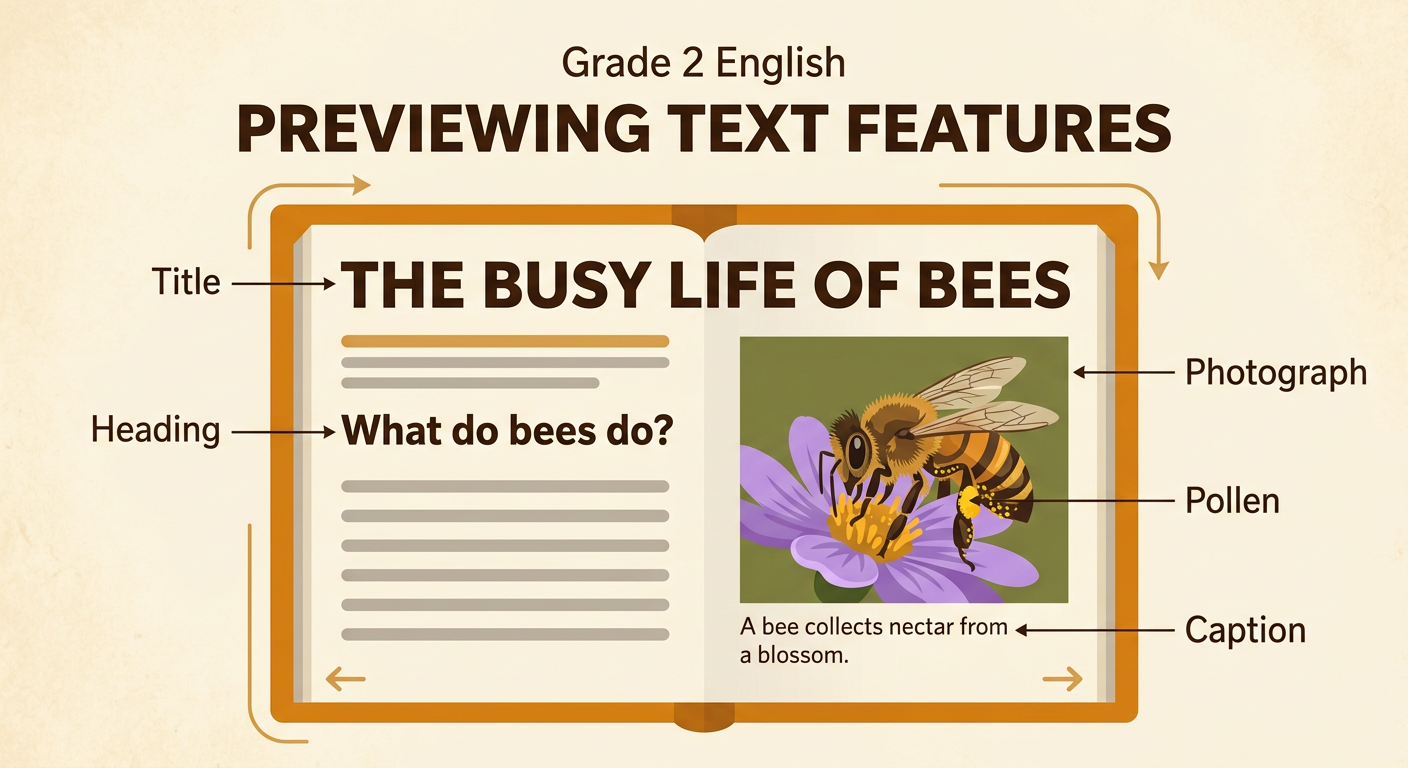
Before you read an informational text, take a quick look at its text features. Read the title and headings. Study photographs, drawings, labels, and captions. These clues help you predict what the whole text will teach. Imagine a text titled “How Honey Bees Help Plants.” One photograph shows a honey bee on a flower, and its caption says that pollen sticks to the bee’s body. You can predict that the text will explain honey bees, flowers, and pollen. A preview does not give you the final main topic. It gives you a smart starting idea. As you read, check whether the information supports your prediction or helps you change it.
Name the Text Topic
The text topic is the general subject of an informational text. Ask, “Who or what is this text mostly about?” Use the title, pictures, and repeated words to name the topic in one or a few words. In “How Honey Bees Help Plants,” words such as bee, flower, and pollen appear again and again. The topic is honey bees and plants. Do not choose a detail that is too small. “Yellow pollen” is only one detail, not the topic of the whole text. Also avoid a topic that is too broad, such as “nature.” A useful topic fits all or most of the paragraphs. Naming the topic prepares you to find the more specific main topic.

Read One Paragraph at a Time
A multiparagraph text has two or more paragraphs. Each paragraph usually has its own focus, or smaller point, that connects to the whole text. Read one paragraph slowly. Then pause and ask, “What is this paragraph mostly about?” For example, the first paragraph may explain that honey bees visit flowers to collect nectar and pollen. Its focus is what bees collect from flowers. The second paragraph may explain that pollen sticks to a bee and moves to another flower. Its focus is how bees carry pollen. Write or say a short focus for each paragraph. Do not try to remember every sentence. Finding each paragraph’s focus helps you see how the ideas work together across the entire text.
Collect Key Details
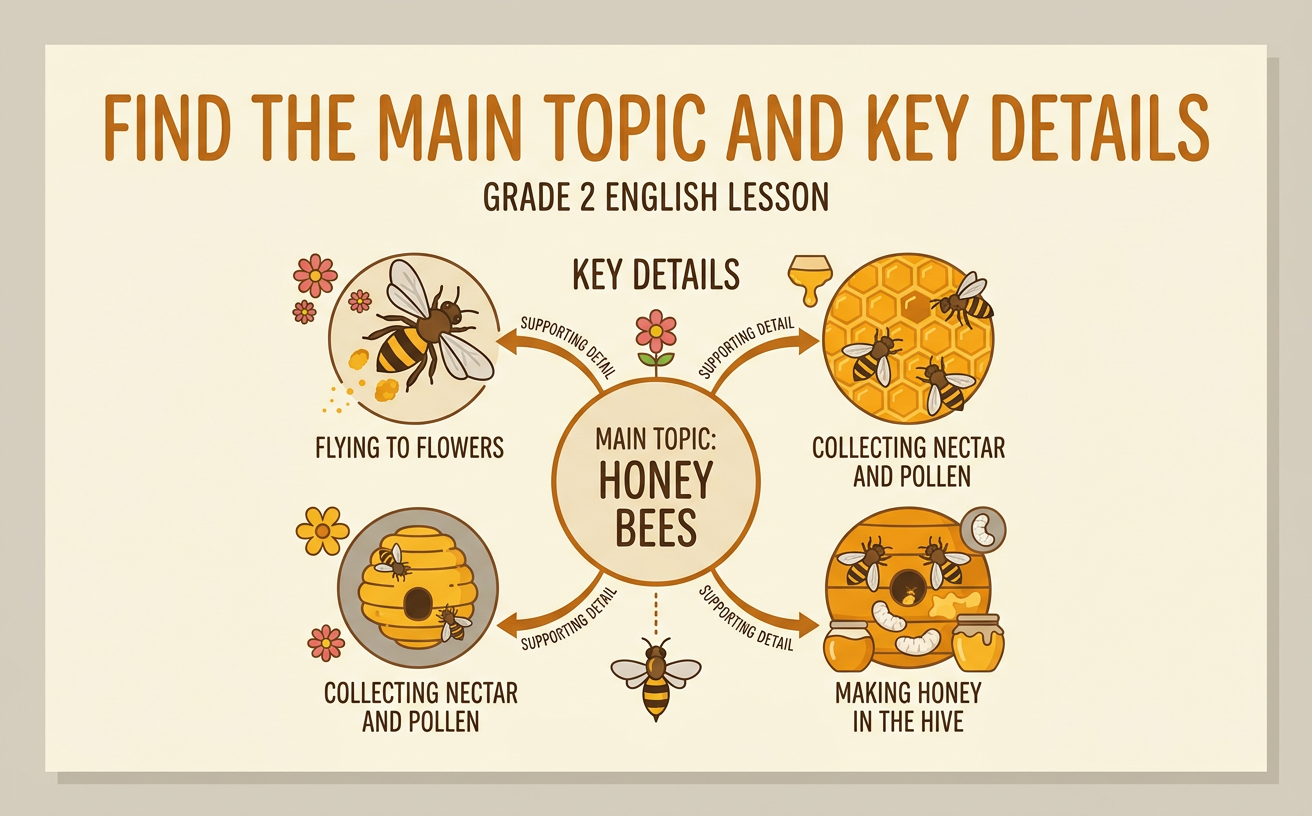
Key details are important facts that explain or support the main topic. After reading each paragraph, ask, “Which facts help me understand the paragraph’s focus?” In the honey bee text, one key detail is that pollen grains stick to the bee’s fuzzy body. Another is that some pollen rubs onto the next flower the bee visits. A third detail is that this movement of pollen helps many flowering plants make seeds and fruit. These details belong together because they show how bees help plants. Leave out facts that do not support the topic. For example, a sentence about the color of a beekeeper’s hat would not explain how honey bees help plants. Collect only the strongest, most connected details.
State the Main Topic
The main topic tells what the whole text is mostly about and what the author wants readers to understand about it. To state it, combine the text topic with the most important idea shared by the key details. Ask, “What do these paragraphs teach about honey bees and plants?” The paragraph focuses show that bees collect pollen, carry it to other flowers, and help plants make seeds and fruit. A strong main topic statement is, “Honey bees help flowering plants by carrying pollen from flower to flower.” This statement fits every paragraph and is supported by the key details. Check your answer by looking back at the title, paragraph focuses, and details. If they all connect, your main topic statement is likely correct.