Finding the Lesson in a Fable
Students recount the beginning, middle, and end of a fable and identify its central message or moral using key story details.
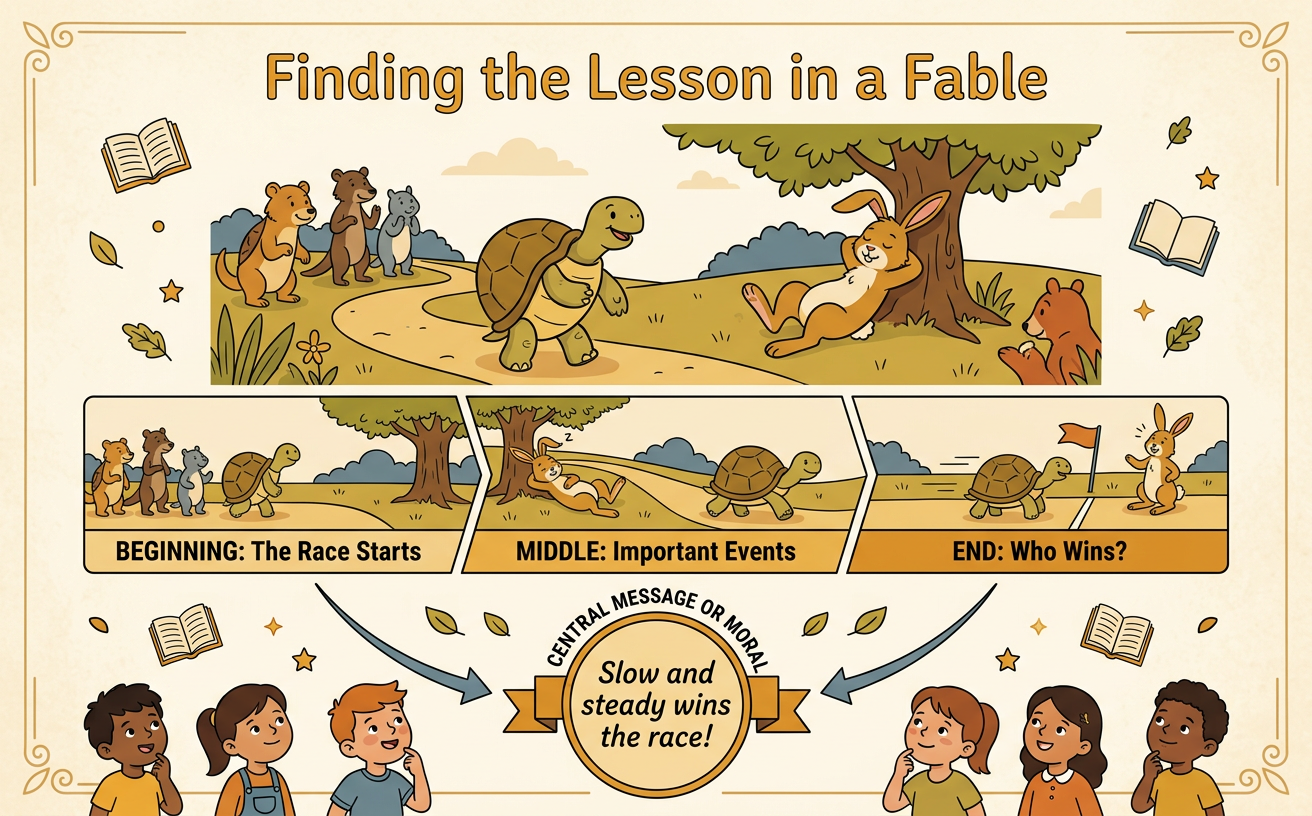
Illustrations are auto-generated and may be placeholders. They can be refreshed to match the narration.
Introduce Fables and Morals
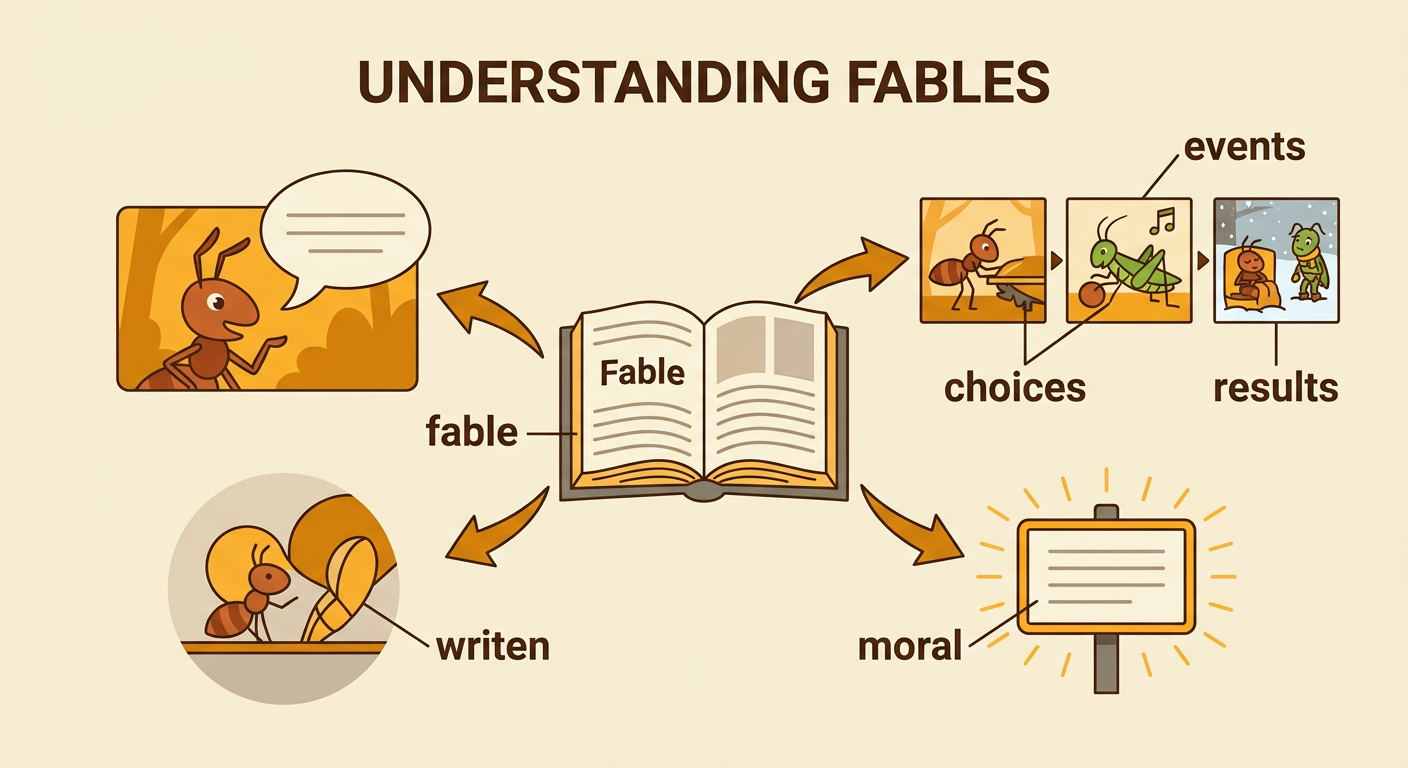
A fable is a short make-believe story that teaches a lesson. Fables often have animal characters that talk, think, and act like people. The lesson is called the moral or central message. It is an idea readers can use in their own lives. For example, a fable might tell about an ant that works hard to store food while a grasshopper plays. When winter arrives, the ant is prepared. The moral could be, “Plan ahead and work before it is too late.” A moral is not just one event from the story. It tells what the events teach us. As you read a fable, notice the characters’ choices, what happens because of those choices, and what the characters learn.
Read a Short Fable Aloud
Listen to the fable “The Lion and the Mouse.” One day, a lion caught a small mouse beneath his paw. The mouse cried, “Please let me go. Someday I may help you.” The lion laughed because he did not believe such a tiny animal could help him. Still, he kindly released the mouse. Later, hunters trapped the lion in a strong rope net. He roared, but he could not escape. The mouse heard him and hurried over. Using her sharp teeth, she chewed through the ropes until the lion was free. The lion thanked the mouse and understood that even a small friend can give great help. As you listen, picture each event. Pay attention to what the lion chooses to do and how his choice matters later.

Recount the Story in Order
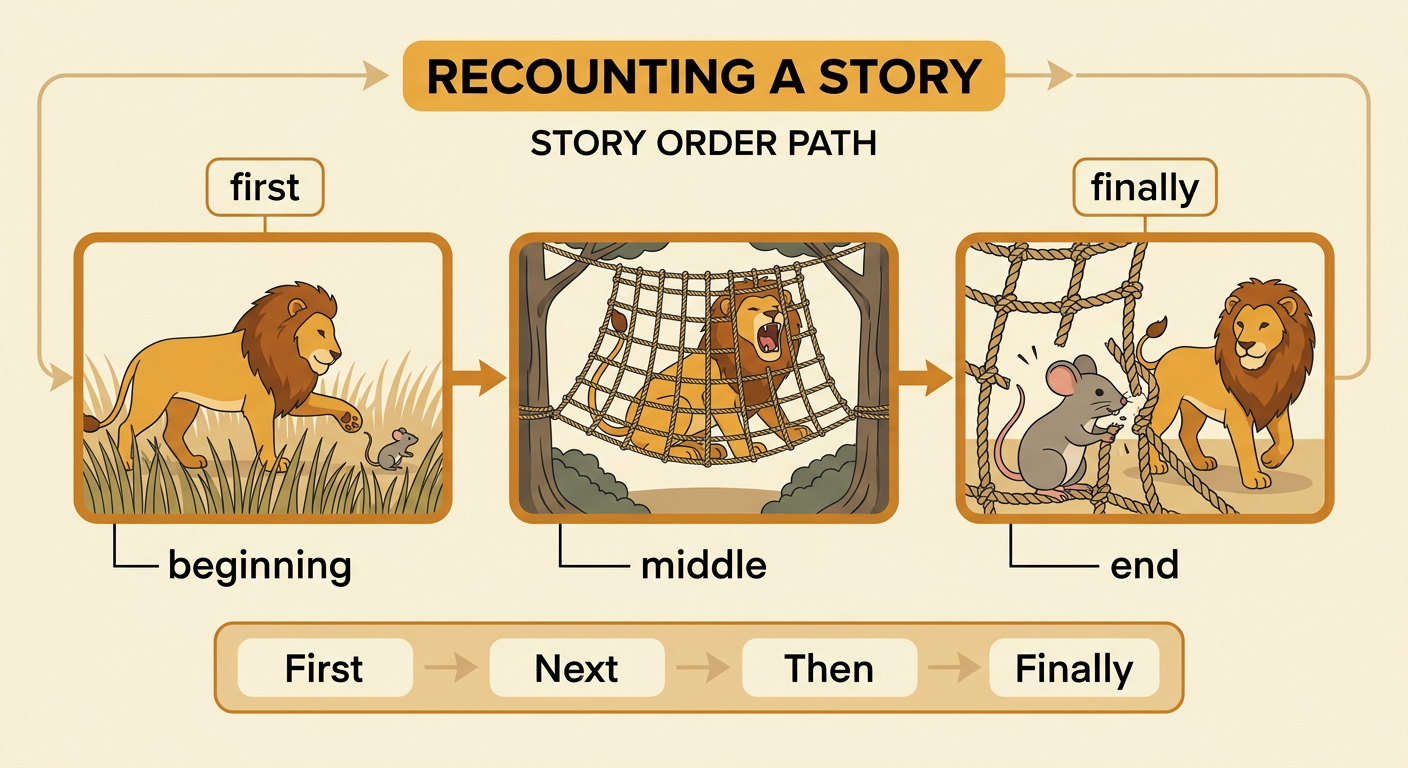
To recount a story, tell its important events in your own words and in the correct order. Use the parts beginning, middle, and end. Do not include every tiny detail. At the beginning of “The Lion and the Mouse,” the lion catches the mouse but decides to let her go. In the middle, hunters trap the lion in a rope net, and he cannot get free. At the end, the mouse chews the ropes and saves the lion. Time-order words help make a recount clear. You can say first, next, then, and finally. Try this recount: “First, the lion frees the mouse. Next, the lion becomes trapped. Then, the mouse chews the net. Finally, the lion escapes and thanks her.” Check that no event is out of order.
Identify the Central Message
The central message is the main lesson the author wants readers to understand. Ask, “What did the characters learn?” and “What can this story teach people?” In “The Lion and the Mouse,” the lion first thinks the mouse is too small to help him. By the end, the mouse saves him. One central message is, “Even someone small can be a great help.” Another fitting moral is, “Kindness may be returned.” The topic of the fable might be kindness or friendship, but a topic is only a word or short phrase. A central message is a complete thought about that topic. Choose a message that matches the whole story, not just one part. The moral should make sense even outside the fable.

Support the Message with Details
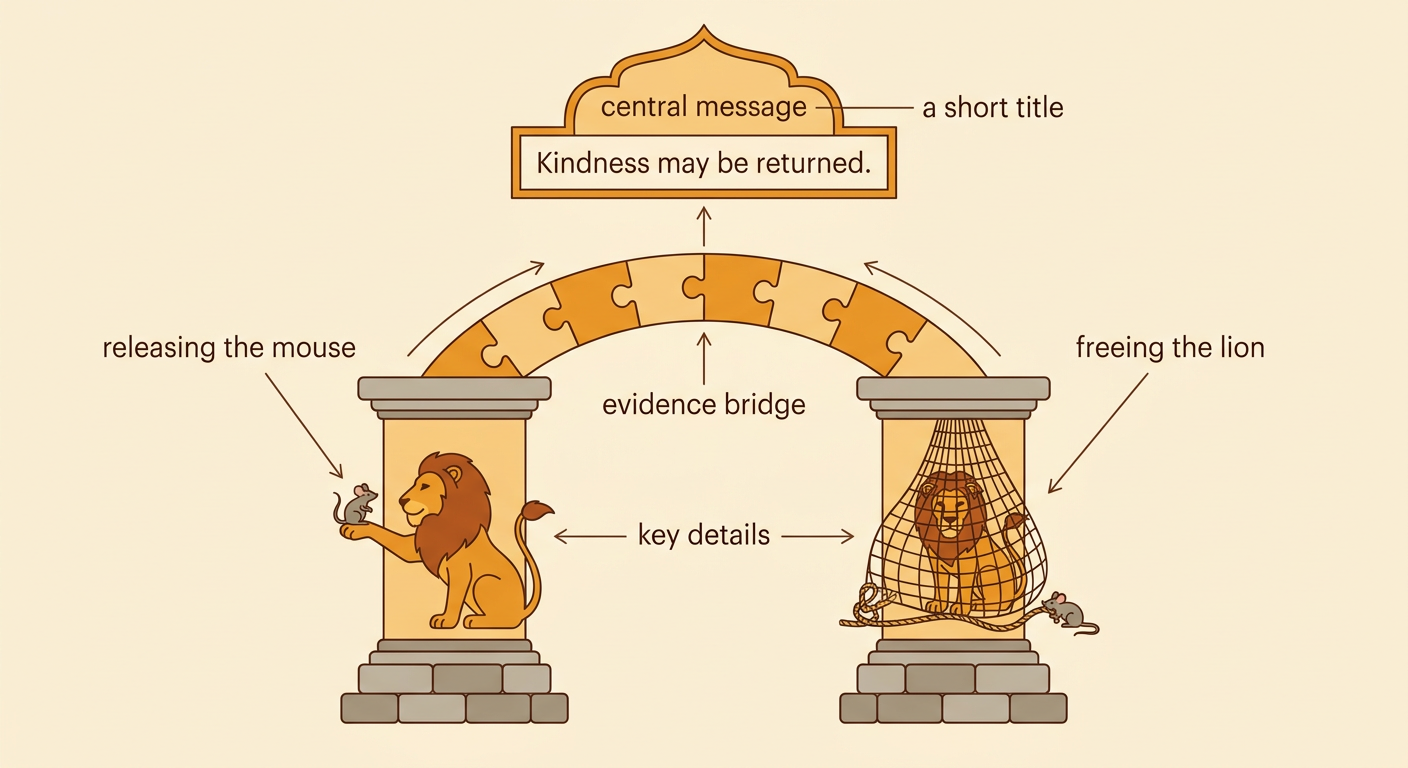
A strong answer names the central message and supports it with key details from the fable. Key details are important actions or events that help prove the lesson. Suppose you choose the message “Kindness may be returned.” First, explain that the lion shows kindness by releasing the mouse. Next, explain that the mouse later returns that kindness by chewing through the net and freeing the lion. These two details connect directly to the message. You might say, “The moral is that kindness may be returned. The lion lets the mouse go, and later the mouse saves the lion.” Avoid details that do not help prove your idea, such as the time of day or the color of the net. Ask yourself, “Does this detail show why my message is true?”