
Finding the Main Topic and Key Details
Students identify what an informational text is mostly about and name key details that support the main topic.

Illustrations are auto-generated and may be placeholders. They can be refreshed to match the narration.
Introduce the Main Topic
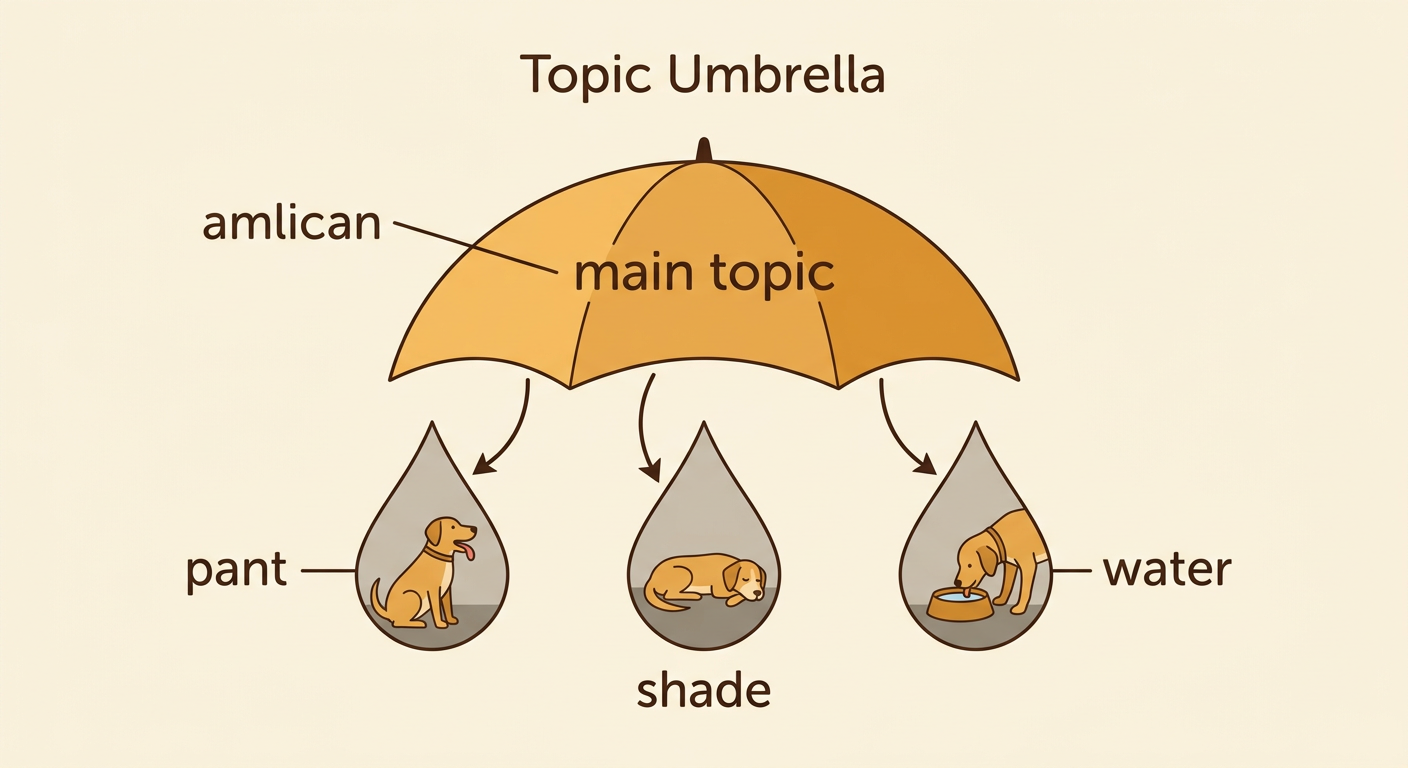
The main topic tells what an informational text is mostly about. It is the big idea that connects the whole text. To find it, ask, “Who or what is this text mostly about?” Then ask, “What important idea does the author teach about it?” For example, imagine a text that explains how dogs stay cool. It tells that dogs pant, rest in shade, and drink water. The main topic is not just “dogs.” That is too broad. A clearer main topic is “ways dogs stay cool.” Each part of the text helps teach that idea. The title and pictures may give clues, but good readers also think about ideas that appear throughout the text.
Read an Informational Text
Informational texts teach true facts about a topic. Read this short text: Bees visit flowers to collect sweet nectar. As a bee moves inside a flower, tiny grains of pollen stick to its body. The bee carries some pollen to the next flower. This helps flowering plants make seeds. Bees also take nectar back to their hive for food. Now think about what the sentences have in common. Most of them explain what bees do when they visit flowers and how this helps plants. A strong main topic is “Bees help flowering plants make seeds.” As you read, pause after each sentence. Ask whether it gives information about bees, flowers, pollen, or seeds. Repeated ideas can help you find the main topic.

Notice Important Details
Key details are important facts that tell more about the main topic. They are not every word or every small fact in the text. In the bee text, one key detail is that pollen sticks to a bee’s body. Another key detail is that the bee carries pollen to another flower. A third key detail is that this helps flowering plants make seeds. These facts explain how bees help plants. The detail that bees take nectar to the hive is true, but it does not explain as directly how bees help plants make seeds. To spot a key detail, ask, “Does this fact help me understand the main topic?” If the answer is yes, keep it in mind. You can also point to the sentence that gives the detail.

Connect Details to the Topic
Good readers connect each key detail to the main topic. Think of the main topic as the center of a wheel. The key details are spokes that join the center. Our center says, “Bees help flowering plants make seeds.” One spoke says, “Pollen sticks to a bee.” Another says, “The bee carries pollen to a new flower.” A third says, “The plant can then make seeds.” Each detail supports the topic because it explains one part of the process. Try using the word because: Bees help flowering plants make seeds because they carry pollen between flowers. If a detail does not connect, check it again. A sentence about the color of a hive may be interesting, but it does not support this main topic.

Share the Main Topic and Details
After reading, share the main topic and retell the key details in your own words. Start with a clear sentence: “The text is mostly about how bees help flowering plants make seeds.” Next, add the important details in order: “Pollen sticks to a bee when it visits a flower. The bee carries pollen to another flower. This helps the plant make seeds.” You do not need to repeat every sentence exactly. Retelling means saying the important ideas clearly in your own words. You can speak, write, or draw your answer. Before you finish, check your work. Did you name one main topic? Did you include two or three key details? Do the details match the topic? If so, you have shown what the text teaches.
