Finding the Main Topic and Key Details
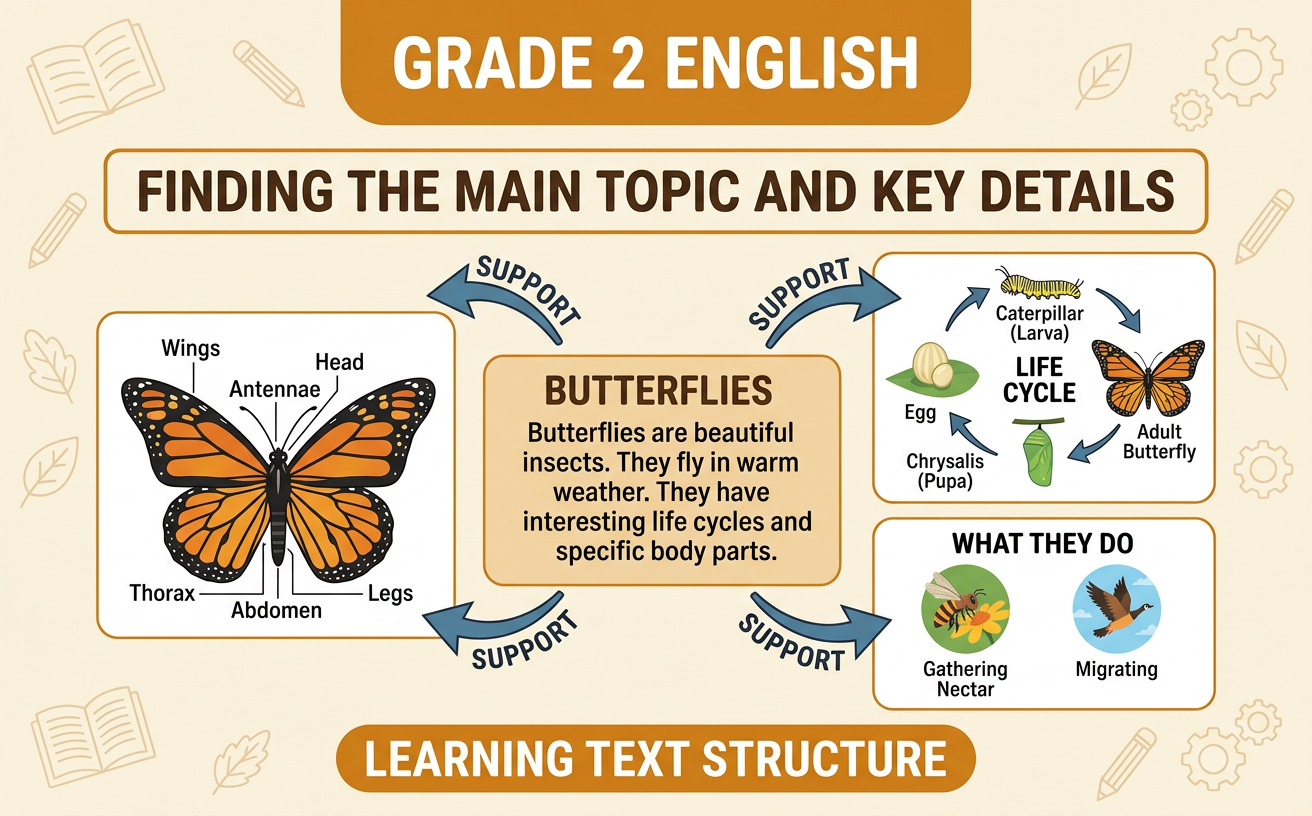
Students identify the main topic of a short informational text and explain how key details support it.
Illustrations are auto-generated and may be placeholders. They can be refreshed to match the narration.
What Is a Main Topic?
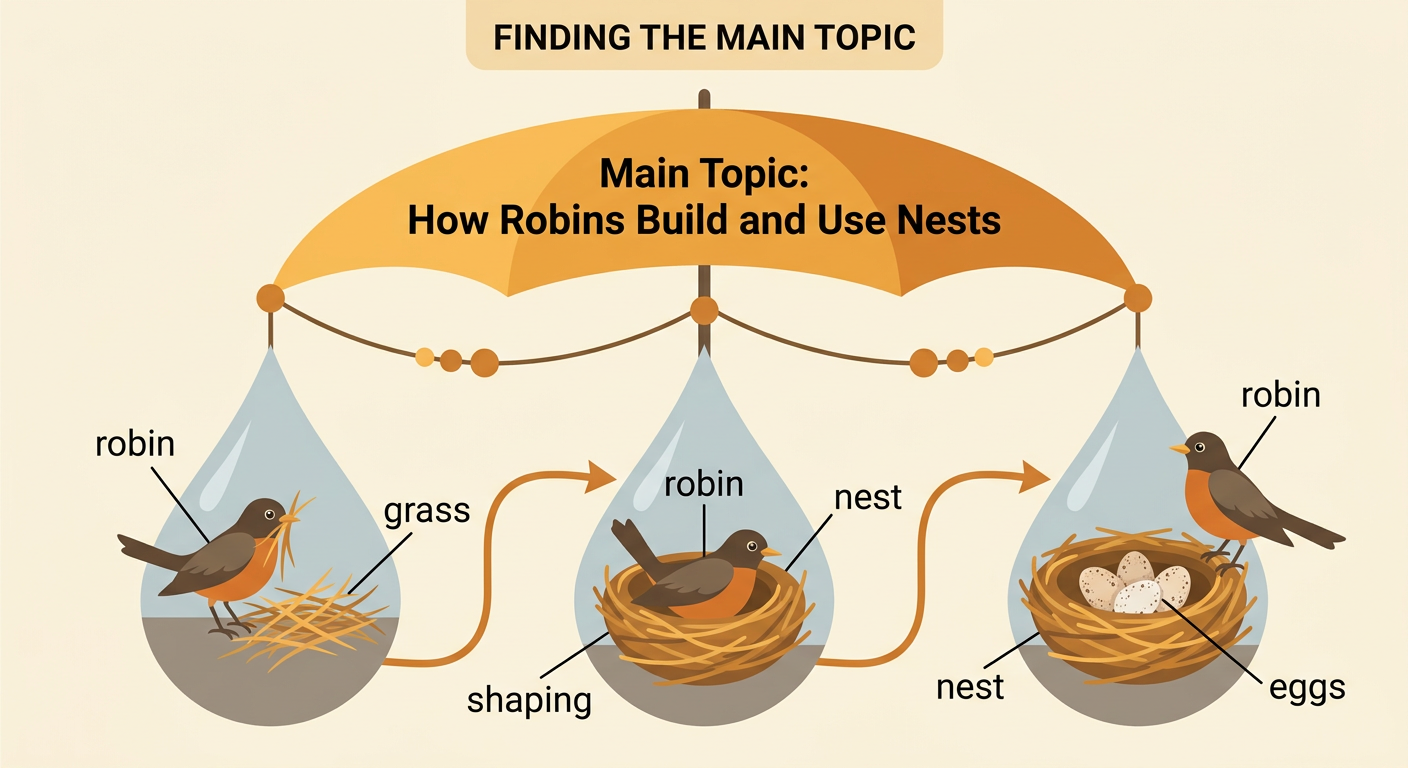
The main topic is what an informational text is mostly about. It is not one small fact. It is the big idea that connects all or most of the paragraphs. To find it, ask, “Who or what do I keep reading about?” Then ask, “What does the text mostly tell me about that subject?” A title can give a clue, but you must check the details too. Imagine a text with one paragraph about a robin gathering grass, another about shaping a nest, and a third about laying eggs in the nest. One detail is that robins use grass. The main topic is broader: how robins build and use nests. Each paragraph adds information about that same big idea.
Read an Informational Text
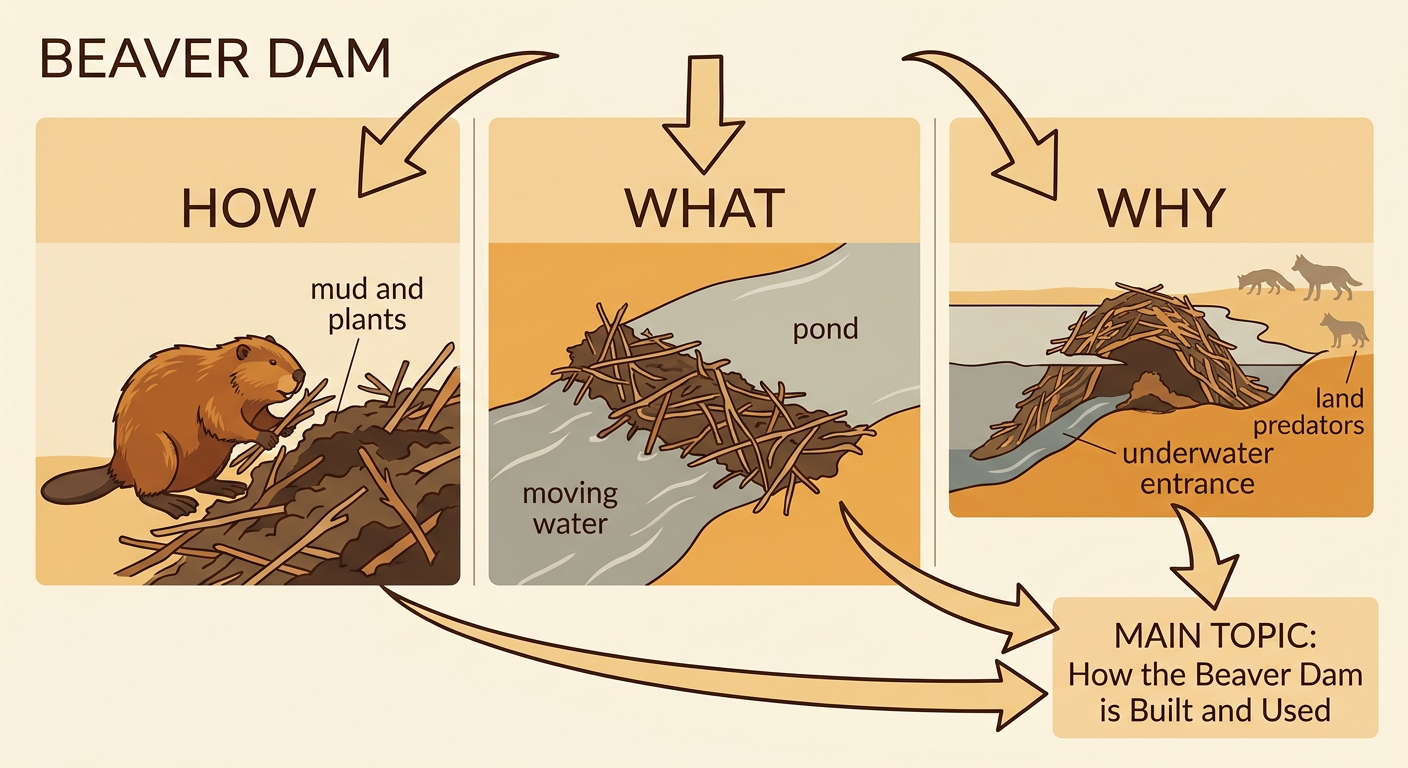
Before you decide on a main topic, read the whole text. Pay attention to the title, each paragraph, and facts that seem connected. Here is a short informational text. Beaver Dams Beavers use their strong front teeth to cut small trees and branches. They carry logs and sticks to a stream. They pack mud and plants into the gaps. The dam slows the moving water. Water may spread out behind the dam and form a pond. Beavers repair holes when water leaks through. A beaver family can build a lodge in the pond. An underwater entrance helps the beavers reach their home while staying away from many land predators. Every paragraph is about beavers and dams. The first focuses on building, the second on changing the water, and the third on how the pond helps beavers.

Notice Repeated Ideas
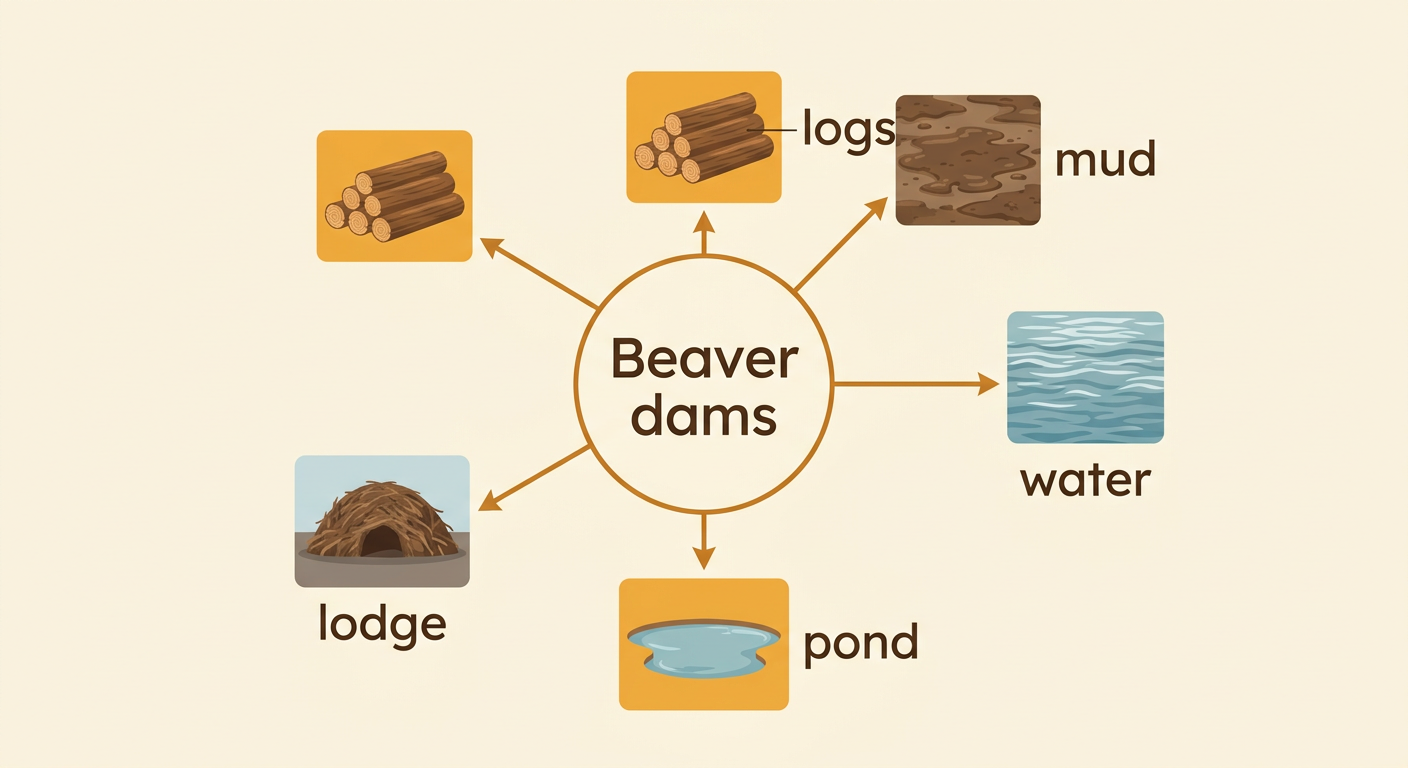
Writers often repeat important words or ideas to keep a text centered on one topic. Look for exact words, such as “dam,” and related words, such as “logs,” “mud,” “water,” and “pond.” These words form a pattern about beavers making a structure that changes a stream. In the beaver text, the first paragraph explains what beavers use to build. The second tells what the dam does to water. The third explains how the pond helps a beaver family. The paragraphs do not repeat the same sentences, but their ideas connect. Repetition is a clue, not the final answer. A word like “the” appears often but does not name the topic. Choose repeated ideas that carry meaning.
Identify Key Details
Key details are important facts that tell more about the main topic. A detail is key when it helps answer what, how, or why about the topic. Ask, “Would this fact help someone understand the text’s big idea?” In the beaver text, one key detail is that beavers pack mud and plants into gaps. This explains how they build a dam. Another key detail is that the dam slows moving water and may help form a pond. This explains what a dam does. A third key detail is that an underwater lodge entrance helps beavers avoid many land predators. This explains why the pond can be useful. Together, these details show how a dam is built, what it changes, and how it helps beavers.
Name the Main Topic
Now combine the repeated ideas and key details into one clear topic statement. First name the subject. In the example, the subject is beavers. Next say what the whole text teaches about that subject. “Beavers” alone is too broad because it does not tell what the text explains. “Beavers have strong teeth” is too narrow because it fits only one part. A strong main topic is “how beavers build dams and how the dams help them.” This idea fits all three paragraphs. Paragraph one focuses on building materials and actions. Paragraph two focuses on how a dam changes the stream. Paragraph three focuses on how the pond gives a beaver family a safer way into its lodge. Check that your topic covers most of the text, not just one paragraph.

Explain Your Evidence
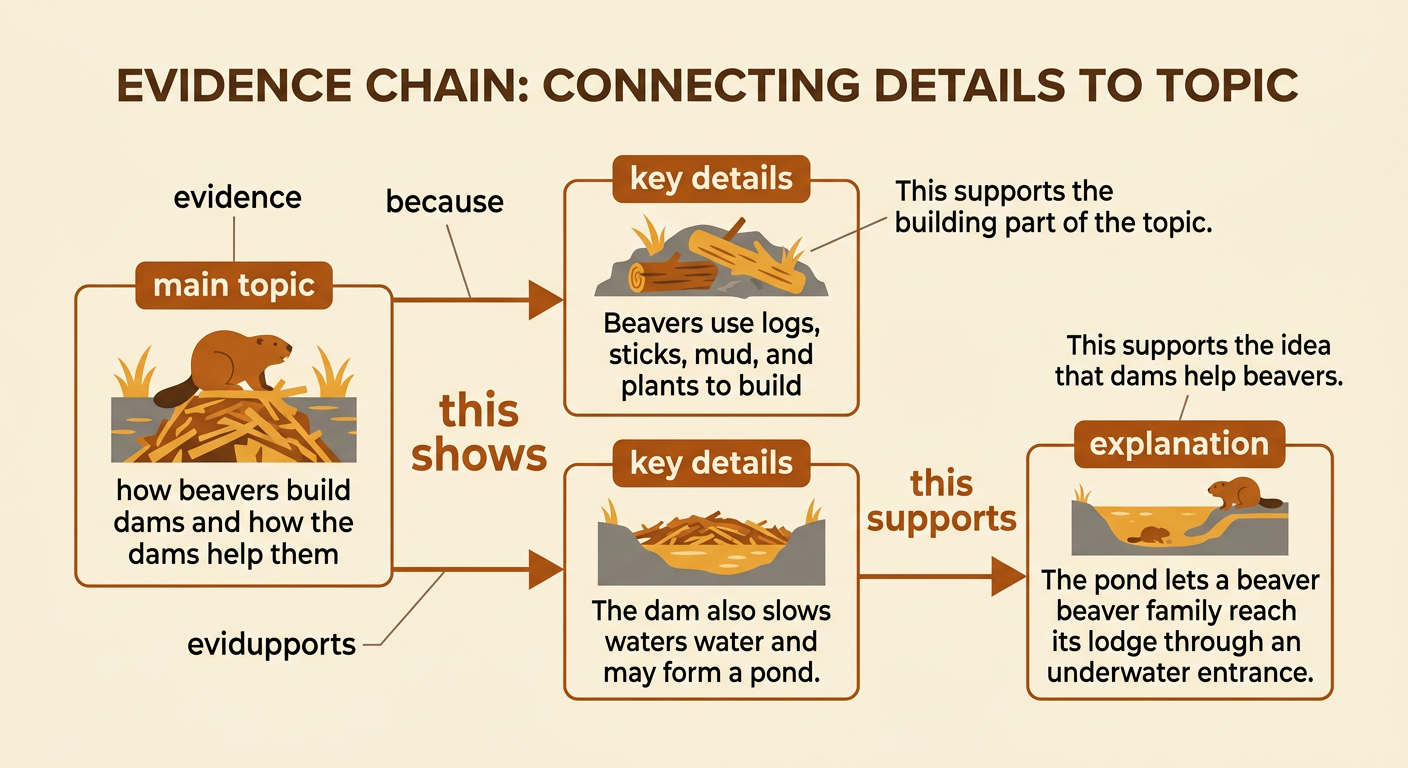
After naming the main topic, use key details as evidence. Evidence is information from the text that shows why your answer makes sense. Do not only list details. Explain how each detail connects to the topic. For example, you might say, “The main topic is how beavers build dams and how the dams help them. One key detail says that beavers use logs, sticks, mud, and plants to build. This supports the building part of the topic. Another detail says that the dam slows water and may form a pond. A beaver family can use the pond to reach its lodge through an underwater entrance. These details support the idea that dams help beavers.” Words such as “because,” “this shows,” and “this supports” can help you explain your thinking.