
Finding the Main Topic in an Informational Text
Students listen to a short informational text and identify its main topic and supporting details using words and pictures.
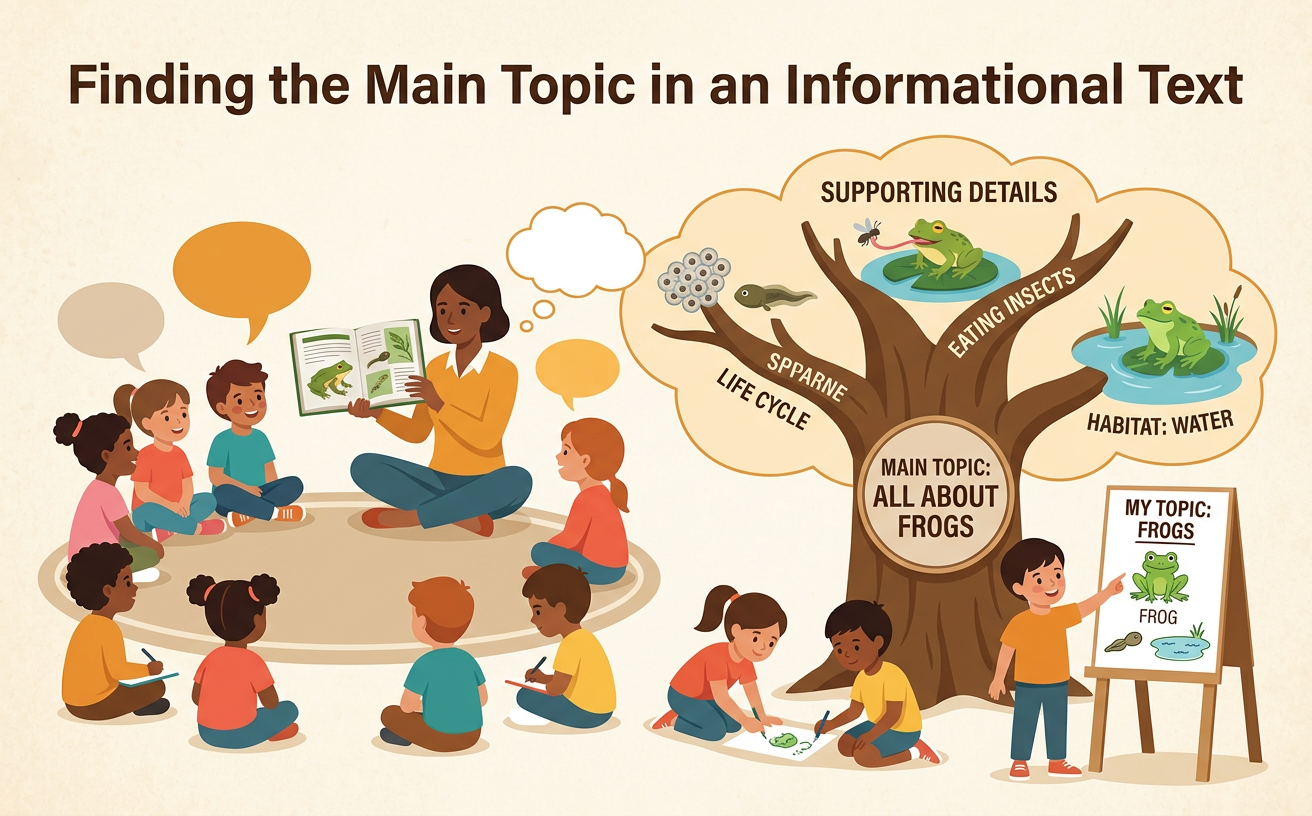
Illustrations are auto-generated and may be placeholders. They can be refreshed to match the narration.
Introduce the Main Topic
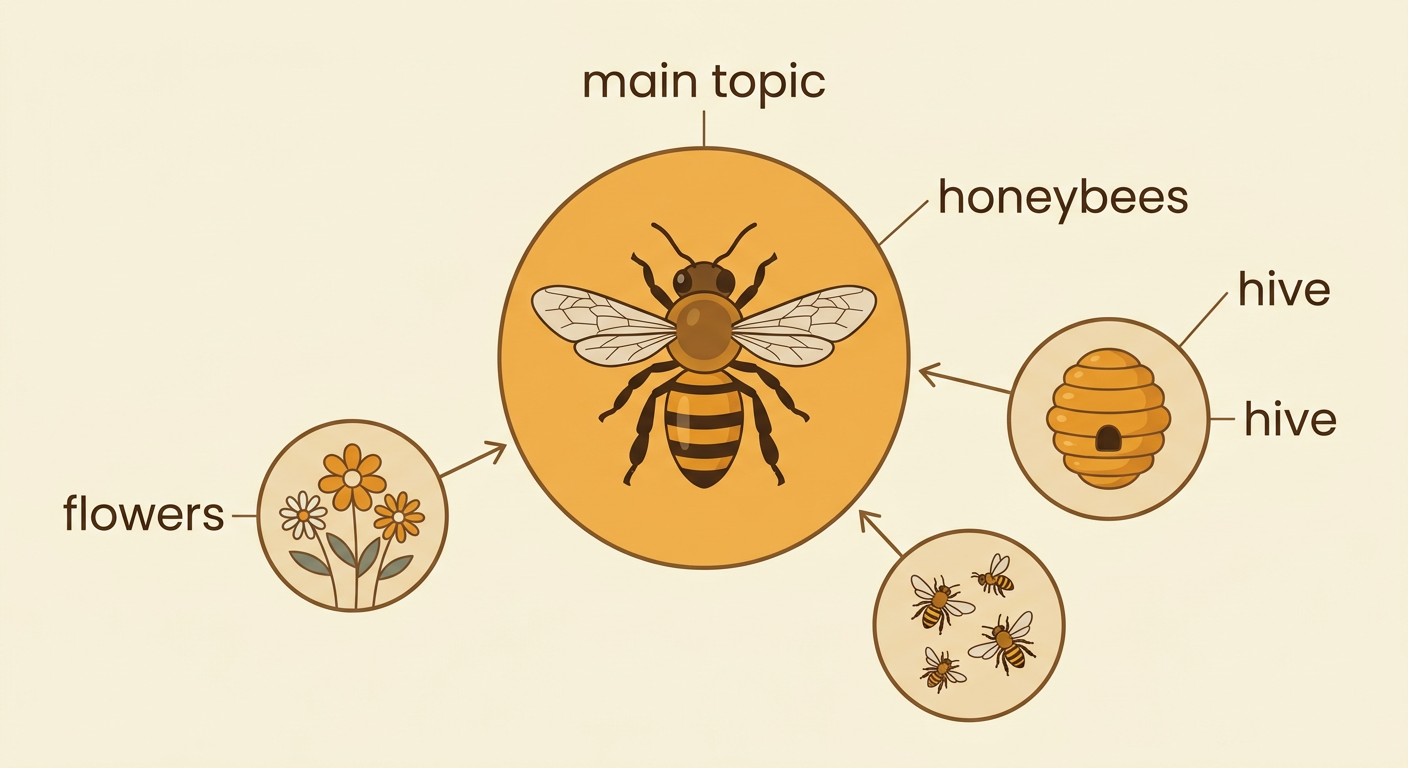
The main topic is what a whole text is mostly about. Think of the main topic as the big idea that connects the words and pictures. A text may tell many facts, but all the facts point to one main topic. For example, imagine a book with pictures of honeybees, flowers, and a hive. The words explain how honeybees gather food and live together. The main topic is honeybees. One fact might be that honeybees visit flowers, but flowers are not the main topic. Another fact might be that honeybees live in hives, but hives are not the main topic. Ask yourself, “Who or what do I keep hearing about?” The answer can help you name the main topic.
Picture Walk and Predictions
Before listening, take a picture walk. Look closely at the cover and each picture without reading the words. Notice which animal, object, or place appears again and again. Suppose the cover shows a honeybee on a flower. Inside, one picture shows bees entering a hive, and another shows a bee collecting nectar from a flower. You might predict, “I think this text will be about honeybees.” A prediction is a smart guess based on clues. Point to a picture clue that supports your guess. You can say, “I see bees in every picture, so I think the text is about bees.” Keep your prediction in mind as you listen. It is okay to change your prediction when the words give you new information.

Listen to the Informational Text
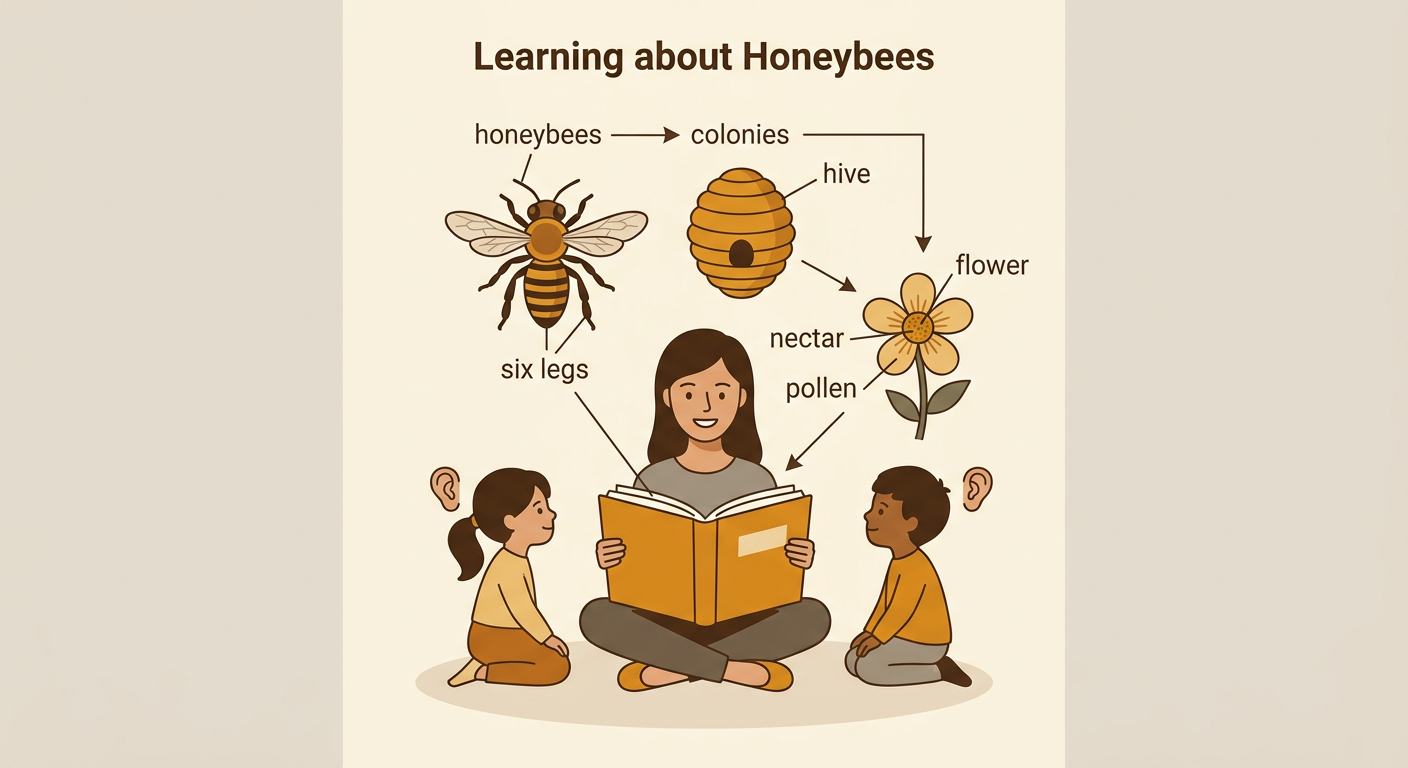
Listen while an adult reads this short informational text: “Honeybees are insects that live and work together. They live in groups called colonies. Many honeybees live in a hive. Worker bees fly to flowers to collect nectar and pollen. They carry these materials back to the hive. Honeybees have six legs, two antennae, and wings.” As you listen, think about the subject you hear named many times. Make a quiet bee signal by touching two fingers to your head like antennae whenever you hear the word “honeybees” or “bees.” Listen for facts that teach you something true about them. After the reading, tell a partner one word or picture you remember. For example, you might remember the hive, the flowers, or the bee’s six legs.
Name the Main Topic
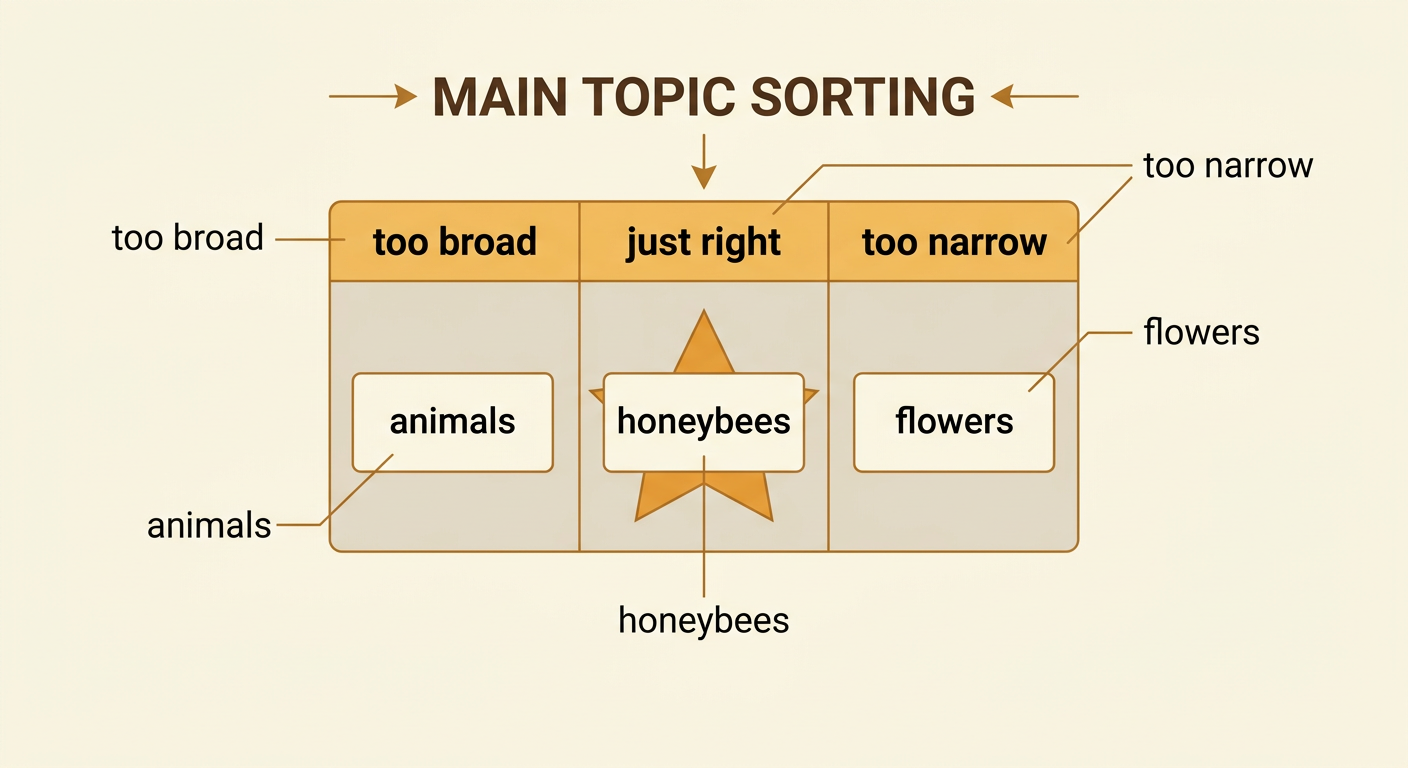
Now name the main topic in a few words. Ask, “Who or what was the whole text mostly about?” The text mentioned insects, colonies, hives, flowers, nectar, pollen, legs, and wings. However, one subject connected all those ideas: honeybees. Say, “The main topic is honeybees.” Check your answer against the whole text. Did most of the sentences teach something about honeybees? Yes. “Flowers” is too narrow because only part of the text discussed flowers. “Animals” is too broad because the text focused on one kind of animal. “Honeybees” is just right. With help, complete this sentence frame: “This text is mostly about _____.” Then point to a picture or repeated word that helped you decide. Naming the main topic shows that you understand the text’s big idea.
Find Supporting Details
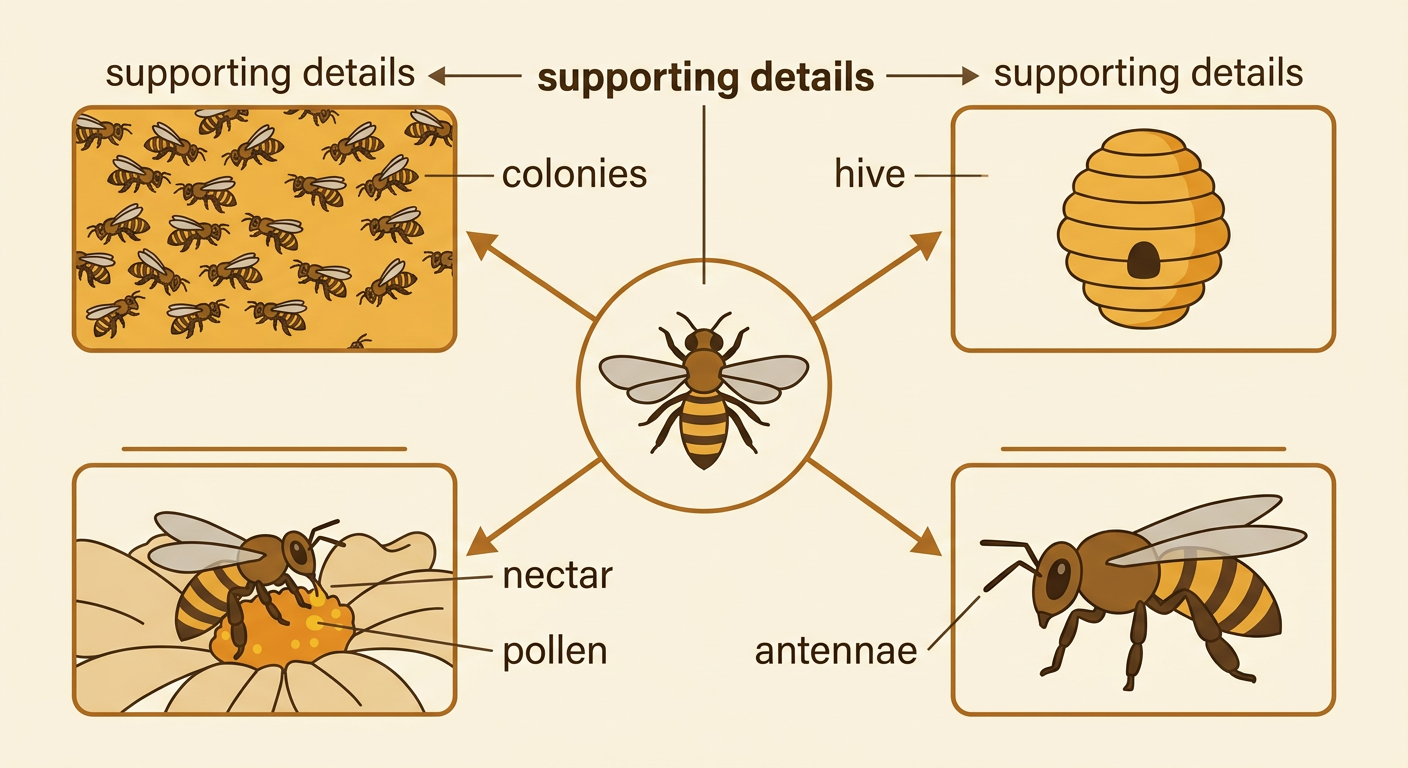
Supporting details are important facts that tell more about the main topic. Return to the text and find details about honeybees. One detail is that honeybees live together in colonies. A second detail is that many honeybees live in a hive. A third detail is that worker bees collect nectar and pollen from flowers. Another detail is that honeybees have six legs, two antennae, and wings. Each fact supports the main topic because it teaches something about honeybees. Do not choose a detail that was not in the text. For example, “Honeybees wear shoes” is silly and is not supported by the words or pictures. Use the sentence frame, “One detail is _____.” Then retell two or three details in your own words, using the pictures to help you remember.
Draw and Share
Show what you learned with a drawing. In the center of your paper, draw the main topic: a honeybee. Add two or three supporting details from the text. You might draw the bee beside a flower to show that worker bees collect nectar and pollen. You might draw a hive to show where many honeybees live. You can also draw six legs, two antennae, and wings on the bee. Try to include only details that match the text. Label your picture with words such as “honeybee,” “flower,” or “hive.” Then share with a partner. Say, “The main topic is honeybees. One detail is that worker bees visit flowers. Another detail is that many honeybees live in a hive.” Your partner can point to each detail as you explain it.
