Flower Helpers: How Animals Pollinate Plants
Students model how bees and other animals move pollen between flowers, helping plants produce fruits and seeds.
Illustrations are auto-generated and may be placeholders. They can be refreshed to match the narration.
Meet the Pollinators
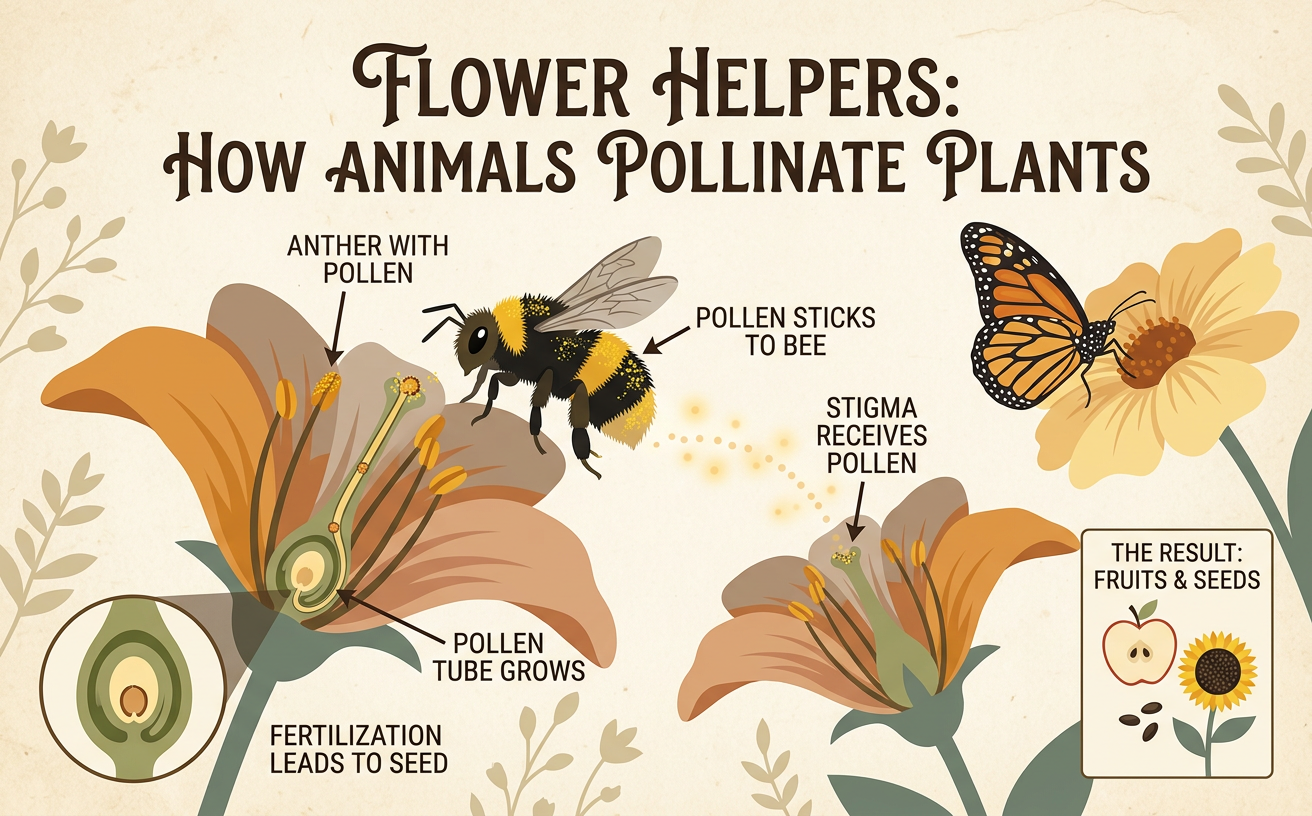
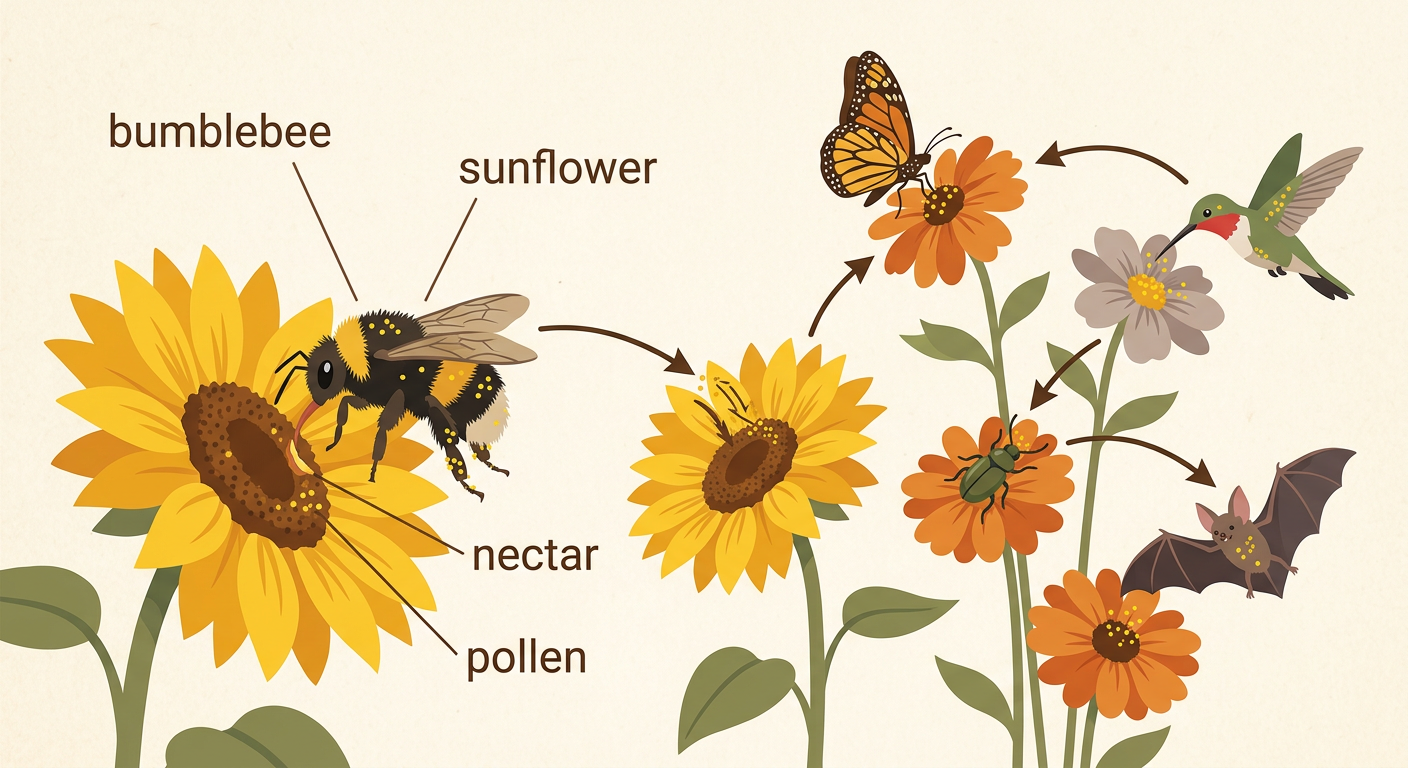
Pollinators are animals that carry pollen from one flower to another flower of the same kind. Bees are common pollinators, but butterflies, moths, beetles, hummingbirds, and some bats can also move pollen. These animals usually visit flowers to find sugary nectar or protein-rich pollen for food. As an animal reaches into a flower, tiny grains of pollen may stick to its body. The pollen can rub off when the animal visits the next flower. For example, a bumblebee may collect pollen on its fuzzy legs while drinking nectar from a sunflower. When it lands on another sunflower, some pollen may be left behind. Different pollinators live in different environments and visit flowers during the day or night.
Flower Parts and Pollen
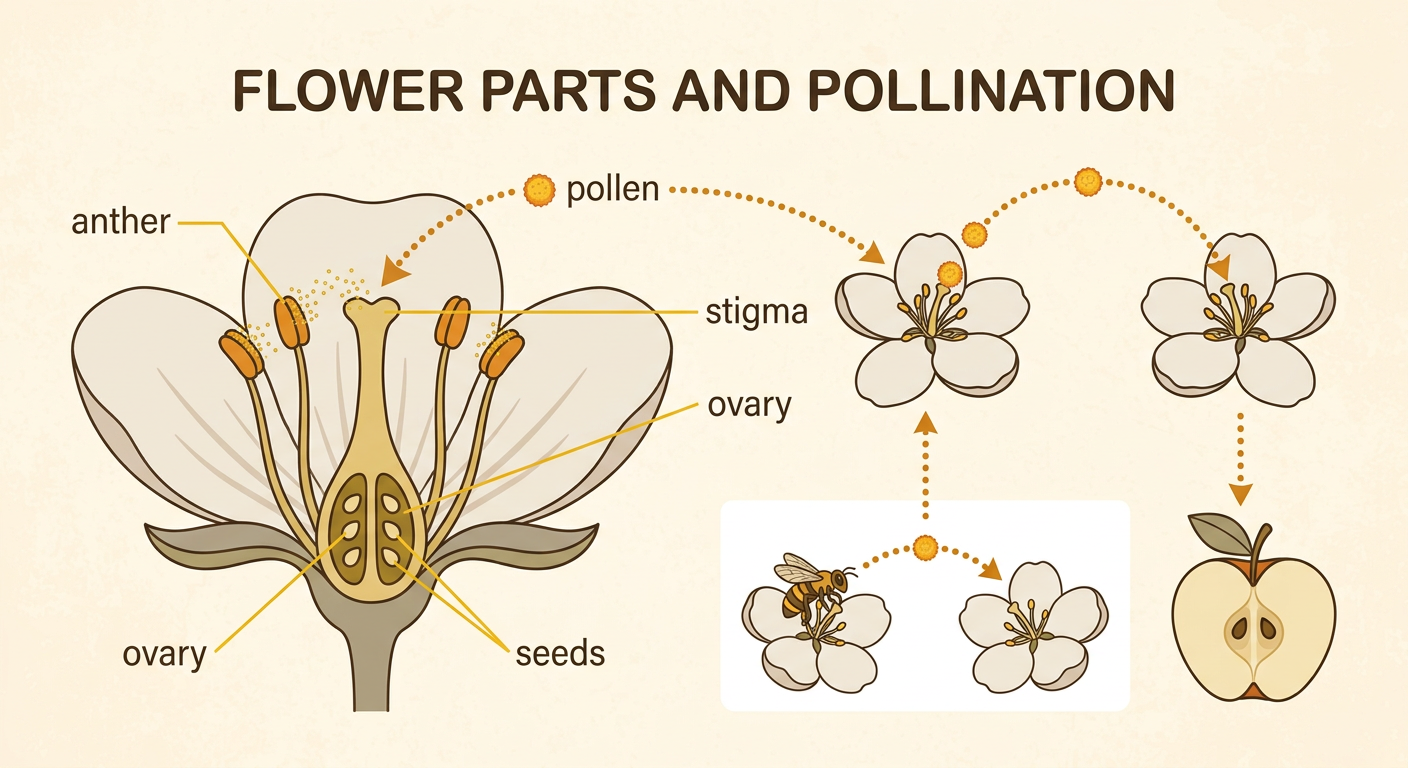
A flower has parts that help a plant make seeds. The anther is a flower part that produces pollen. Pollen is made of tiny grains that often look like yellow dust. The stigma is another flower part, and its surface is often sticky. Pollination happens when pollen reaches the stigma of a flower of the same kind. After pollination, the plant may begin making seeds. In many flowering plants, the ovary at the base of the flower can develop into a fruit that holds the seeds. For example, a bee can carry pollen from the anther of one apple blossom to the stigma of another apple blossom. Later, that flower may grow into an apple containing seeds. Not every flower is pollinated by an animal; some pollen travels by wind.
Model a Pollinator Visit
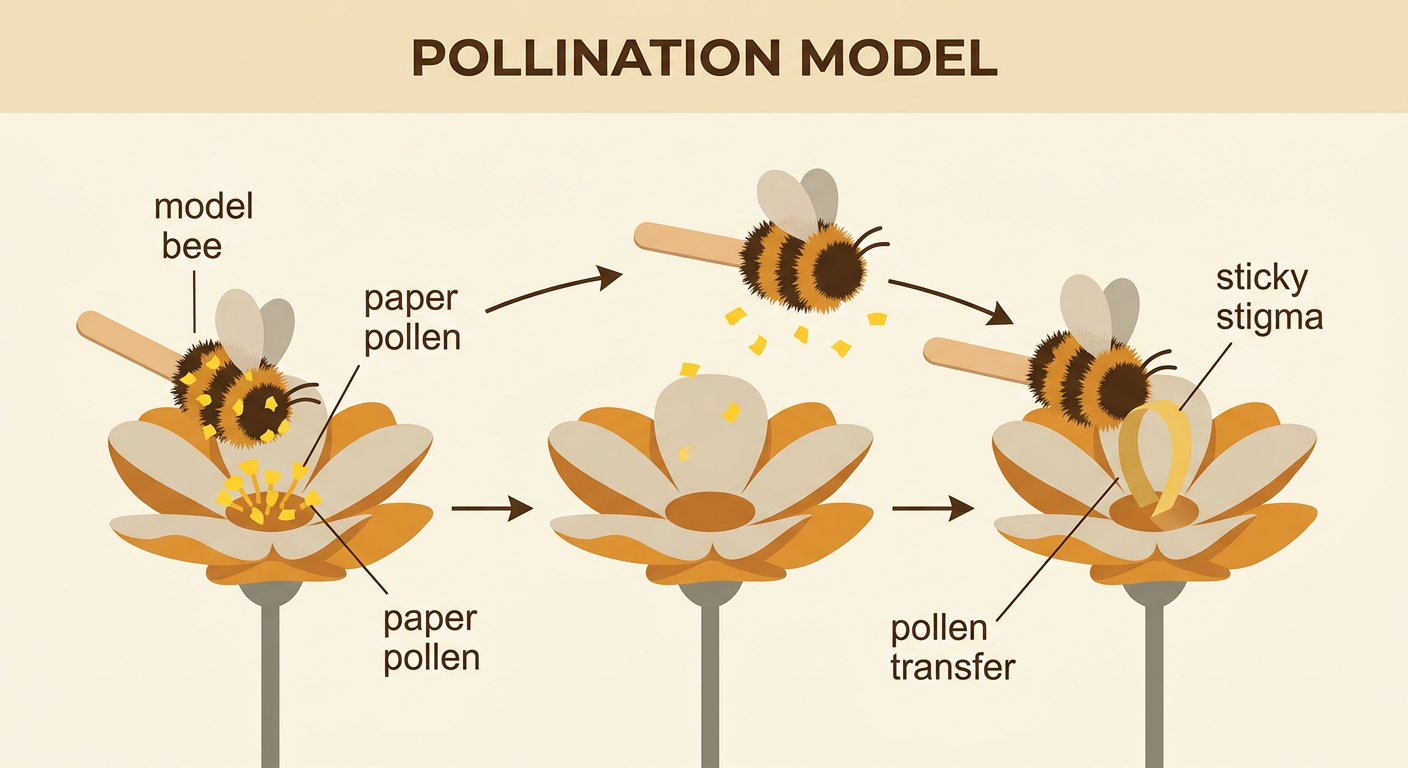
You can build a simple model to show how an animal moves pollen. Place small yellow paper bits in the center of two paper flowers. Add a small loop of sticky tape to each flower to represent the stigma. Use a fuzzy pom-pom on a craft stick as a model bee. Gently touch the model bee to the paper pollen in the first flower. Then move it to the second flower and touch the sticky stigma. Look for paper bits that moved with the bee. Each paper bit on the second stigma represents a pollen transfer. Repeat the visit and compare what happens. Work with a partner: one student moves the bee, while the other observes and records. The model is not a real bee or flower, but it helps explain the movement of pollen.
Count and Graph Pollen Transfers
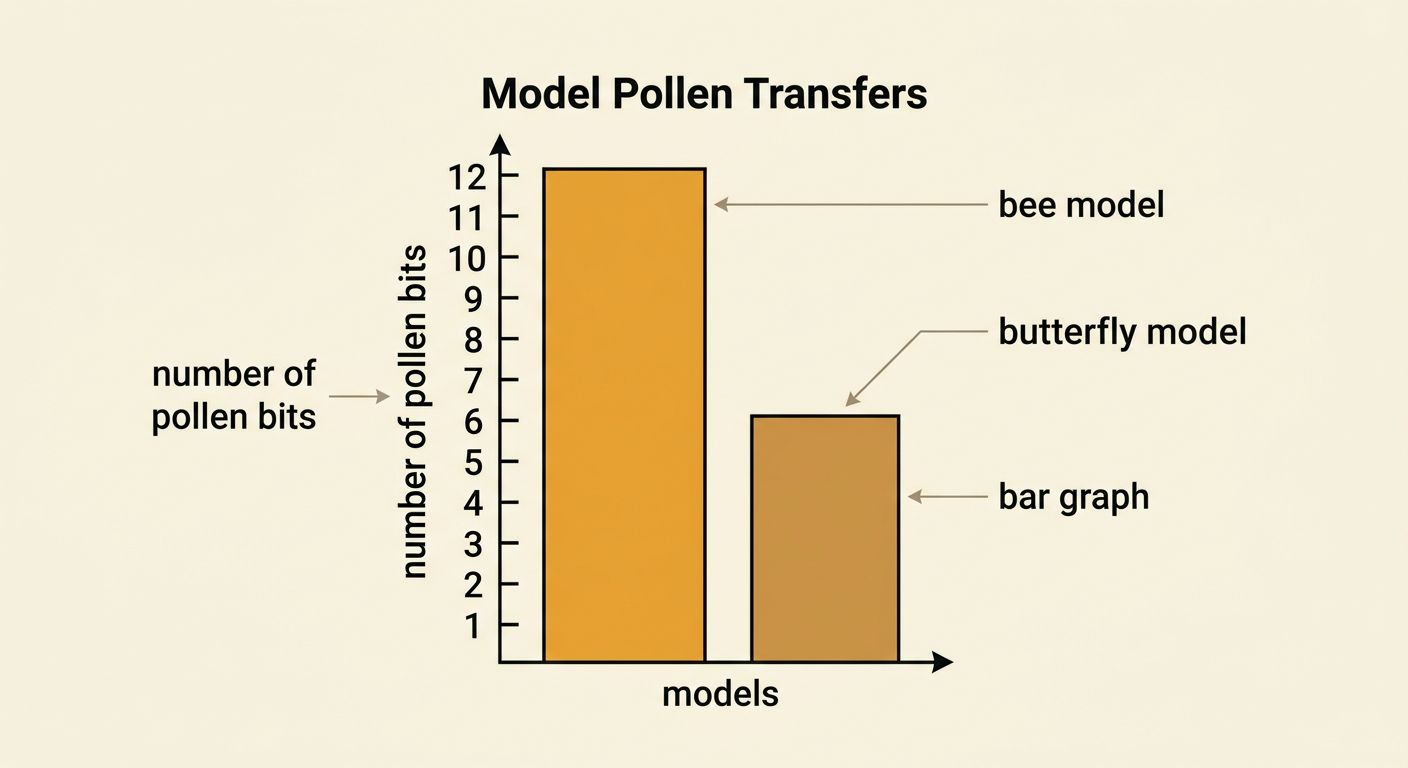
Scientists count and organize observations to find patterns. After each model pollinator visit, count the paper pollen bits that reached the second flower. Record the number in a table. For example, suppose three bee-model visits moved 4, 3, and 5 bits. Three butterfly-model visits might move 2, 1, and 3 bits. Add each set to find the total: the bee model moved 12 bits, and the butterfly model moved 6 bits. Make a picture graph or bar graph with one category for each model. Use one picture or one square to represent one pollen bit. Add a title and label both sides of the graph. Then compare the bars. A taller bar shows more transfers in this model, but it does not prove that every real bee moves more pollen than every butterfly.
Why Pollinators Matter
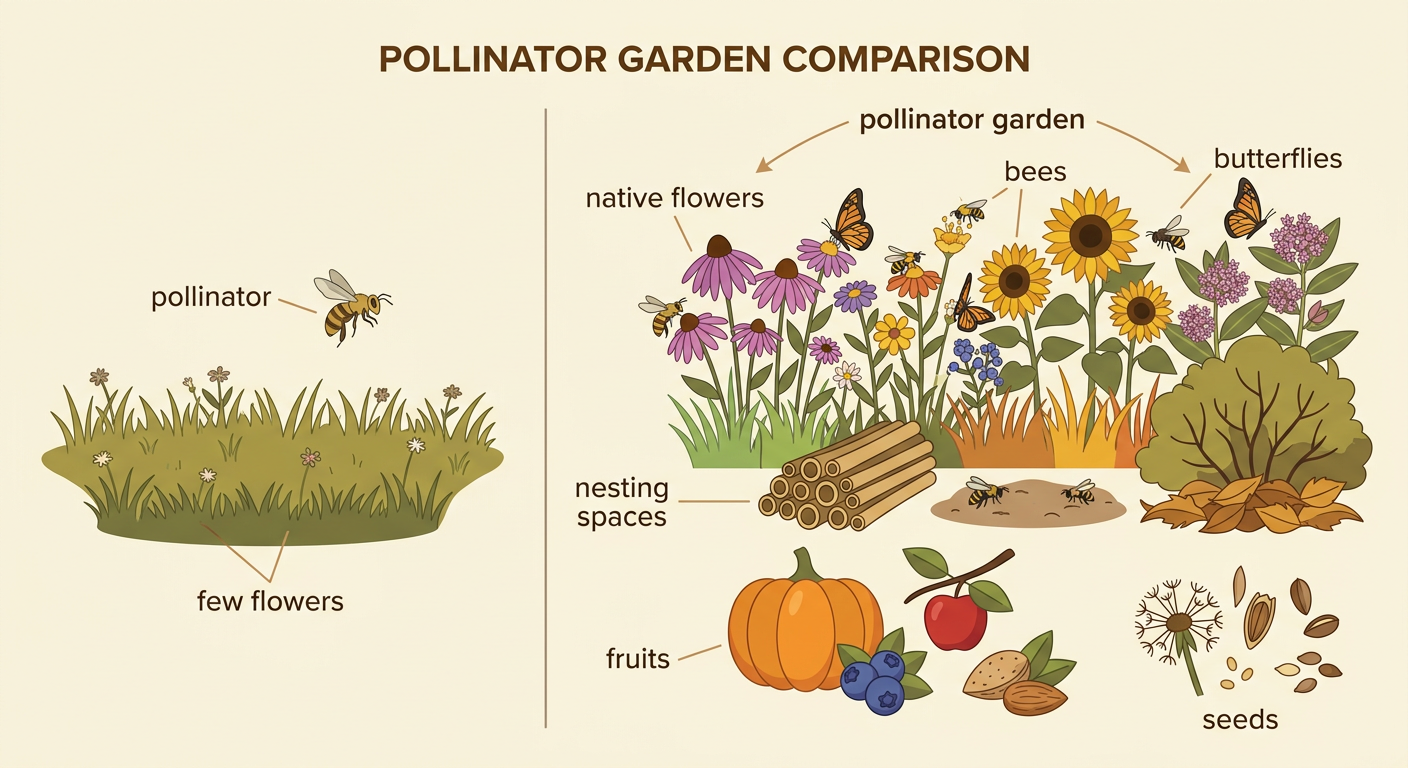
Pollinators help many flowering plants produce fruits and seeds. Seeds can grow into new plants, and fruits provide food for people and other animals. Apples, blueberries, pumpkins, and almonds are examples of foods that benefit from animal pollination. Pollinators also depend on their environment. They need flowering plants for food and safe places for shelter or nests. Human activities can change these places. Removing many wildflowers may leave pollinators with less food, and using pesticides incorrectly may harm helpful insects. People can also improve the environment by planting different native flowers, protecting nesting spaces, and following pesticide directions. For example, a school can create a small pollinator garden that blooms from spring through fall. The flowers feed pollinators, and the pollinators help the plants make seeds.