
Flower Partners: How Pollination Helps Plants Reproduce
Students examine flower structures, model pollen transfer, compare pollinator visit counts, and explain how pollination supports plant reproduction.

Illustrations are auto-generated and may be placeholders. They can be refreshed to match the narration.
Inside a Flower
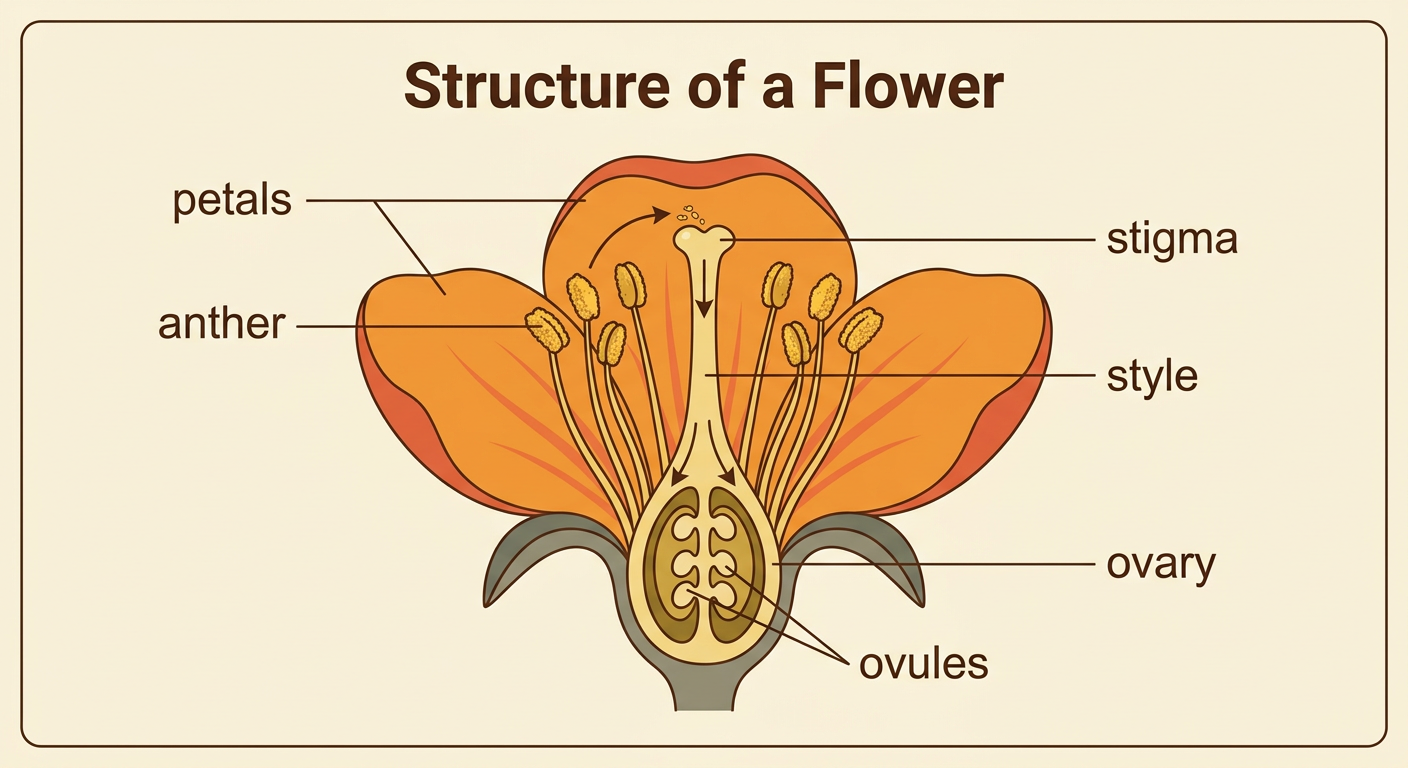
A flower has structures that help a flowering plant reproduce. Colorful petals and scents may attract animals such as bees, butterflies, birds, and bats. The anther makes powdery pollen and is held up by a thin filament. The stigma is often sticky, so it can catch pollen. A tube-like style connects the stigma to the ovary. Inside the ovary are ovules, which may develop into seeds after fertilization. For example, when a bee reaches into an apple blossom for nectar, its body may brush against the anthers and pick up pollen. If the bee later touches the stigma of another apple blossom, it may help the plant reproduce. Each flower structure has a form that supports a particular job.
The Job of Pollen
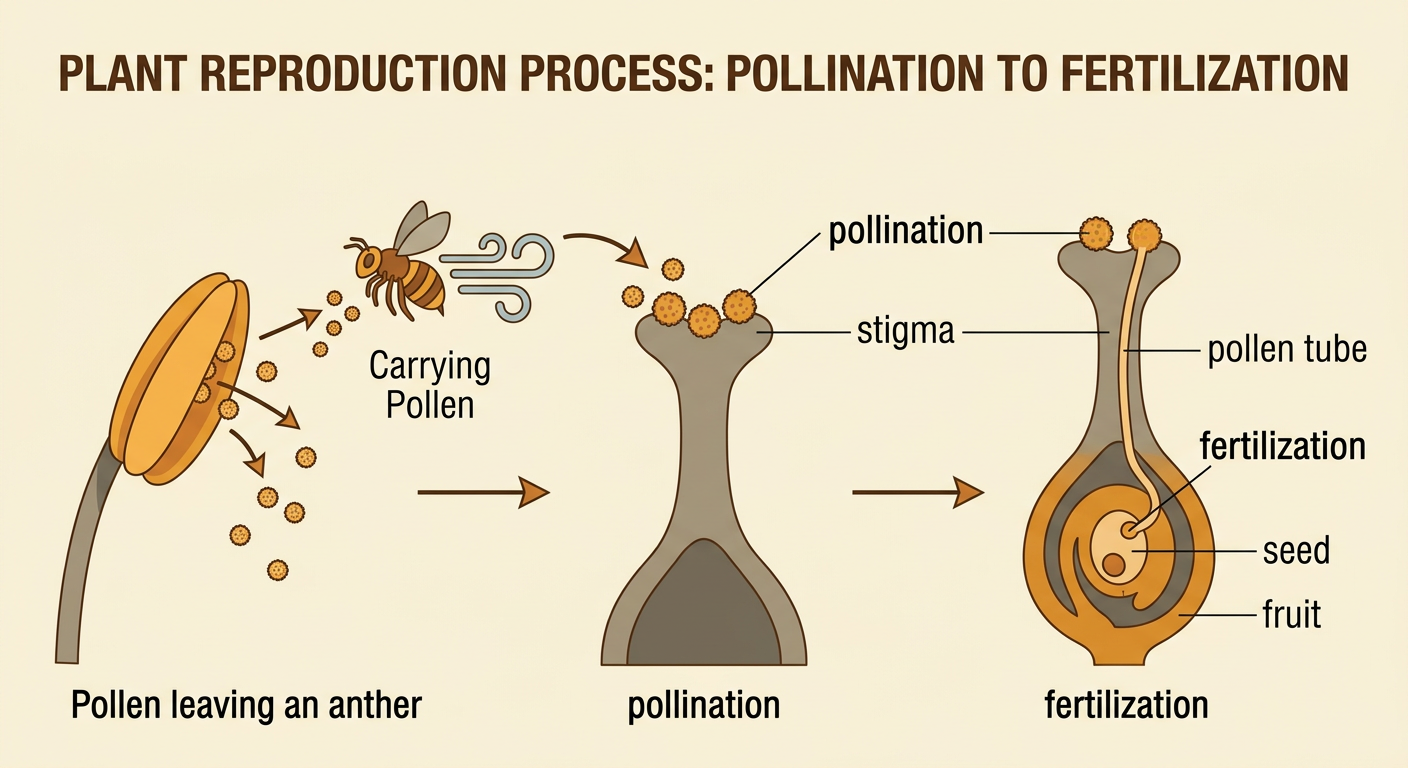
Pollen is made in a flower’s anthers and contains cells needed for plant reproduction. Pollination occurs when pollen moves from an anther to a stigma of a flower of the same species. Wind, water, or animals can carry it. After compatible pollen lands on a stigma, a tiny pollen tube may grow down the style toward an ovule. A male reproductive cell travels through the tube and joins with an egg cell. This process is fertilization. The fertilized ovule can develop into a seed, and the ovary may develop into a fruit. For example, pollen from a pumpkin flower must reach a female pumpkin flower before a pumpkin containing seeds can begin to form. Pollination makes fertilization possible, but the two processes are not the same.
Modeling Pollination
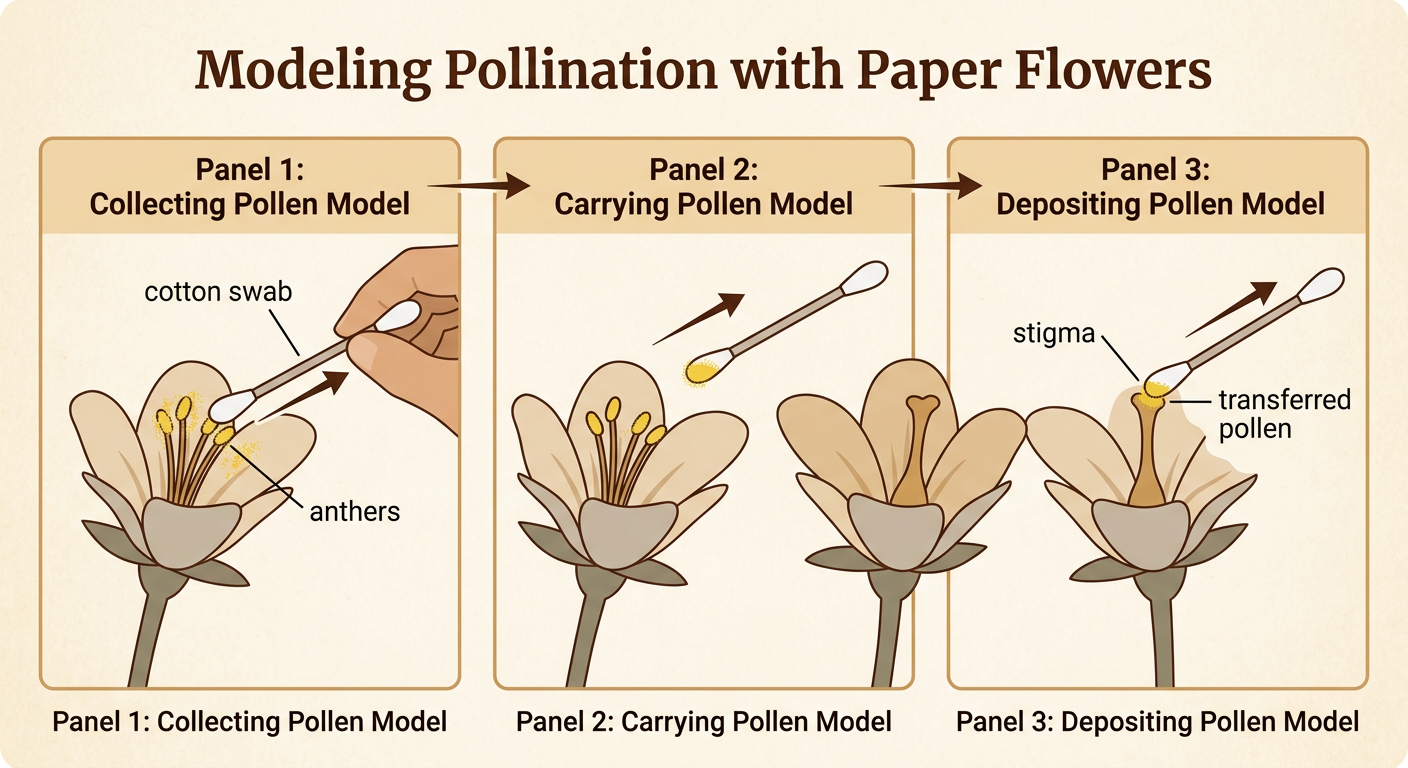
A model can show how an animal transfers pollen between flowers. Make two paper flowers of the same kind. Place yellow chalk dust on the anthers of one model flower. Use a clean cotton swab as the pollinator. Touch the swab to the dusty anthers, then touch it to the stigma of the second flower. Yellow dust left on the stigma represents transferred pollen. Try touching several flowers in a row and record where the dust moves. The model shows that contact with both anthers and stigmas matters. However, it has limits: a cotton swab does not fly, search for nectar, or choose flowers, and chalk is not living pollen. Real pollination depends on flower species, timing, weather, and the pollinator’s behavior.
Comparing Pollinator Visits
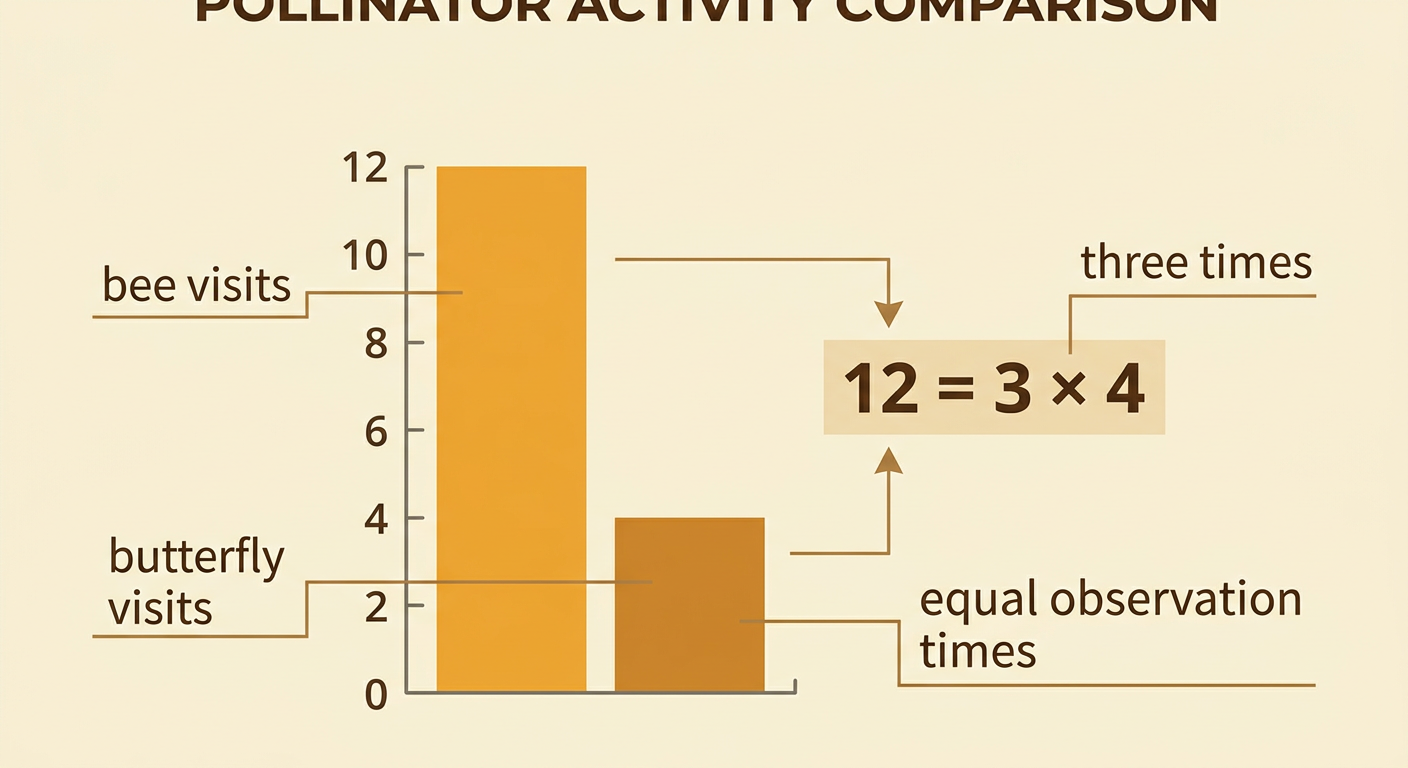
Scientists can count flower visits to compare pollinator activity. Suppose students observe one garden for the same amount of time and record 12 bee visits and 4 butterfly visits. To find how many times as many bee visits occurred, divide 12 by 4. The result is 3, so there were three times as many bee visits as butterfly visits. The multiplicative comparison can also be written as 12 = 3 × 4. Equal observation times and the same counting rules make the comparison fair. Visit counts provide useful evidence, but they do not prove that every visit transferred pollen. A pollinator might miss the stigma or visit a different plant species. Scientists combine visit counts with observations of pollen transfer, fruit formation, or seed production.
Protecting Pollinators
People modify environments to meet community needs, and cultural knowledge and values influence their choices. A neighborhood may replace a grassy area with a garden containing native flowers, food plants, and walking paths. Families might choose plants used in local cooking or celebrations, while Indigenous knowledge may guide the care of native plants and seasonal habitats. These choices can also help pollinators when flowers provide nectar and pollen across several seasons. People can protect pollinators by planting varied native species, reducing pesticide use, leaving some safe nesting spaces, and providing shallow water. For example, a school could plant milkweed for monarch butterflies beside vegetables that need pollination. Communities must also consider safety, available water, food goals, and local ecosystems when deciding how to change a place.

Evidence-Based Conclusion
A strong conclusion makes a claim and supports it with evidence and reasoning. One possible claim is: Flower structures and pollinators work together to help many flowering plants reproduce. Evidence includes the anther making pollen, the stigma catching pollen, and an animal carrying pollen between compatible flowers. Visit data can add support. For example, 12 bee visits compared with 4 butterfly visits show that bees visited three times as often during one observation. Explain why the evidence matters: more contact between pollinators and flower structures can create opportunities for pollen transfer, which can lead to fertilization and seed formation. Also recognize limits. Visit counts alone do not show that seeds formed. A convincing argument uses accurate observations, gives more than one reason, connects each reason to the claim, and mentions what further evidence is needed.
