Flower Power: How Pollination Helps Plants Make Seeds
Students investigate how flower structures attract pollinators and help flowering plants reproduce by producing seeds.
Illustrations are auto-generated and may be placeholders. They can be refreshed to match the narration.
Why Plants Need Pollination
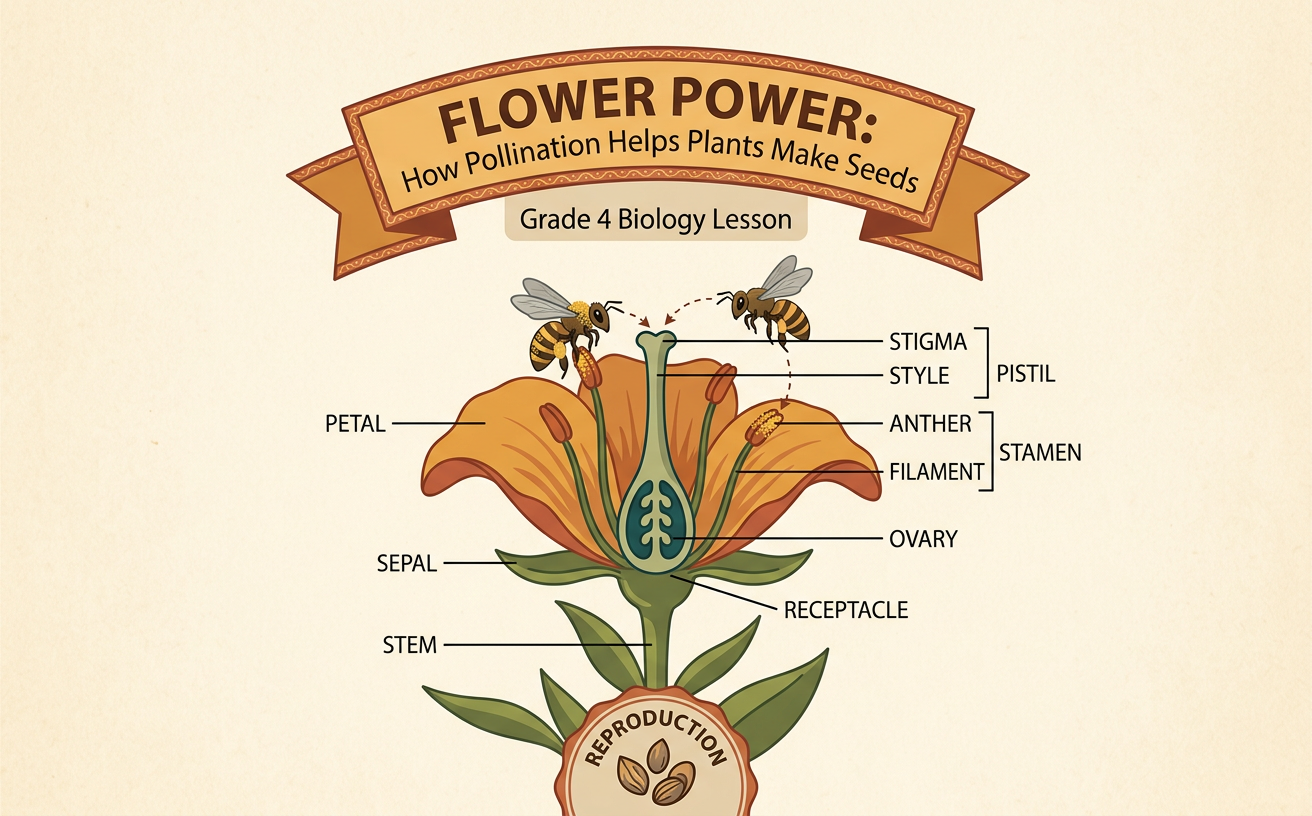
Flowering plants reproduce by making seeds, and pollination is an important step in that process. Pollination happens when pollen moves from an anther to a stigma of a flower of the same species. Pollen may move within one flower or between flowers. Animals such as bees, butterflies, moths, birds, and bats can carry it. Wind and water can also move pollen. A flower’s colors, scents, nectar, and shapes may attract animal pollinators. For example, when a bee enters an apple blossom to drink nectar, pollen sticks to its fuzzy body. At the next apple blossom, some pollen may rub onto the stigma. This transfer can eventually help the flower produce apple seeds. Evidence from this example shows that flower structures support plant reproduction.

Parts of a Flower
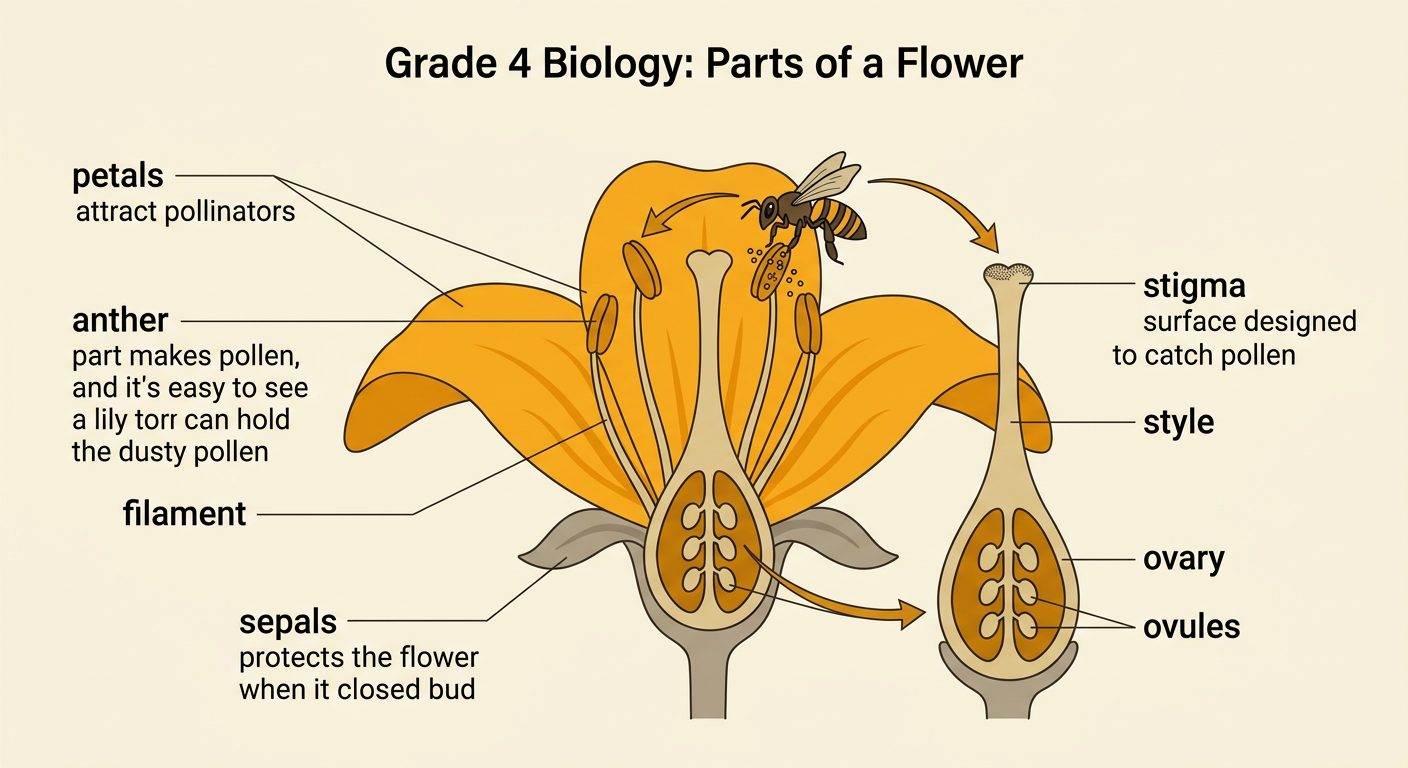
Each flower part has a job that can support reproduction. Colorful petals and sweet-smelling nectar may attract pollinators. Sepals protect the flower while it is still a bud. The anther produces pollen and sits at the top of a thin stalk called a filament. The stigma has a surface that can catch pollen. A style connects the stigma to the ovary. Inside the ovary are ovules, which can develop into seeds after fertilization. For example, a lily’s large anthers are easy to see because they hold dusty pollen. When an insect brushes against them, pollen can cling to its body. If the insect later touches a lily stigma, it may leave pollen there. The position of these flower parts makes pollen transfer more likely.
From Pollen to Seed
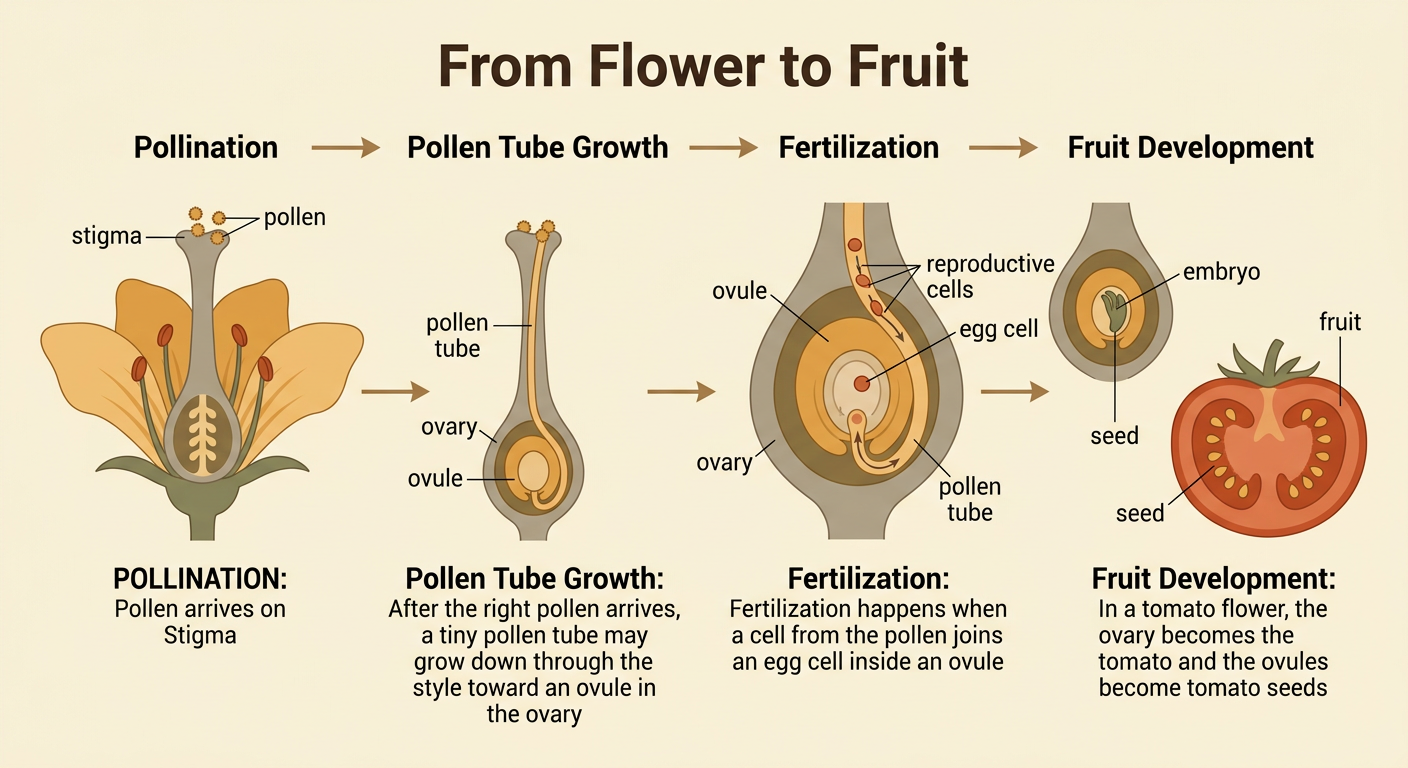
Pollination is the transfer of pollen, but it is not the same as fertilization. After the right kind of pollen lands on a stigma, a tiny pollen tube may grow down through the style toward an ovule in the ovary. Reproductive cells travel through this tube. Fertilization occurs when a cell from the pollen joins an egg cell inside an ovule. The fertilized ovule then develops into a seed containing a young plant, called an embryo, and stored food. The ovary often grows into a fruit that surrounds and protects the seeds. For example, after a tomato flower is pollinated and fertilized, its ovary grows into a tomato while its ovules become tomato seeds. With suitable water, air, and warmth, one of those seeds may later germinate and grow into a new plant.
Pollinators at Work
Pollinators visit flowers mainly to collect food such as nectar or pollen. As they feed, their bodies may pick up pollen and carry it to another flower. Different flower structures attract different pollinators. Bees often visit blue, purple, or yellow flowers and can see patterns that guide them toward nectar. Hummingbirds can reach nectar in long, tube-shaped flowers with their beaks. Some pale flowers open at night and release strong scents that attract moths or bats. For example, a hummingbird may push its head into a red tubular flower. The flower’s anthers brush pollen onto the bird’s head. At the next flower, the bird may touch the stigma and deposit pollen. Wind-pollinated plants, such as many grasses, usually produce large amounts of light pollen instead of relying on colorful petals.

Graphing Pollinator Visits
Scientists collect data to find patterns in pollinator behavior. Students can watch one flower patch for equal periods and record each pollinator’s visit length to the nearest one-fourth minute. The measurements can be displayed on a line plot. Write visit lengths along a number line, then place one X above the matching length for each visit. Suppose eight bee visits lasted 1/4, 1/2, 1/2, 3/4, 3/4, 3/4, 1, and 1 minute. The line plot would have one X at 1/4, two at 1/2, three at 3/4, and two at 1. The most common visit length was 3/4 minute. Students can also compare totals: the three 3/4-minute visits lasted 2 1/4 minutes altogether. These data provide evidence about how long bees used the flower patch.

How People Help Pollinators
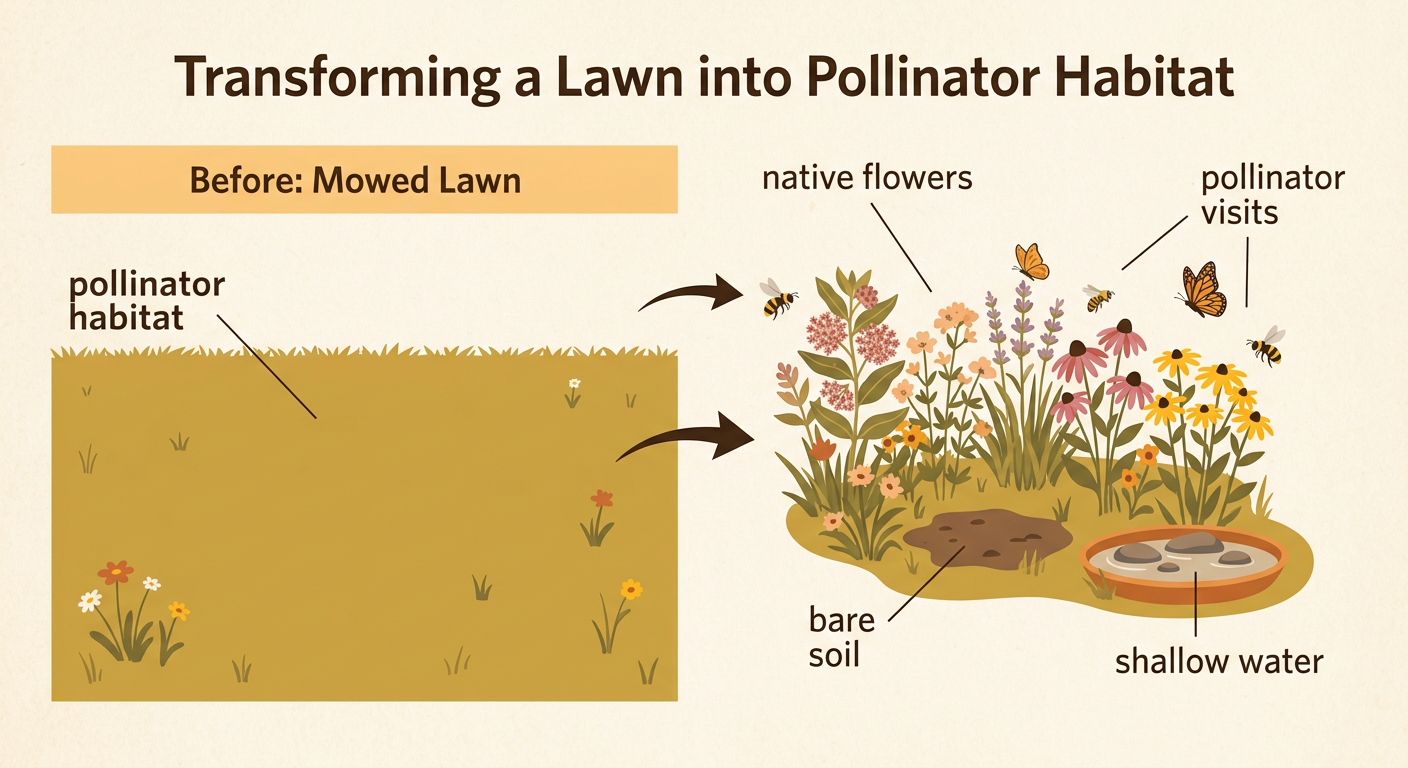
People change environments when they build roads, homes, farms, and lawns. These changes can remove flowers, nesting places, and water that pollinators need. People can also modify environments in helpful ways by creating pollinator habitats. A school might replace part of a mowed lawn with a garden of native flowering plants. Choosing several plant species that bloom in spring, summer, and fall provides food across many months. Leaving some bare soil can help ground-nesting bees, while shallow water dishes with stones can offer safe drinking places. Avoiding unnecessary pesticides also reduces harm. For example, students could map a sunny schoolyard area, plant native milkweed and other nectar flowers, and count pollinator visits before and after planting. An increase in visits would be evidence that the new habitat supports pollinators and plant reproduction.