Flowers and Pollinators: Partners in Plant Reproduction
Students model how flower structures, pollinators, and human choices work together to help flowering plants reproduce.
Illustrations are auto-generated and may be placeholders. They can be refreshed to match the narration.
Parts of a Flower
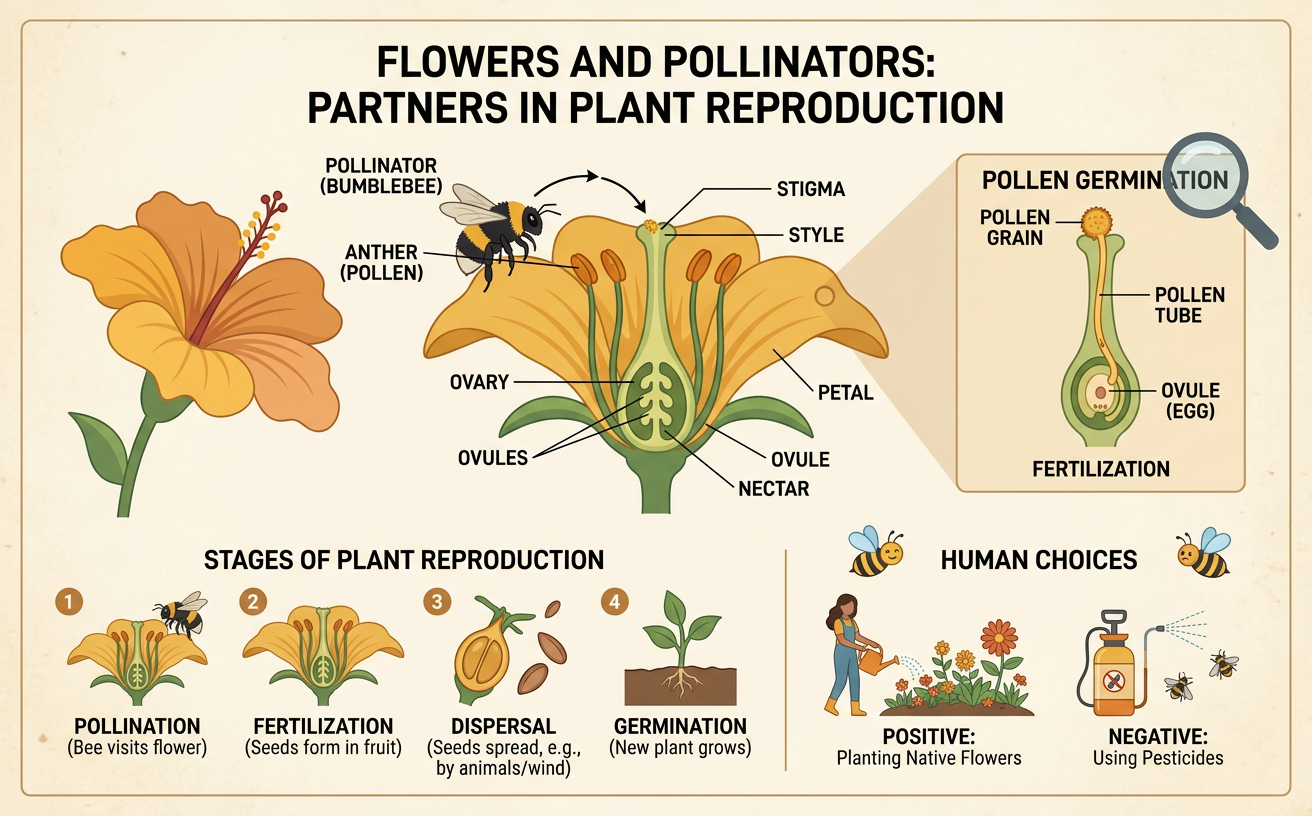
A flower has external structures that work together in plant reproduction. Sepals protect the flower before it opens. Petals may use bright colors, patterns, or scents to attract animals. The stamen is the male part. Its anther produces pollen, and its filament holds the anther up. The pistil is the female part. Its sticky stigma receives pollen, its style connects to the ovary, and the ovary contains ovules. After fertilization, an ovule can develop into a seed. Some flowers also make nectar, a sugary liquid that attracts pollinators. For example, a bee visiting an apple blossom for nectar may brush against the anthers and pick up pollen. Each flower structure has a form that supports the plant’s ability to reproduce.

Pollen’s Journey
Pollination begins when pollen moves from an anther to a stigma of a flower of the same kind of plant. Pollen may travel by wind, water, or an animal. If a pollen grain lands on a suitable stigma, it can grow a tiny pollen tube down through the style toward an ovule in the ovary. Sperm cells travel through this tube. When a sperm cell joins an egg cell inside an ovule, fertilization occurs. The fertilized ovule can then develop into a seed, and the ovary may develop into a fruit. For example, pollen carried between two pumpkin flowers can help a pumpkin plant produce seeds inside a pumpkin. Pollination and fertilization are related, but they are not the same event.

How Pollinators Help
Pollinators are animals that carry pollen between flowers as they search for food. Bees, butterflies, moths, beetles, hummingbirds, and some bats can be pollinators. When a bee enters a flower to collect nectar or pollen, grains may stick to hairs on its body. At the next flower of the same plant species, some grains may rub onto the stigma. This transfer helps the plant reproduce, while the bee receives food. Flower structures often match the behavior or body shape of their pollinators. For example, a hummingbird’s long bill can reach nectar deep inside a tube-shaped flower. As the bird feeds, its head touches the anthers and stigma. This interaction shows how animal behaviors and plant structures can work together to support reproduction and survival.

Modeling Pollination
A model can help explain how flower structures and pollinator movement cause pollen transfer. Make two paper flowers of the same type. Mark the anthers on each flower and place a small amount of colored powder on them. Mark the stigma in the center of each flower. Use a cotton swab as the pollinator. Touch it to the anthers of the first flower, then move it to the stigma of the second flower. The powder left on the stigma represents pollination. Repeat the test without touching an anther first and compare the results. For example, the clean swab should leave little or no powder on the second stigma. The model supports the claim that contact with anthers and movement between flowers help pollen reach a stigma, although real pollinators move on their own.

People and Pollinator Habitats
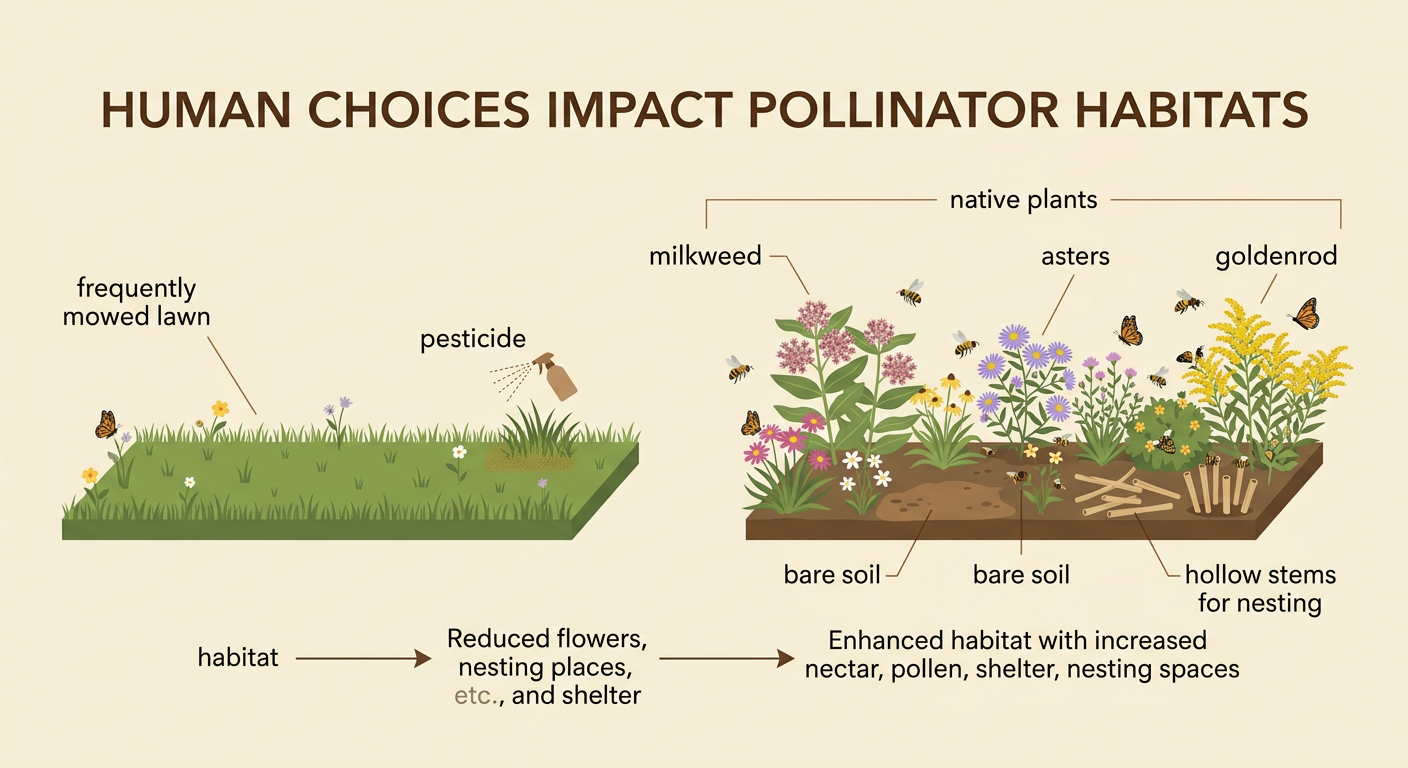
People modify environments based on their needs, traditions, and values. Farmers may plant large fields for food production, families may prefer closely cut lawns, and communities may build roads or neighborhoods. These choices can reduce the flowers, nesting places, and shelter pollinators need. Other cultural choices can create habitat. People can grow native flowering plants, leave some hollow stems or bare soil for nesting bees, reduce pesticide use, and provide flowers across different seasons. For example, a school community might replace part of a lawn with a garden containing native milkweed, asters, and goldenrod. Students could observe more butterflies and bees using the area. Human choices therefore influence where pollinators can live and find food, which can also affect the reproduction of wild plants and food crops.