Follow Words from Left to Right
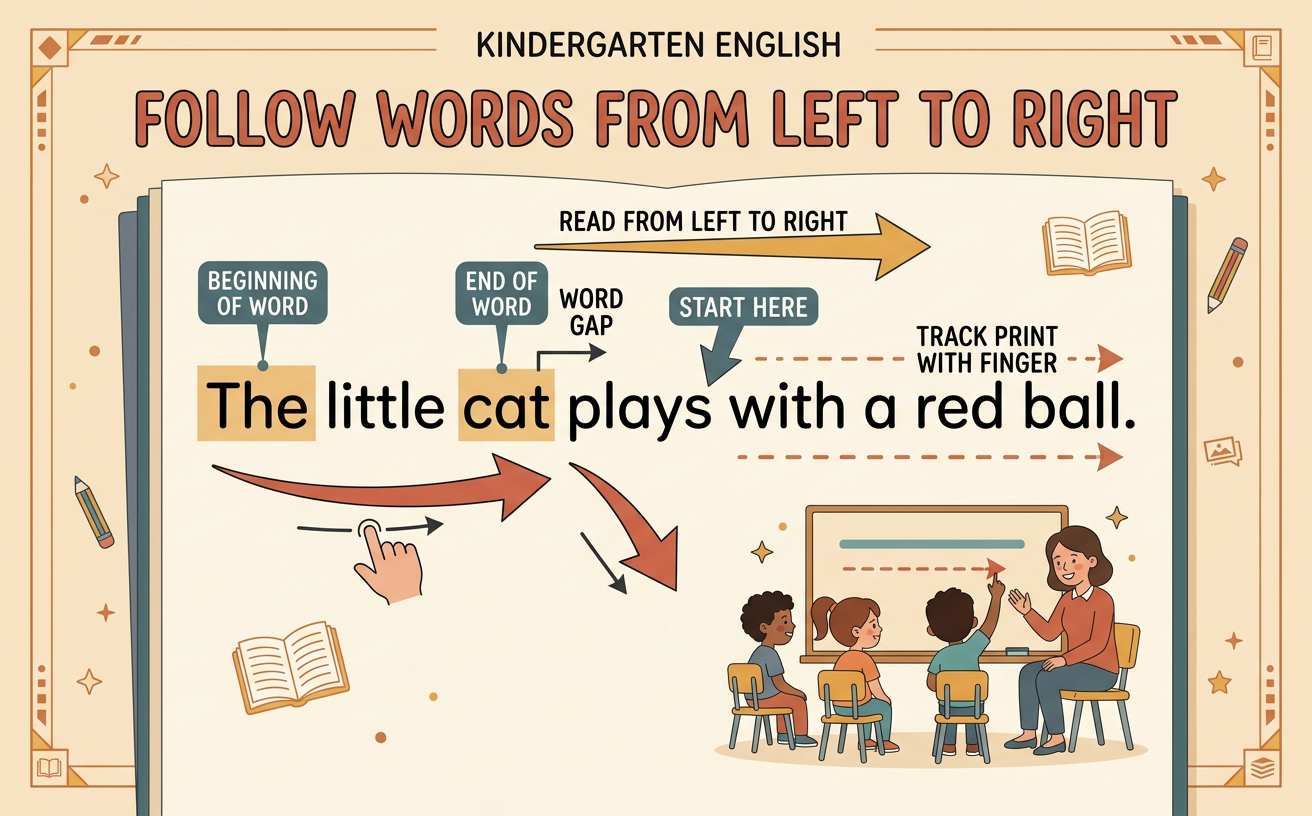
Students practice tracking print from left to right and top to bottom while identifying where words begin and end in a simple sentence.
Illustrations are auto-generated and may be placeholders. They can be refreshed to match the narration.
Explore How Print Moves
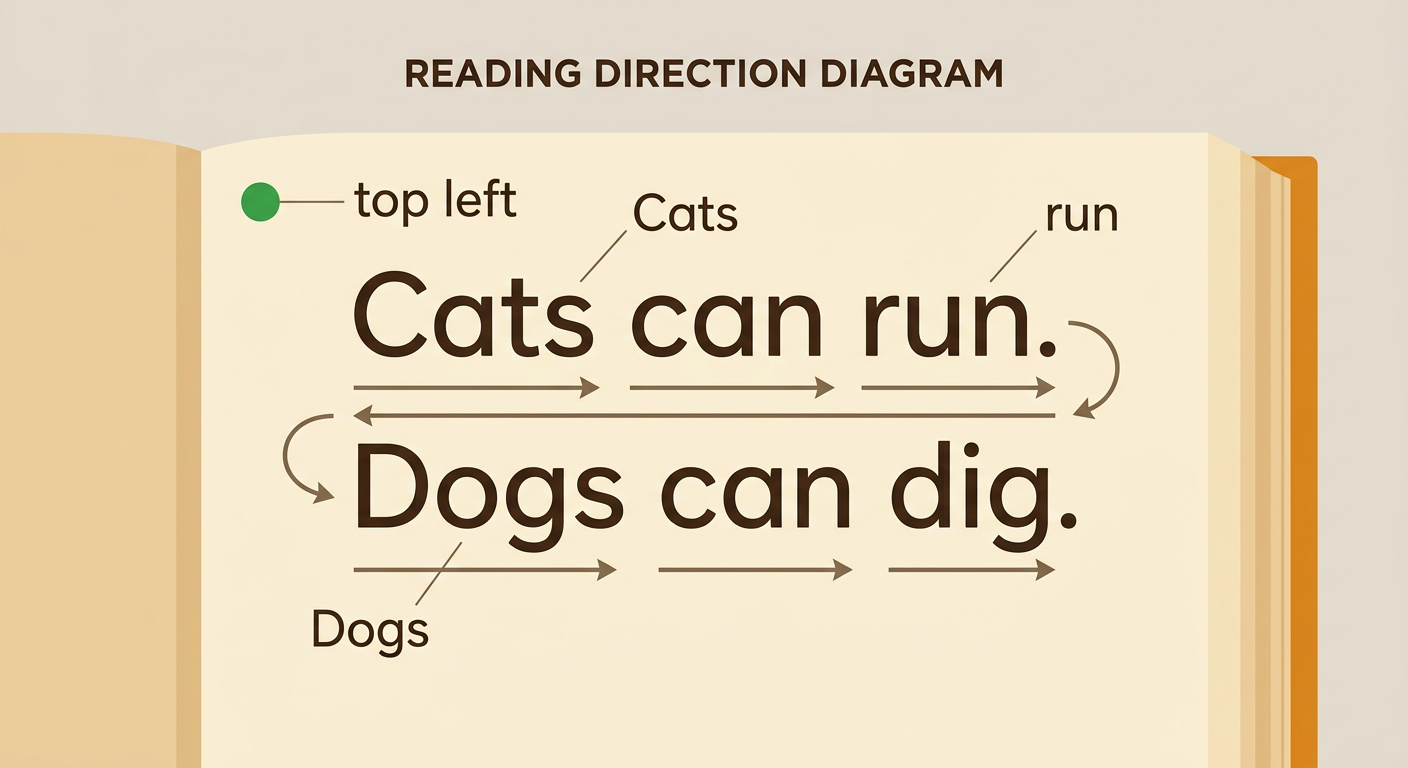
When you look at a page, begin near the top left. English print moves from left to right across each line. Your eyes follow the words in that direction. When you reach the last word on one line, move down to the left side of the next line. Then begin moving right again. Try it with these two lines: “Cats can run.” “Dogs can dig.” Start at “Cats,” move across the first line, and stop after “run.” Next, move down and back to the left. Begin the second line at “Dogs.” This path helps you read the words in the correct order.
Model Left-to-Right Tracking
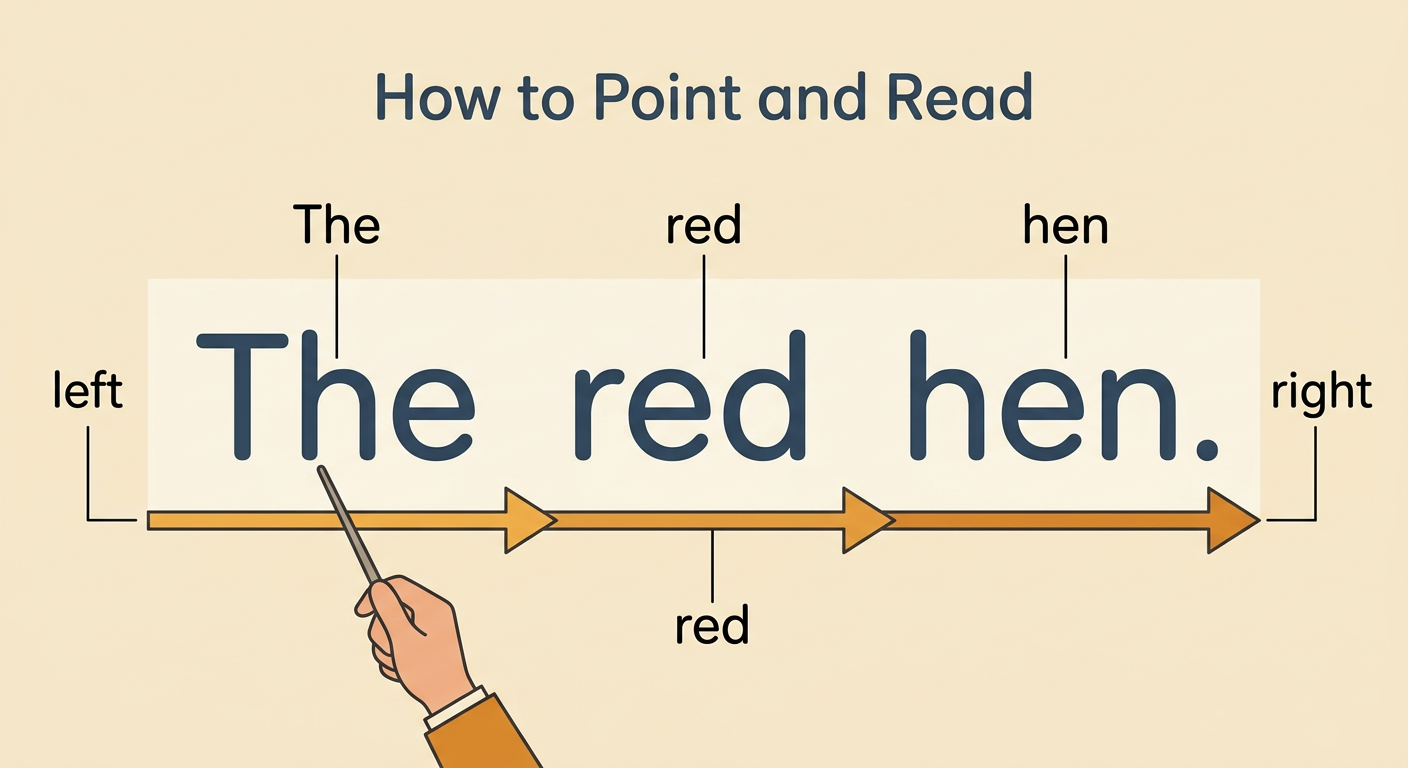
Watch as the teacher reads, “The red hen.” The teacher places a finger or pointer under “The,” the first word. As the teacher says each word, the pointer slides to the right: “The,” “red,” “hen.” The pointer does not jump ahead or move backward. It stays under the word being spoken. Now trace the same path in the air with your finger. Begin on the left under “The.” Move right under “red,” and finish under “hen.” Pointing to each word helps your eyes and voice work together. Remember that the first word is on the left and the last word is on the right.
Find Spaces Between Words
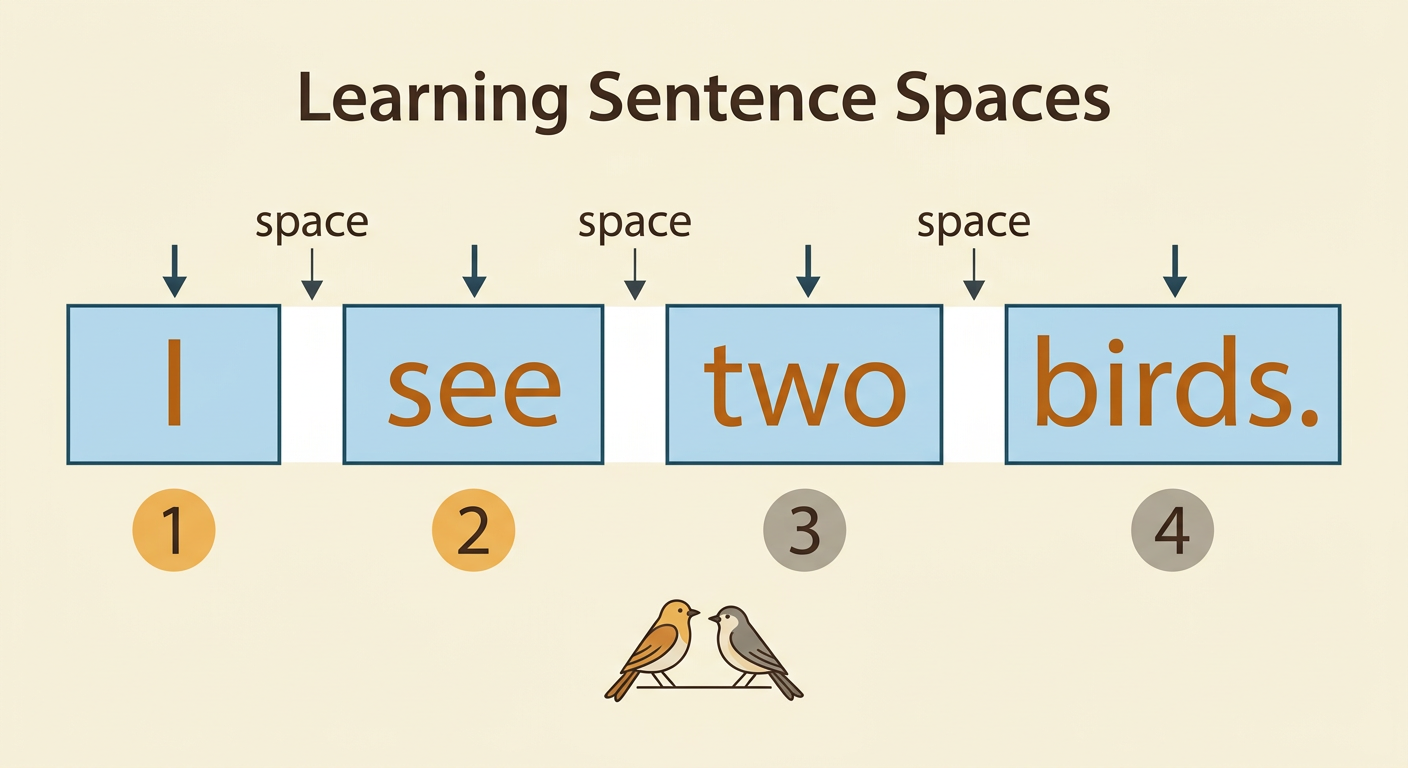
A sentence is made of words placed in order. A blank space separates one word from the next word. Look at the sentence, “I see two birds.” The first word, “I,” begins at the left. A space comes after it. Then you see “see,” another space, “two,” another space, and “birds.” The spaces show where each word ends and the next word begins. Slide your finger under the sentence from left to right. Pause briefly at each space. Count the words by touching each one: “I” is one, “see” is two, “two” is three, and “birds” is four. Do not count the spaces as words.
Track a Shared Sentence
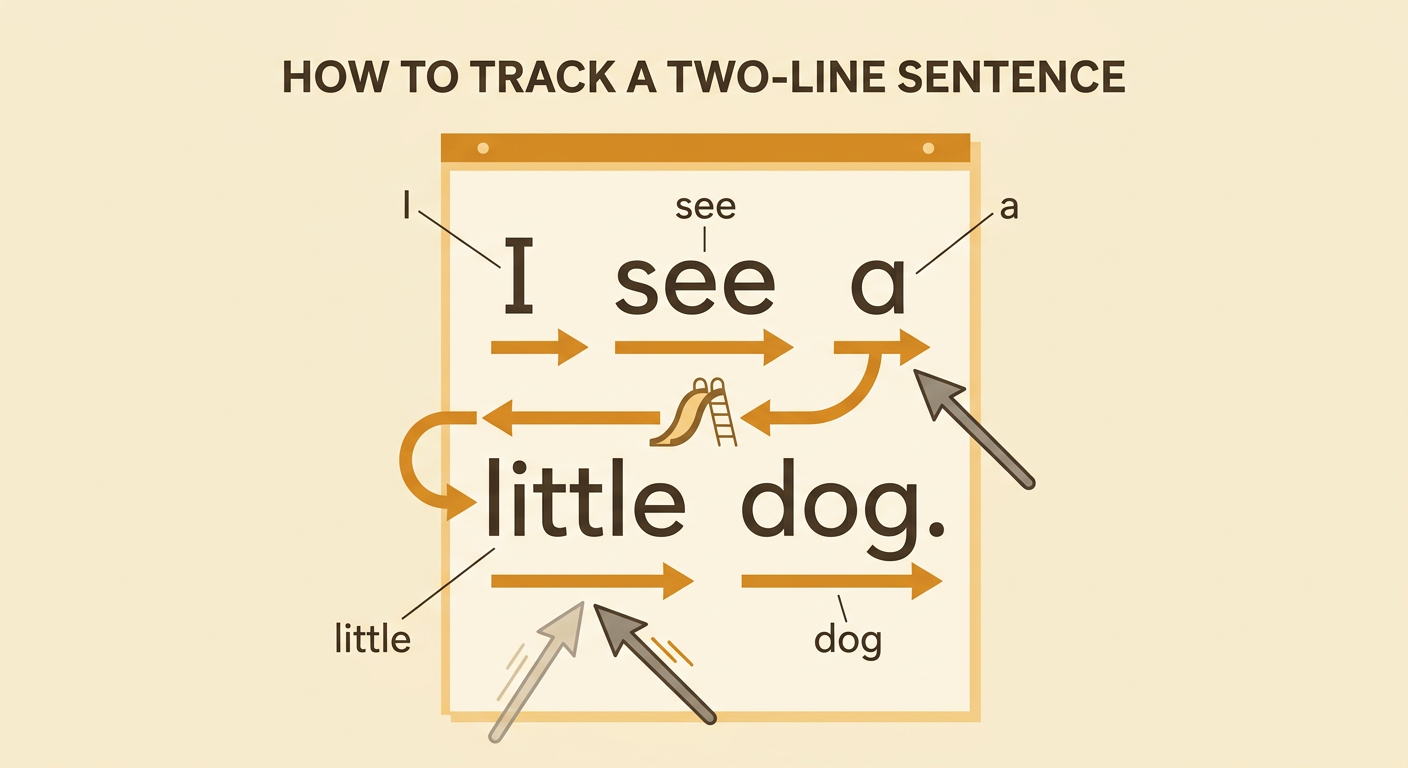
Read this shared sentence with the class: “I see a little dog.” The sentence is shown on two lines. The first line says, “I see a,” and the second line says, “little dog.” Begin at the top left and point to “I.” Move right as the class reads “see” and “a.” At the end of the first line, sweep your pointer down and back to the left. Begin the next line at “little,” and then move right to “dog.” Your pointer should match each spoken word. This movement follows print from left to right and from the top line to the bottom line.
Practice with a Partner
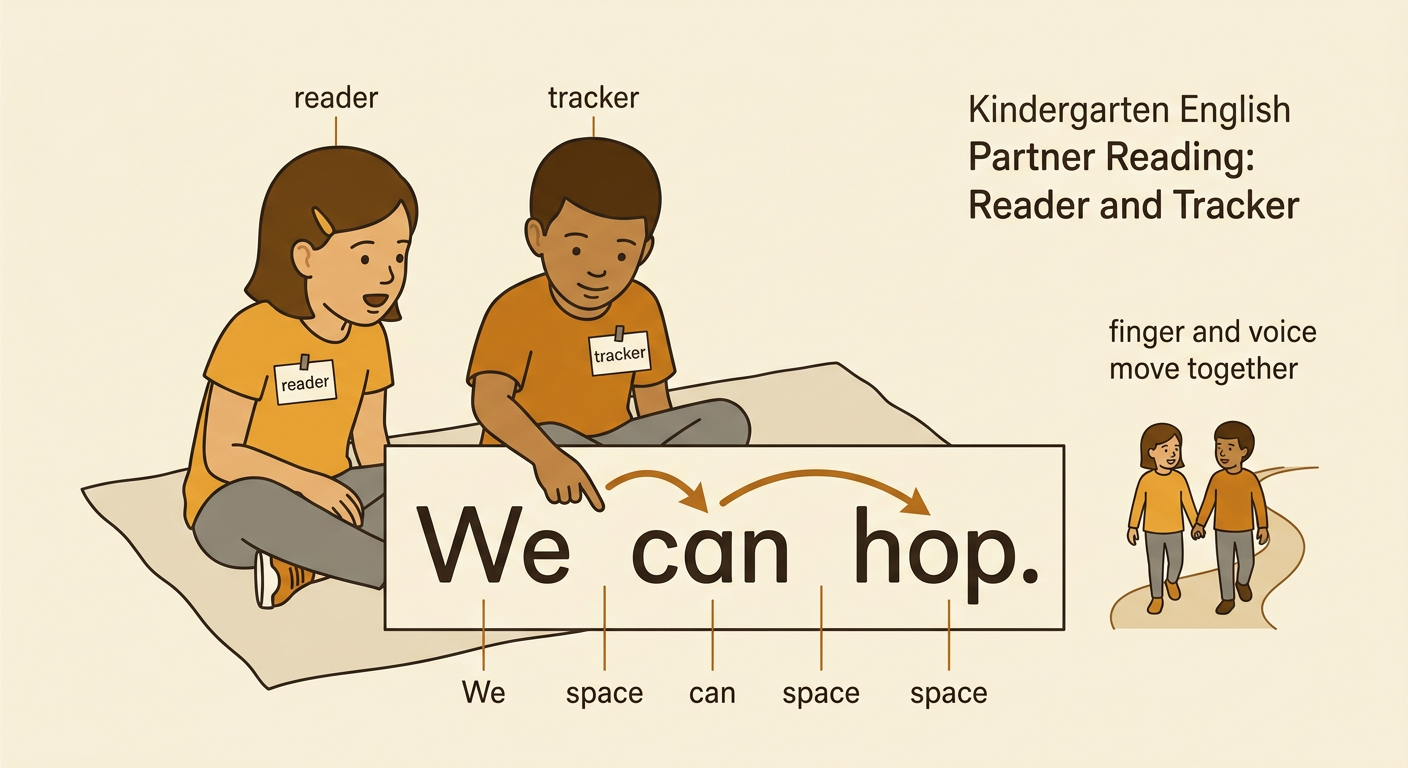
Work with a partner and use the sentence, “We can hop.” One partner is the reader, and the other partner is the tracker. The tracker places a finger under “We” and moves from left to right as the reader says each word. Both partners check that the finger stops under “can” and then “hop.” Next, find the spaces between the three words. Point to the first word and the last word. Then switch jobs so each partner gets a turn reading and tracking. Help each other by saying, “Start on the left,” or, “Move to the next word.” Careful partners move slowly and match one spoken word to one printed word.
Review Print Direction
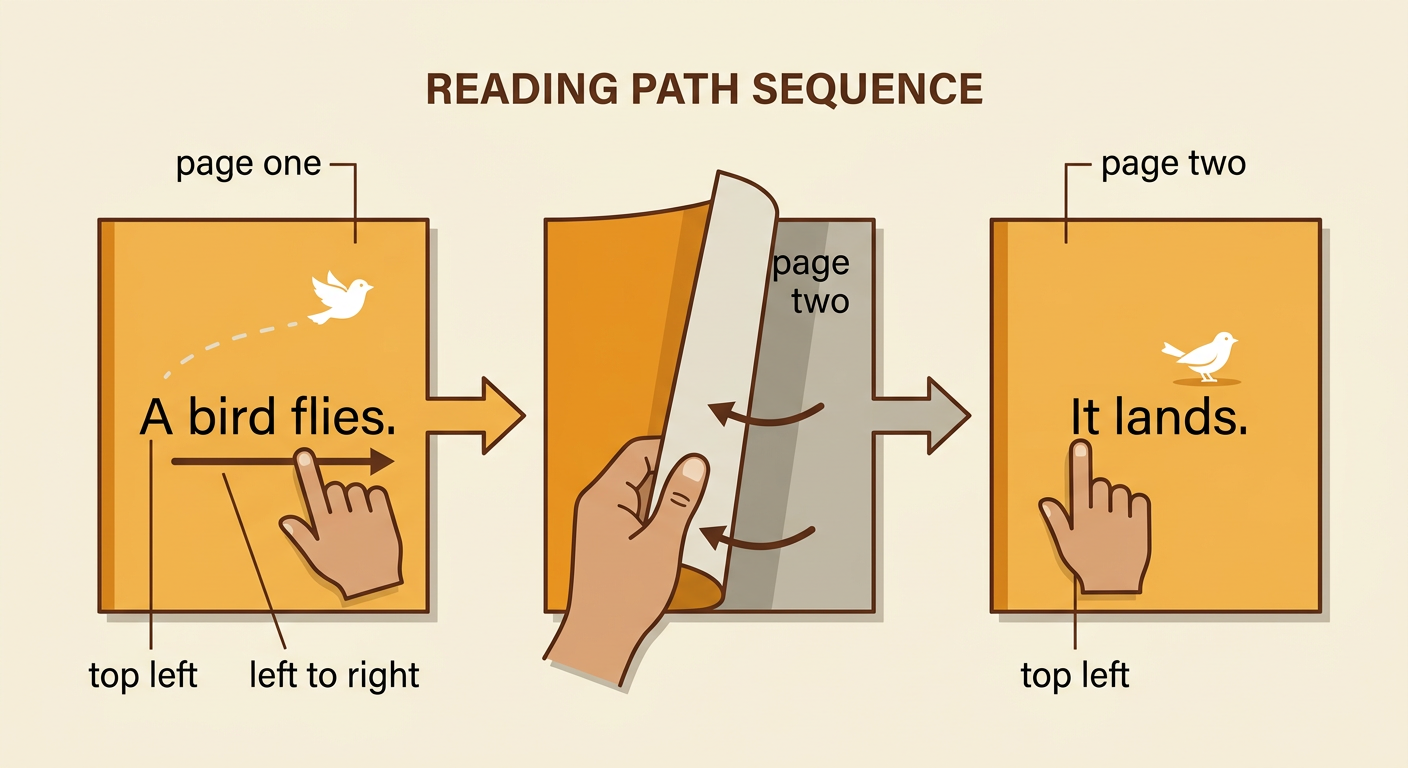
Remember the path that print follows. Start at the top left of a page. Follow the words from left to right. At the end of a line, move down and return to the left side of the next line. Read each line from top to bottom. In a book, finish one page before turning to the next page. Imagine a small book with these pages: page one says, “A bird flies.” Page two says, “It lands.” Track “A bird flies” from left to right. Then turn the page and begin at the top left again to read “It lands.” Use your eyes, finger, or pointer to keep your place.