Food and Feathers: Why Flamingos Turn Pink
Students analyze diet and feather-color evidence to explain how food in a flamingo’s environment can influence an observable trait.
Illustrations are auto-generated and may be placeholders. They can be refreshed to match the narration.
Gray Chicks and Pink Adults
Flamingo chicks do not hatch with bright pink feathers. Most chicks have soft white or gray down. As they grow, their feathers slowly change color. An adult flamingo may be pale pink, bright pink, or reddish. This change is influenced by the food available in the flamingo’s environment. Flamingos can use pigments from certain foods to color their new feathers. A pigment is a substance that gives something color. For example, a young gray flamingo that regularly eats pigment-rich foods may grow pink feathers when it molts, or replaces old feathers. The food does not change the bird into a different kind of animal. Instead, the environment influences one observable trait: feather color. Genes help flamingos process the pigments, while diet affects how much pink color appears.

Pigments in Wetland Foods
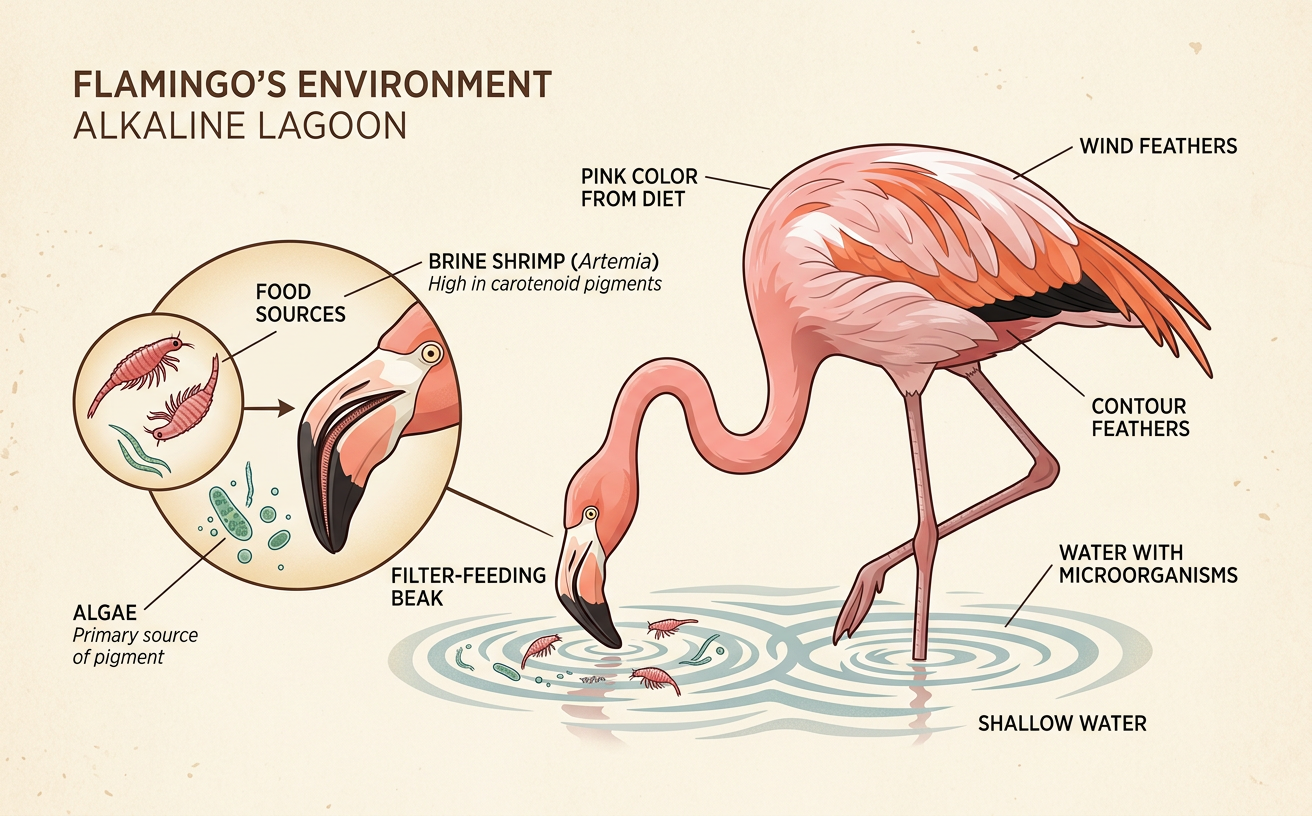
Flamingos live near salty lakes, lagoons, and other wetlands. These environments can contain algae and tiny animals such as brine shrimp and small crustaceans. Many of these foods contain red, orange, or yellow pigments called carotenoids. Flamingos filter food from the water with their specialized bills. After a flamingo eats carotenoid-rich food, its body breaks down and uses the pigments. Some pigment is placed in growing feathers, skin, and the bill. For example, brine shrimp may eat microscopic algae that contain carotenoids. A flamingo then eats the brine shrimp and receives those pigments. Wetlands do not all have the same water conditions or food supply. Therefore, flamingos in different places may eat different amounts of pigment-rich food and may show different shades of pink.

Read the Diet-and-Color Graph
A bar graph can help us look for a relationship between diet and feather color. Imagine that caretakers recorded three flamingo groups eating balanced diets with different amounts of carotenoid-rich food. Group A received 2 scoops each day and had a feather-color score of 1, meaning very pale pink. Group B received 4 scoops and had a color score of 2. Group C received 6 scoops and had a color score of 3, meaning brighter pink. Each graph square represents one scoop or one color point. Group C received 4 more scoops than Group A and had a color score 2 points higher. The pattern shows that groups eating more pigment-rich food had brighter feathers. A graph shows a relationship, but scientists also consider age, health, species, and other evidence before deciding on a cause.

Connect Environment and Traits
An environment includes the water, land, climate, food, and living things around an organism. For flamingos, wetland conditions affect which foods are available. A wetland with many algae and brine shrimp may provide more carotenoid pigments than a wetland with fewer of these foods. Flamingos feeding in the first wetland may develop brighter pink feathers. Those feeding where pigment-rich food is scarce may remain paler. This is a cause-and-effect chain: wetland conditions influence food supply, food supply influences diet, and diet influences feather color. The environment affects the trait, but it does not change the flamingo’s parents or genes. Wetland characteristics also influence where flamingo populations gather. For example, a large shallow lake with suitable food and safe nesting areas can support many flamingos, while a deep lake with little usable food may support fewer.

Explain the Flamingo Evidence
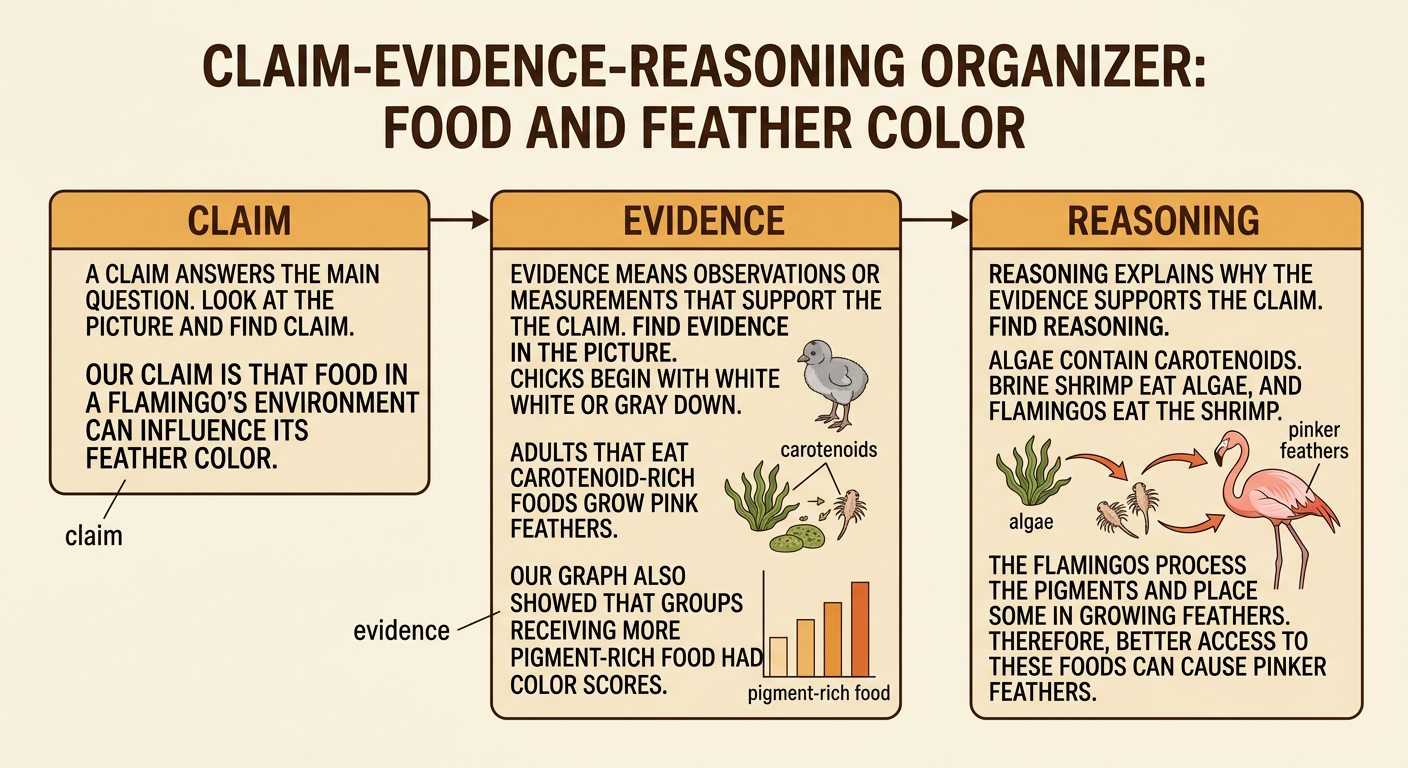
A strong scientific explanation includes a claim, evidence, and reasoning. A useful claim is: Food in a flamingo’s environment can influence its feather color. Evidence includes the observation that chicks begin with white or gray down, adults eating carotenoid-rich foods grow pink feathers, and groups receiving more pigment-rich food can have higher color scores. The reasoning connects these facts. Algae and small wetland animals contain carotenoid pigments. Flamingos eat these foods, process the pigments, and place some pigment in growing feathers. Therefore, access to these foods can cause feathers to become pinker. For example, if a wetland loses many algae and brine shrimp, flamingos may receive less pigment and grow paler replacement feathers. This evidence supports environmental influence, not the idea that food is the only factor. Age, health, species, and genes can also affect color.