Forces, Motion, and Seat Belt Safety
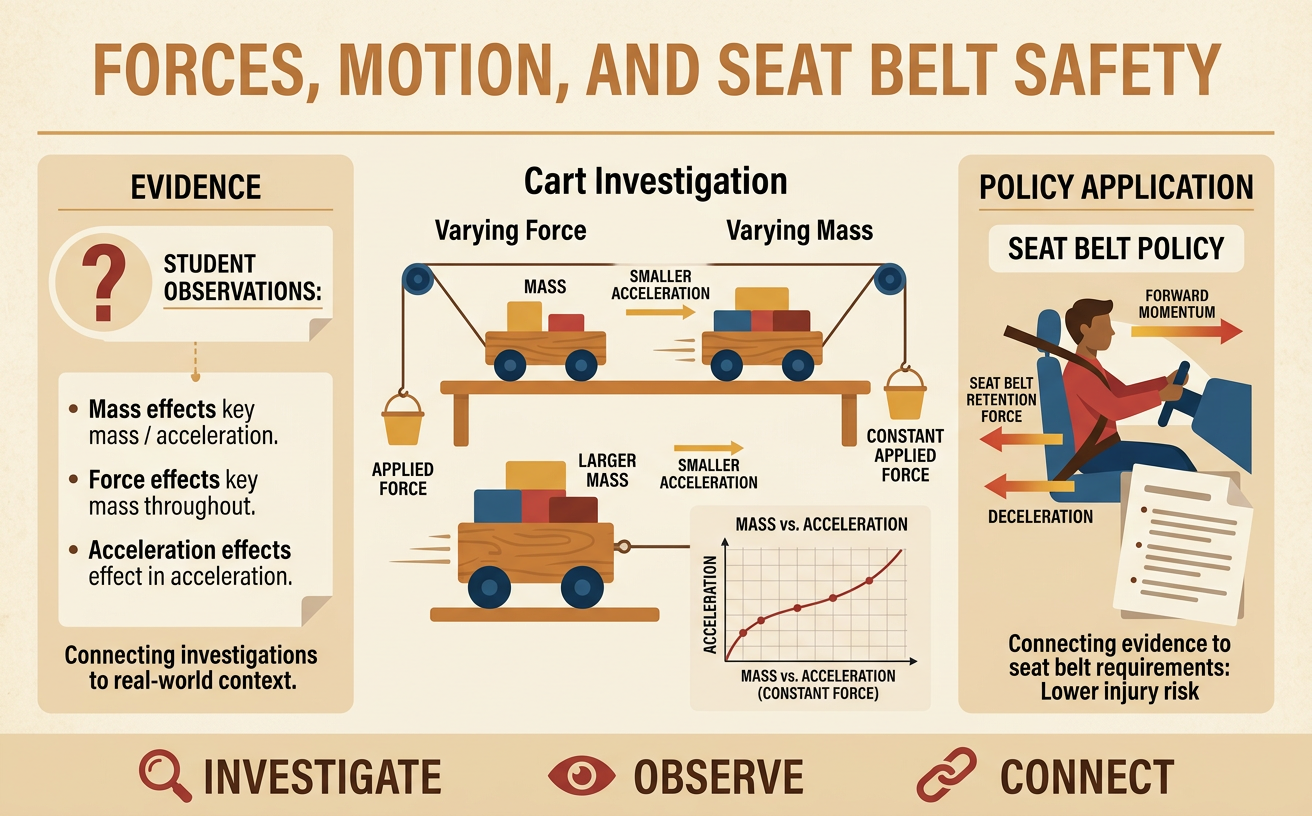
Students use a simple cart investigation to examine how force and mass affect motion and connect their evidence to seat belt safety policies.
Illustrations are auto-generated and may be placeholders. They can be refreshed to match the narration.
Motion and Force Warm-Up
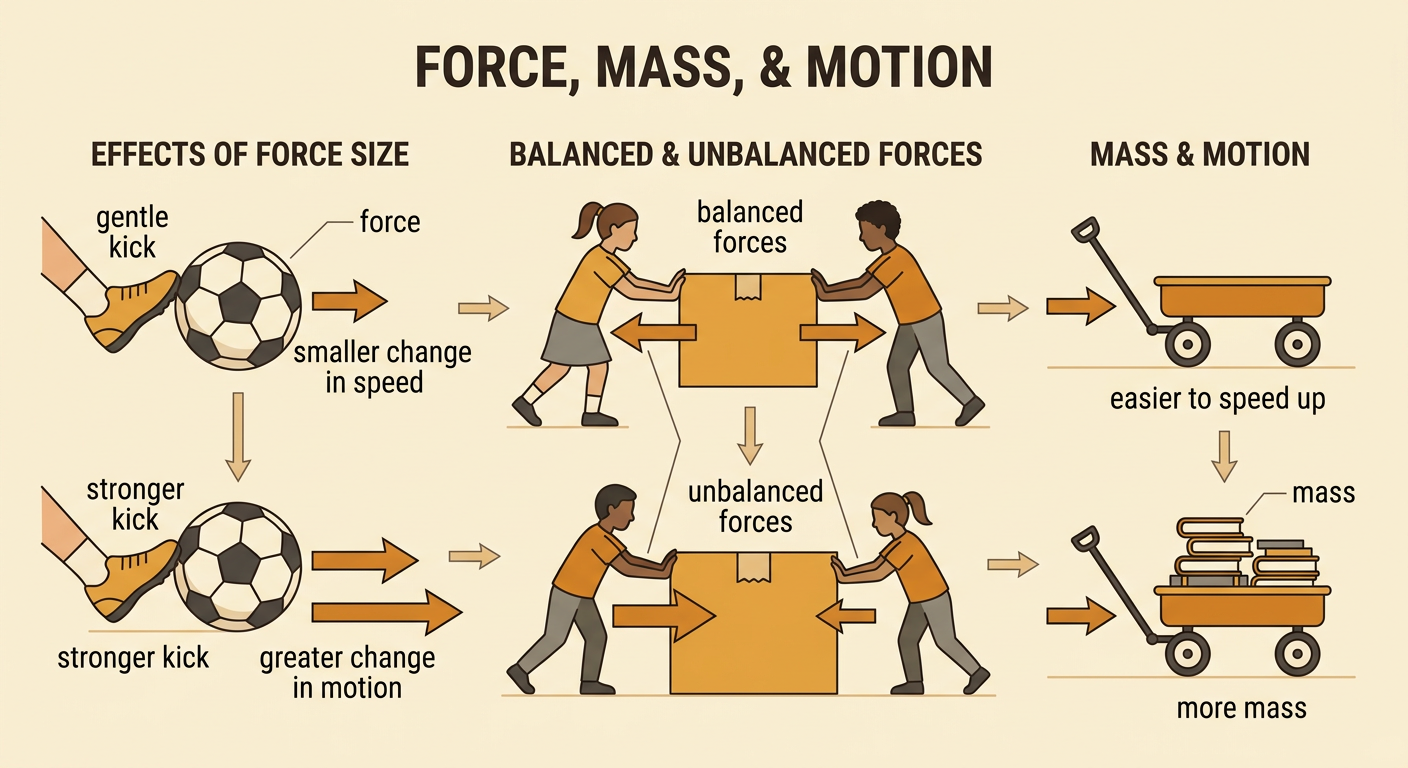
Motion is a change in an object’s position over time. A force is a push or pull that can change an object’s speed or direction. Imagine a soccer ball resting on grass. A gentle kick makes it move slowly, while a stronger kick usually causes a greater change in motion. Forces also have direction. If two students push a box from opposite sides with equal force, the pushes balance and the box does not accelerate. If one student pushes harder, the forces are unbalanced and the box accelerates toward the stronger push. Mass matters too. An empty wagon is easier to speed up than the same wagon loaded with books. During this lesson, look for evidence showing how the total force and an object’s mass affect its change in motion.
Cart-and-Mass Investigation
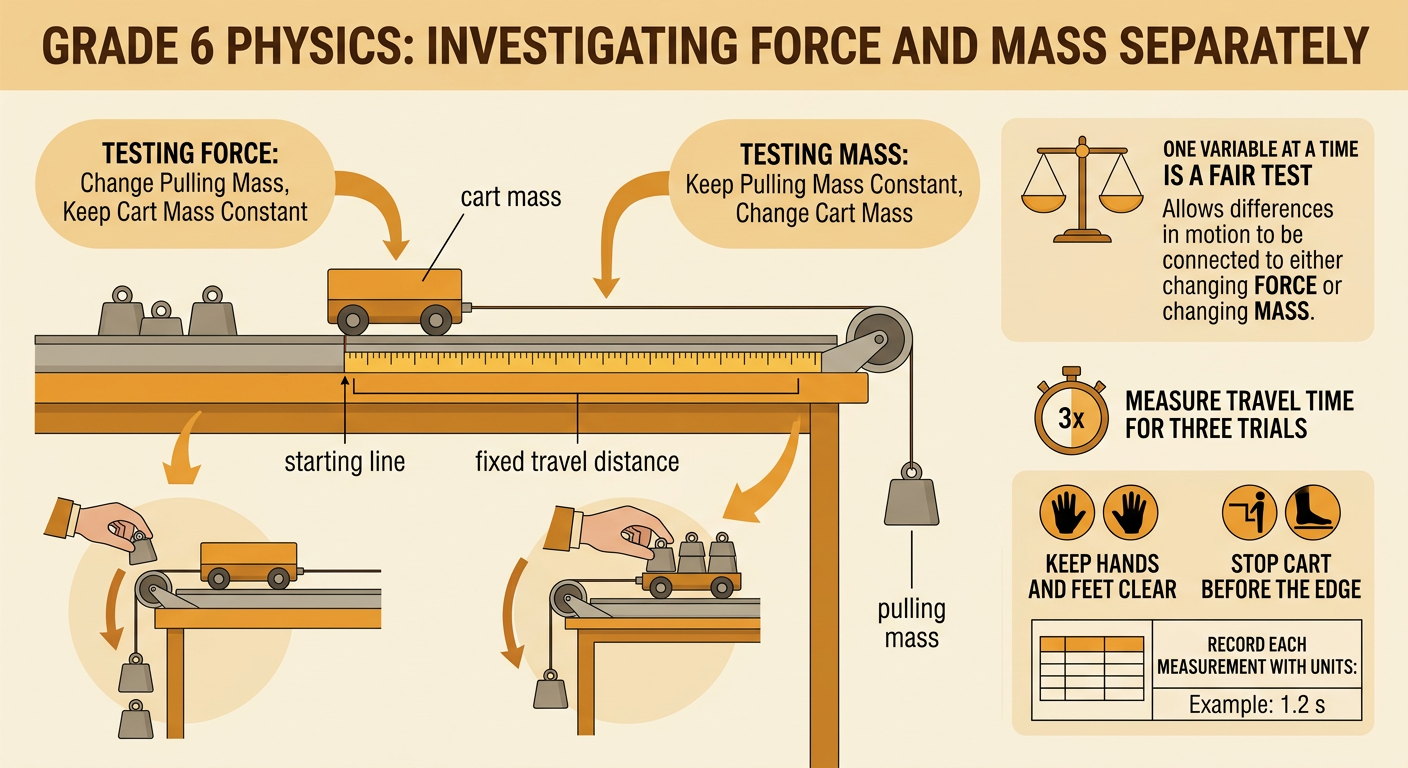
Work with a small cart, identical masses, a meter tape, and a safe pulling system such as a hanging mass attached by string. First, mark a starting line and a fixed travel distance. Test the cart with one pulling mass, release it without pushing, and record the travel time. Repeat three times. Next, increase the pulling force while keeping the cart’s mass constant. Then return to the original pulling force, add mass to the cart, and repeat the trials. Change only one variable at a time so the comparison is fair. Keep hands and feet away from the cart’s path, and stop the cart before it reaches the table edge. Record every measurement with units. For example, write 1.2 seconds, not simply 1.2.
Compare Force and Motion Data
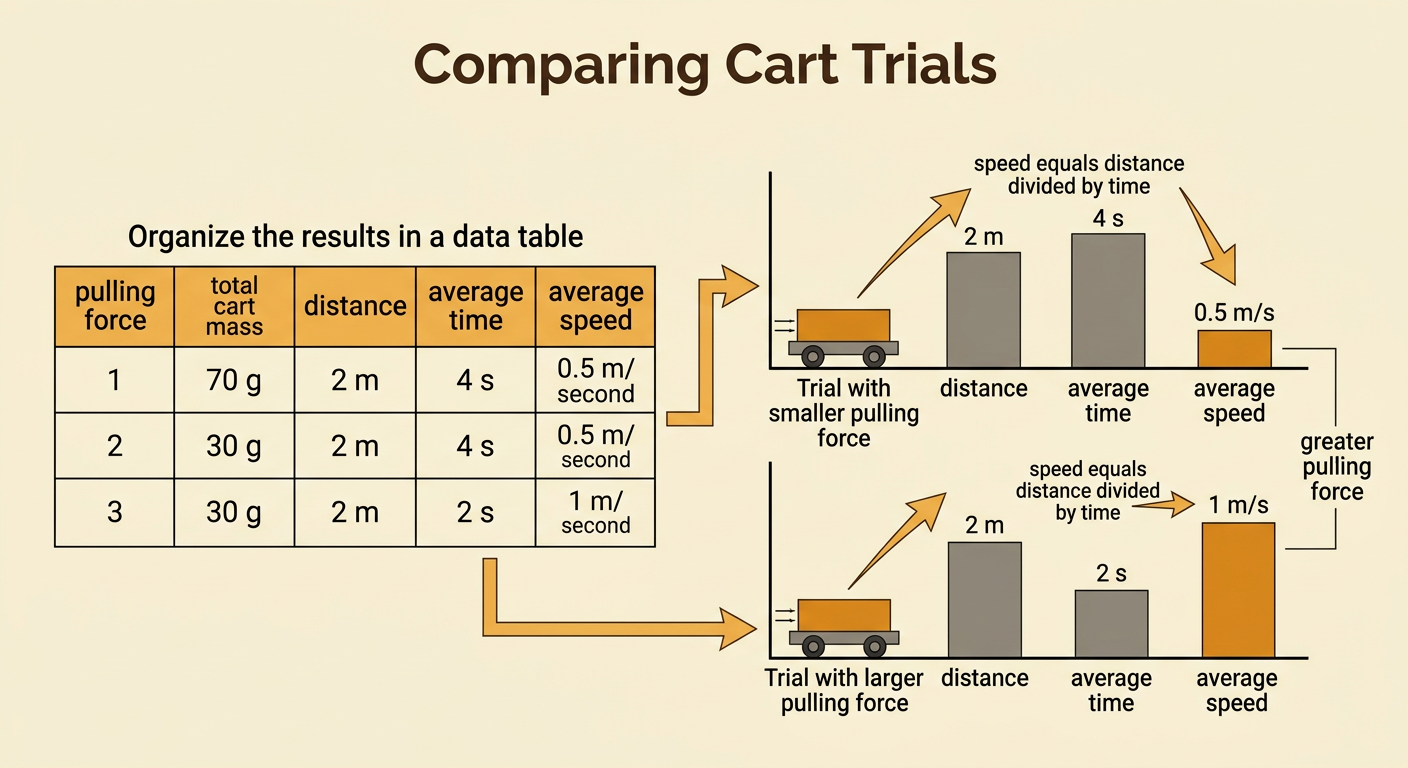
Organize the results in a table with pulling force, total cart mass, distance, and average time. Find each average by adding the three trial times and dividing by three. You can also compare average speed using speed equals distance divided by time. Suppose a cart travels 2 meters in 4 seconds with one pulling mass. Its average speed is 2 ÷ 4, or 0.5 meter per second. If a larger pulling force moves the same cart 2 meters in 2 seconds, its average speed is 1 meter per second. The speed ratio is 1 to 0.5, or 2 to 1. Look for patterns rather than relying on one trial. A shorter time over the same distance provides evidence of a greater change in motion. Added cart mass will generally reduce that change when the pulling force stays constant.
Explain Balanced and Unbalanced Forces
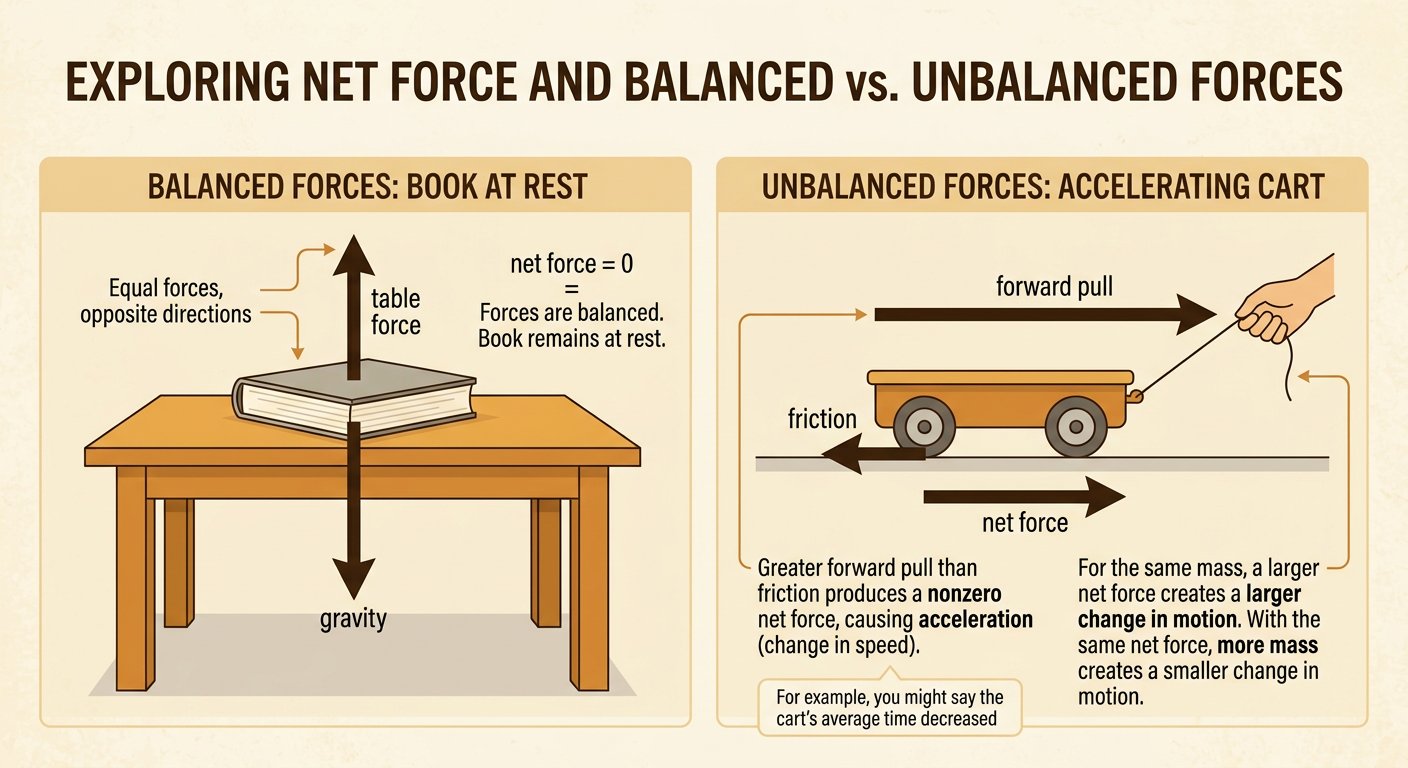
The net force is the sum of all forces, including their directions. Balanced forces have a net force of zero, so they do not change an object’s motion. A book resting on a table has gravity pulling downward and the table pushing upward with an equal force. The book remains at rest. Unbalanced forces have a nonzero net force and cause acceleration, which means a change in speed or direction. In the cart investigation, the forward pull must be greater than opposing forces such as friction for the cart to speed up. A larger net force produces a larger change in motion for the same mass. With the same net force, a cart with more mass has a smaller change in motion. Your explanation should cite measurements from the investigation, such as average times or speeds, as evidence.
Connect Evidence to Seat Belt Safety
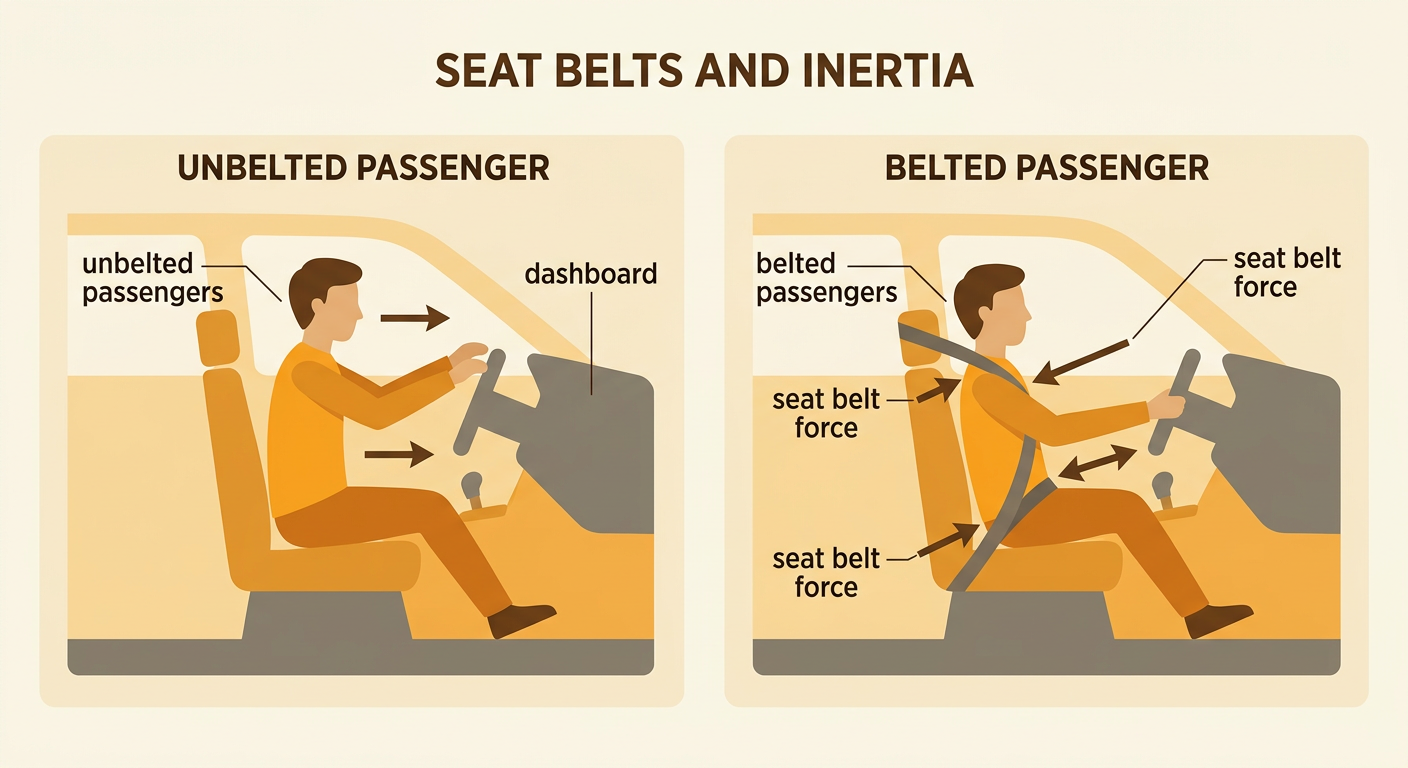
When a car stops suddenly, a passenger’s body tends to keep moving forward. A seat belt provides the force needed to slow the passenger with the car. It spreads that force across strong parts of the body and helps prevent contact with the dashboard or windshield. This evidence supports seat belt laws and school transportation rules. Their purpose is to reduce injuries and deaths. Implementation may include required belt installation, posted reminders, driver checks, education, and fines for violations. Consequences include increased belt use and safer travel, although enforcement costs money and may raise debates about personal choice. Evaluate the policy using reliable crash data and evidence about motion. For example, compare injury rates for belted and unbelted passengers while considering factors such as vehicle type, speed, and seating position.