Fossil Detectives: Clues to Ancient Environments
Students analyze fossil images, text, location maps, and a simple data graph to infer what organisms and environments existed long ago.
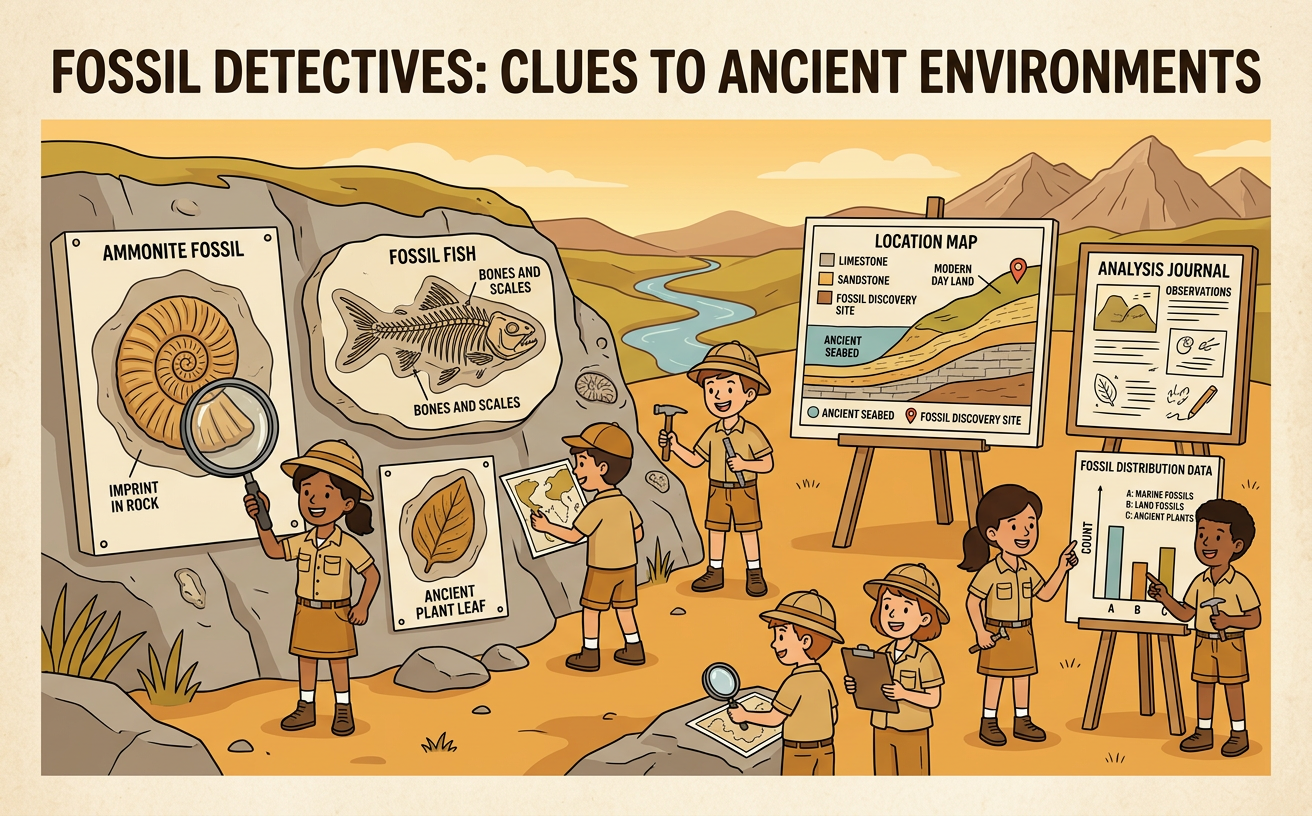
Illustrations are auto-generated and may be placeholders. They can be refreshed to match the narration.
What Can Fossils Tell Us?
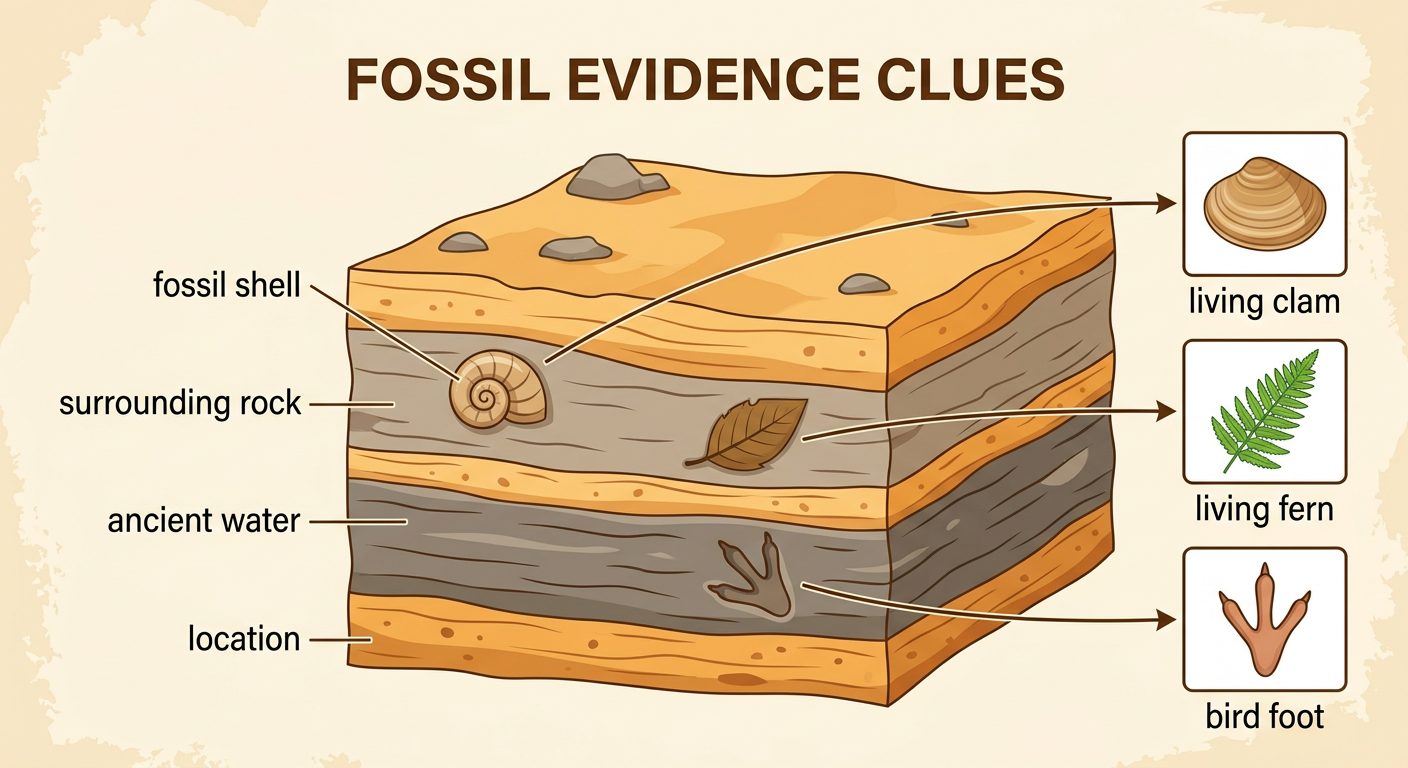
Fossils are preserved remains or traces of organisms that lived long ago. Bones, shells, teeth, leaves, footprints, and burrows can become fossils. Each fossil is a clue about a past organism and the environment where it lived. For example, scientists might find fossil seashells in rock far from today’s ocean. The shells are evidence that water probably covered that place long ago. Fossils do not show every detail of the past because many organisms never became fossils. Earth’s surface can also change over time as land rises, water moves, and rock wears away. Fossil detectives therefore study several clues together. They compare fossils with living organisms, examine the surrounding rock, and record where each fossil was found before making an explanation.
Observe Fossil Clues
Begin by observing exactly what you can see. Look closely at a fossil’s shape, size, pattern, edges, and parts. An observation is a fact noticed with the senses or measured with a tool. An inference is an idea that explains the observation. Suppose a fossil is curved, is five centimeters wide, and has raised lines that spiral from its center. Those details are observations. You might infer that it was a shell because it resembles shells from some animals living today. Record the observations before making the inference. Use careful words such as “has,” “measures,” and “shows” for observations. Use phrases such as “may have been” or “this suggests” for inferences. This separation helps fossil detectives avoid treating a first guess as a proven fact.

Read and Map the Evidence
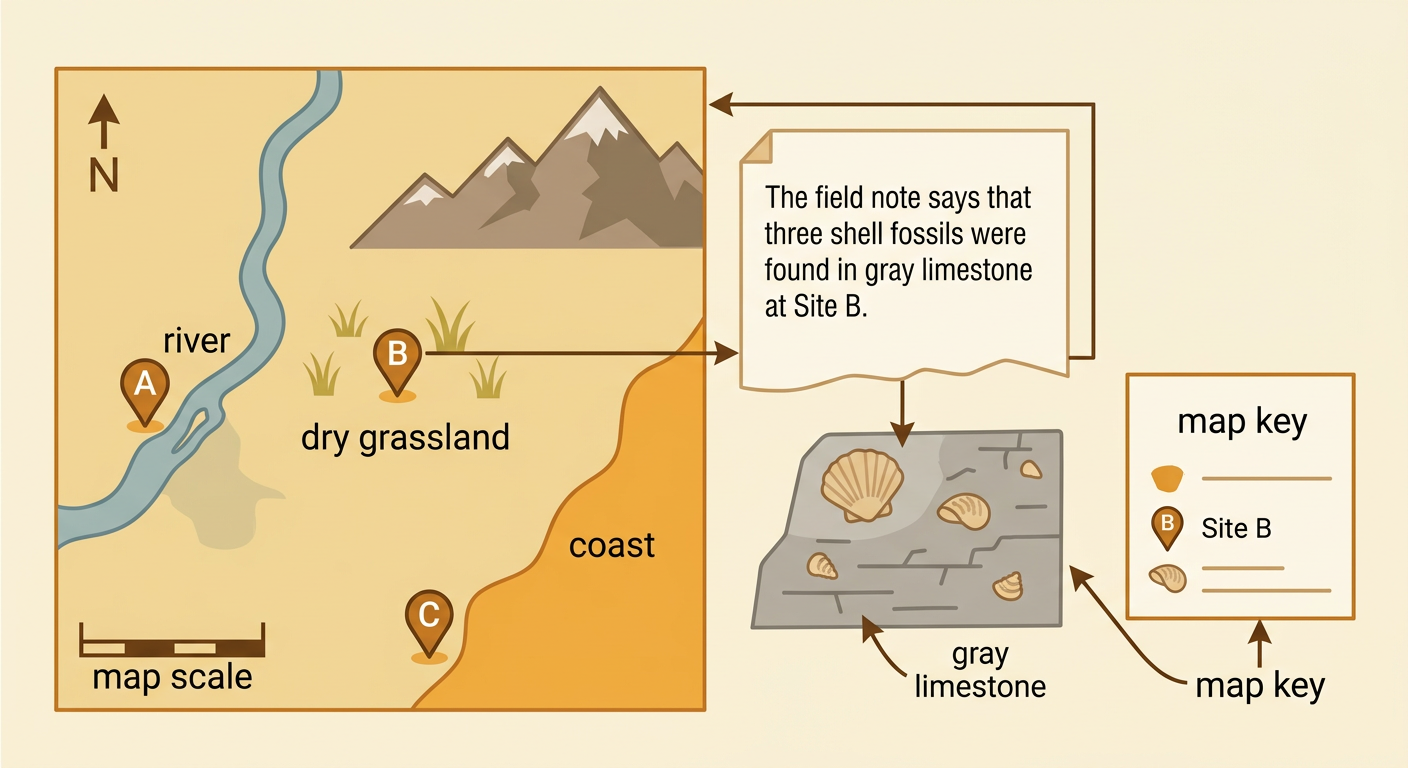
Informational text and maps add clues that a fossil image cannot provide. A field note might say, “Three shell fossils were found in gray limestone at Site B.” The text identifies the fossil, rock, and site. Next, locate Site B on a map using its symbol and the map key. Notice nearby rivers, mountains, or coastlines, but remember that today’s map shows the present environment. The ancient environment may have been different. For example, Site B may now be in a dry grassland hundreds of miles from the coast. Shell fossils and limestone at that location suggest that water once covered the area. Use the map scale to describe location and distance accurately. Combining the text, fossil image, and map gives stronger evidence than using only one source.
Graph the Fossil Data
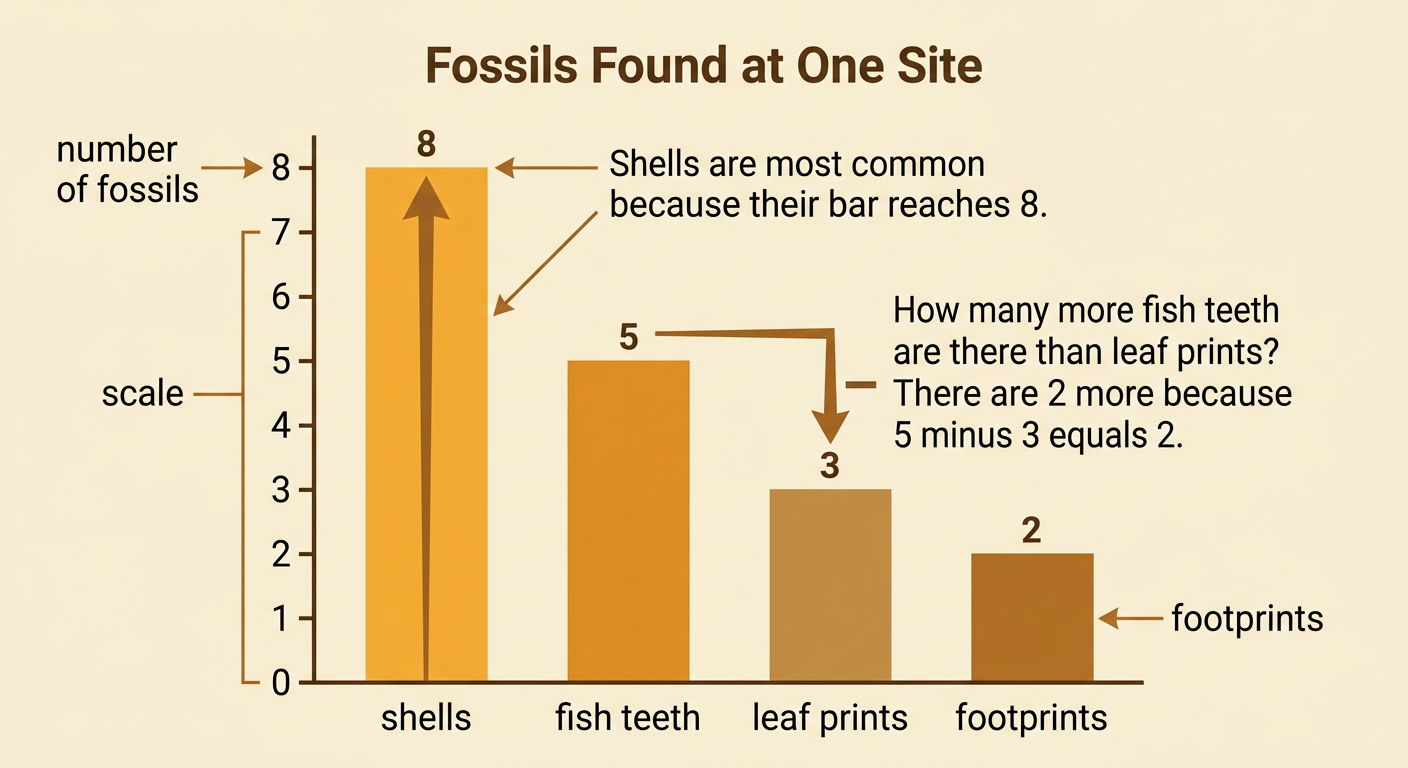
A graph organizes fossil counts so patterns are easier to see. Imagine that students classify fossils from one site into four categories: 8 shells, 5 fish teeth, 3 leaf prints, and 2 footprints. Make a bar graph with fossil categories along the bottom and number of fossils along the side. Choose a scale that increases by ones, begin at zero, and draw each bar to the correct height. The shell bar should reach 8, while the footprint bar should reach 2. The graph shows that shells are the most common category in this sample. It also shows that there are three more fish teeth than leaf prints. A graph summarizes the collected data, but the number of fossils may not equal the number of organisms that once lived there.
Infer an Ancient Environment
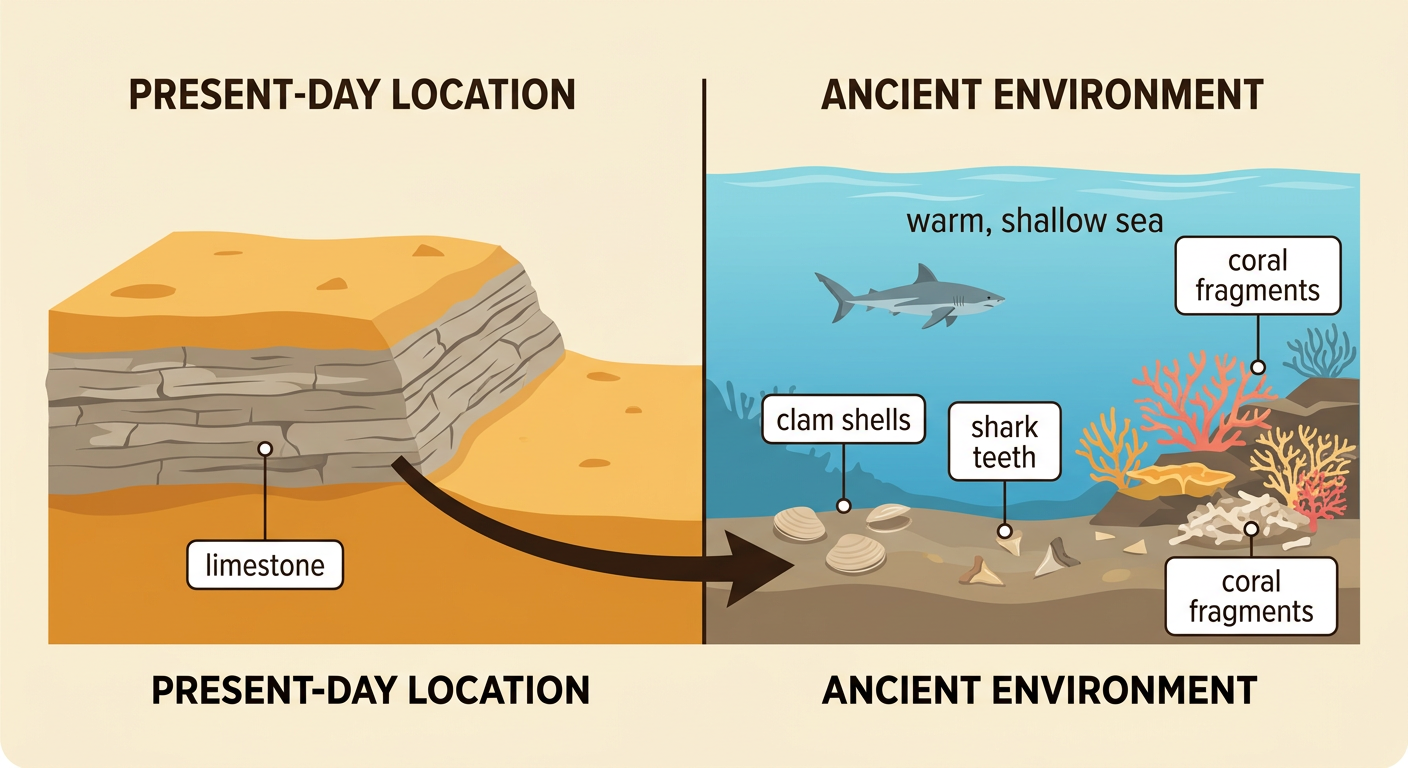
To infer an ancient environment, combine several clues and ask what setting best explains them. Suppose a rock layer contains many clam shells, shark teeth, and coral fragments. The rock is limestone, and the site is now on dry land. Clams, sharks, and reef-building corals are connected with ocean habitats. Many reef-building corals live in warm, shallow, sunlit seawater, and limestone commonly forms from material that collects in marine settings. Together, these clues support the inference that the area was once a warm, shallow sea. One fossil alone would make the claim less certain. Also consider other possible explanations, such as fossils being moved by water before burial. The best inference fits the fossil types, rock, location, and data while recognizing what remains uncertain.
Share Claims and Evidence
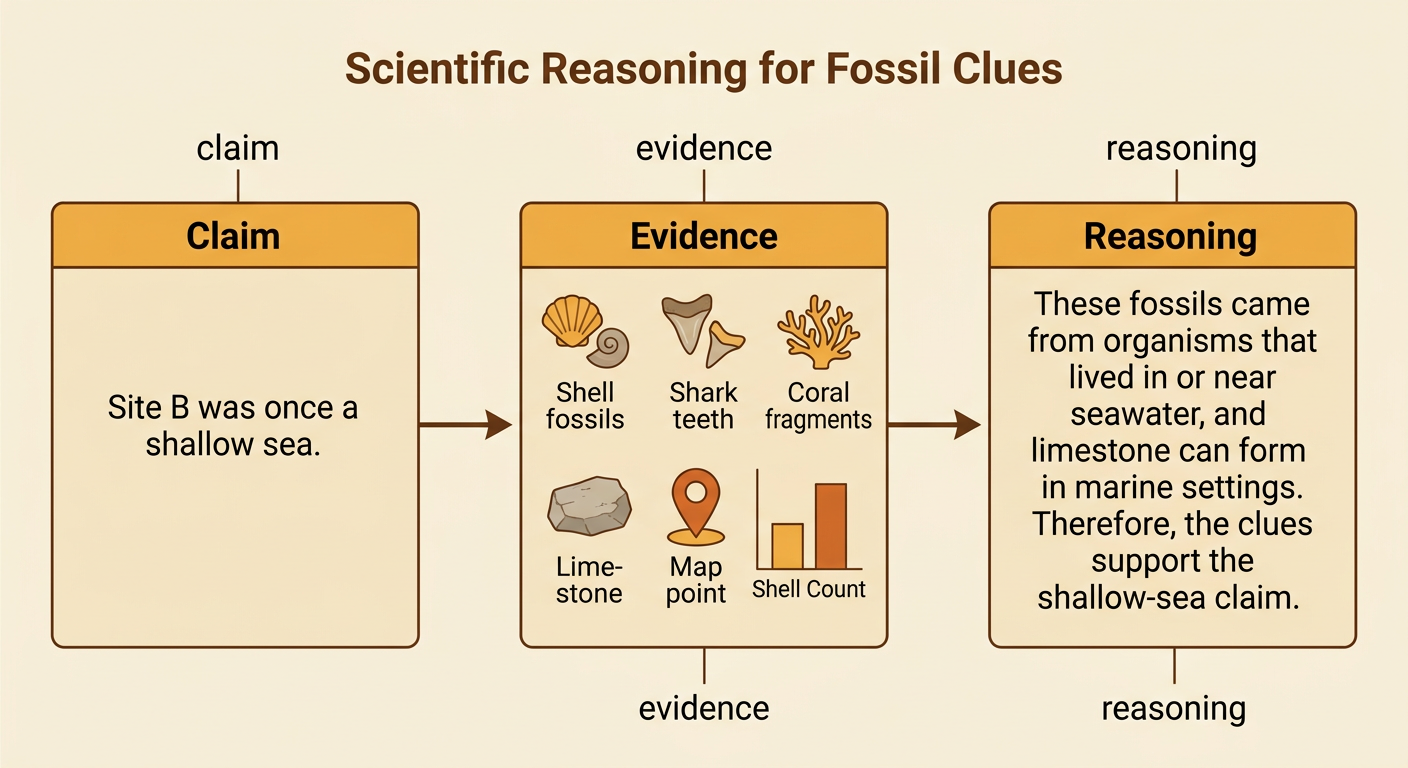
Scientists explain conclusions with a claim, evidence, and reasoning. The claim answers the question. Evidence includes specific observations, counts, text facts, and map information. Reasoning explains why the evidence supports the claim. For example, a student might claim, “Site B was once covered by a shallow sea.” The student could cite shell fossils, shark teeth, coral fragments, limestone, and the high shell count on the graph. The reasoning should connect those clues to ocean organisms and marine rock formation. A strong explanation may say, “These fossils came from organisms that lived in or near seawater, so they support the shallow-sea claim.” Listen to classmates’ explanations and ask whether each claim uses accurate evidence. Revise your claim if another explanation fits the full set of data better.