
From DNA to Protein: How Gene Expression Shapes Cell Function
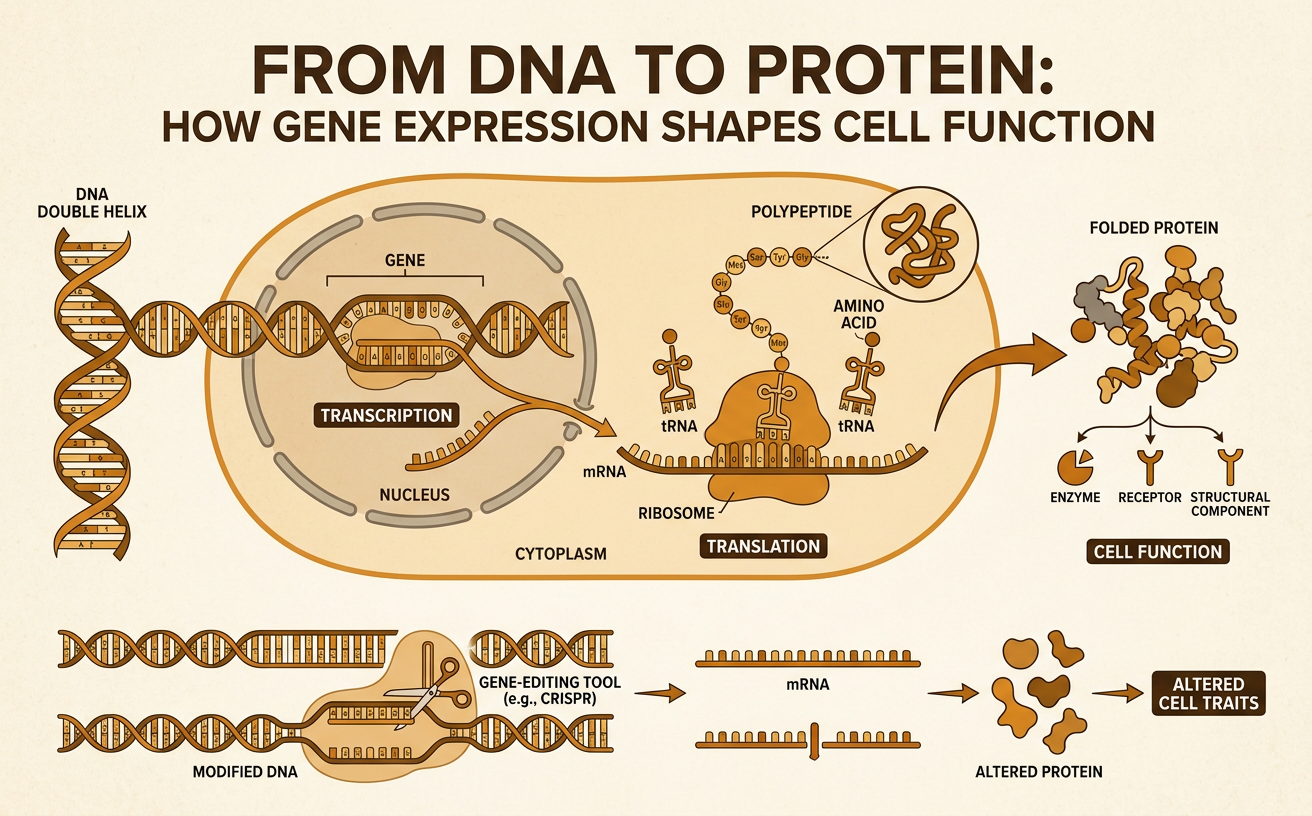
Students use models of transcription and translation to explain how DNA sequences determine protein structure, cell function, and the potential effects of gene-editing decisions.
Illustrations are auto-generated and may be placeholders. They can be refreshed to match the narration.
Genes as Protein Instructions
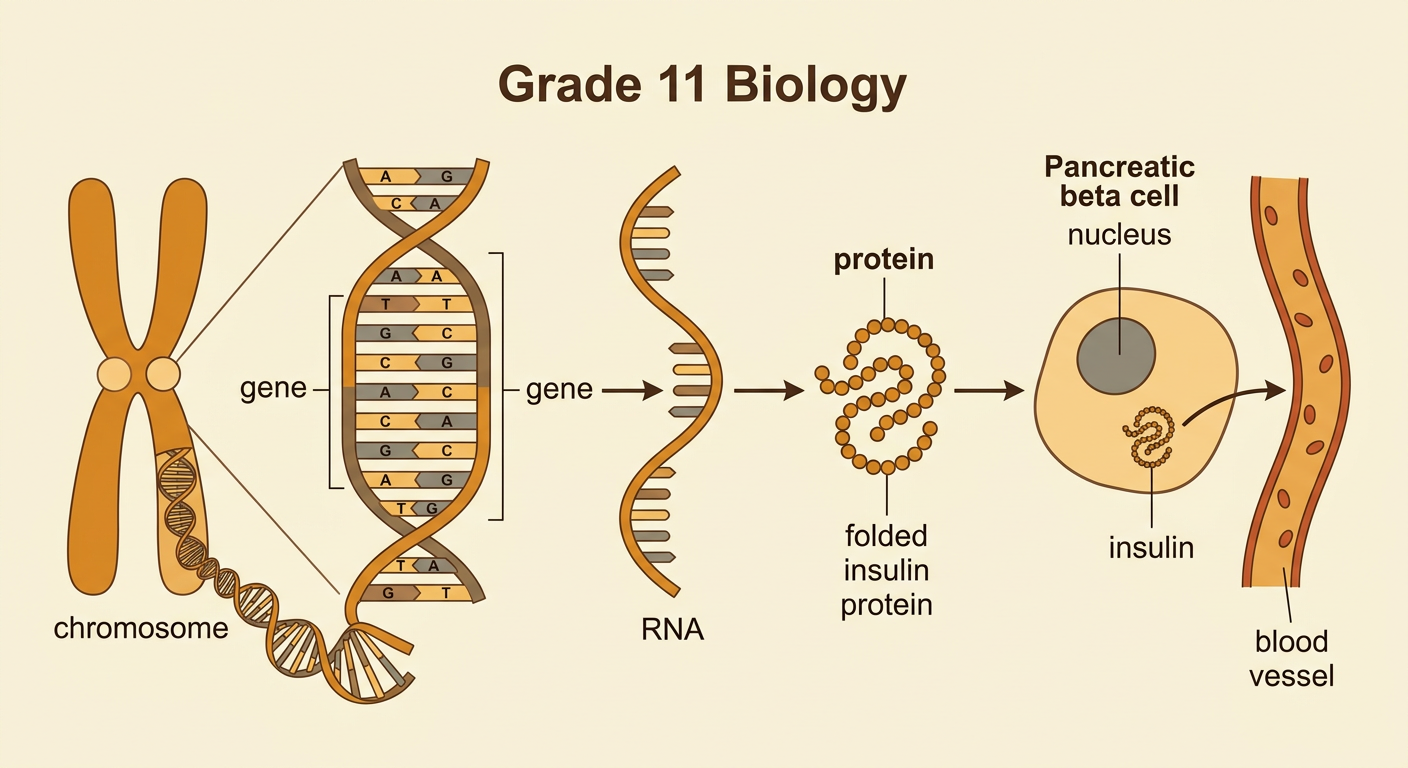
A gene is a segment of DNA whose nucleotide sequence contains information for making a functional product, often a protein. DNA has two complementary strands built from the bases adenine, thymine, cytosine, and guanine. The order of these bases stores information. During gene expression, a cell transcribes a gene into RNA and usually translates the RNA into a chain of amino acids. The amino acid sequence then influences how the protein folds and functions. Different cell types use different sets of genes, even though most cells in an organism contain the same DNA. For example, pancreatic beta cells express the insulin gene and produce insulin, a protein hormone that helps regulate blood glucose. Gene expression therefore connects DNA information with specialized cell activities and essential life functions.
Transcription: DNA to Messenger RNA
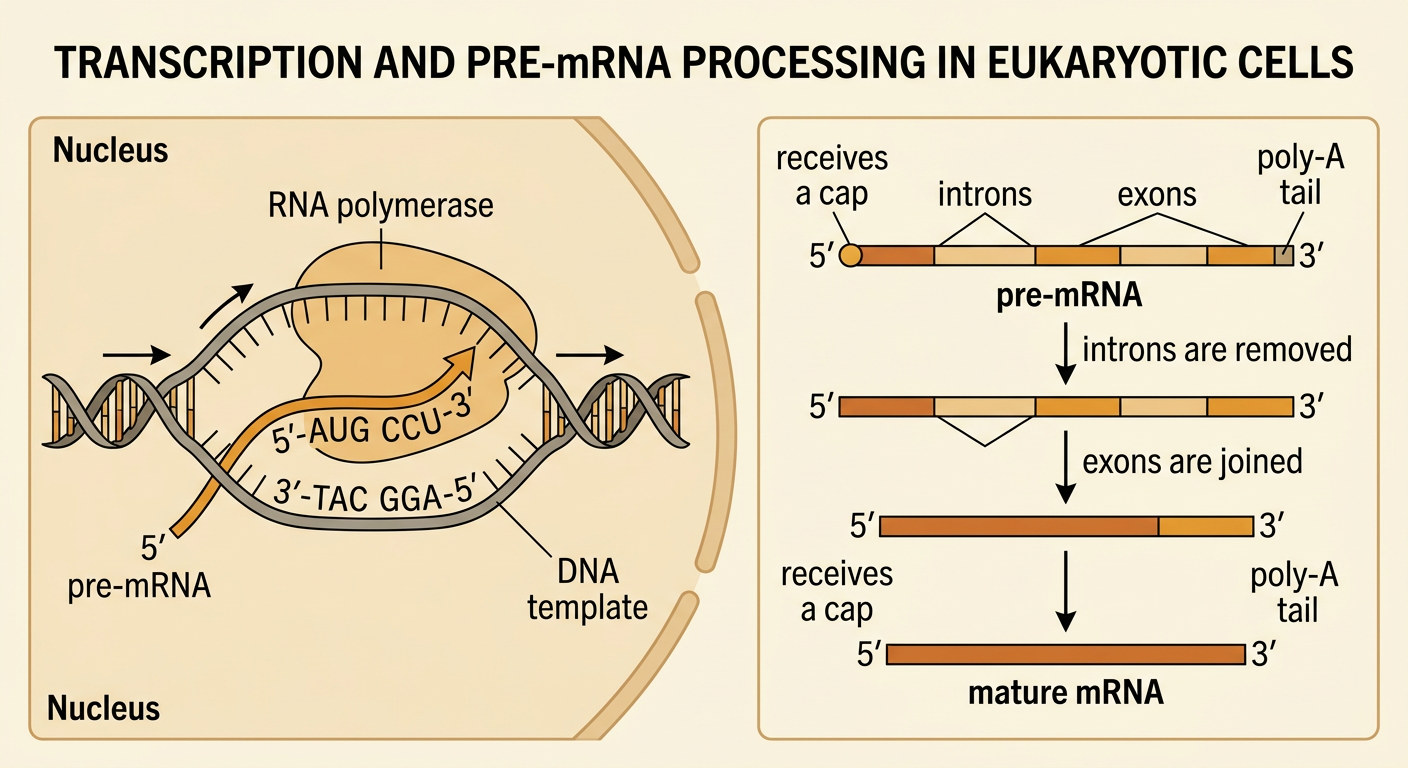
Transcription makes an RNA copy of a gene. In eukaryotic cells, it occurs in the nucleus. RNA polymerase binds near the beginning of a gene, separates a short region of the DNA strands, and uses one strand as a template. It builds RNA in the 5′ to 3′ direction by complementary base pairing: DNA adenine pairs with RNA uracil, while DNA cytosine pairs with RNA guanine. The first product, pre-mRNA, is processed before leaving the nucleus. A cap and poly-A tail are added, and introns are removed while exons are joined. For example, if a DNA template segment reads 3′-TAC GGA-5′, the complementary RNA segment is 5′-AUG CCU-3′. Accurate transcription preserves the sequence information needed for protein production.
Translation: RNA to Protein
Translation converts the nucleotide sequence of messenger RNA into an amino acid sequence. It occurs at ribosomes in the cytoplasm or on the rough endoplasmic reticulum. The ribosome reads mRNA three bases at a time. Each three-base codon corresponds to an amino acid or a stop signal. Transfer RNA molecules carry specific amino acids and use anticodons to pair with complementary mRNA codons. Translation usually begins at the start codon AUG, which codes for methionine. The ribosome forms peptide bonds as it moves along the mRNA, extending the polypeptide until it reaches a stop codon. For example, the mRNA sequence AUG-CCU-GAA-UAA produces methionine-proline-glutamic acid, followed by a stop signal. The codon order therefore determines the protein's primary amino acid sequence.

From Protein Shape to Cell Function
A protein's amino acid sequence influences how it folds into a specific three-dimensional shape. Interactions among amino acid side chains, including attractions, repulsions, hydrogen bonds, and disulfide bonds, help stabilize that shape. Shape is critical because a protein often functions by binding particular molecules. Environmental conditions such as high temperature or extreme pH can disrupt folding and reduce function. For example, the enzyme lactase has an active site shaped to bind lactose. Lactase helps split lactose into glucose and galactose, which cells can absorb and use. If lactase is absent or its active site has the wrong shape, lactose may remain undigested and cause symptoms of lactose intolerance. Thus, DNA sequence can influence amino acid sequence, protein folding, molecular interactions, and ultimately the behavior of cells and organisms.

Predicting the Effects of Sequence Changes
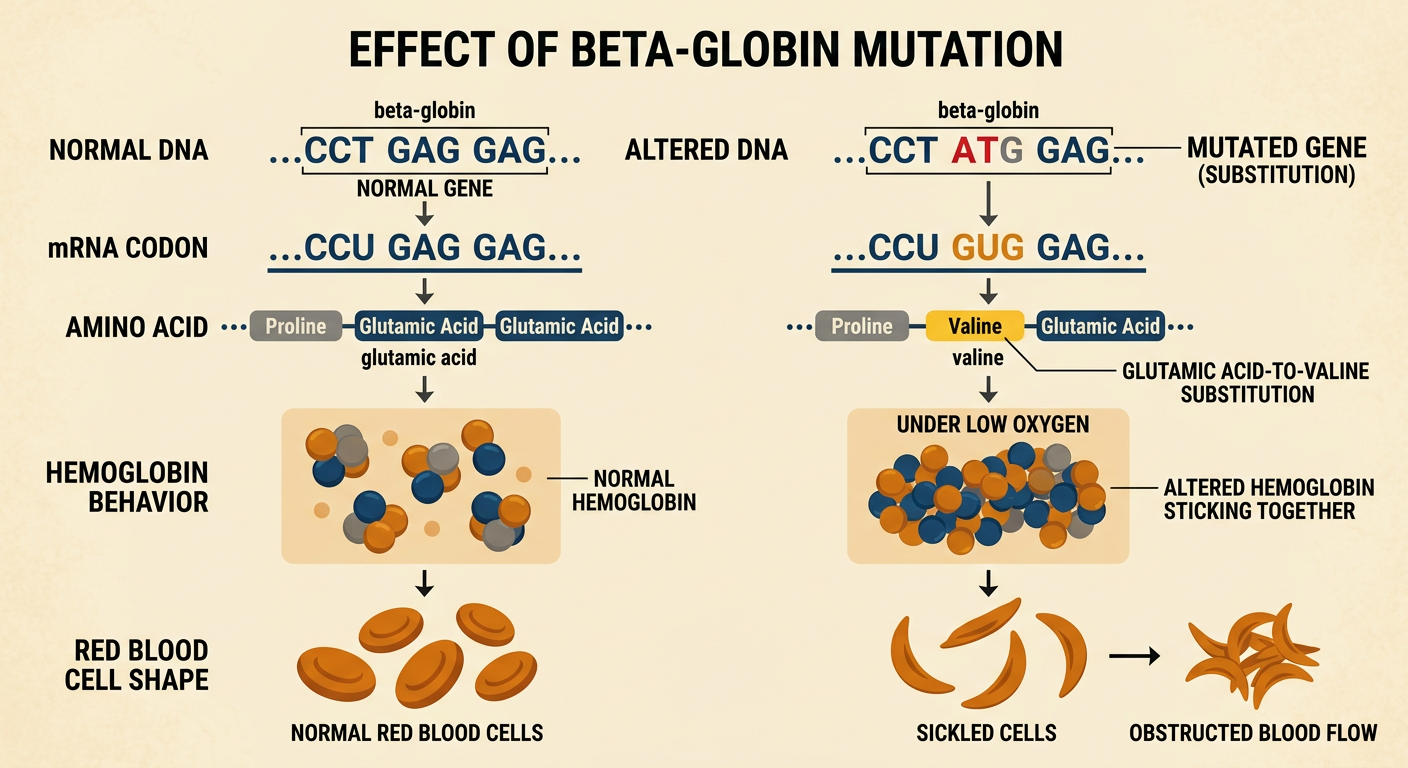
A change in DNA sequence is called a mutation, and its effect depends on its location and type. A base substitution may be silent because multiple codons can specify the same amino acid. It may instead be a missense mutation that changes one amino acid or a nonsense mutation that creates an early stop codon. Insertions or deletions that are not multiples of three can shift the reading frame and alter many downstream codons. Some mutations occur outside coding regions and affect when or how strongly a gene is expressed. For example, sickle cell disease can result from a single substitution in the beta-globin gene. The change replaces glutamic acid with valine in the protein, encouraging hemoglobin molecules to stick together under low-oxygen conditions. Red blood cells can then become rigid and sickle-shaped, interfering with blood flow.
Evaluating Gene-Editing Outcomes
Gene-editing tools such as CRISPR can target a chosen DNA sequence so that it is removed, replaced, or disrupted. A proposed policy should be evaluated using evidence about both intended and unintended outcomes. Editing blood-forming stem cells to treat sickle cell disease could reduce harmful sickling and improve a patient's health. However, decision-makers must also examine off-target edits, incomplete treatment, long-term monitoring, cost, informed consent, privacy, and equitable access. Editing a patient's body cells affects that individual, whereas editing embryos could create heritable changes passed to future generations who cannot consent. A responsible policy might permit carefully reviewed treatments for serious diseases while requiring safety testing, transparent reporting, patient protections, and fair access. Evaluating the policy requires comparing expected medical benefits with biological risks and civic principles such as individual rights, equality, accountability, and protection from harm.
