
From DNA to Traits: Evaluating Gene Editing
Students model how DNA carries instructions for proteins and use evidence to evaluate a claim about editing an inherited gene variant.
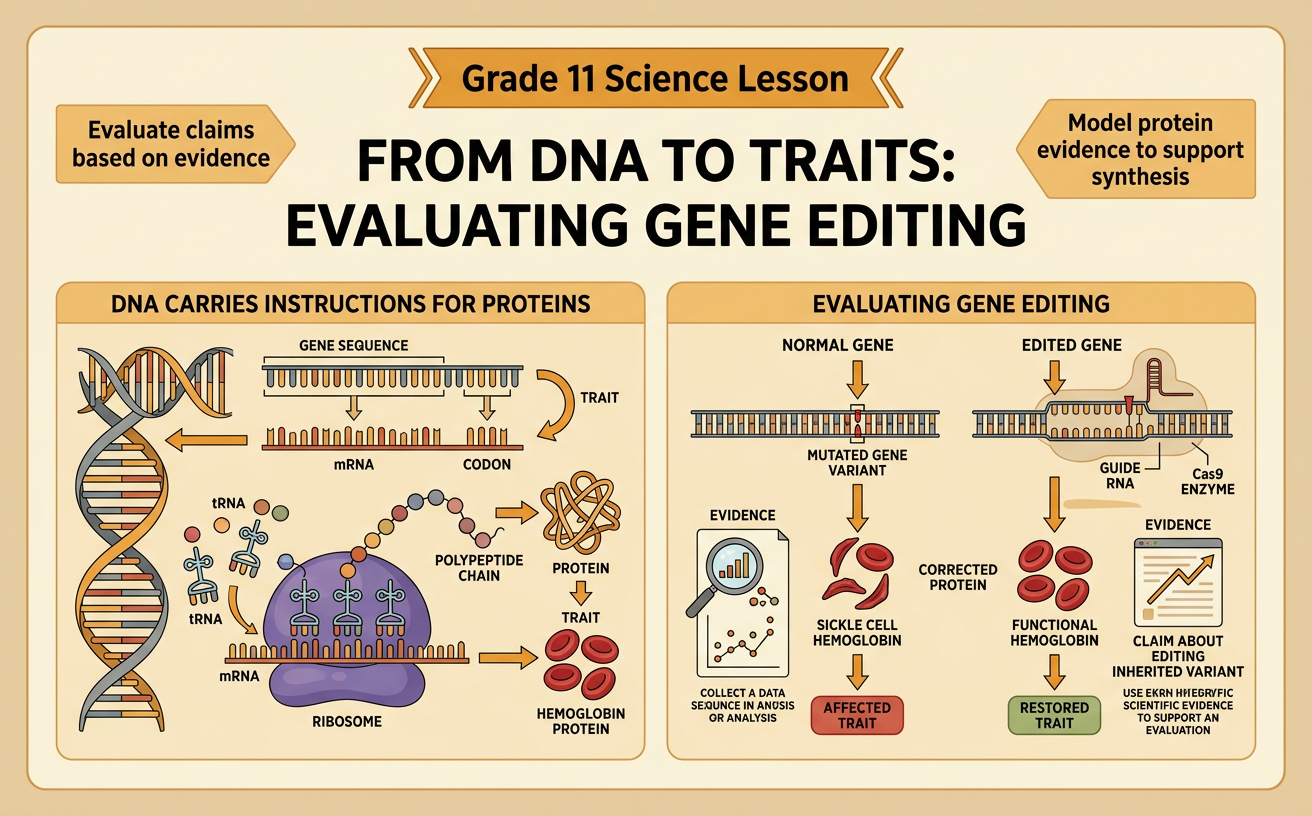
Illustrations are auto-generated and may be placeholders. They can be refreshed to match the narration.
DNA, Chromosomes, and Genes
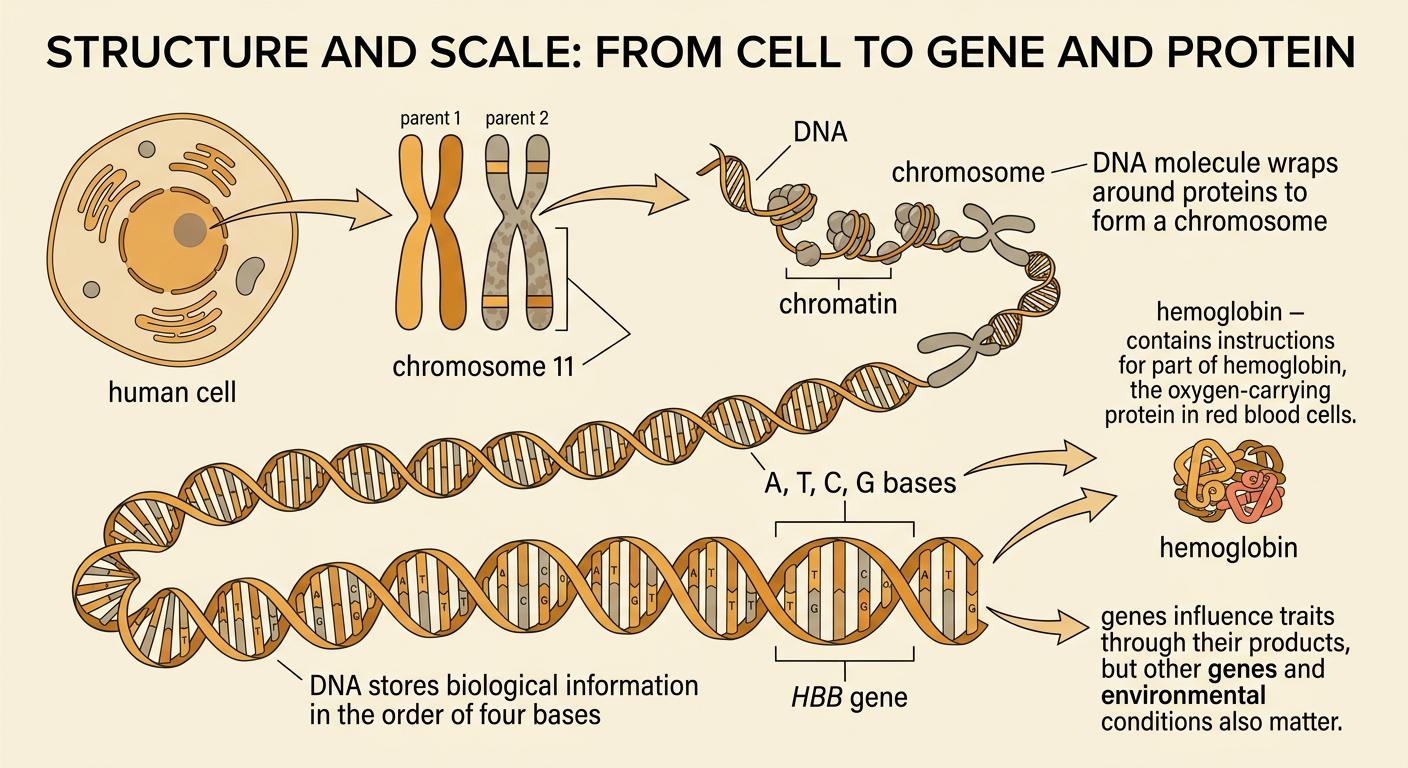
DNA is a molecule that stores biological information in the order of four bases: A, T, C, and G. In human cells, long DNA molecules are packaged with proteins into chromosomes. Most body cells contain 23 pairs of chromosomes, with one chromosome in each pair inherited from each parent. A gene is a specific DNA region that helps produce a functional RNA or protein, while other DNA regions help control when genes are active. Genes influence traits through their products, but many traits also depend on multiple genes and environmental conditions. For example, the HBB gene is located on chromosome 11 and contains instructions for part of adult hemoglobin, the protein in red blood cells that carries oxygen. A useful question is: How can a change in one gene affect a cell, an organ system, and an inherited trait?
From Gene Sequence to Protein
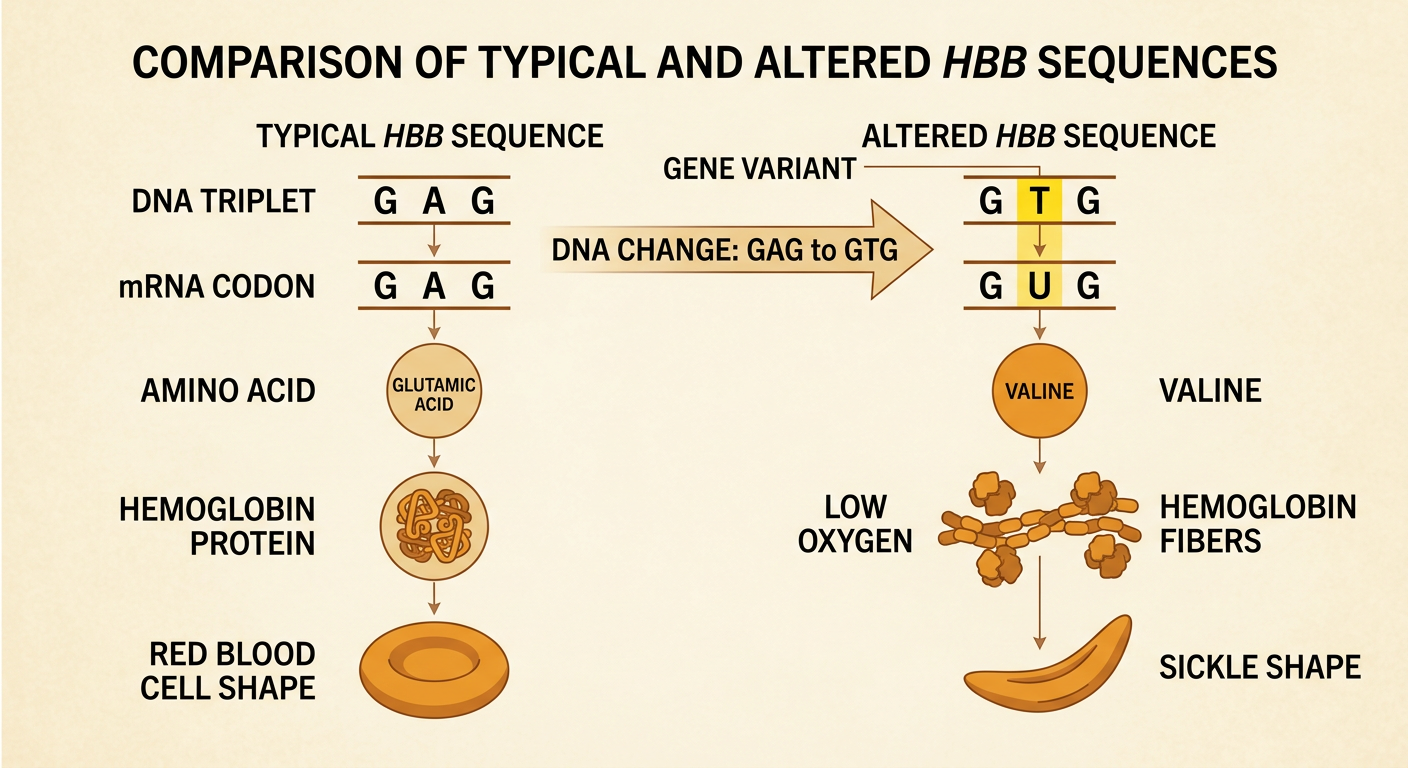
A gene’s base sequence can guide protein production through transcription and translation. During transcription, cellular machinery uses one DNA strand as a template to build messenger RNA, or mRNA. The mRNA is processed and then moves to a ribosome. During translation, the ribosome reads the mRNA three bases at a time. Each three-base codon specifies an amino acid or a stop signal. Amino acids are joined into a chain that folds and may combine with other chains to form a working protein. For example, part of the HBB coding DNA sequence contains the triplet GAG. The corresponding mRNA codon is GAG, which specifies the amino acid glutamic acid. The complete HBB sequence produces beta-globin, which combines with other globin chains and heme groups to form adult hemoglobin. Protein function depends on both amino acid sequence and three-dimensional shape.

How Gene Variants Affect Traits
A gene variant is a difference in DNA sequence. A variant may have no detectable effect, alter how much protein is produced, or change the protein’s amino acid sequence and function. One well-studied HBB variant changes a coding DNA triplet from GAG to GTG. The resulting mRNA codon changes from GAG to GUG, replacing glutamic acid with valine in beta-globin. Under low-oxygen conditions, hemoglobin containing this altered beta-globin can form long fibers. These fibers may distort red blood cells into a sickle shape, restrict blood flow, and contribute to pain and organ damage. However, genotype does not determine every detail of the outcome. Effects depend on which HBB variants a person inherits, the activity of other genes, medical care, and environmental conditions such as oxygen availability. Thus, evidence should connect DNA, protein, cells, and the observed trait without claiming that one variant explains everything.
Modeling a Gene Edit
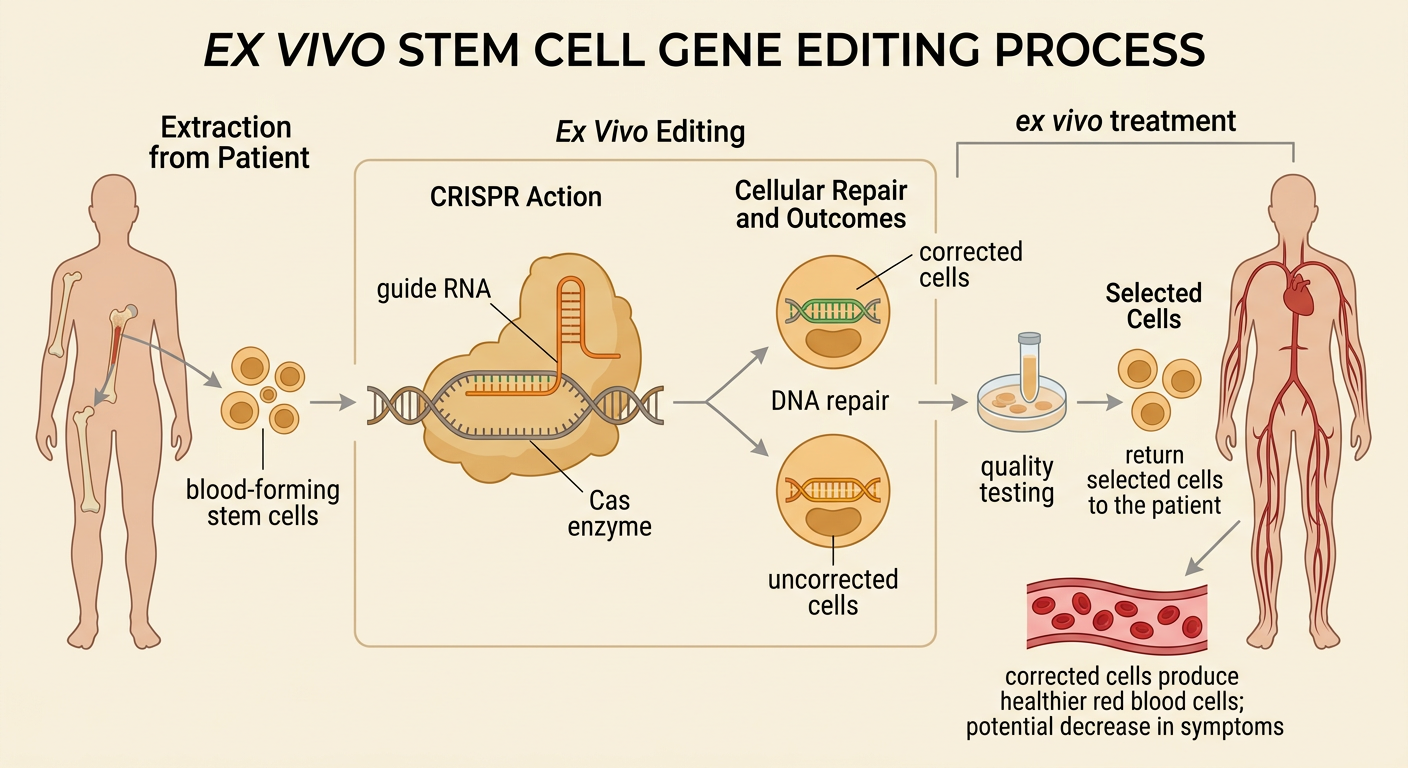
Gene editing changes DNA at a selected location, but a model must distinguish the intended steps from the outcomes that must be tested. In one CRISPR-based model, a guide RNA matches a target sequence near a disease-associated HBB variant. The guide RNA directs a Cas enzyme to that DNA location, where the enzyme makes a cut. Cellular DNA-repair processes may then disrupt a sequence or use an added repair template to make a specific correction. For example, researchers could remove a patient’s blood-forming stem cells, edit them outside the body, test the cells, and return selected cells to the patient. If enough edited stem cells produce healthy red blood cells, disease symptoms might decrease. Editing is not guaranteed in every cell, and repair can create unintended sequences. Because this example edits body stem cells rather than egg or sperm cells, the edit would not normally be passed to the patient’s children.
Evidence, Risks, and Limitations
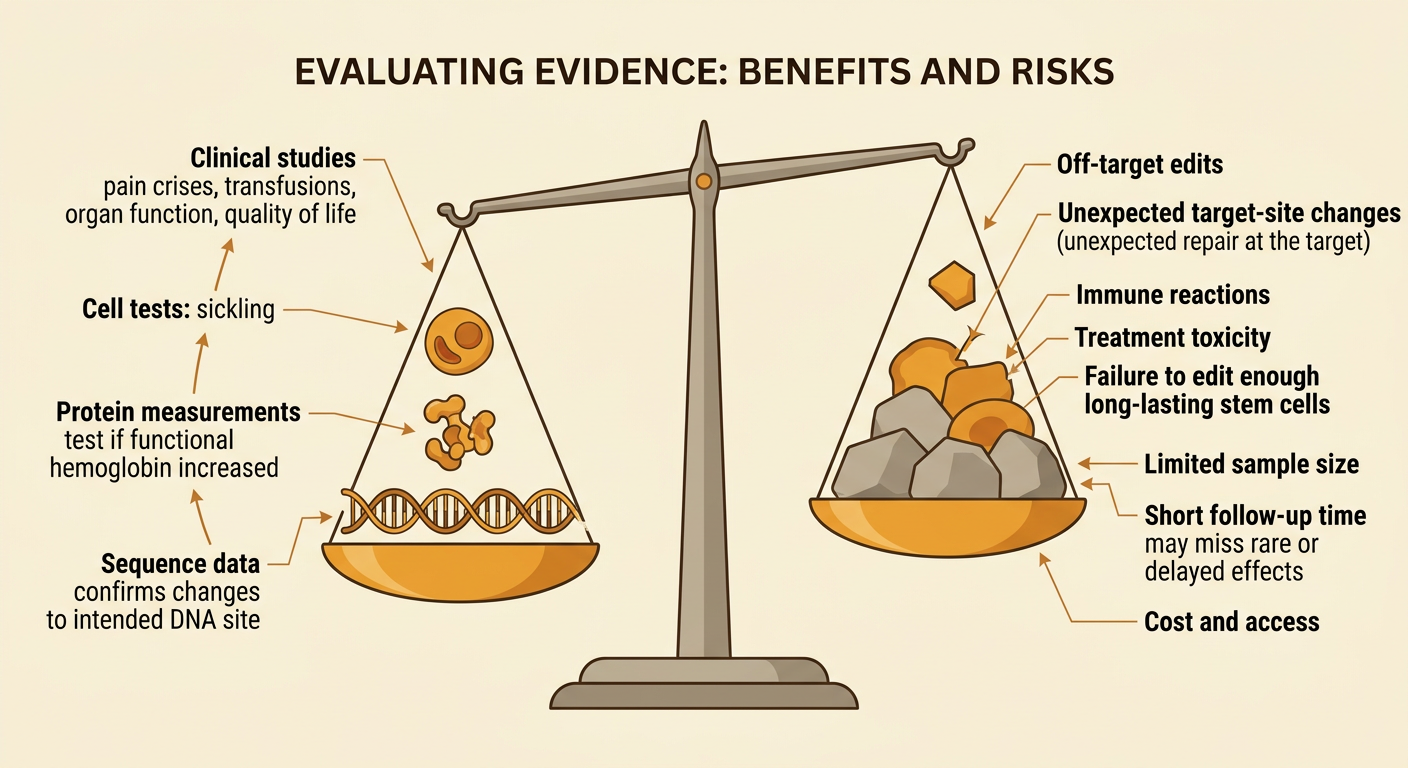
Evaluating a gene-editing claim requires evidence at several levels. Sequence data can show whether the intended DNA site changed. Protein measurements can show whether functional hemoglobin increased. Cell tests can examine red blood cell behavior, while clinical studies can measure pain crises, transfusions, organ function, and quality of life. For example, a report that patients experienced fewer pain crises after treatment supports possible benefit, but the strength of that evidence depends on the number of patients, comparison groups, follow-up time, and how outcomes were measured. Risks include unintended edits at other DNA sites, unexpected repair at the target site, immune reactions, treatment toxicity, and failure to edit enough long-lasting stem cells. A short study may miss rare or delayed effects. Cost and access also affect whether a successful therapy benefits many people. Evidence can support a limited conclusion without proving that a treatment is completely safe, permanent, or appropriate for every patient.
Constructing an Evidence-Based Claim
An evidence-based argument includes a precise claim, relevant evidence, reasoning, and an acknowledgment of counterclaims or weaknesses. A defensible example is: For patients with severe sickle cell disease, ex vivo editing of blood-forming stem cells may be justified when clinical evidence shows durable benefit and careful testing finds acceptably low risk. Evidence should be cited specifically, such as the number of participants who had fewer pain crises, the length of follow-up, changes in hemoglobin, and results of off-target testing. Reasoning must explain the mechanism: edited stem cells produce red blood cells with altered hemoglobin patterns, which may reduce sickling and blocked blood flow. A counterclaim might argue that rare unintended edits or long-term effects remain uncertain. The response should not dismiss that concern; it should explain how monitoring, larger studies, and comparison with the risks of untreated disease affect the judgment. The conclusion should match the evidence’s strength and avoid claiming certainty when data are limited.
