
From Egg to Adult: Comparing Animal Life Cycles
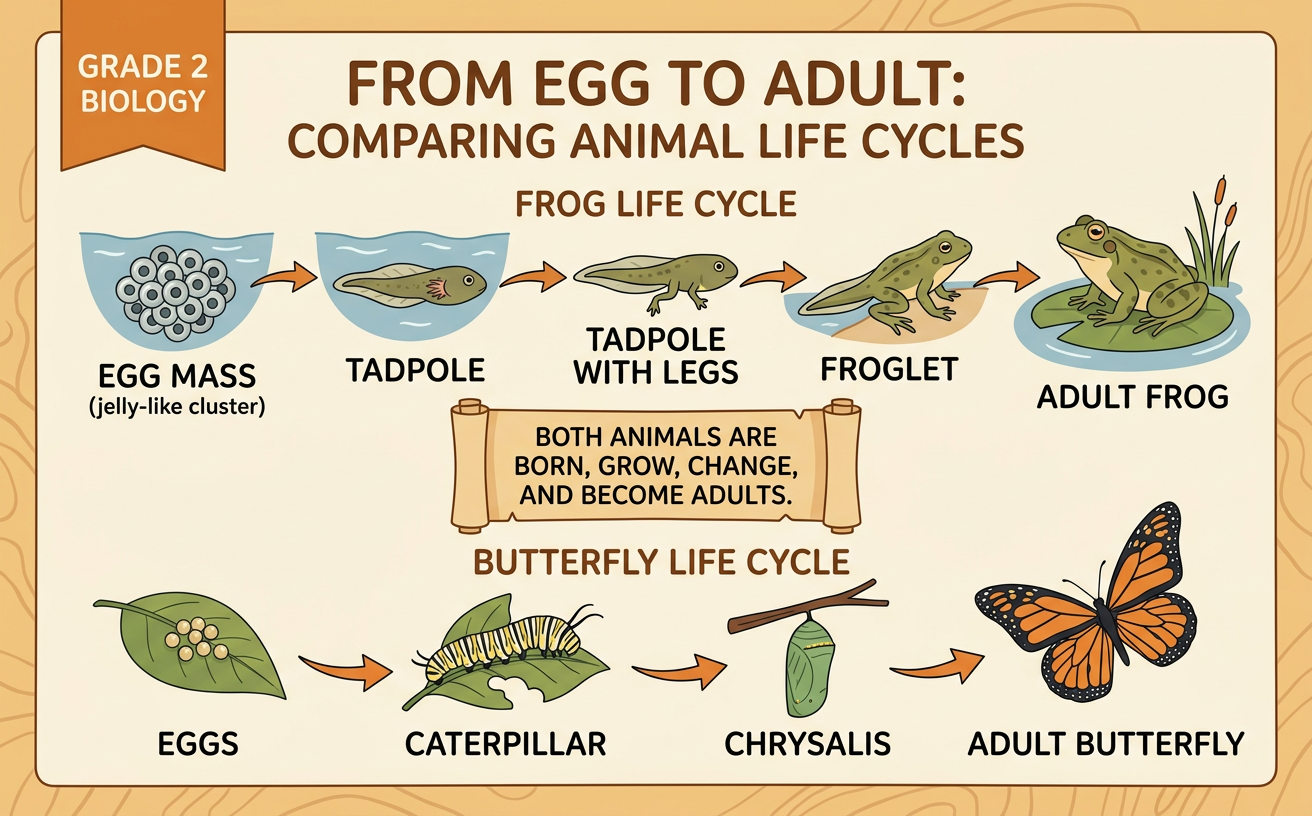
Students sequence and compare the stages of frog and butterfly life cycles, noticing that both animals are born, grow, change, and become adults.
Illustrations are auto-generated and may be placeholders. They can be refreshed to match the narration.
What Is a Life Cycle?
A life cycle is the ordered series of stages a living thing goes through. An animal begins life, grows, changes, becomes an adult, and may produce young of its own. Then the cycle begins again. Each stage comes before or after another stage. For example, a frog begins inside an egg. It hatches as a tadpole, changes into a froglet, and grows into an adult frog. The adult frog can lay eggs that begin a new cycle. Life cycles can look different, but they share a pattern: birth, growth, change, and adulthood. Putting the stages in chronological order means arranging them from earliest to latest.
Sequence a Frog’s Stages
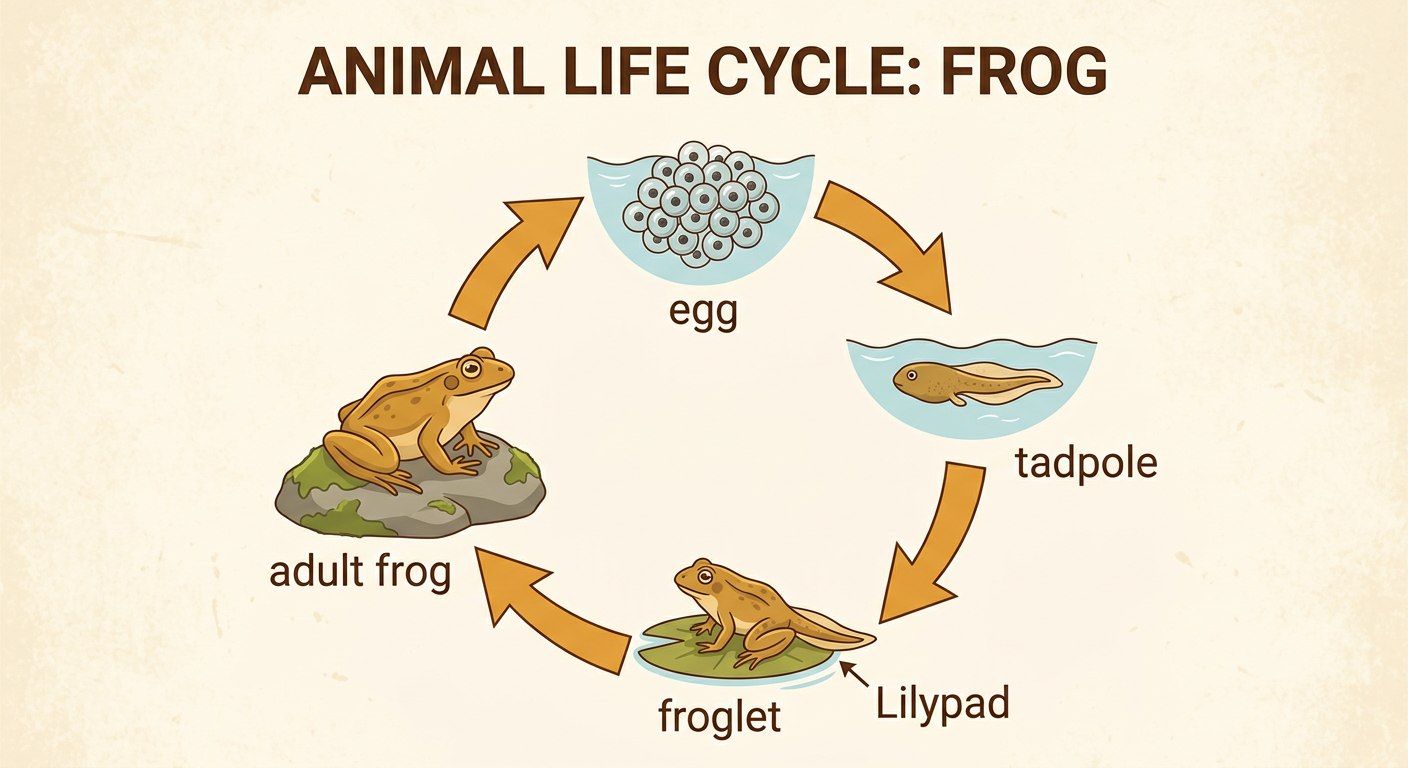
A frog’s life cycle usually begins when an adult frog lays eggs in water. First, a tiny developing frog grows inside each egg. Next, a tadpole hatches. The tadpole lives in water, has a tail, and uses gills to breathe. As it grows, back legs and then front legs develop. It becomes a froglet with four legs and a shrinking tail. Finally, the froglet becomes an adult frog. The adult has lungs, strong legs, and no tail. To sequence the stages, place them in this order: egg, tadpole, froglet, adult frog. Arrows can show how one stage leads to the next and how the adult begins the cycle again by producing eggs.

Sequence a Butterfly’s Stages
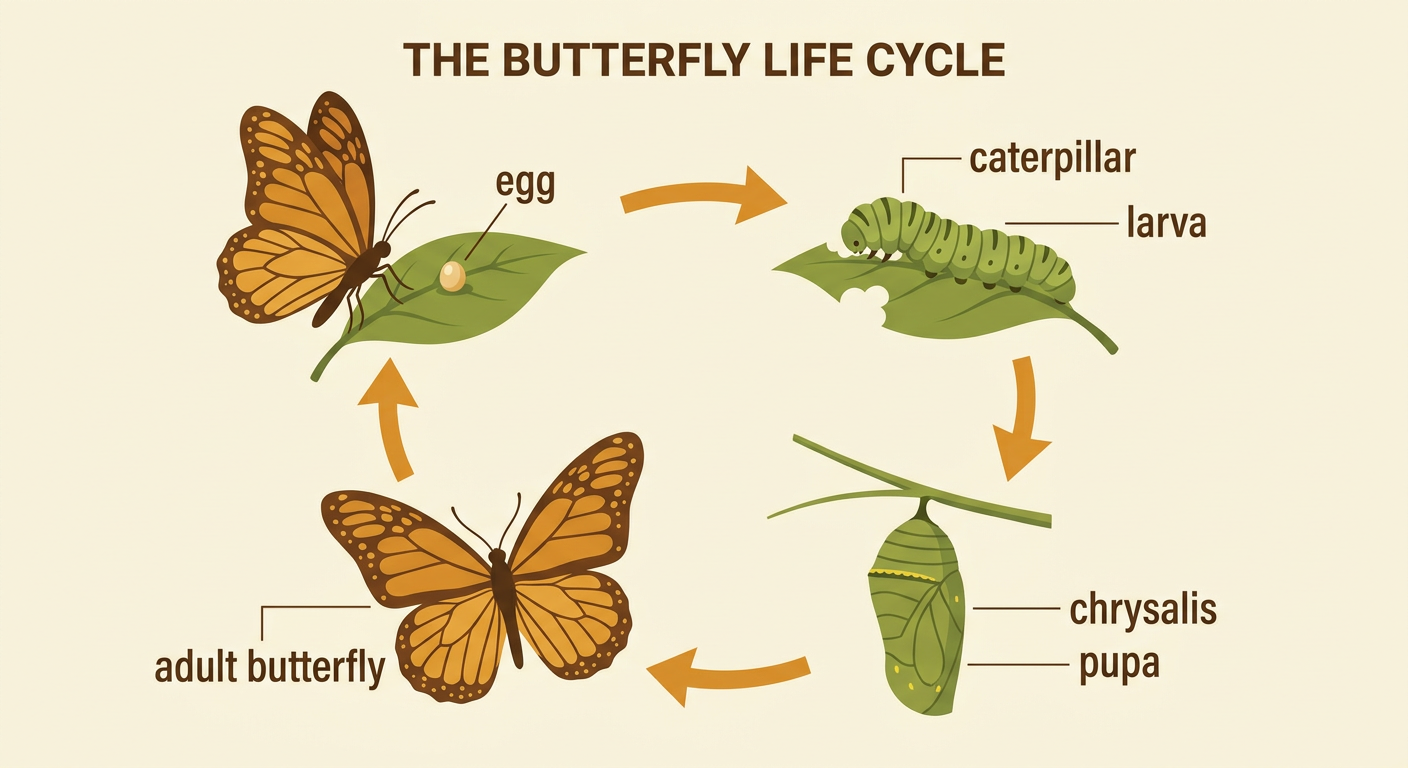
A butterfly’s life cycle has four main stages. First, an adult butterfly lays a tiny egg on a plant. Next, a caterpillar, or larva, hatches from the egg. The caterpillar eats leaves and grows quickly. As it grows, it sheds its outer covering several times. Then it forms a chrysalis and becomes a pupa. Inside the chrysalis, its body changes greatly. Finally, an adult butterfly comes out. After its wings unfold and dry, it can fly. To create a chronological sequence, arrange the stages as egg, caterpillar, chrysalis, and adult butterfly. For example, a caterpillar cannot come before the egg because it must hatch from the egg first.
Compare the Two Life Cycles
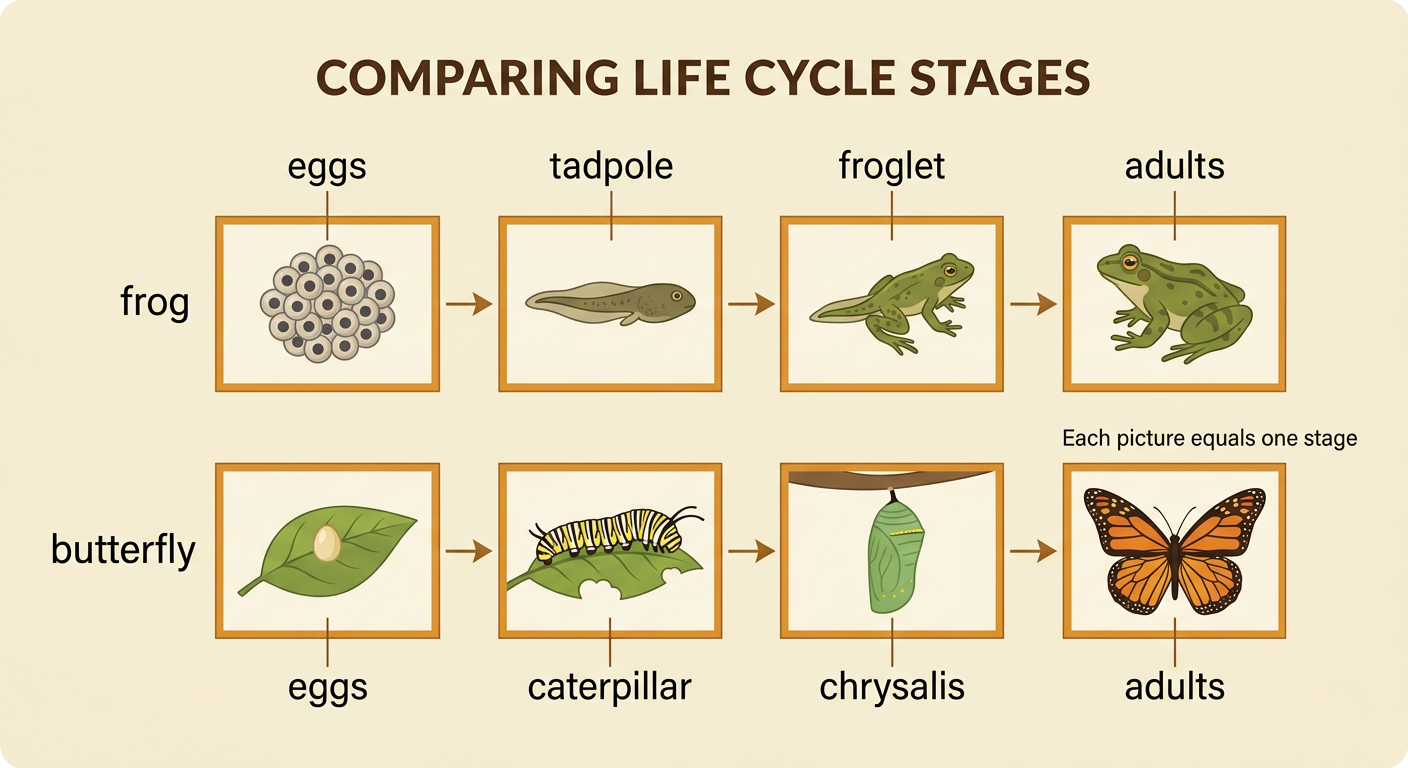
Frogs and butterflies look different, but their life cycles share important patterns. Both begin as eggs. Both hatch into young animals that look different from the adults. A tadpole changes into a froglet, while a caterpillar changes inside a chrysalis. Both cycles end with an adult that can produce new eggs. A picture graph can help compare the cycles. Make one row for the frog and one for the butterfly. Add one picture for each main stage. Each row will have four pictures, showing that both models use four main stages. The pictures will not be the same because the animals grow and change in different ways. The graph shows one similarity in number and several differences in form.
Build and Explain a Life-Cycle Model
A model is a simple way to show how something works. To build a life-cycle model, draw or use picture cards for each stage of one animal. Put the cards in chronological order and connect them with arrows. For a butterfly, place egg first, caterpillar second, chrysalis third, and adult fourth. Add an arrow from the adult back to the egg to show that the cycle repeats. Check that no stage is missing or out of order. Then explain the model using sequence words: first, next, then, and finally. You might say, “First, an egg is laid. Next, a caterpillar hatches. Then it forms a chrysalis. Finally, an adult butterfly comes out.” A clear model shows both change and order.
