From Farm to Table
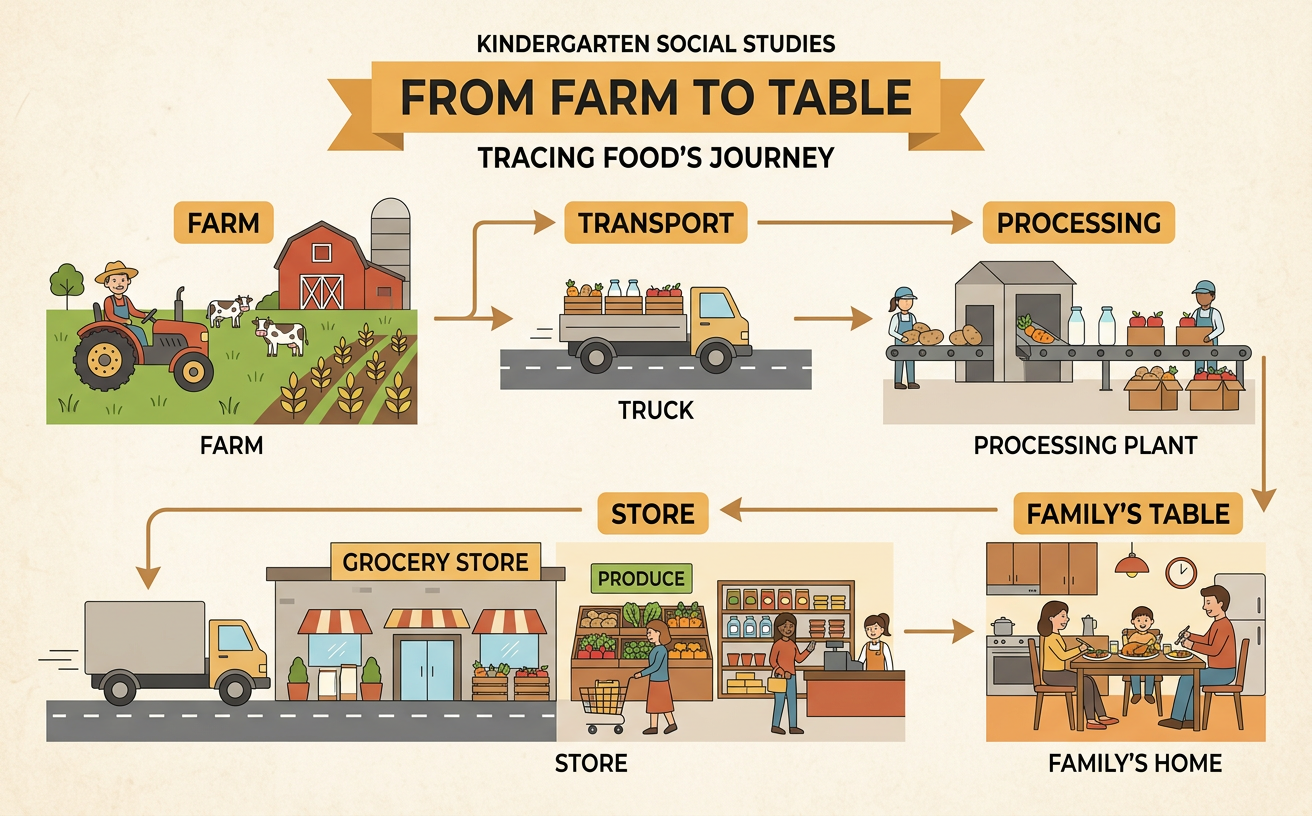
Students trace how a familiar food moves from a farm to a store and finally to a family’s table.
Illustrations are auto-generated and may be placeholders. They can be refreshed to match the narration.
Where Does Food Begin?
Food does not begin at the grocery store. Much of our food begins on a farm. Farmers grow plants such as apples, corn, carrots, and wheat. They may also raise animals that provide foods such as milk and eggs. Think about an apple. It begins as part of a flower on an apple tree. With care and time, the apple grows larger and becomes ripe. A farmer picks the apple so people can eat it. Some foods have several farm ingredients. Bread can be made from wheat, and cheese can be made from milk. Farms may be near our community or far away. Food is a good because it is something people grow, make, sell, and use.

What Plants Need
Plants are living things, and they need certain things to survive and grow. Plants need water and light. They also need air and enough space to grow. Many farm plants grow in soil, where their roots take in water and nutrients. We can observe a pattern: plants that get what they need usually grow, but plants without water or light may droop or stop growing. For example, a tomato plant placed in sunlight and given the right amount of water can grow green leaves, flowers, and tomatoes. Its roots grow below the soil, while its stem and leaves grow above the soil. Farmers watch their plants and provide water and care so the plants can stay healthy.

Farmers Grow and Harvest
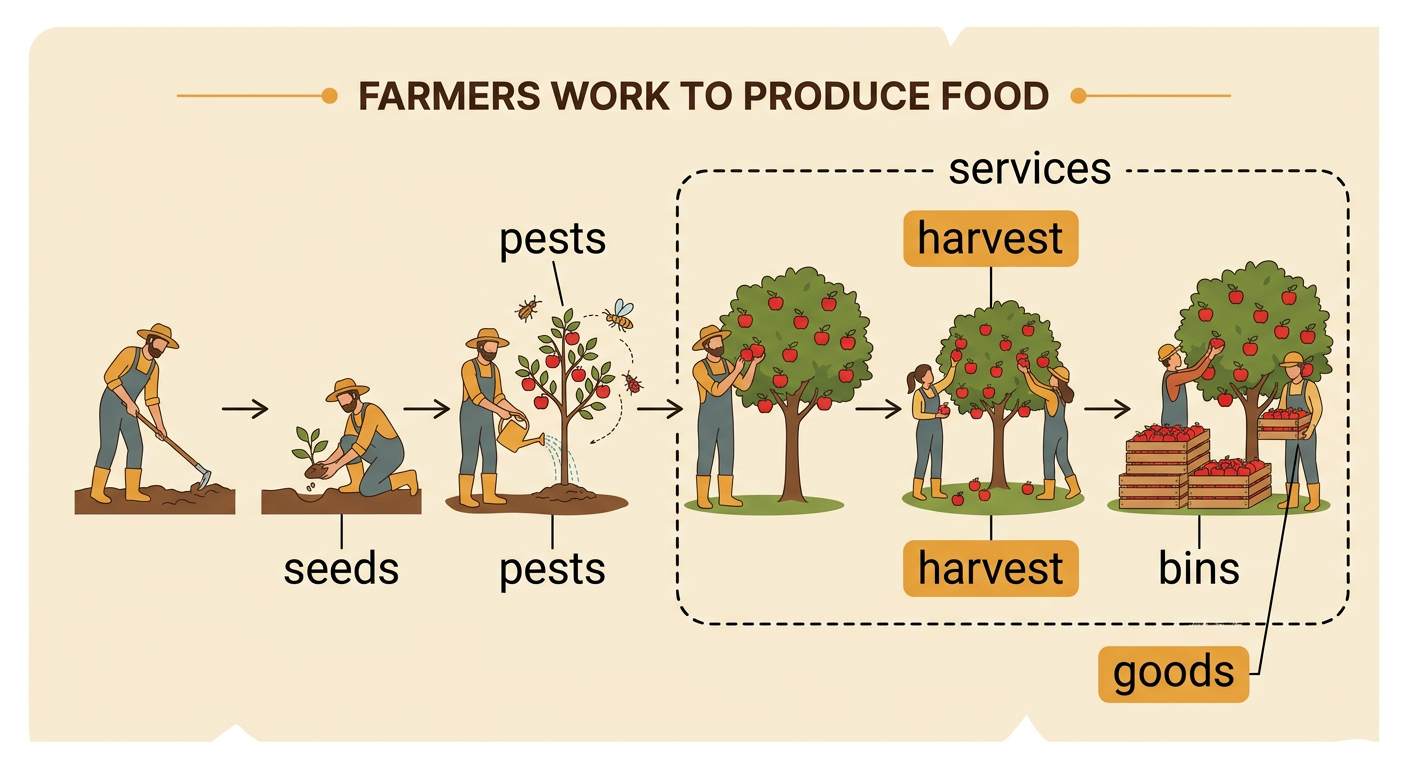
Farmers do important work to produce food. First, they prepare the land and plant seeds or young plants. Then they water the plants, check their health, and protect them from harmful pests. Farmers observe the plants as they grow. When a crop is ready, farmers harvest it. Harvest means gathering ripe crops from fields, gardens, or trees. For example, an apple farmer checks the color and size of the apples. Workers carefully pick ripe apples and place them in bins. On some farms, machines help harvest large crops such as wheat or corn. Growing and harvesting food are services farmers provide. The apples, wheat, and corn they produce are goods that can be sold to other people and communities.
Food Travels to the Store
After food is harvested, it must travel safely to a place where people can buy it. Fresh apples are sorted so damaged fruit can be removed. They may be washed and packed into strong boxes. A truck carries the boxes from the farm to a grocery store or to a packing center first. Some foods need to stay cold while they travel. Milk, for example, is kept cold in a refrigerated truck. At the store, workers unload the food and place it on shelves or in cool cases. Truck drivers, packers, and store workers provide services that help move and sell food. Some food comes from nearby farms, while other food travels from farms in distant communities.

Putting the Steps in Order
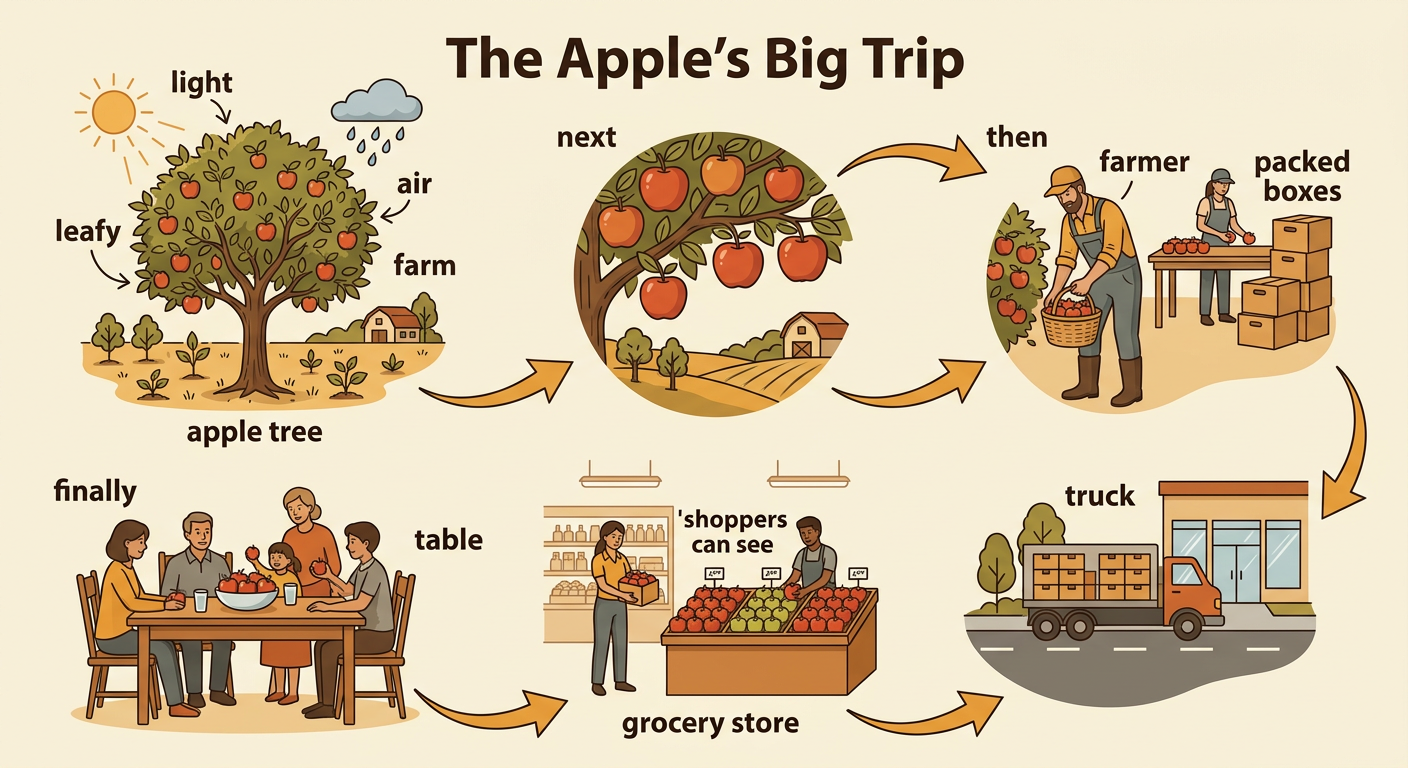
We can trace food by putting events in the order they happen. Consider an apple. First, an apple tree grows on a farm with light, water, air, and space. Next, apples grow and ripen on the tree. Then a farmer harvests the ripe apples. Workers sort and pack them into boxes. A truck carries the boxes to a grocery store. Store workers place the apples where shoppers can see them. Finally, a family buys apples, takes them home, washes them, and puts them on the table to eat. Each step connects to the next step. If we mix up the order, the story does not make sense. Words such as first, next, then, and finally help us explain the journey from farm to table.