
From Flower to Seed: How Pollination Works
Students model how flower structures and pollinators work together to transfer pollen, produce seeds, and support plant reproduction while considering how communities can protect pollinator habitats.

Illustrations are auto-generated and may be placeholders. They can be refreshed to match the narration.
Parts of a Flower
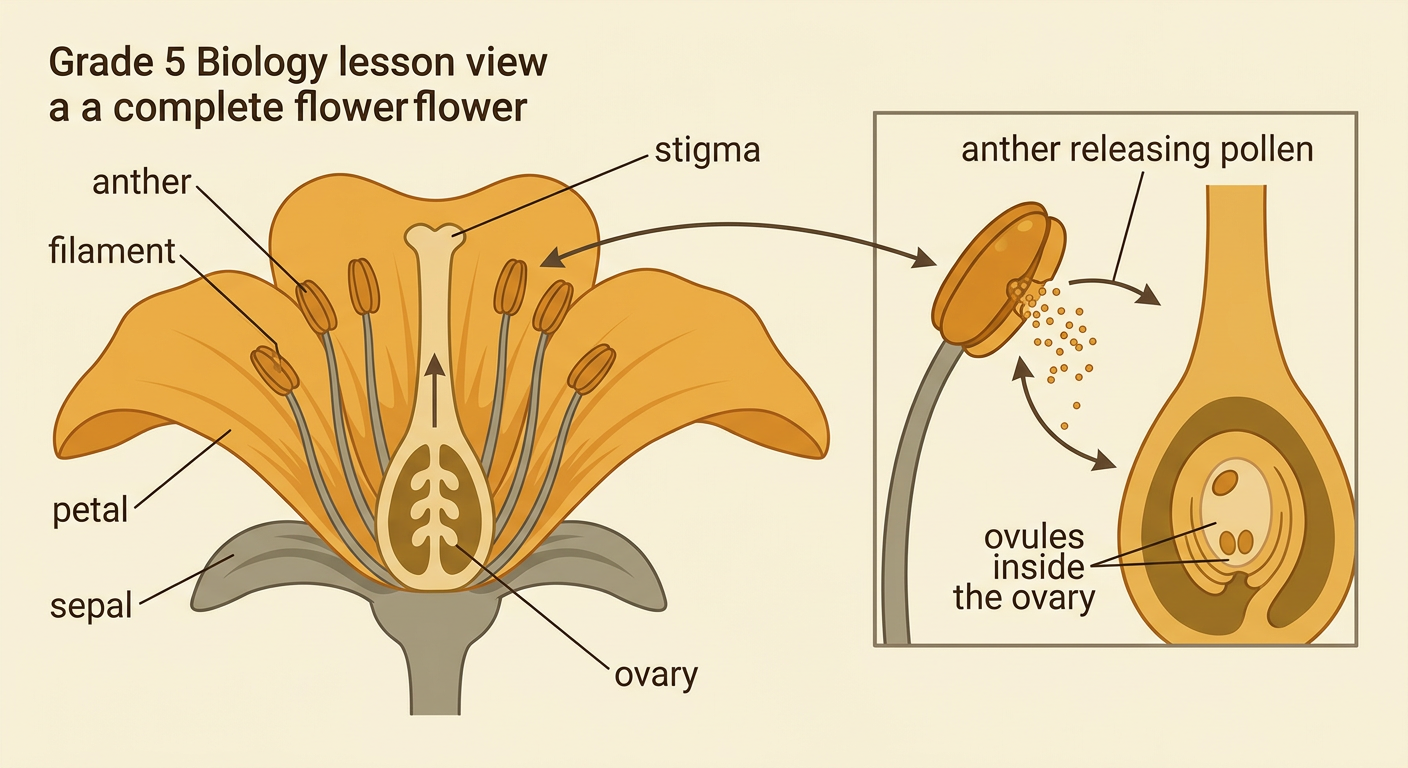
A flower has structures that work together to help a plant reproduce. Sepals protect the unopened flower bud. Petals may attract animal pollinators with their colors, shapes, or scents. The stamen is the pollen-producing part. Each stamen includes a thin filament and an anther, where pollen is made. The pistil is the seed-producing part. Its sticky stigma receives pollen, and its style connects to the ovary. Inside the ovary are ovules, which can develop into seeds after fertilization. For example, when a bee brushes against the anthers of an apple blossom, pollen sticks to its body. If the bee later touches the stigma of another apple blossom, it may help the plant reproduce. The arrangement of these flower structures makes pollen transfer more likely.
Pollinators at Work
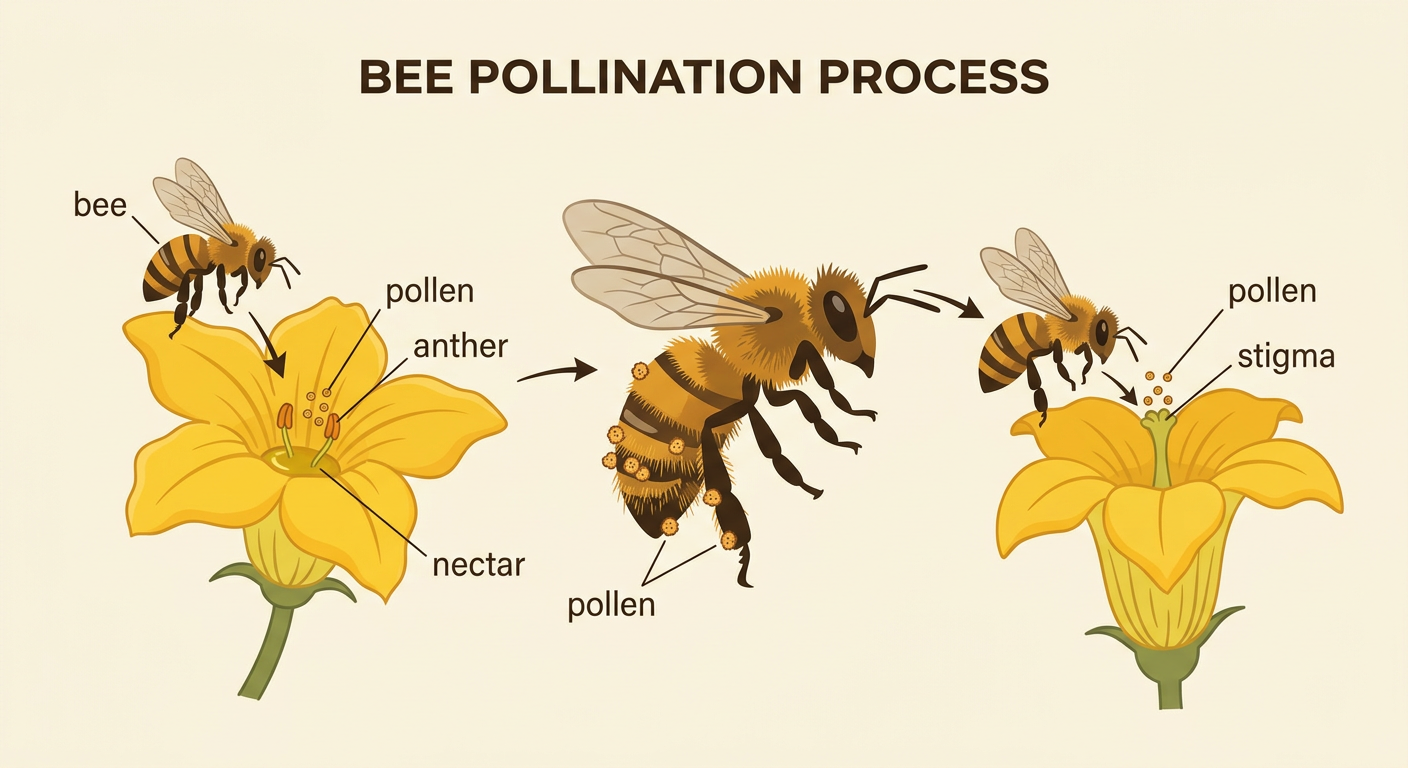
Pollination is the transfer of pollen from an anther to a stigma of a flower of the same species. Wind and water can move pollen, but many flowering plants depend on animals. Bees, butterflies, moths, beetles, birds, and bats may act as pollinators. They visit flowers to collect food such as nectar or pollen. As an animal feeds, pollen may stick to its body. The animal can carry that pollen to another flower. For example, a bee may pick up yellow squash pollen while gathering nectar. When it visits another squash flower, some pollen can rub onto the stigma. Flower shape, scent, color, and blooming time can help attract particular pollinators. The pollinator gets food, and the plant gains a chance to produce seeds.
From Pollen to Seed
Pollination begins the process that can lead to a seed, but pollination and fertilization are not the same event. After a suitable pollen grain lands on a stigma, it can grow a pollen tube down through the style. Male reproductive cells travel through this tube to an ovule inside the ovary. When a male cell joins an egg cell in the ovule, fertilization occurs. The fertilized ovule then develops into a seed containing a tiny plant embryo and stored food. In many flowering plants, the ovary develops into a fruit that surrounds or helps spread the seeds. For example, after a tomato flower is pollinated and fertilized, its ovules become tomato seeds while its ovary grows into the tomato fruit. Without successful fertilization, seeds do not form.

Modeling Pollinator Visits
A mathematical model can help scientists look for patterns in pollinator visits. Suppose students observe a garden for four ten-minute periods. They count 6, 8, 5, and 9 bee visits. The total is 6 + 8 + 5 + 9 = 28 visits. The average is 28 divided by 4, or 7 visits per period. Students can make a bar graph with observation periods on the horizontal axis and numbers of visits on the vertical axis. They might compare these results with a second garden that averages only 3 visits per period. The model suggests that the first garden attracts more bees, but it does not prove why. Flower number, weather, time of day, and observation length should be considered. Using equal observation periods makes the comparison fairer.

Building an Evidence-Based Explanation
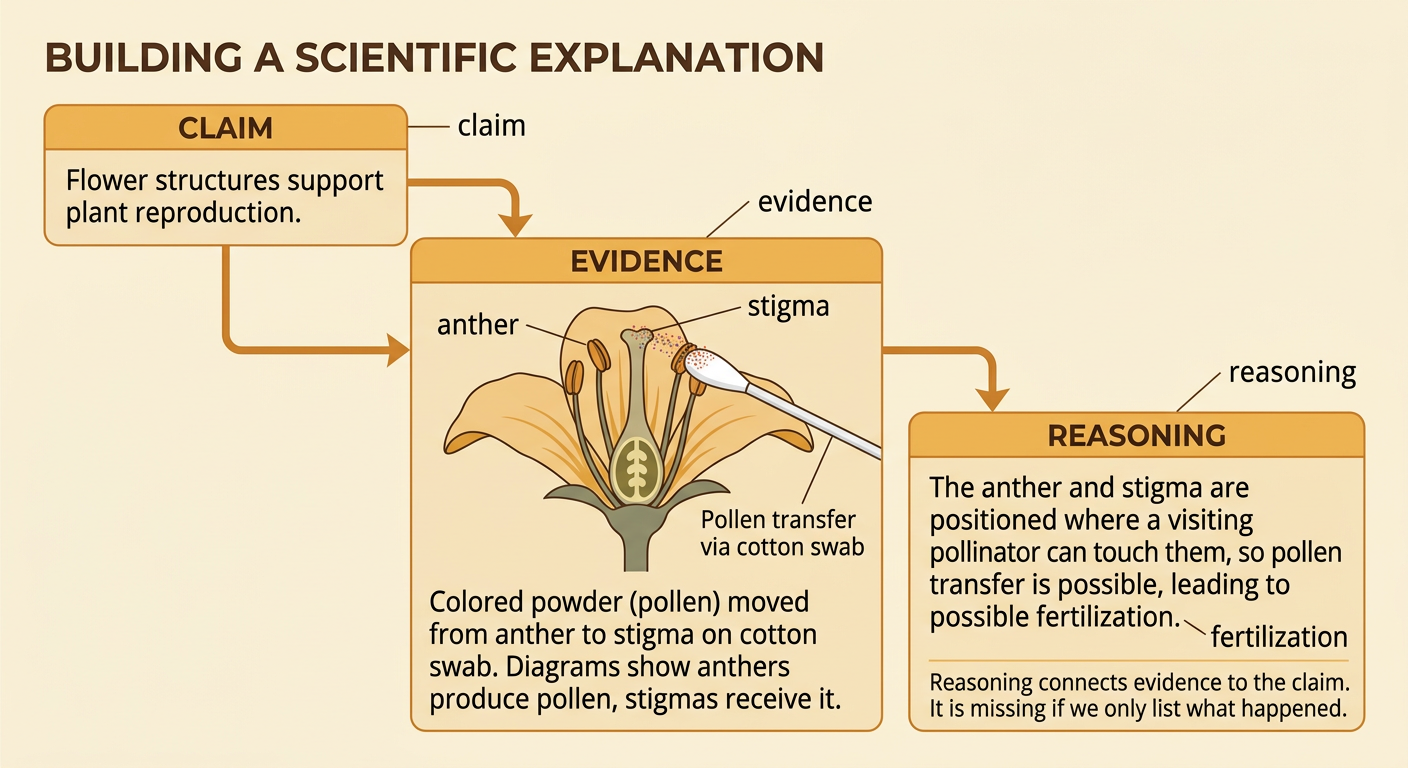
A strong scientific explanation includes a claim, evidence, and reasoning. A claim answers a question, such as, “Flower structures support plant reproduction.” Evidence can come from a text, diagram, investigation, or model. For example, students may observe colored powder moving from a model anther to a model stigma when a cotton swab acts as a bee. They may also read that anthers produce pollen and stigmas receive it. The reasoning connects the evidence to the claim: because the anther and stigma are positioned where a visiting pollinator can touch them, these structures make pollen transfer possible. Students should describe events in order and explain how one event affects the next. They should also consider limits. A single pollen transfer shows how pollination can occur, but seed formation requires successful fertilization afterward.
Creating Pollinator-Friendly Spaces
People change environments in ways that can help or harm pollinators. Removing flowering plants, paving open land, or using pesticides incorrectly can reduce food, shelter, and nesting areas. Communities can also create helpful habitats. A school might plant several native flower species that bloom in spring, summer, and fall. This provides nectar and pollen across much of the growing season. Leaving some bare soil can help ground-nesting bees, while shallow water and undisturbed plant stems can support other animals. For example, students could compare a lawn with few flowers to a garden containing native asters, milkweed, and sunflowers. They might predict which space will receive more pollinator visits and then collect data. A good community plan considers local species, avoids invasive plants, follows pesticide safety guidance, and protects both people and wildlife.
