From Iceboxes to Freezers: Melting and Freezing Water
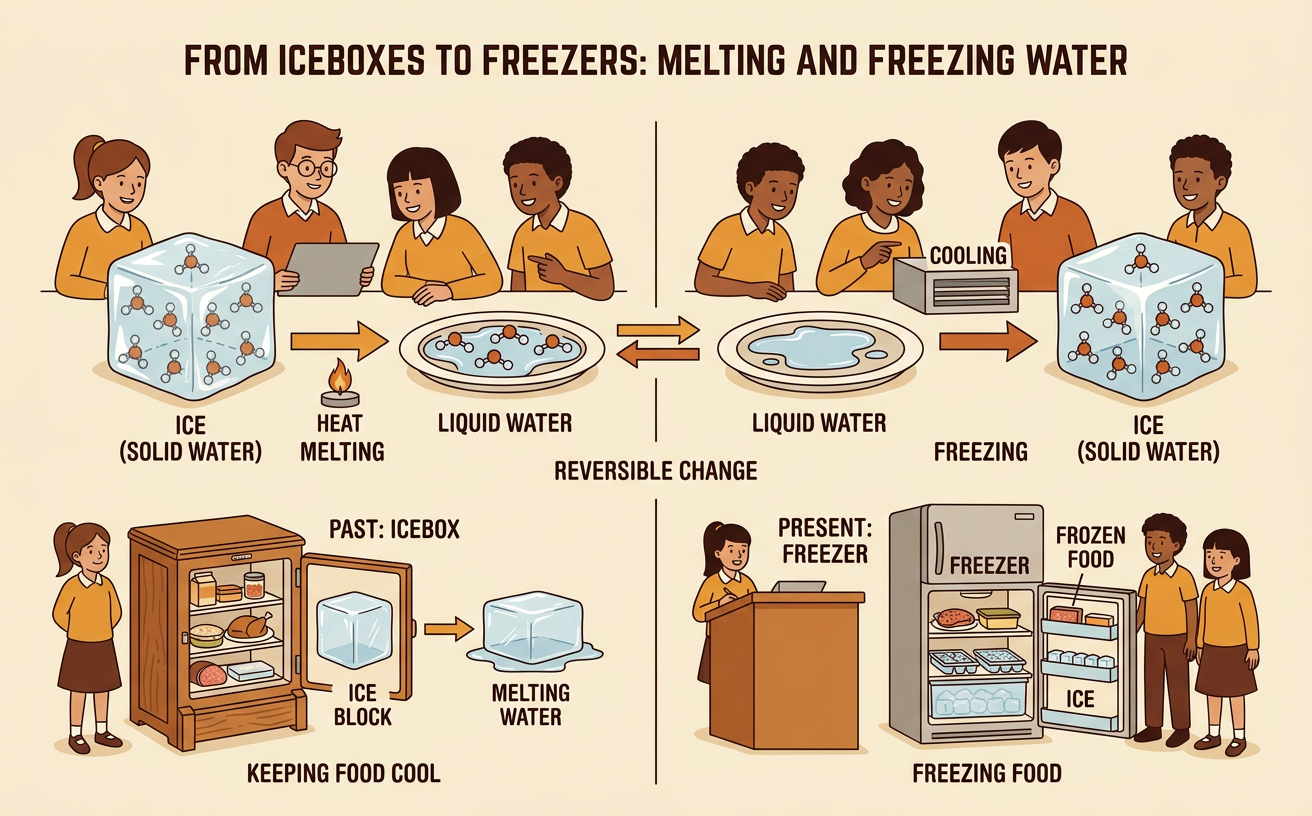
Students observe how heating and cooling cause reversible changes between ice and liquid water, then connect these changes to food storage in the past and present.
Illustrations are auto-generated and may be placeholders. They can be refreshed to match the narration.
Icebox Mystery
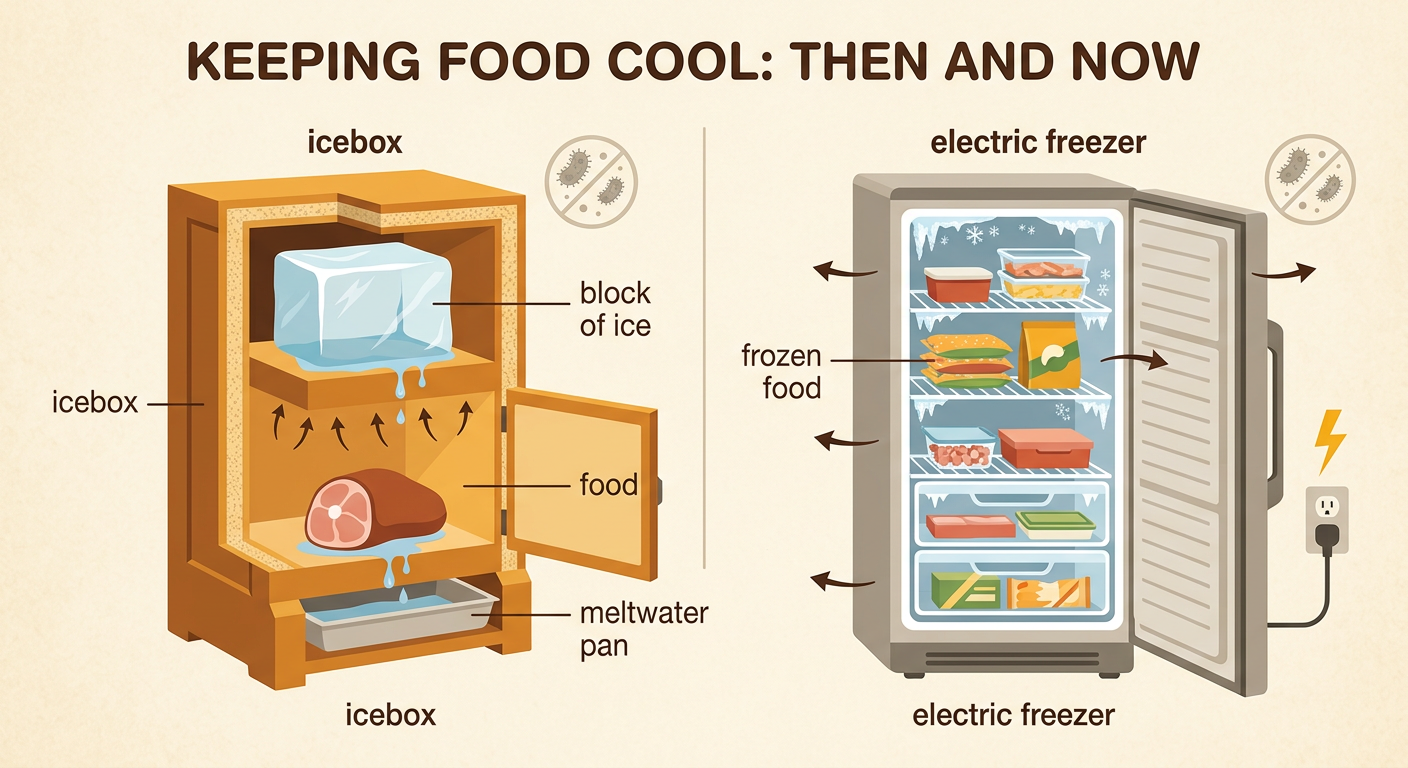
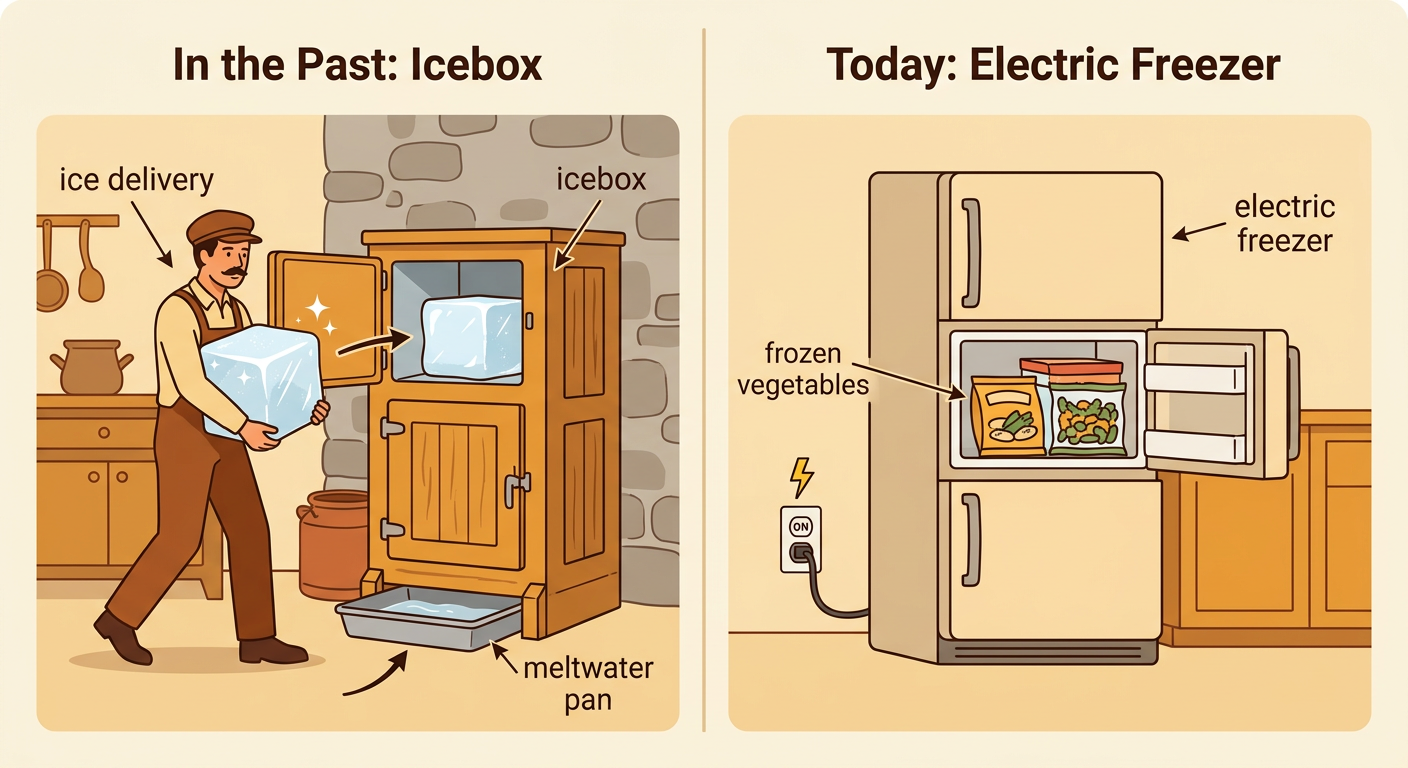
Imagine opening a kitchen cabinet from long ago and finding a large block of ice inside. Before electric freezers were common, many families used an icebox to keep food cool. An icebox was an insulated cabinet with one space for ice and another space for food. The ice absorbed heat from the air and food around it, so the inside stayed cooler than the room. As the ice gained heat, it melted into liquid water. A tray or pipe collected the water. Families had to add new ice regularly. The mystery is that the ice did not make cold; instead, it took in heat as it melted. Today, a freezer uses electricity to remove heat and keep water frozen. Both devices help slow food spoilage by keeping food cool.
Observe Ice Melting
Place one ice cube in a clear cup and set the cup on a table. Observe the ice without touching or tasting it. At first, the ice is solid water with a fixed shape. Heat moves from the warmer room air, cup, and table into the colder ice. After a few minutes, a small puddle forms around the cube. The cube becomes smaller while the amount of liquid water increases. This change is called melting. The water is still the same substance, even though it has changed from a solid to a liquid. For example, after ten minutes, you may see rounded edges on the ice and more water at the bottom of the cup. Melting happens because the ice gains heat, not because the water disappears.

Track Time and Changes
Scientists record both time and observations so they can describe change clearly. Start a timer when the ice cube is placed in the cup. Observe it every five minutes and record what you see. At 0 minutes, the cup may contain only solid ice. At 5 minutes, a thin layer of water may appear. At 10 minutes, the ice may be about half its starting size. If the observation begins at 10:15 a.m. and ends at 10:30 a.m., the elapsed time is 15 minutes. You can find this interval by counting three groups of five minutes. Results may differ because ice cubes, cups, and room temperatures are not always the same. Accurate time records help connect the heating of the ice with the steps of melting.

Can the Change Be Reversed?
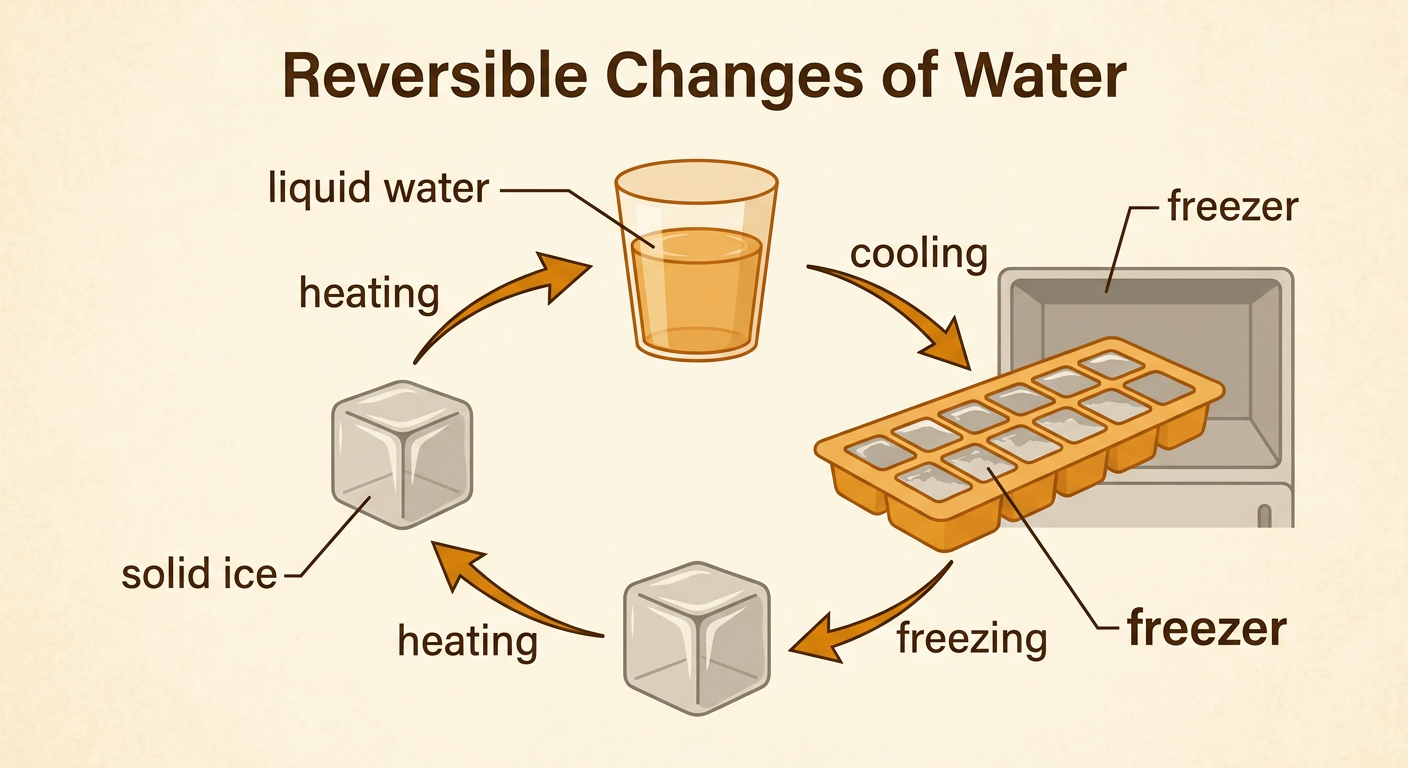
Melting can be reversed by cooling the liquid water. Pour the melted water into an ice cube tray and place it in a freezer with an adult’s help. A freezer removes heat from the water. As the water loses enough heat, it changes from a liquid into solid ice. This change is called freezing. The ice may have a different shape because it takes the shape of the tray, but it is still water. For example, water that melted from a round piece of ice can freeze into a cube-shaped piece. Evidence of reversal is that solid ice became liquid water when heated, and the liquid became solid again when cooled. Melting and freezing are reversible changes because the material remains water during both changes.
Iceboxes and Freezers
In the past, an ice delivery worker brought large blocks of ice to homes. Families placed the ice in an insulated icebox and emptied the meltwater pan often. If the ice melted completely, the cabinet warmed, so families needed another block. People planned meals around foods that were available and could be stored safely for a short time. Today, most families use electric refrigerators and freezers. A freezer can keep water frozen for long periods as long as it has power. It does not need daily ice deliveries or a meltwater pan. For example, a family today can store frozen vegetables for weeks, while a family using an icebox had less dependable cooling. Both time periods used cooling to protect food, but the tools, work, and reliability were different.
Make an Evidence-Based Claim
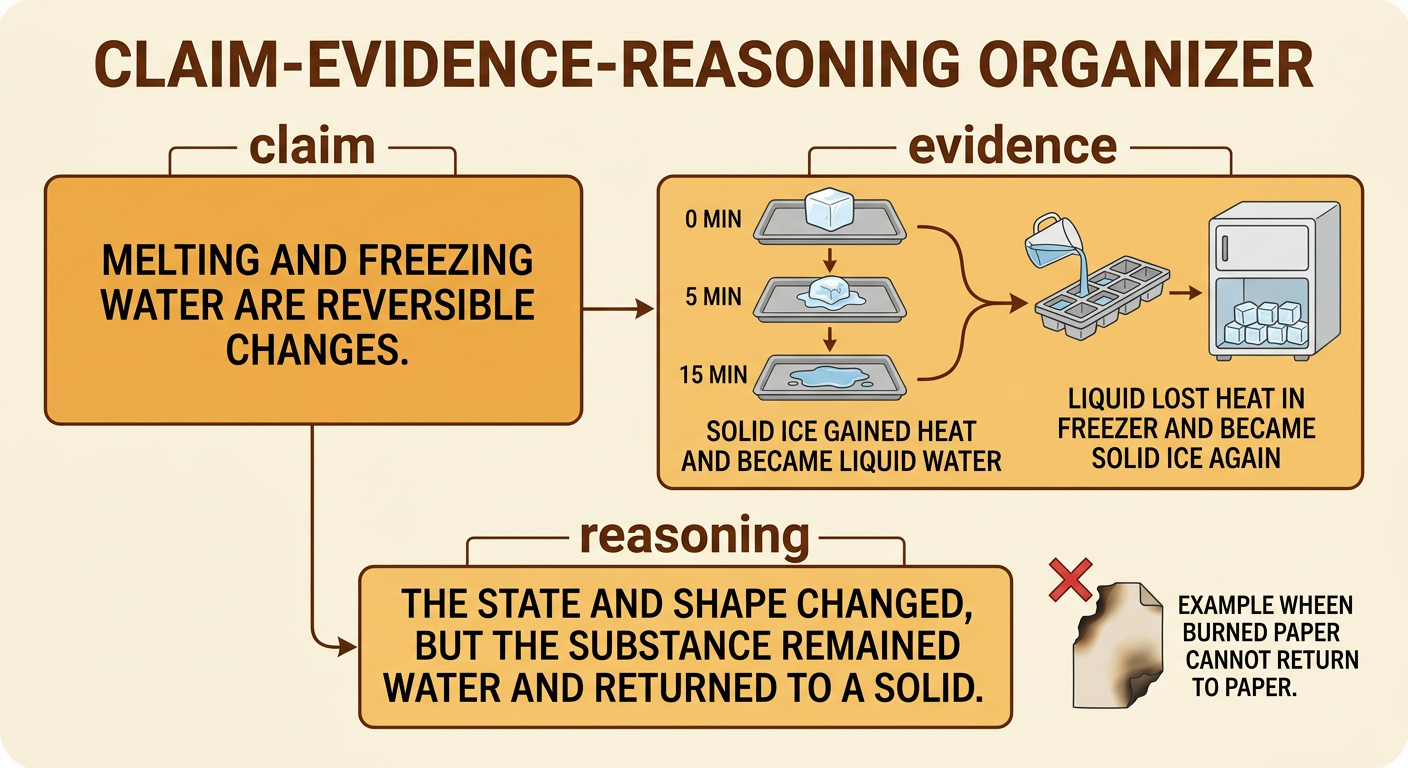
An evidence-based claim answers a question and uses observations as support. Consider this question: Can a change caused by heating or cooling water be reversed? A strong claim is: Melting and freezing water are reversible changes. Evidence from the investigation supports the claim. The solid ice gained heat and became liquid water. Later, the liquid water lost heat in the freezer and became solid ice again. The reasoning connects the evidence to the claim: the state and shape changed, but the substance remained water. You can also use measurements, such as, “The ice began melting within 5 minutes and was mostly liquid after 15 minutes.” Do not claim that every change is reversible. Burning paper, for example, cannot be reversed by cooling it. Base your conclusion only on evidence that matches the question.