
From Letters to Video Calls: How Communication Changed Communities
Students compare communication methods from different time periods and use historical evidence to explain how faster communication changed community life.
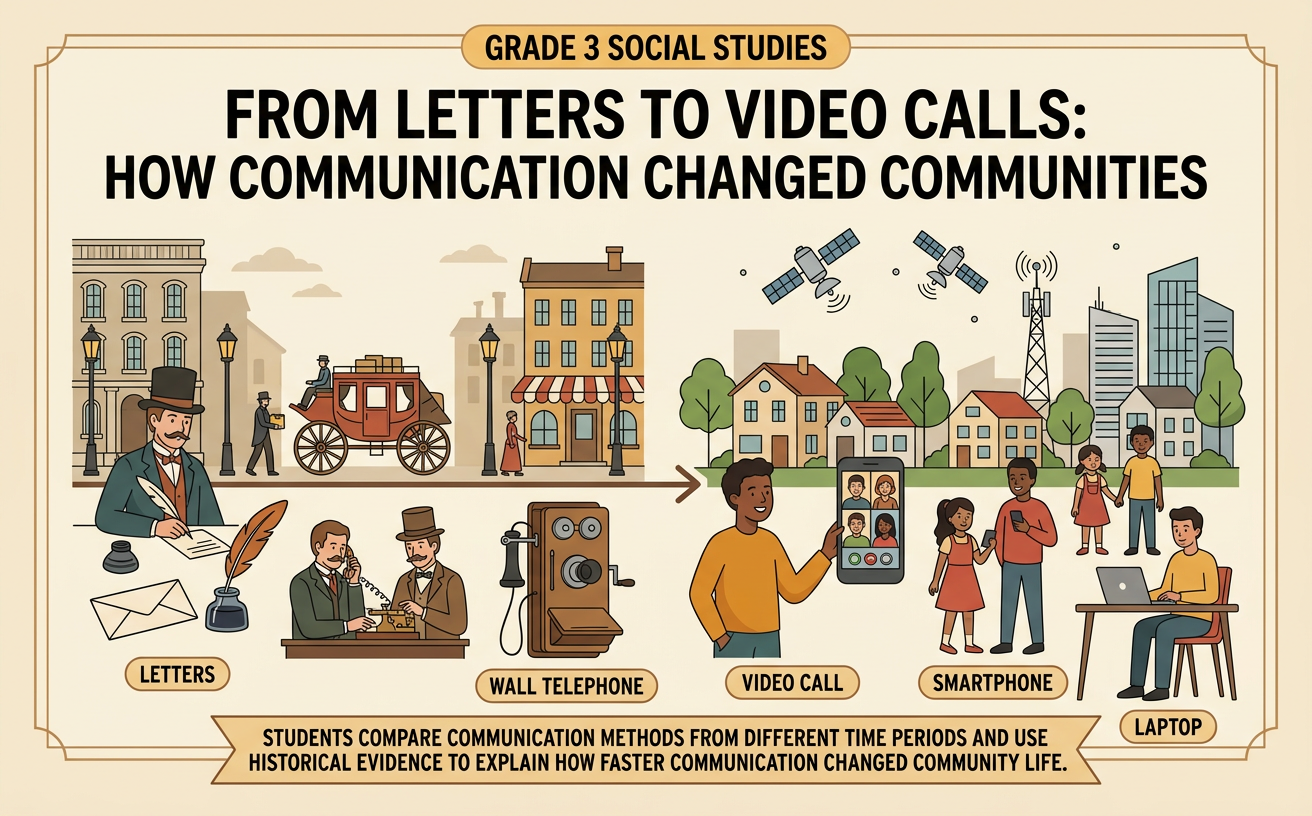
Illustrations are auto-generated and may be placeholders. They can be refreshed to match the narration.
Communication Long Ago
Long ago, people shared news by speaking face to face, sending handwritten letters, or asking travelers to carry messages. Before telephones and electronic communication, distance made communication slow. A letter had to be written, carried by a person, horse, wagon, train, or ship, and delivered to the correct place. A reply traveled back in the same way. For example, in the early 1800s, a family living far from relatives might wait weeks for a letter. Important news could arrive after an event had already happened. Communities often depended on local gathering places, such as stores, schools, churches, and town meetings, to exchange news. These methods met the need to share information, but travel time, weather, cost, and distance limited how quickly messages could move.

Comparing Historical Sources
Historical sources provide evidence about life in the past. Two sources about the same topic may share key points but include different details. Imagine reading a letter written in 1860 and a history text about mail in the 1860s. The letter might say, “Your news reached us after twelve days,” showing one person’s experience. The history text might explain that mail traveled by stagecoach, train, or ship. Both sources show that messages took time to travel. However, the letter expresses personal feelings, while the history text gives broader facts. When comparing sources, identify each source’s main point, details, author, and time period. Then ask how the sources agree and differ. Using evidence from both sources creates a stronger explanation than relying on only one.

Innovations That Sped Up Messages
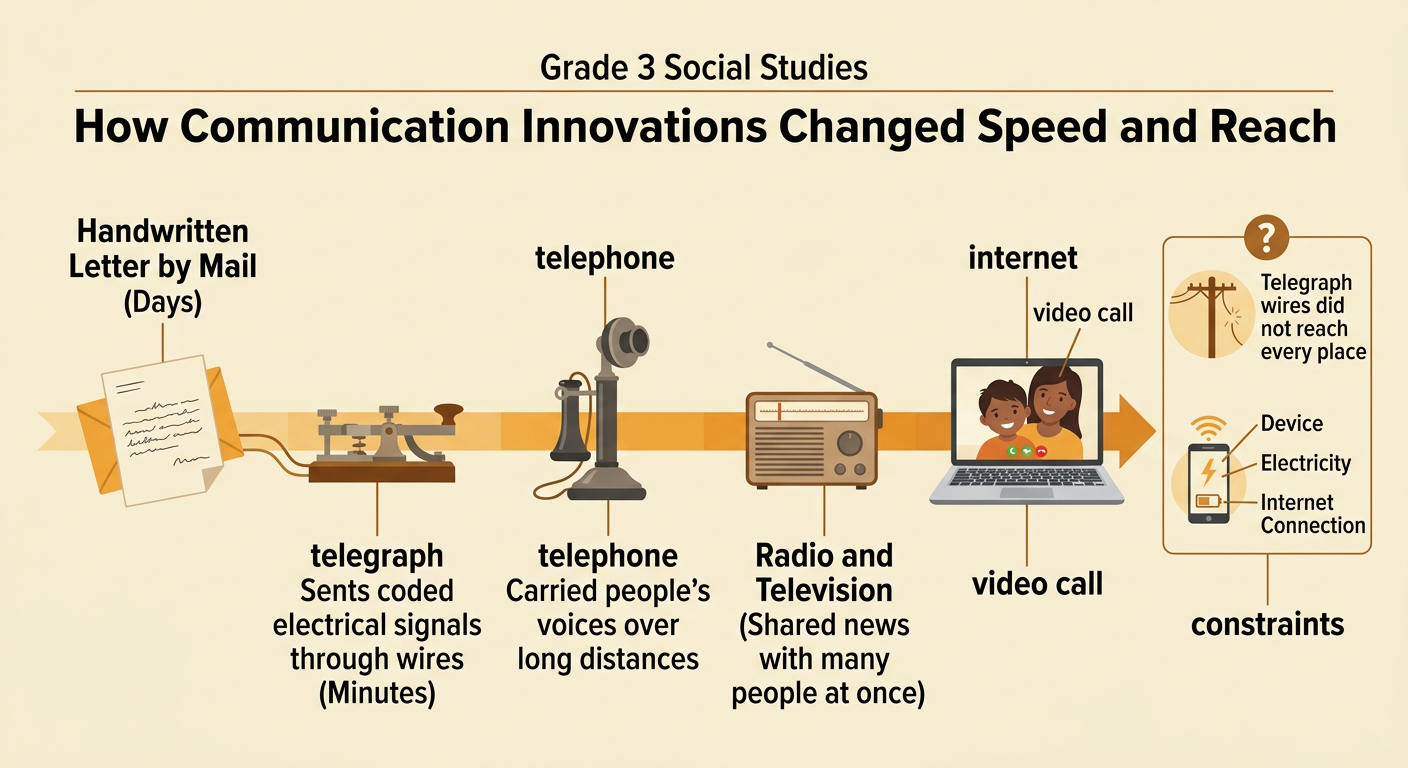
An innovation is a new or improved tool or process that solves a problem. Communication innovations helped messages travel faster. In the 1840s, the telegraph sent coded electrical signals through wires. A message that once took days to carry could sometimes reach another city in minutes. Later, telephones allowed people to hear one another’s voices across long distances. Radio and television sent news to many people at once. Computers, the internet, smartphones, and video calls now send words, pictures, sounds, and live images almost instantly. Each innovation addressed a need for quicker or wider communication, but each also had constraints. Telegraph lines did not reach every location, early telephone service cost money, and modern video calls require devices, electricity, and an internet connection.
Effects on Community Life
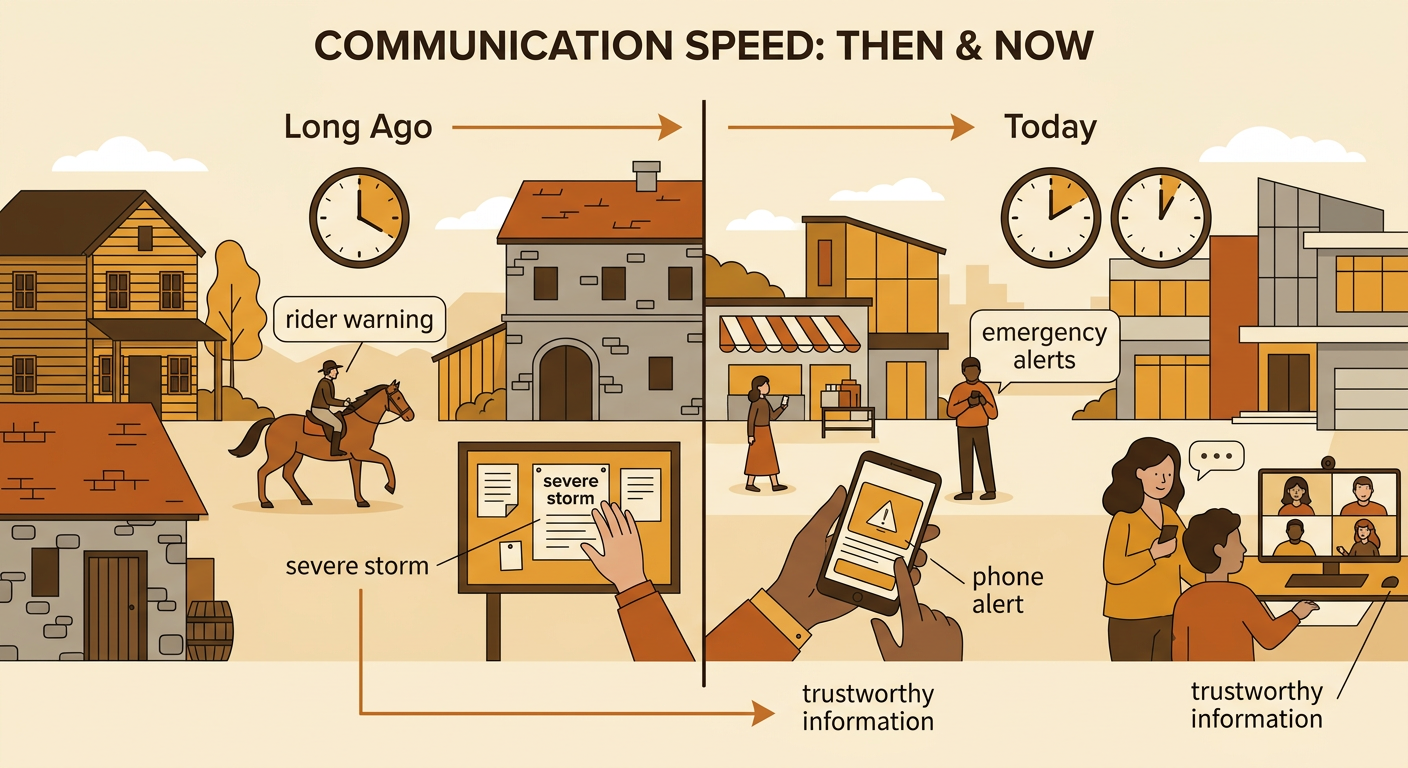
Faster communication changed how communities worked. In the past, leaders might send a rider or post a notice to warn people about danger. Today, officials can send phone alerts quickly. Businesses can order supplies, families can share news, and schools can contact caregivers without waiting for a delivered letter. For example, if a severe storm is approaching, a modern weather alert can reach many community members within seconds. They can seek shelter before the storm arrives. Faster communication also helps people work with others outside their local area through calls and online meetings. However, speed can create problems. Incorrect information can spread quickly, and not everyone has equal access to devices or internet service. Compared with earlier periods, communities today receive information faster, but people must still check whether information is accurate and trustworthy.
A Communication Design Challenge
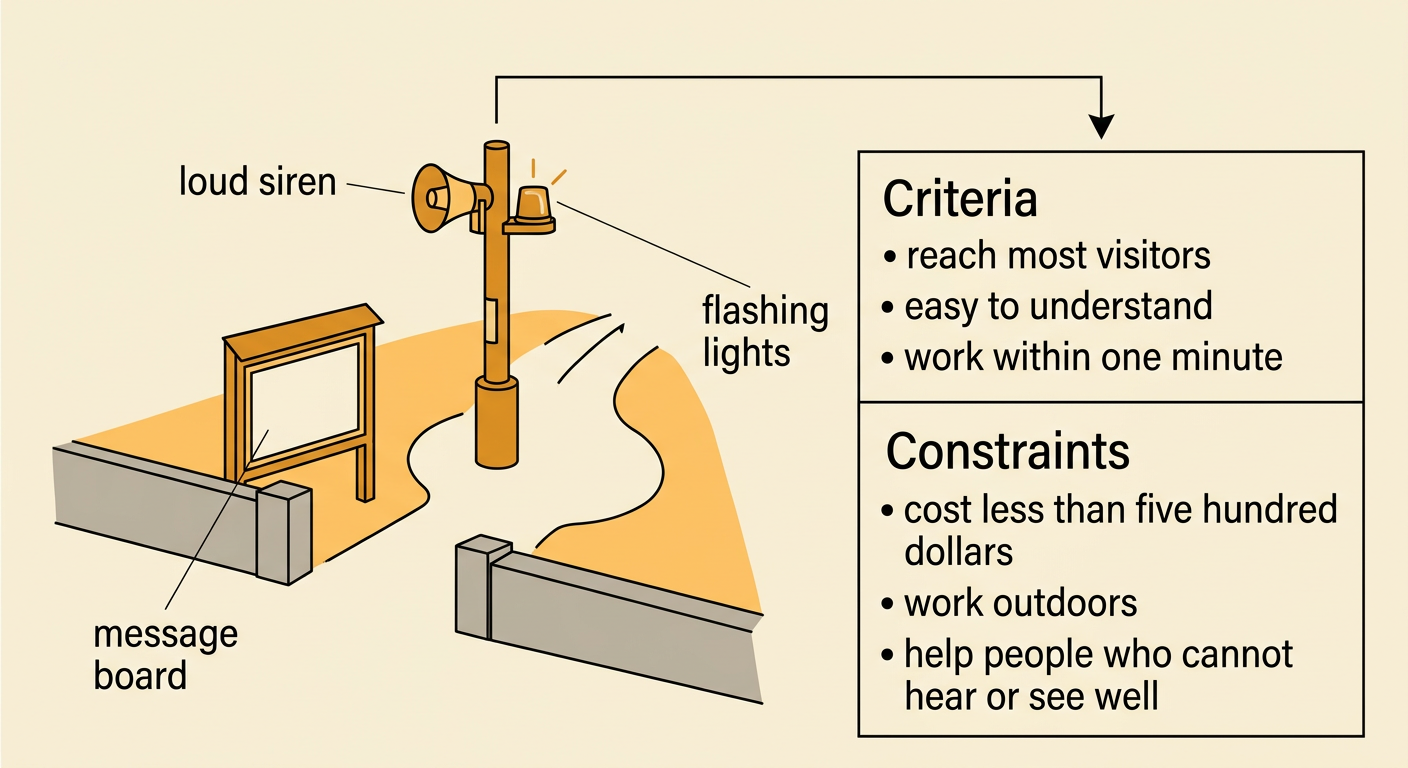
Suppose a community park needs a way to warn visitors when lightning is nearby. This need creates a design problem: How can a warning reach people quickly, clearly, and safely? Begin by setting criteria, which are the features a successful solution must have. The warning must reach most visitors, be easy to understand, and work within one minute. Next, identify constraints, which are limits on the design. The solution must cost less than $500, work outdoors, and help visitors who cannot hear or see well. One possible design combines a loud siren, flashing lights, and a large message board. Students can draw and label a model, explain how it meets each criterion, and note any weaknesses. They can then compare designs and improve their ideas using evidence.
Evidence-Based Exit Ticket
Use historical evidence to answer this question: How did faster communication change community life? First, make a clear claim. Next, support it with details from at least two lesson sources or examples. Finally, explain how each detail supports your claim. A strong response might state that faster communication helped communities react sooner and connect over greater distances. As evidence, the writer could explain that an 1860 letter took twelve days to arrive, while a modern emergency alert can arrive within seconds. The writer could also mention that video calls allow people in different places to speak and see one another live. These details show a major difference between past and present communication. Before finishing, check that your response compares time periods, uses accurate evidence, and explains why faster messages mattered to community members.
