
From Natural Resources to Synthetic Materials
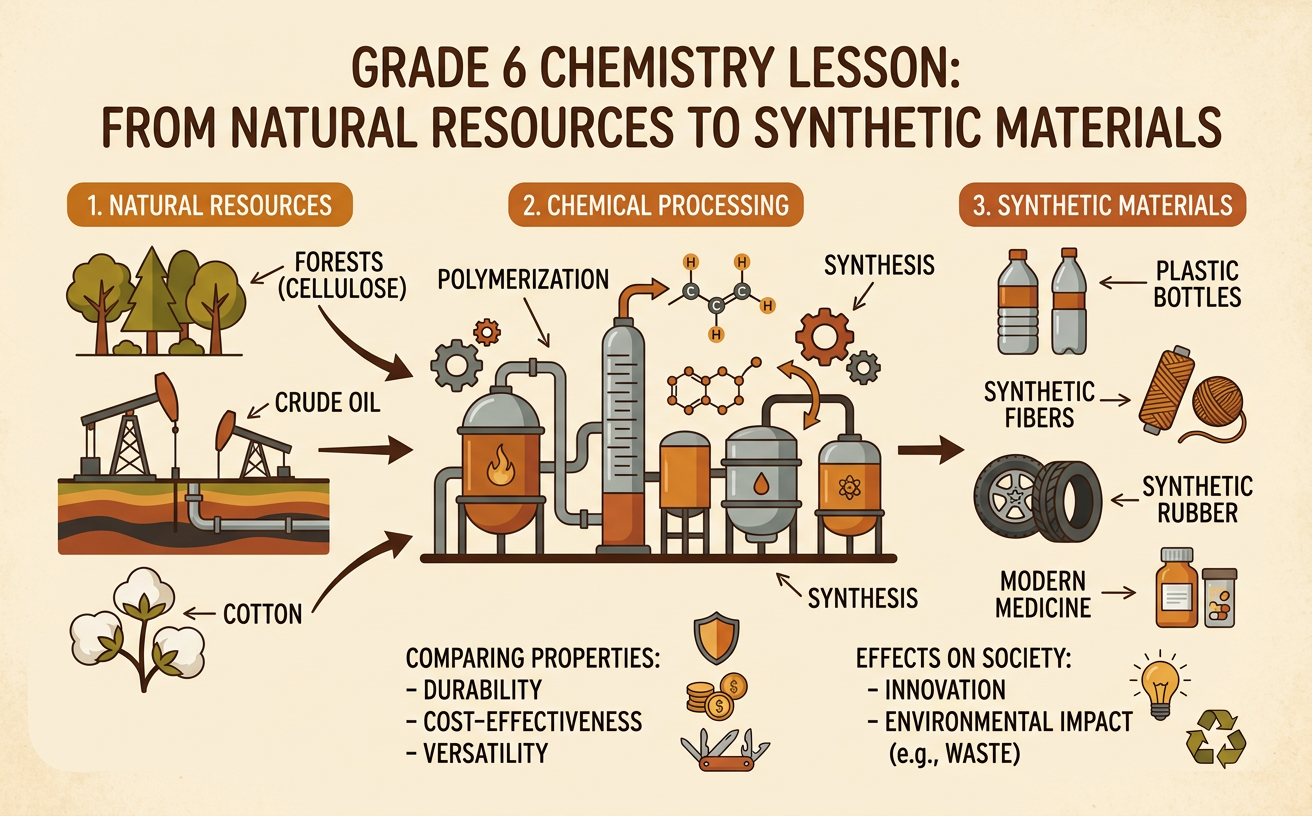
Students examine evidence about how synthetic materials are made from natural resources and compare their useful properties, costs, and effects on society.
Illustrations are auto-generated and may be placeholders. They can be refreshed to match the narration.
Natural and Synthetic Materials
A natural resource is matter found in nature that people can use, such as wood, cotton, minerals, water, or petroleum. A natural material may be used with limited changes. For example, cotton fibers are cleaned and spun into thread. A synthetic material is made by people through chemical processes that change natural resources into substances with new structures and properties. Polyester fabric, for example, is made from chemicals commonly obtained from petroleum or natural gas. Its fibers can be strong, lightweight, and resistant to wrinkles. Synthetic does not automatically mean harmful, and natural does not automatically mean safe or sustainable. Scientists examine where a material comes from, how it is produced, what properties it has, and what happens to it after use.

Tracing a Material's Source
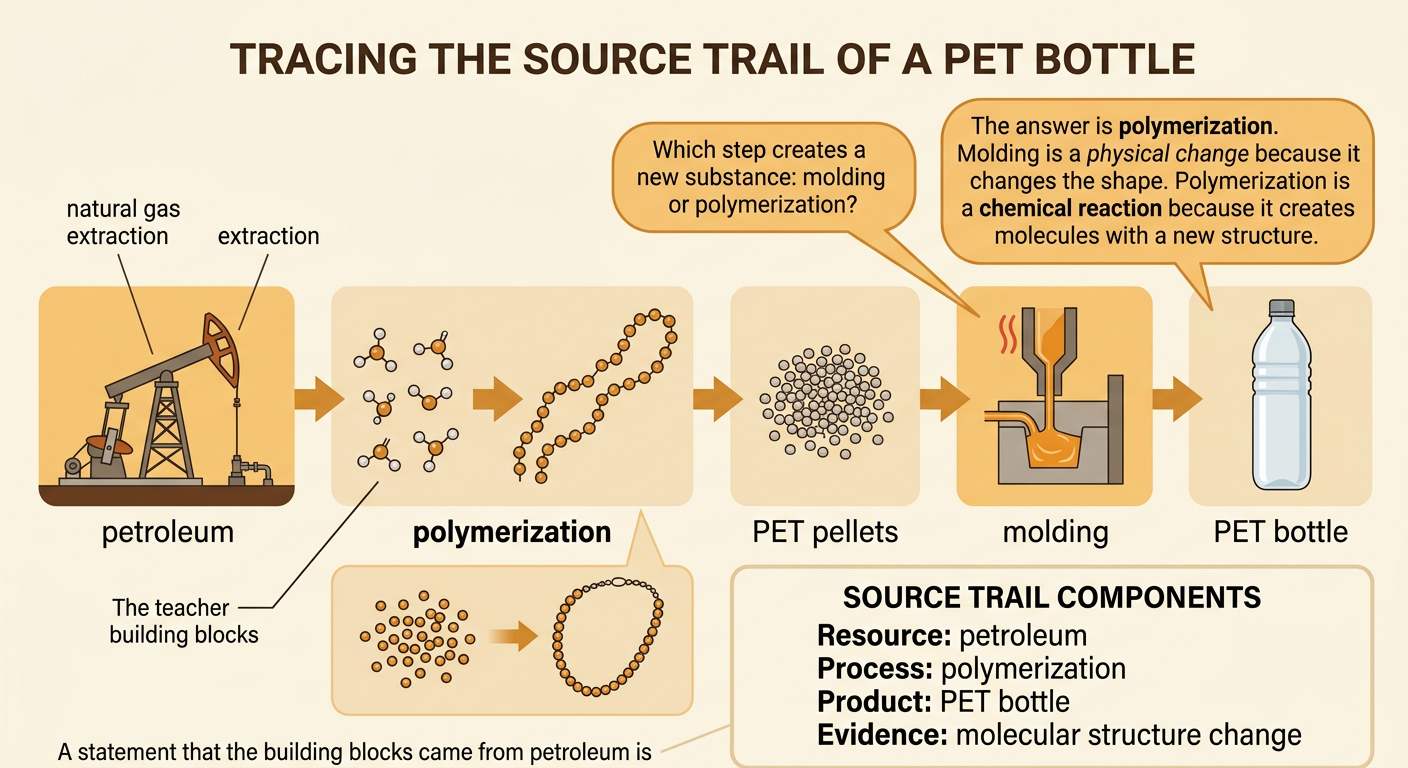
To trace a synthetic material, follow the steps backward from the finished product to its natural resources. A clear source trail names both physical changes and chemical reactions. Consider a polyethylene terephthalate, or PET, drink bottle. PET is commonly made from chemical building blocks obtained from petroleum or natural gas. Manufacturers use a chemical reaction called polymerization to join many small molecules into long PET molecules. The PET is formed into pellets, heated until it softens, and molded into bottles. Molding changes the material's shape, while polymerization creates a new substance. When reading a science text, identify the resource, process, product, and evidence. A sentence stating that PET's chemical building blocks come from petroleum is specific evidence for its natural-resource origin.
Comparing Material Properties
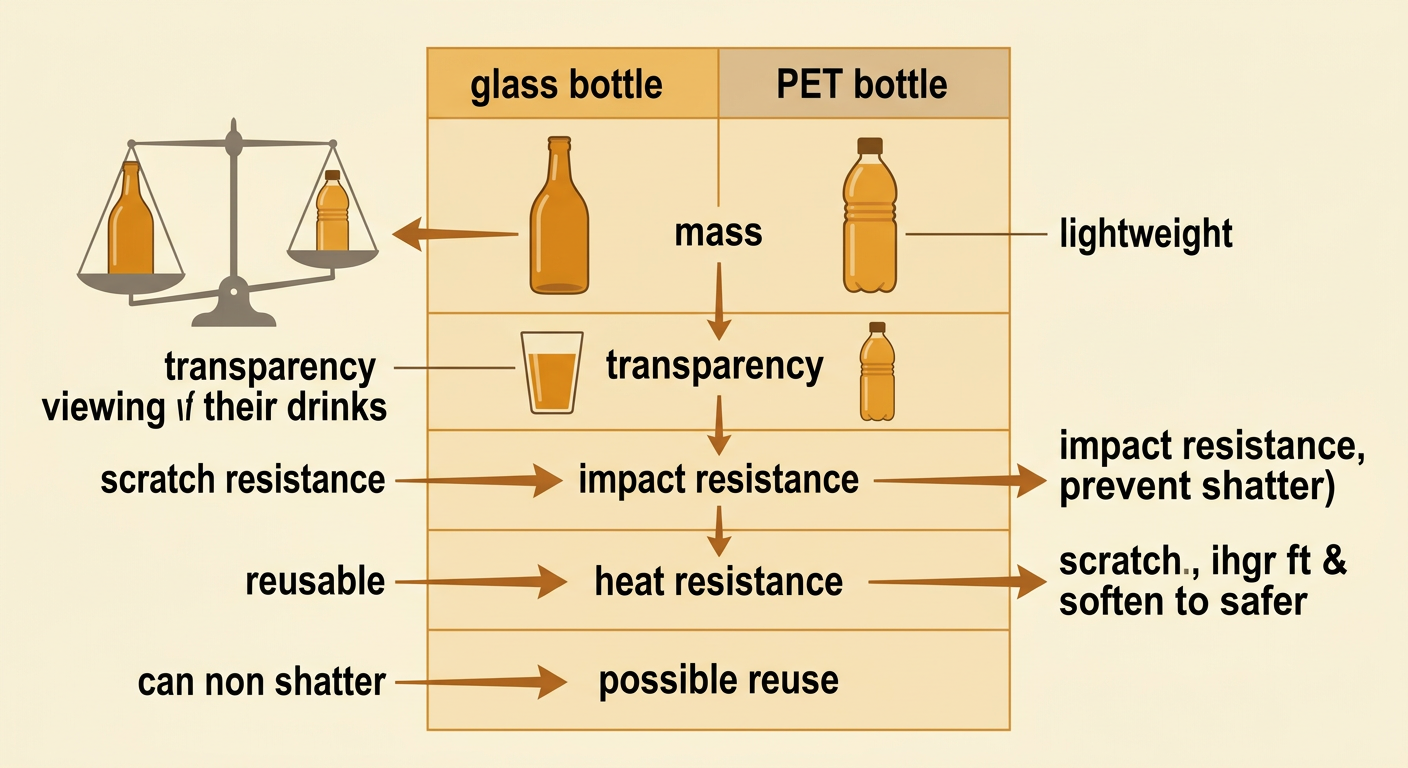
Material properties help engineers decide which material fits a purpose. Useful properties include strength, flexibility, hardness, transparency, water resistance, heat resistance, mass, and ability to be reused or recycled. For example, both glass and PET plastic can make clear drink bottles. Glass resists scratching and can be washed and reused many times, but it is heavy and can shatter. PET is lightweight and impact resistant, but it can scratch, soften with high heat, and may be used only a limited number of times. A fair comparison uses the same test conditions. Students might test equal-sized empty bottles by measuring mass, observing transparency, and recording what happens during a controlled impact test conducted by the teacher. Evidence from several properties is stronger than a judgment based on appearance alone.
Analyzing Cost and Quantity Data
Ratios and rates allow us to compare material choices at the same scale. Suppose one empty PET bottle has a mass of 25 grams and costs $0.18, while one empty glass bottle has a mass of 300 grams and costs $0.42. For 120 bottles, PET requires 3,000 grams of material because 120 times 25 equals 3,000. Glass requires 36,000 grams. The glass-to-PET mass ratio is 36,000 to 3,000, or 12 to 1. The PET bottles cost $21.60, while the glass bottles cost $50.40. The purchase-cost difference is $28.80. These calculations suggest lower material and transportation demands for PET, but they do not include every cost. A complete analysis may also include washing, breakage, recycling, disposal, and environmental cleanup.

Evaluating Benefits and Trade-Offs
A material choice can create different benefits and costs for different groups. Lightweight plastic food packaging can lower shipping costs, reduce breakage, and protect food from contamination. Consumers may pay less, stores may lose fewer products, and transportation companies may use less fuel. However, communities may pay for litter collection, recycling systems, or landfill space. Wildlife and ecosystems can be harmed when plastic waste escapes into the environment. Workers and businesses may also be affected when rules or materials change. One possible solution is a return system for durable, refillable containers. It may reduce waste, but it requires collection, washing, transportation, and customer participation. Evaluating the solution means asking who benefits, who pays, how large each effect is, and whether evidence supports the expected results.

Evidence-Based Exit Response
Use a claim, evidence, and reasoning structure to explain a material decision. Begin with a claim that answers the question. Then cite specific facts or numerical data from the lesson. Finally, explain how the evidence supports the claim and acknowledge an important trade-off. For example: “PET may be a better choice when low shipping mass is the main goal. The data show that 120 PET bottles have a mass of 3,000 grams, while 120 glass bottles have a mass of 36,000 grams. Because glass is 12 times as heavy in this example, transporting PET could require less energy. However, this choice is responsible only if the bottles are collected and managed so they do not become pollution.” A strong response connects the natural resource, manufacturing process, useful properties, costs, and effects on society.
