From Natural Resources to Synthetic Materials
Students trace how synthetic materials are chemically produced from natural resources and evaluate their benefits, costs, and environmental impacts.
Illustrations are auto-generated and may be placeholders. They can be refreshed to match the narration.
Natural and Synthetic Materials
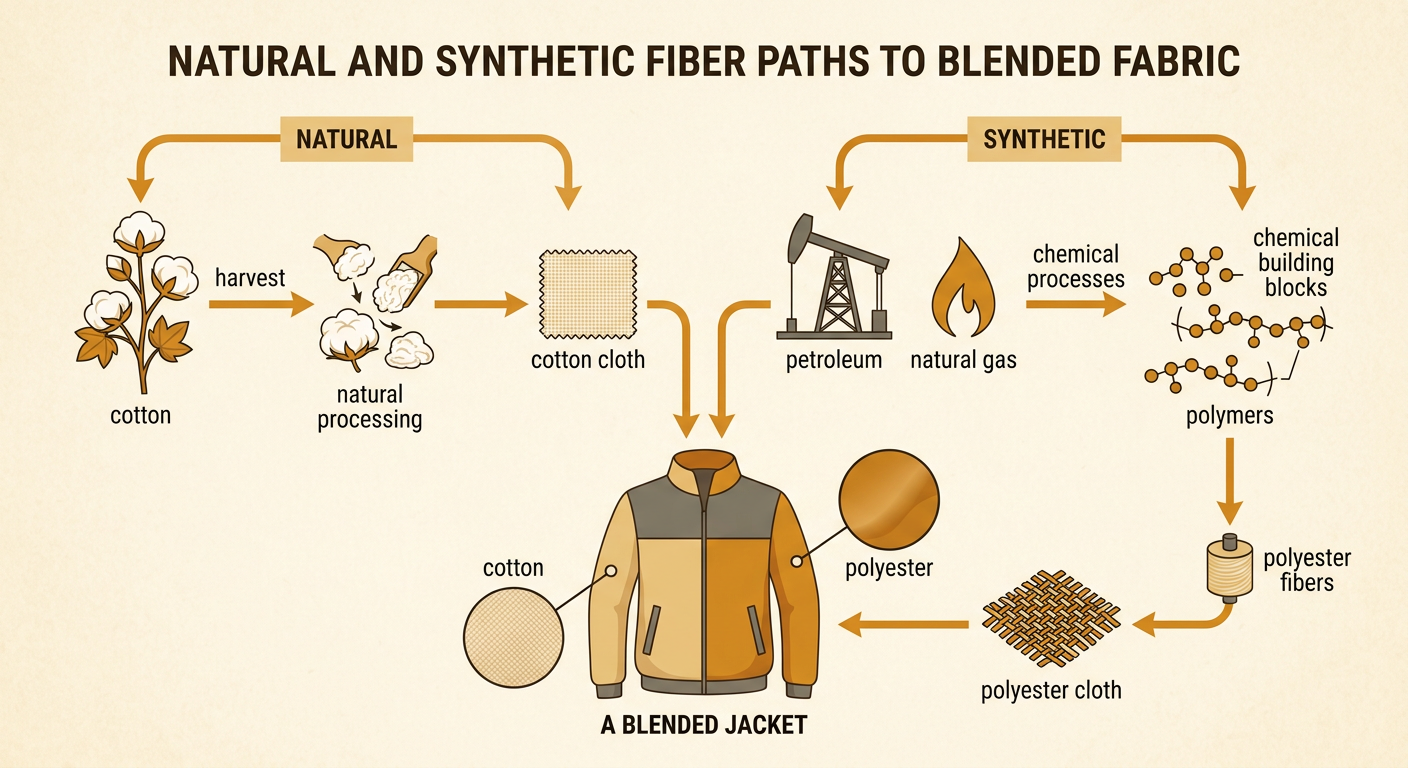
Natural materials come from plants, animals, or Earth materials and may be used with limited processing. Wood, cotton, wool, stone, and natural rubber are examples. Synthetic materials are made through chemical processes that change natural resources into substances with new structures and properties. For example, polyester is produced from chemicals commonly obtained from petroleum or natural gas. Its long polymer molecules can be spun into strong, wrinkle-resistant fibers. A jacket may contain both natural cotton and synthetic polyester, so many products cannot be placed in only one category. “Synthetic” does not automatically mean harmful, and “natural” does not automatically mean environmentally friendly. To compare materials fairly, scientists examine their sources, production methods, useful properties, and effects throughout their life cycles.
Raw Materials and Chemical Processing
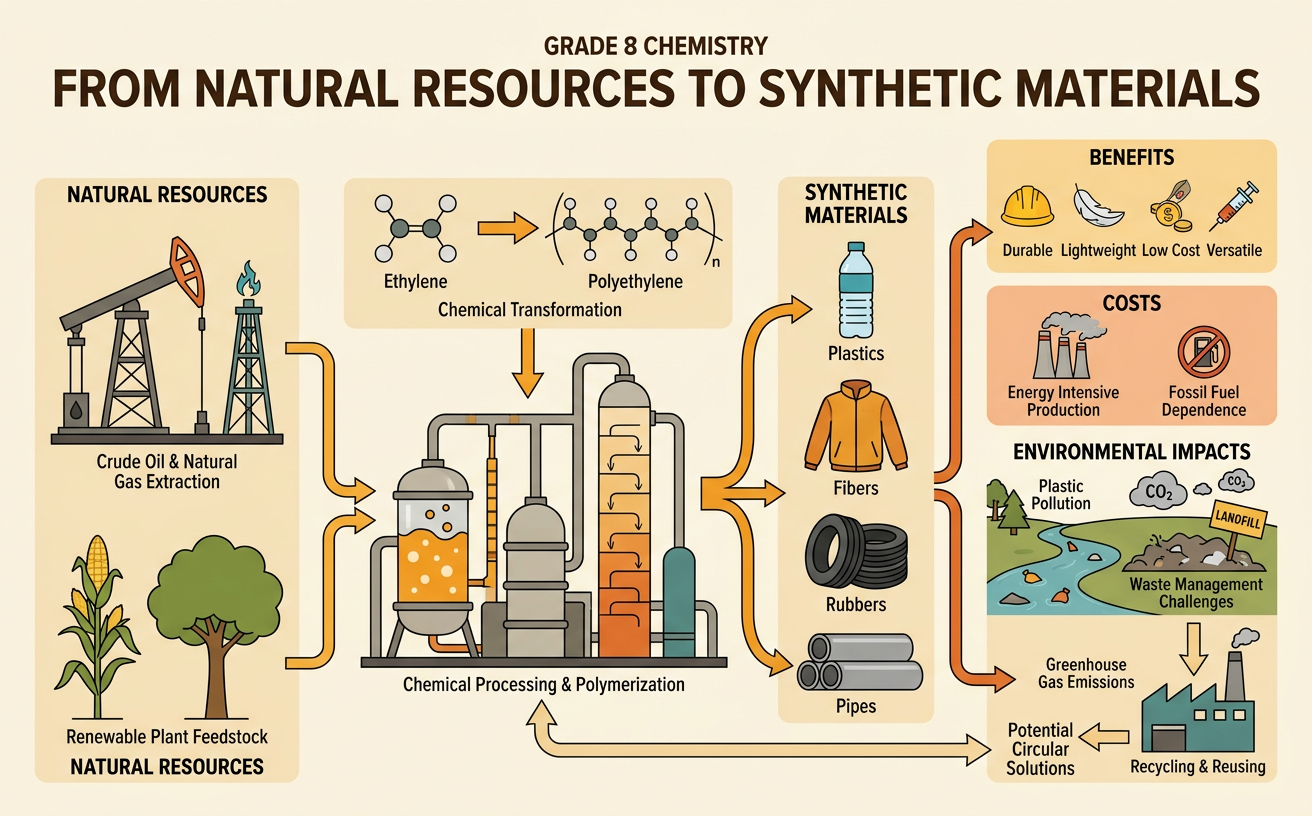
Producing a synthetic material usually involves several physical and chemical steps. Polyethylene terephthalate, or PET, provides one example. Manufacturers obtain starting chemicals from petroleum or natural gas, separate and purify them, and use chemical reactions to make small molecules called monomers. During polymerization, monomers join into long-chain PET molecules. The PET can be cooled into pellets, melted, and shaped into bottles or spun into fabric fibers. Melting and shaping are physical changes because the PET molecules remain PET. Polymerization is a chemical change because atoms are rearranged and new chemical bonds form. Each stage may require energy, water, equipment, and transportation. It may also produce emissions or waste. Tracing every stage helps reveal that a finished bottle depends on both raw natural resources and human-controlled chemical processes.

Connecting Properties to Uses
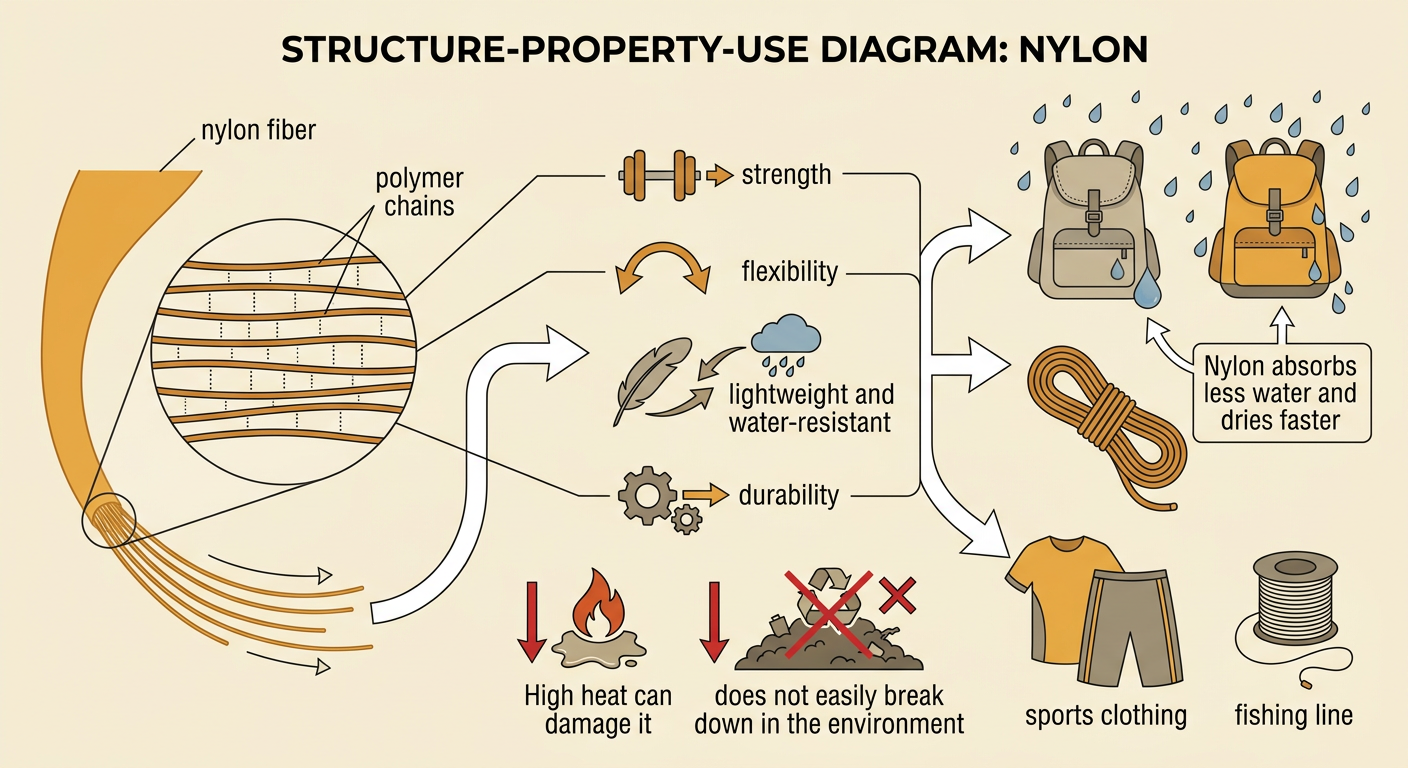
A material’s structure helps determine its properties, and those properties influence how people use it. Nylon contains long polymer chains that can be drawn into thin fibers. The chains and attractions between them help nylon fibers resist pulling and bending. Nylon is also lightweight, flexible, and resistant to water and wear. These properties make it useful for backpacks, ropes, sports clothing, and fishing line. However, no material has every desirable property. A nylon backpack may dry faster than a cotton one, but high heat can damage nylon, and the material does not easily break down in the environment. Engineers choose materials by matching measured properties to a product’s purpose. Tests of strength, flexibility, absorbency, heat resistance, and durability provide evidence for deciding whether nylon or another material is the better choice.
Benefits of Synthetic Materials
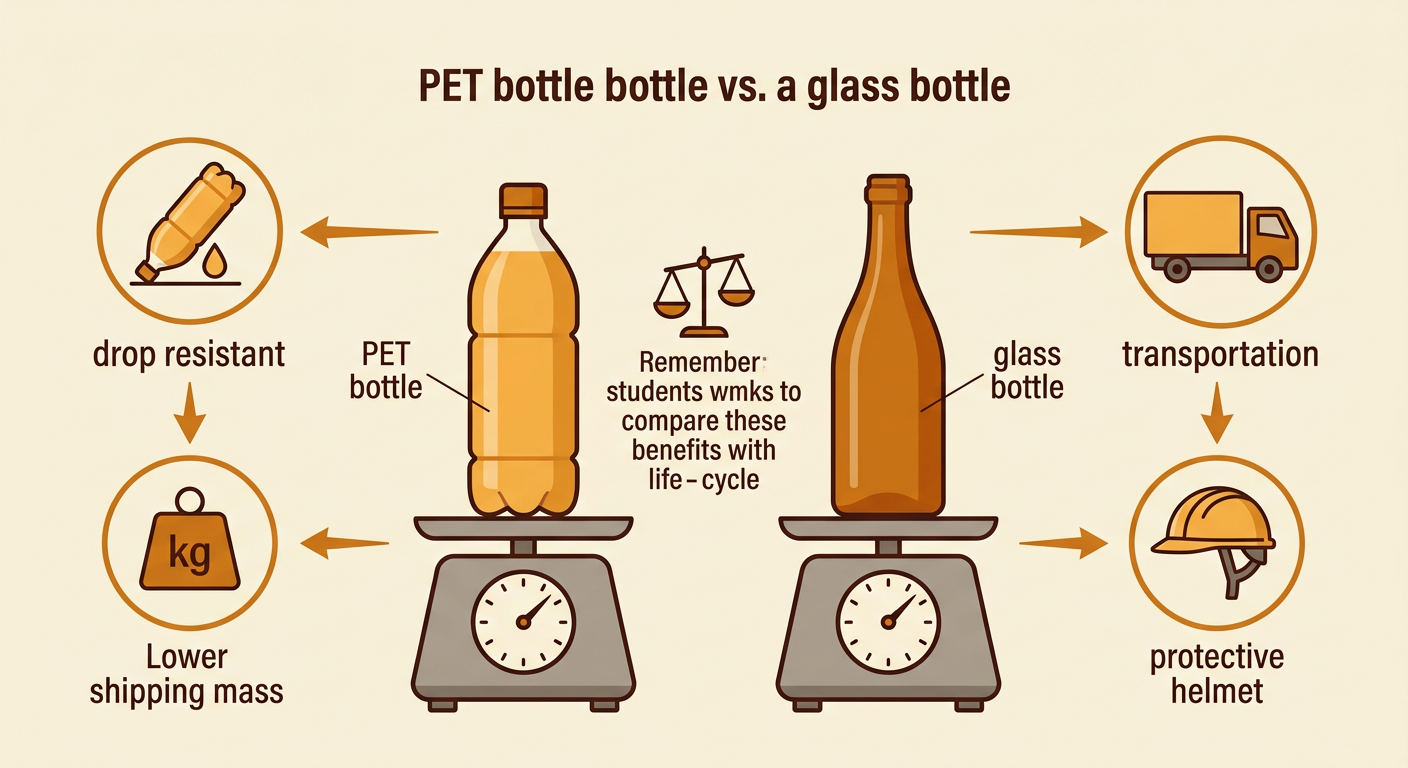
Synthetic materials can be designed to provide combinations of properties that are difficult to obtain from natural materials alone. They may be lightweight, strong, waterproof, flexible, heat-resistant, or inexpensive to manufacture. For example, a PET drink bottle is much lighter than a glass bottle and does not shatter when dropped. Its low mass can reduce the fuel needed to transport a shipment, while its toughness can reduce injuries and product loss. Synthetic polymers are also used in electrical insulation, medical tubing, protective helmets, and food packaging. These products can improve safety, health, and access to goods. Large-scale manufacturing may also make useful products affordable for more people. However, a benefit during use does not prove that a material is the best overall choice. Its resource use, production pollution, lifetime, and disposal must also be considered.
Environmental and Social Costs
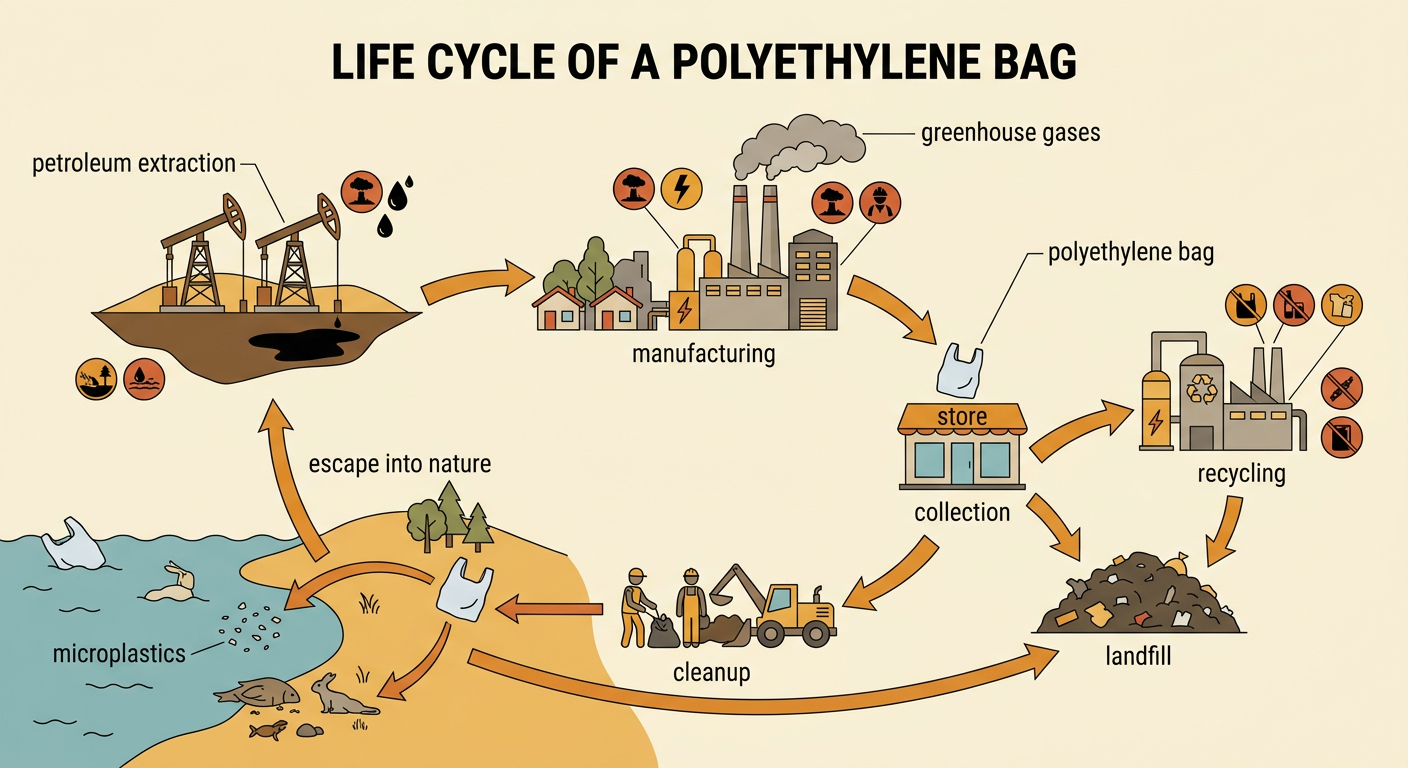
Synthetic materials can create costs at every stage of their life cycle. Extracting petroleum or natural gas can disturb habitats and risk spills or leaks. Factories use energy and may release greenhouse gases or other pollutants. After use, some plastics can be recycled, but contamination, mixed materials, and limited collection systems often prevent recycling. Plastic that escapes into the environment can injure wildlife or break into tiny pieces called microplastics. Consider a single-use polyethylene shopping bag: it uses little material and is convenient, but it may be used for only minutes while remaining in the environment for many years. Social costs can include health risks for workers, pollution near communities, and public spending on waste collection and cleanup. These costs may fall on people who receive few of the product’s benefits, so fairness is also part of evaluating a material.
Evidence-Based Material Choices
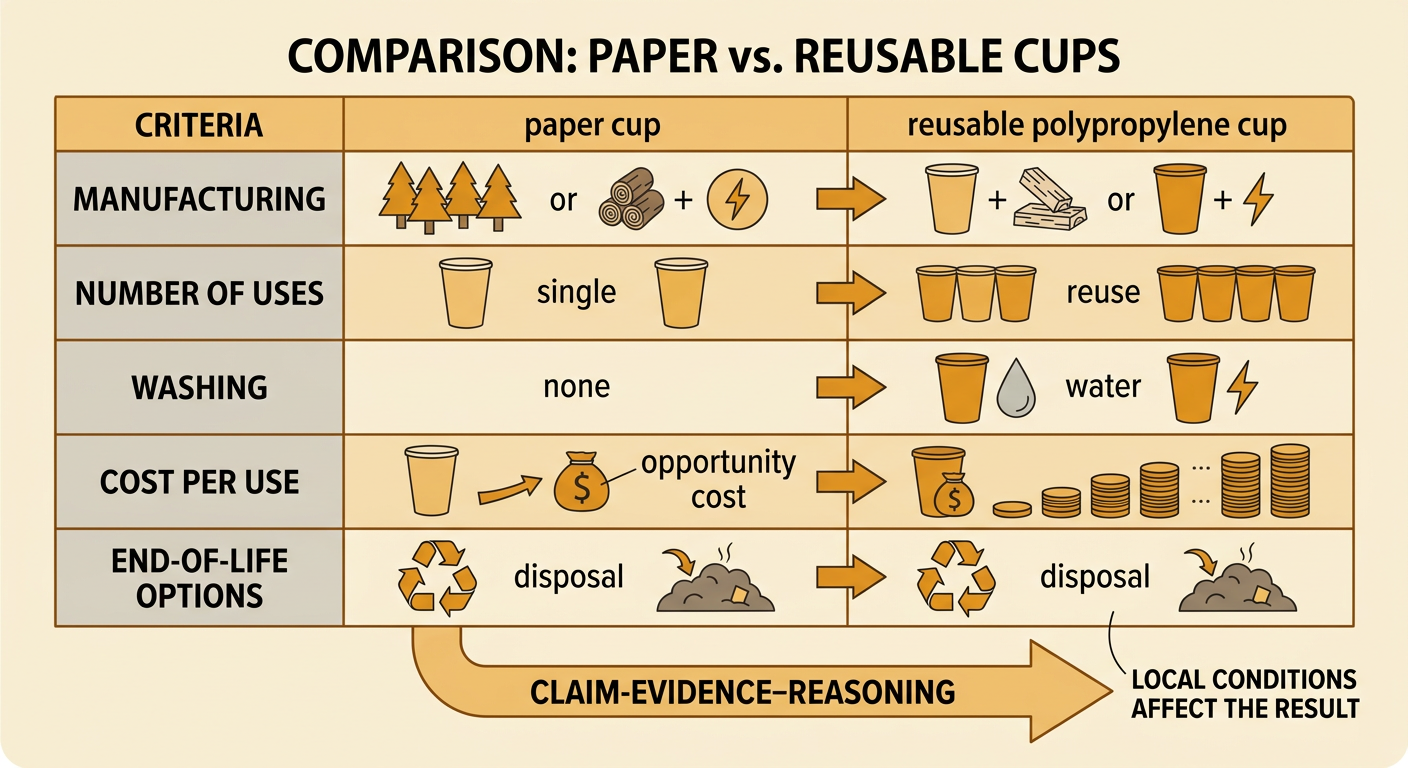
A strong material choice is supported by specific evidence rather than by labels such as “natural” or “plastic.” Begin by defining the product’s purpose and the properties it needs. Then compare trustworthy scientific information about resource extraction, manufacturing energy, durability, safety, cost, reuse, recycling, and disposal. For example, a school choosing cafeteria cups might compare single-use paper cups with reusable polypropylene cups. A reusable cup requires materials and energy to manufacture and wash, but many uses can spread those impacts over time. The better choice depends on evidence such as expected reuse, water and energy use, breakage, price, and the local waste system. Students should cite the source and exact data supporting each claim, explain how the evidence leads to the conclusion, and acknowledge tradeoffs. Decision makers must also consider opportunity cost: money spent on one option cannot be spent on another school need.