
From Seed to New Seed: A Plant Life Cycle
Students observe and sequence how a plant begins as a seed, grows into an adult plant, and produces new seeds.

Illustrations are auto-generated and may be placeholders. They can be refreshed to match the narration.
Meet the Seed
A plant life cycle can begin with a seed. A seed is small, but a tiny young plant is inside it. A protective covering called a seed coat surrounds the seed. Stored food helps the young plant begin to grow. Seeds come in many shapes, colors, and sizes. For example, a bean seed is smooth and shaped like a small oval. Many seeds need water, air, and suitable warmth to start growing. This beginning is called germination. Place a dry bean seed beside a bean seed that has soaked in water. The soaked seed may look larger because it has taken in water. This change is one sign that growth may soon begin.

Look for Signs of Growth
After a seed takes in water, it may begin to sprout. First, the seed coat opens. A small root usually grows downward into the soil. The root takes in water and helps hold the plant in place. Next, a shoot grows upward. Soon, the shoot reaches above the soil and small leaves open. This young plant is called a seedling. You can observe a sprouting bean each day. On one day, you may see only a seed. Later, you may see a root, a shoot, and leaves. Draw or describe each change. When plants get the water, air, and suitable warmth they need, the same order of early growth often appears.

Seedling to Adult Plant
A seedling keeps growing when its needs are met. Its roots spread through the soil and take in water and nutrients. Its stem becomes taller and supports more leaves. The leaves use sunlight, air, and water to help the plant make food. Over time, the seedling becomes an adult plant. An adult plant is larger and has more developed roots, stems, and leaves. For example, a young sunflower may have only two small leaves. As it grows, it becomes tall and grows many larger leaves. When we observe plants over many days, we notice a pattern: plants with enough light and water usually keep growing, while plants without these needs may wilt or stop growing.

Flowers and New Seeds
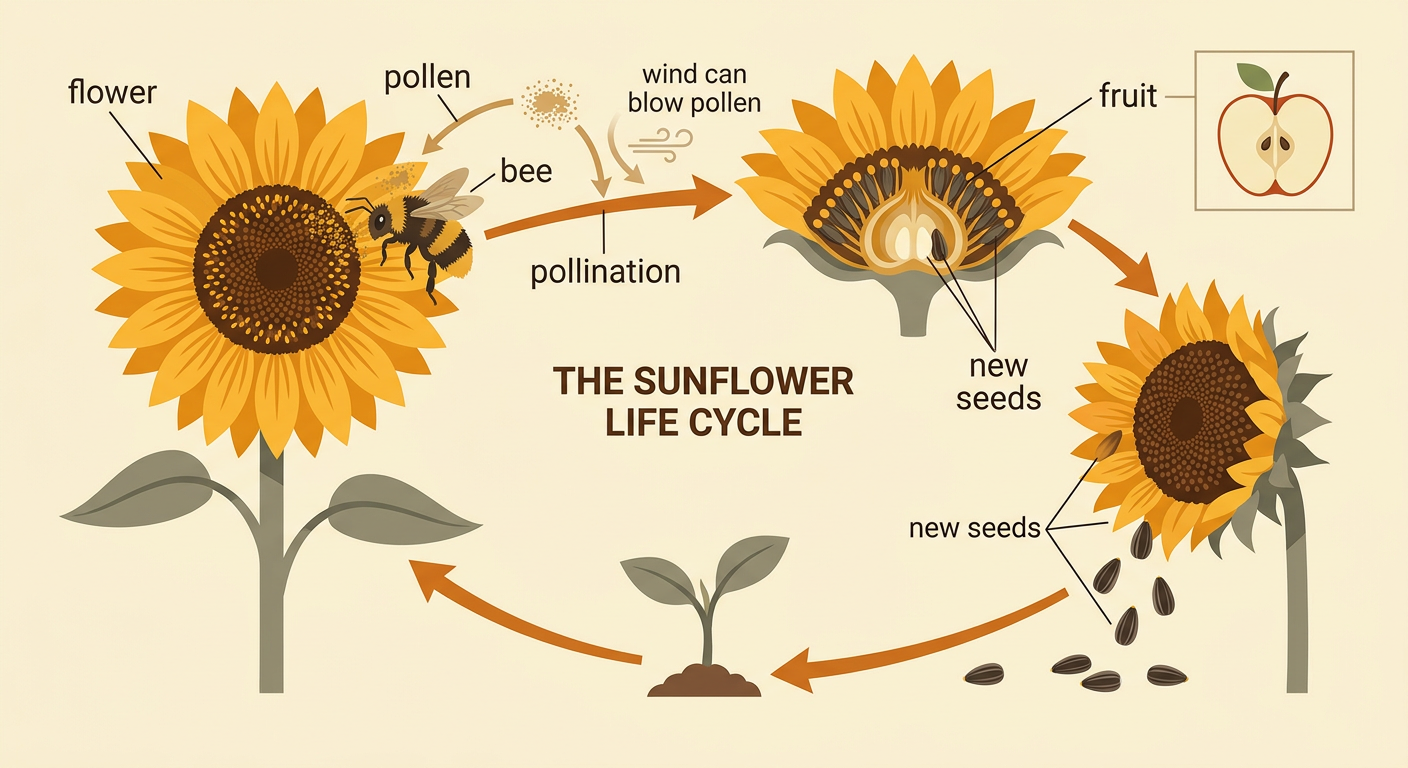
Many familiar adult plants grow flowers. Flowers help these plants make new seeds. Pollen must reach the part of the flower where seeds can begin to develop. Wind or animals, such as bees, can move pollen from flower to flower. After pollination, part of the flower may grow into a fruit that holds seeds. A sunflower makes many seeds in the center of its flower head. An apple tree makes seeds inside apples. When the new seeds are mature, they may fall, be carried by animals, or be moved by wind. If a seed reaches a place with the right conditions, it can begin growing into a new plant. The life cycle can start again.
Put the Life Cycle in Order
A life cycle shows events in the order they happen. First, there is a seed. Second, the seed sprouts and grows a root and shoot. Third, it becomes a seedling with leaves. Fourth, it grows into an adult plant. Fifth, the adult plant produces flowers and new seeds. Count the pictures in this sequence: one, two, three, four, five. Each number matches one event. For example, picture three should show the seedling because the seedling comes after sprouting and before the adult plant. Put picture cards in order by looking for changes in roots, stems, leaves, flowers, and seeds. The last event connects back to the first because new seeds can begin the life cycle again.
