From Source Materials to Manufactured Products
Students observe and classify materials such as cotton, wood, clay, and glass, then connect their observable properties to products made through human processing.

Illustrations are auto-generated and may be placeholders. They can be refreshed to match the narration.
Identify Source Materials
A material is what an object is made from. Some materials come from nature and are called source materials. Cotton grows on cotton plants. Wood comes from trees, and clay is found in the ground. People collect these materials and process, or change, them to make useful products. Other materials have already been changed by people. For example, glass is manufactured by heating sand and other ingredients until they melt. Look closely at an object and ask, “What material is this made from?” A cotton towel begins with cotton fibers. A wooden chair begins with wood from a tree. Workers need knowledge about where materials come from and skills for collecting them safely. Identifying a source material helps us understand the first part of a product’s story.

Observe Material Properties
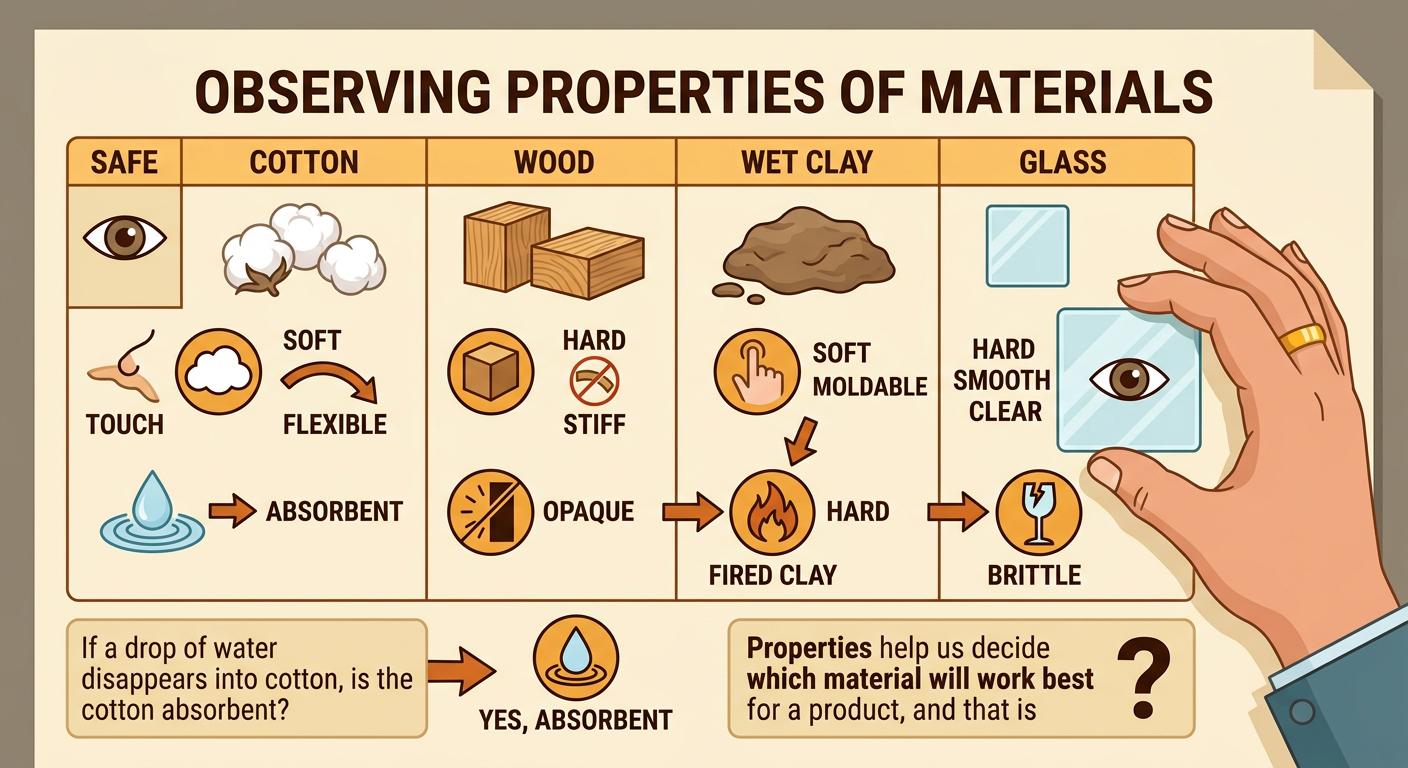
Properties are features that we can observe safely with our senses or simple tests. A material may be hard or soft, smooth or rough, stiff or flexible, clear or opaque, and able or unable to soak up water. Observe cotton, wood, clay, and glass without tasting them. Cotton is usually soft, flexible, and absorbent. Wood is often hard, stiff, and opaque. Wet clay is soft enough to shape, but fired clay becomes hard. Glass is hard, smooth, and often clear, but it can break, so an adult should handle it. In an investigation, students can touch safe samples, look through them, and place one drop of water on each approved sample. Record only what you observe. These observations help classify materials into groups with shared properties.
Match Materials to Products
Manufacturers choose materials whose properties fit a product’s purpose. Cotton is soft, flexible, and absorbent, so it is useful for towels and clothing. Wood is hard and stiff, so it can support the seat and legs of a chair. Clay can be shaped while wet and becomes hard when heated, making it useful for bowls, bricks, and tiles. Glass is smooth and often clear, so it is useful for windows and jars. A window made from cotton would not work well because cotton is not clear or stiff. A towel made from glass would not work because glass is hard and not absorbent. Matching properties to purposes helps designers select suitable materials. Workers also need skills to cut, shape, join, or heat materials when they make goods.

Explore a Simple Production Process
A production process is a series of steps that changes a material into a product. Consider how cotton becomes a shirt. First, workers pick cotton from cotton plants. Machines separate the fluffy fibers from seeds and dirt. Next, other machines twist the fibers into yarn. The yarn is woven or knitted into fabric. Workers then measure and cut the fabric into shirt pieces. Finally, they sew the pieces together and check the finished shirt. Each step depends on the step before it. Farmers need knowledge about growing cotton. Machine operators must know how to use equipment safely. Designers and sewing workers need measuring, cutting, and joining skills. Many people with different knowledge and skills work together to produce one useful good.

Classify and Explain
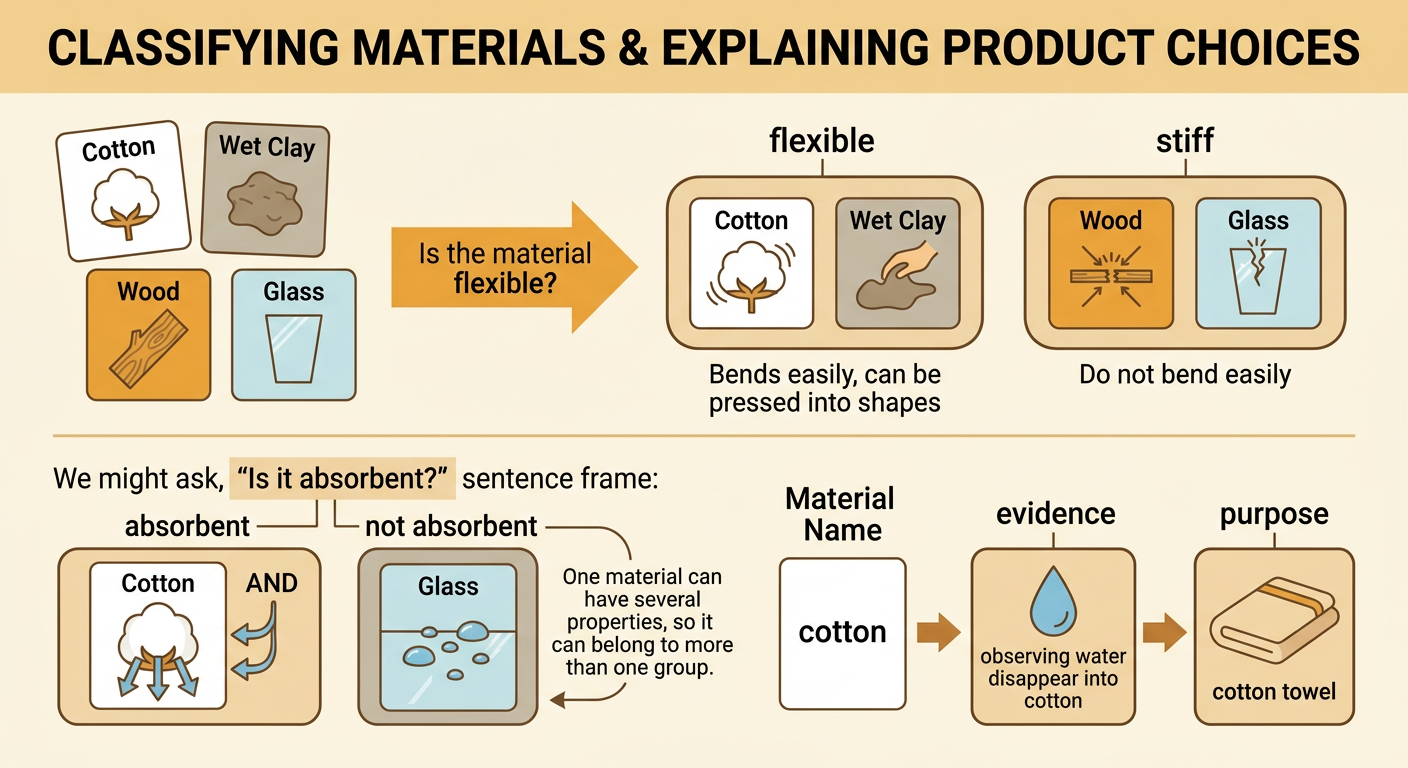
To classify materials, sort them into groups using observable properties. Begin with safe samples or pictures of cotton, wood, clay, and glass. Ask one clear question, such as, “Is the material flexible?” Gently bend samples that are safe to bend, and record the result. Cotton and wet clay may go in the flexible or shapeable group. Wood and glass belong in the stiff group. Next, sort by another property, such as absorbent or not absorbent. A material can belong to more than one group because it has several properties. Then explain how one property connects a material to a product. For example: “Cotton is absorbent, so it is used to make towels.” A strong explanation names the material, gives observed evidence, and connects that evidence to the product’s purpose.