
From Stem Cells to Specialized Tissues
Students model how mitosis and cell differentiation produce specialized cells and maintain tissues, then evaluate how scientific evidence and public perspectives shape stem-cell policy.

Illustrations are auto-generated and may be placeholders. They can be refreshed to match the narration.
One Genome, Many Cell Types
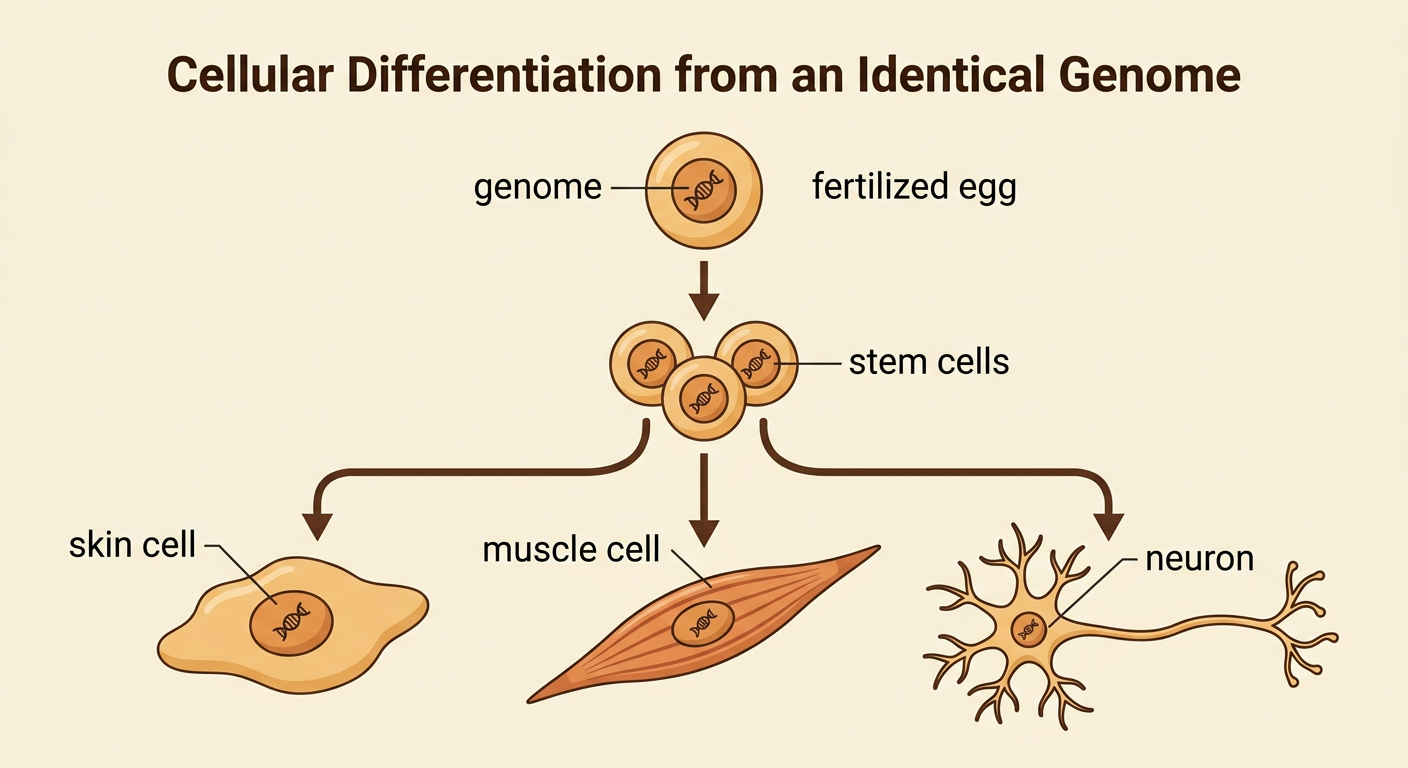
Nearly every cell in a person contains the same genome, the complete set of DNA inherited at fertilization. Yet cells can differ greatly in structure and function because they use different parts of that shared genetic information. Stem cells are unspecialized cells that can self-renew and produce cells that follow different developmental pathways. For example, a skin cell is flat and forms a protective barrier, while a neuron has long extensions that transmit signals. These differences usually do not result from changes in the DNA sequence. Instead, each cell type activates some genes and keeps others inactive. As development proceeds, signals from nearby cells and the environment guide cells toward particular identities. This combination of a common genome and selective gene use allows one fertilized egg to develop into a complex organism with many specialized tissues.
Mitosis and Differentiation
Mitosis and differentiation play related but distinct roles in development and tissue maintenance. Before mitosis, a cell copies its DNA. During mitosis, the duplicated chromosomes are separated into two nuclei, and cell division usually produces two genetically similar daughter cells. Mitosis increases cell number, but it does not by itself determine what type of cell each daughter becomes. Differentiation occurs when signals change patterns of gene expression, causing a cell to develop specialized structures and functions. In the lining of the small intestine, stem cells near the bottom of intestinal crypts divide by mitosis. Some daughter cells remain stem cells, while others differentiate into absorptive, mucus-producing, or hormone-secreting cells. Continuous division and differentiation replace cells lost from the intestinal surface, helping maintain the tissue.

Gene Expression Drives Specialization
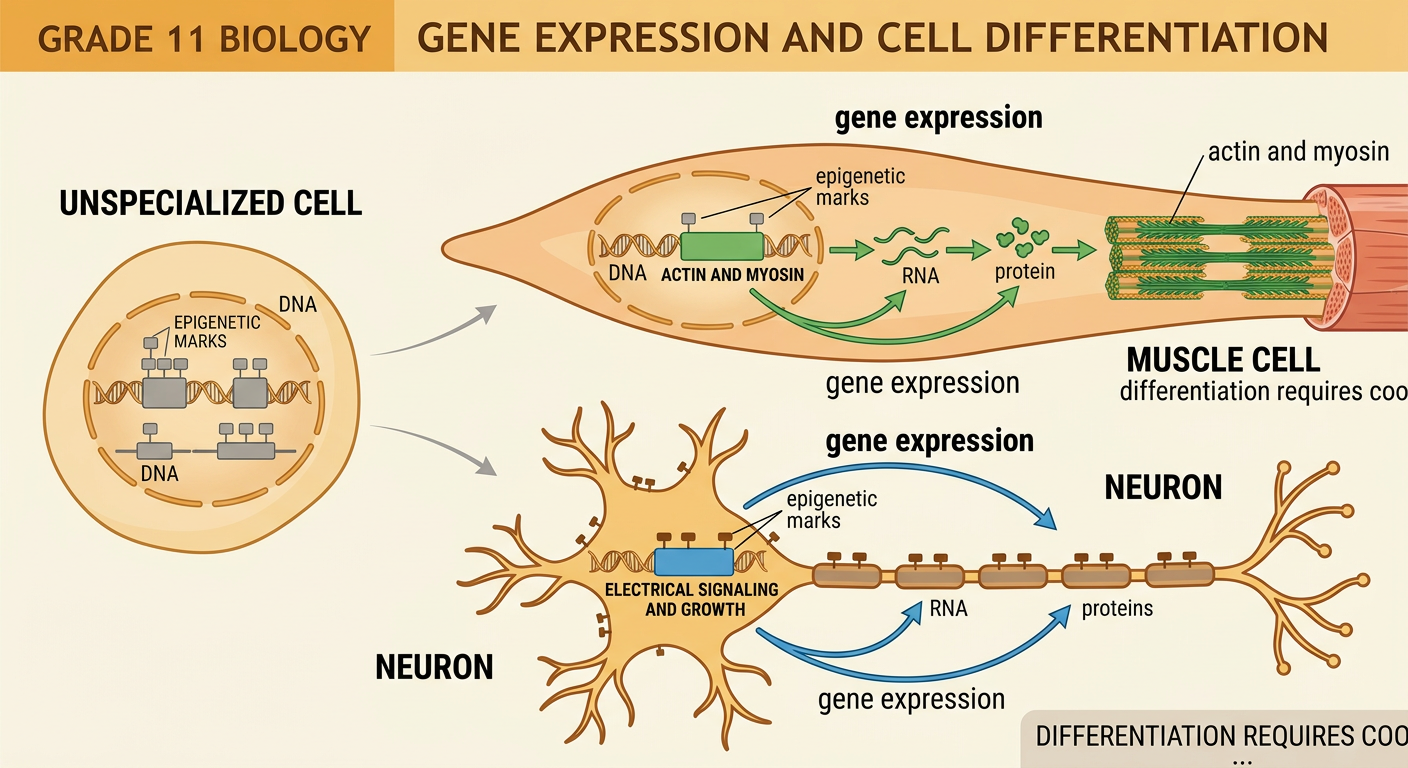
Gene expression is the process through which information in DNA is used to produce RNA and proteins. Regulatory proteins and chemical signals can increase or decrease the expression of particular genes. Epigenetic marks, such as chemical modifications to DNA or associated proteins, can also help maintain patterns of gene activity without changing the DNA sequence. The proteins a cell produces influence its shape, metabolism, communication, and function. For example, developing muscle cells activate genes that encode contractile proteins such as actin and myosin. They also join to form long fibers capable of shortening and generating force. A developing neuron activates a different gene program that supports electrical signaling and the growth of axons and dendrites. Thus, differentiation depends on coordinated changes in many genes rather than on a single gene acting alone.
Modeling Tissue Growth and Repair
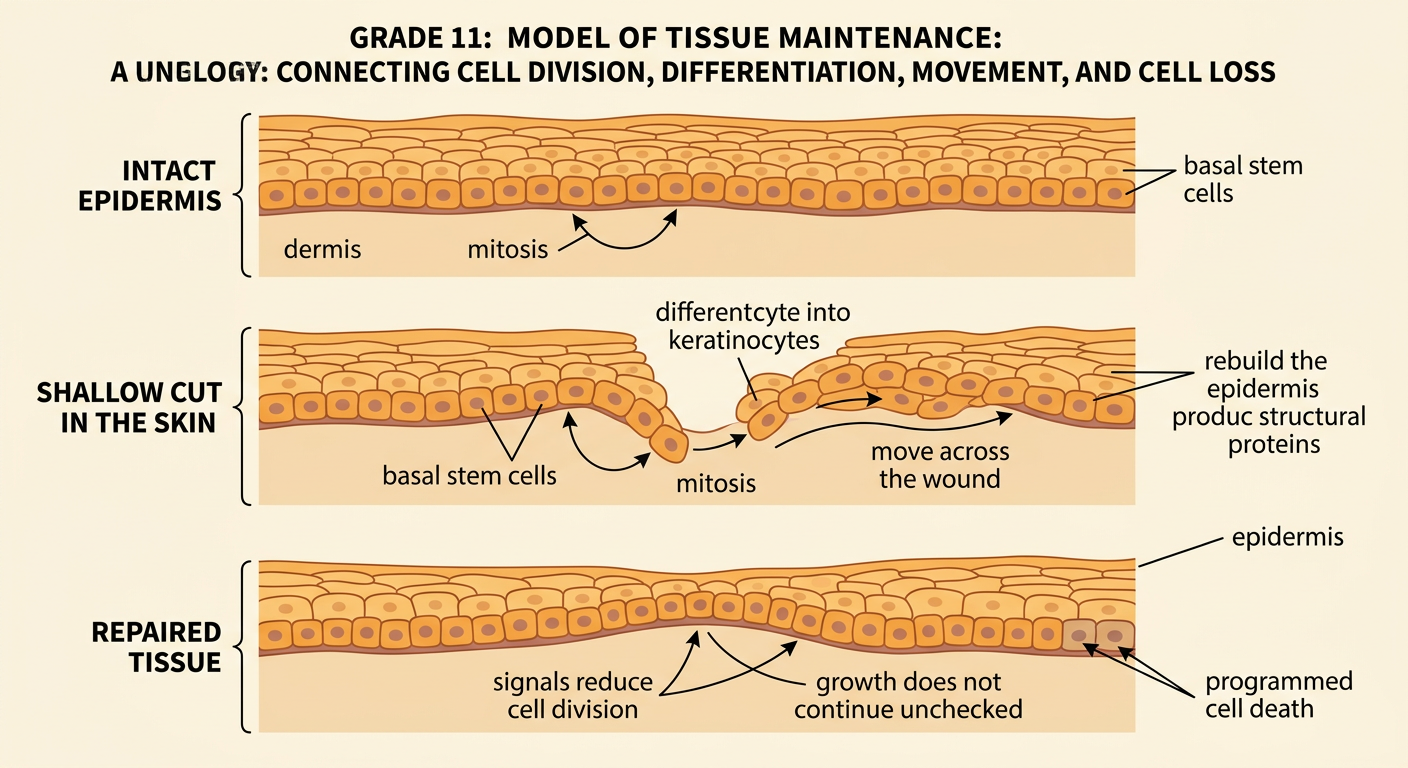
A useful model of tissue maintenance must connect cell division, differentiation, movement, and cell loss. Consider repair after a shallow cut in the skin. Basal stem cells near the wound divide by mitosis, increasing the number of available cells. Some daughter cells remain in the stem-cell pool, while others differentiate into keratinocytes. These cells move across the wound, produce structural proteins, and rebuild the protective epidermis. As repair finishes, signals reduce cell division so growth does not continue unchecked. A classroom model can represent cells with tokens and use arrows to show division, differentiation, migration, and programmed cell death. Students can change the rate of one process and predict the result. For example, too little mitosis slows healing, while excessive division without normal regulation can create abnormal tissue growth. The model is useful but simplifies real molecular signals and immune responses.
Evidence and Perspectives in Stem-Cell Policy
Stem-cell policy involves both scientific evidence and civic perspectives. Adult stem cells maintain certain tissues but usually have a limited range of possible cell types. Embryonic stem cells are pluripotent and can form nearly any body cell, while induced pluripotent stem cells are adult cells reprogrammed to a pluripotent state. To evaluate a proposed research policy, students should compare evidence from data tables, cell-lineage diagrams, clinical studies, and expert testimony. They should examine sample size, methods, risks, benefits, and whether claims match the evidence. Public perspectives may differ because people weigh patient needs, scientific freedom, informed consent, embryo moral status, religious beliefs, costs, and equal access differently. For example, at a public hearing on funding stem-cell research, a patient group may emphasize potential treatments, while another group may object to particular cell sources. Fair policy analysis identifies these interests without treating opinion as scientific evidence.
