From Variation to Selection: Genes, Environment, and Useful Traits
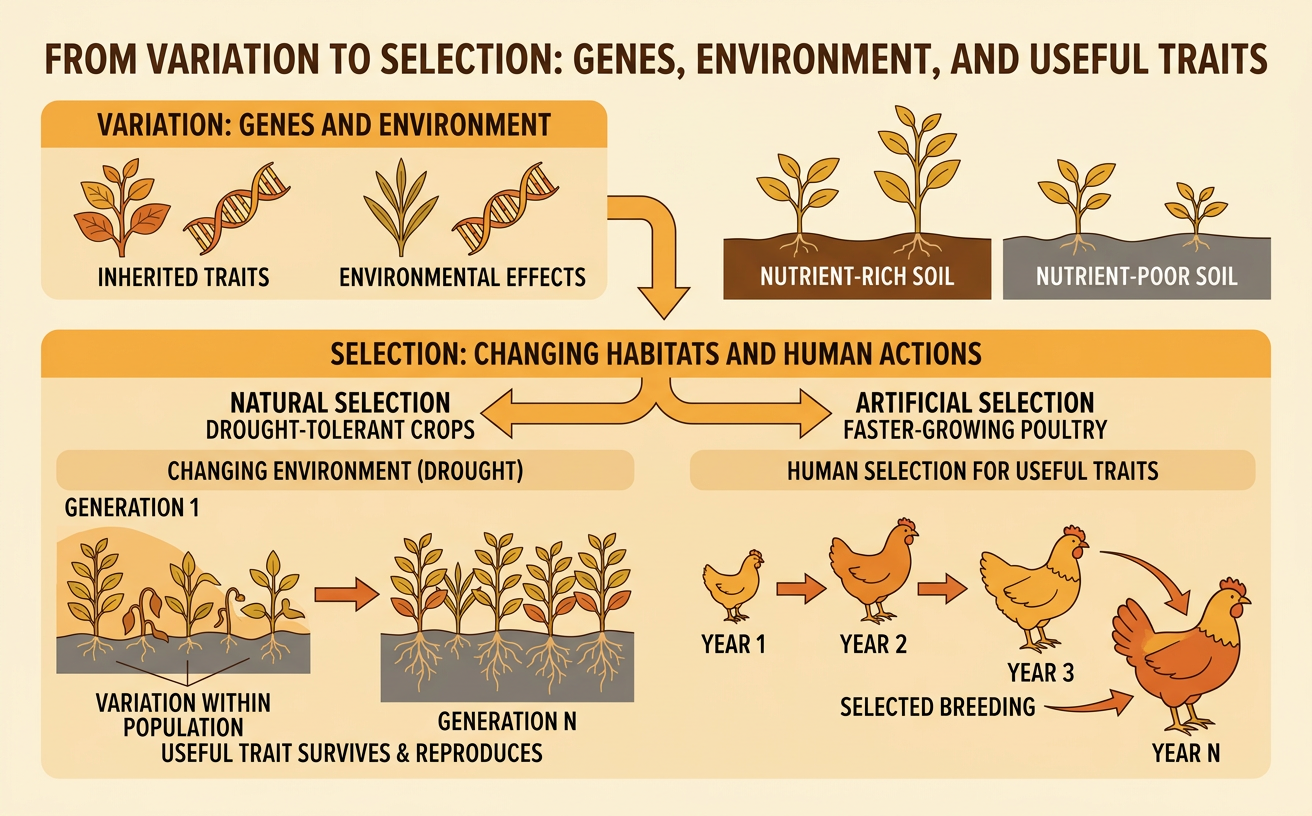
Students connect inherited traits and environmental effects on growth to natural selection in changing habitats and artificial selection by farmers, using examples such as drought-tolerant crops and faster-growing poultry.
Illustrations are auto-generated and may be placeholders. They can be refreshed to match the narration.
Sources of Differences in Growth
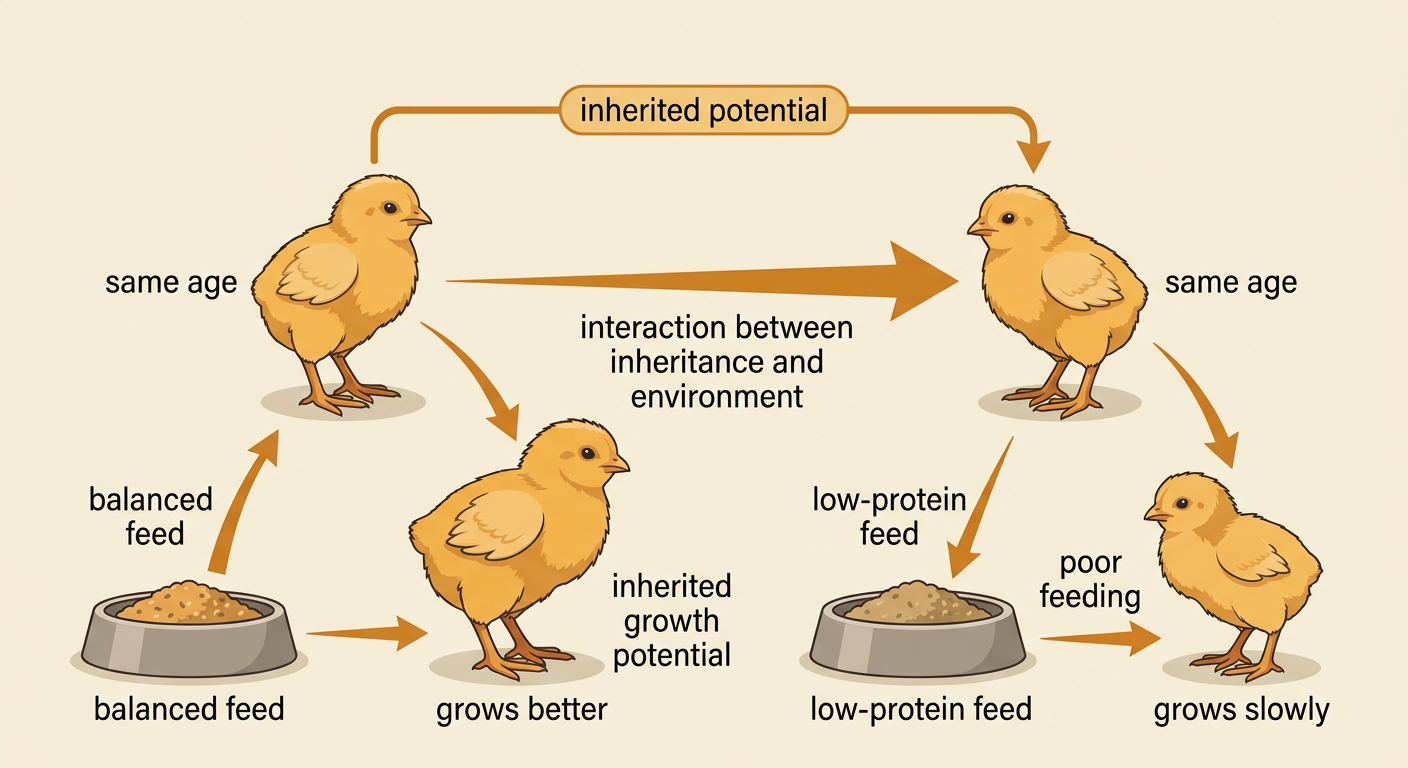
Members of the same species do not all grow at the same rate or reach the same size. Some differences come from inherited information passed from parents to offspring. For example, chicks may inherit genes linked to body size or growth rate. Other differences result from environmental conditions such as food supply, water, temperature, disease, space, and care. Two chicks with similar inherited potential may grow differently if one receives balanced feed while the other receives too little protein. Age also matters, so fair comparisons should involve organisms of the same age. Usually, growth results from an interaction between inherited traits and the environment. Good conditions can help an organism reach its inherited growth potential, but they do not change every trait. A poorly fed chick may grow slowly without passing that slow growth to its offspring.
Genes, Environment, and Trait Variation
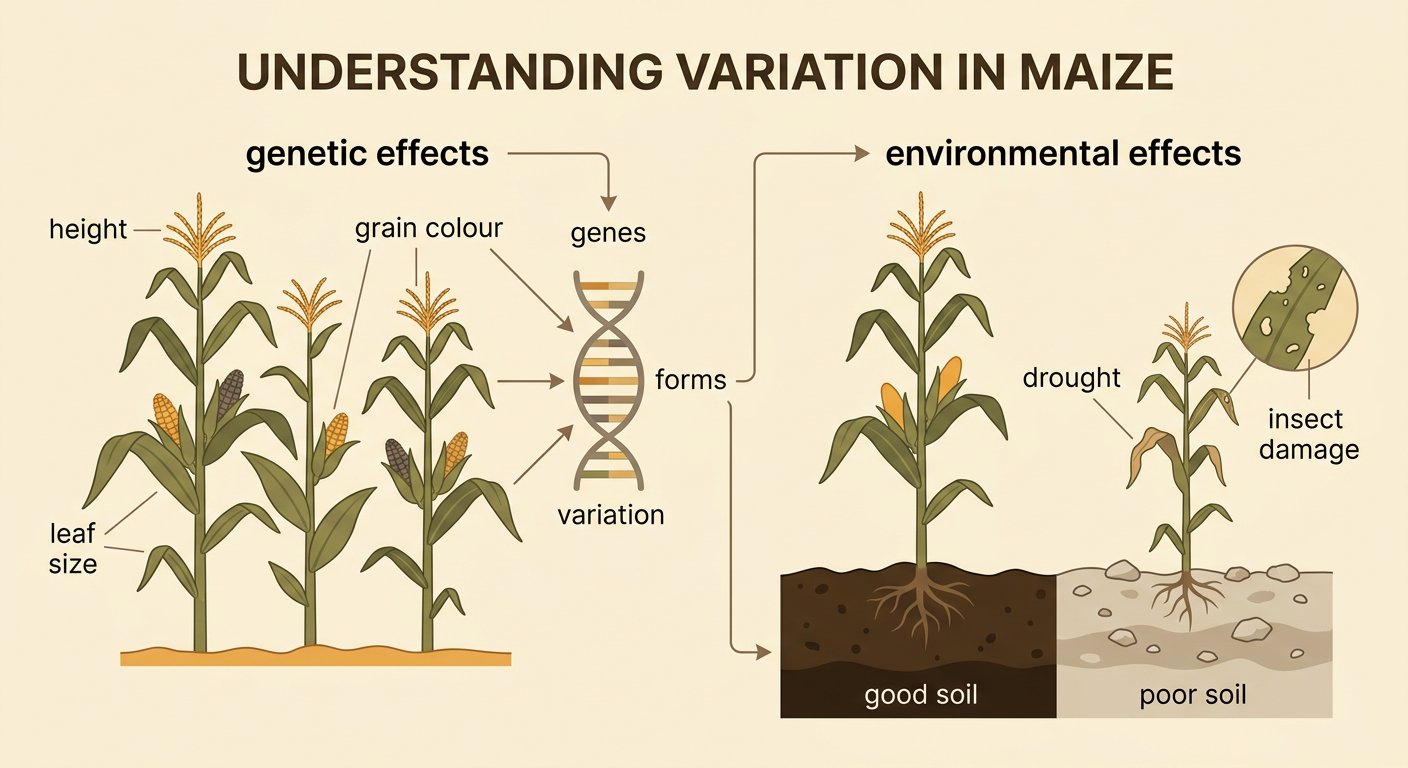
Genes are sections of DNA that help determine inherited traits. Different forms of genes can contribute to variation, meaning differences among individuals of the same species. In a maize field, plants may differ in height, leaf size, grain color, or ability to continue growing with little water. Environmental conditions also affect how traits appear. A maize plant may inherit the potential to grow tall, but poor soil, drought, or pest damage may limit its height. This does not mean the drought created a new gene for shortness. Instead, the environment affected how the plant grew. Some traits, such as scars or damage caused by insects, are acquired during life and are not usually inherited. Scientists compare related organisms grown under similar and different conditions to investigate how genes and environment contribute to variation.
Useful Traits in Natural Selection
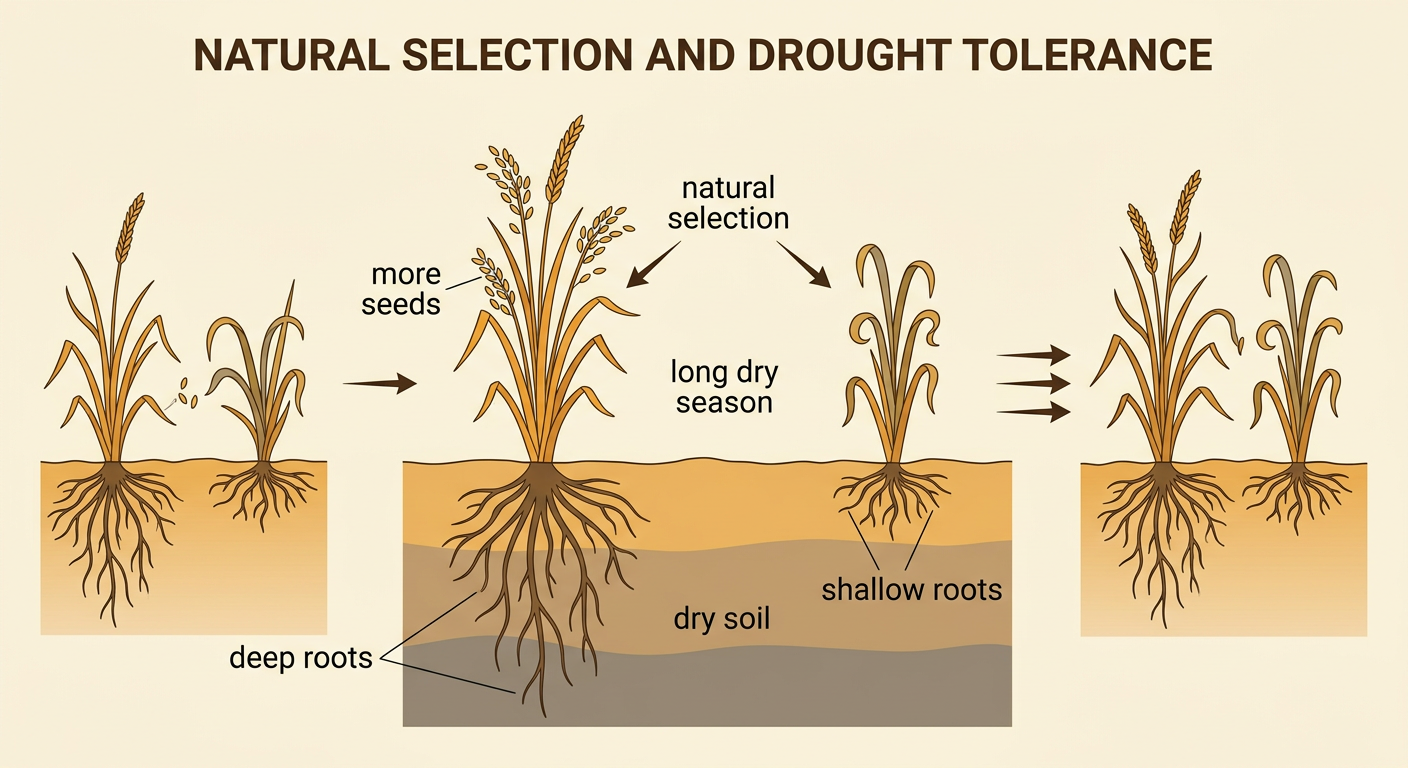
Natural selection occurs when environmental conditions cause individuals with certain inherited traits to survive and reproduce more successfully than others. A useful trait is an inherited variation that gives an advantage in a particular habitat. During a long dry season, some wild grass plants may have deeper roots or leaves that reduce water loss. These plants are more likely to survive, produce seeds, and pass the helpful genes to their offspring. Plants without those traits may produce fewer seeds. Over many generations, drought-tolerant traits can become more common in the population. Individual plants do not change because they need to survive, and natural selection does not create traits on purpose. It acts on inherited variation that is already present. A trait that is useful during drought may not provide the same advantage in a flooded habitat.
Farmers and Artificial Selection
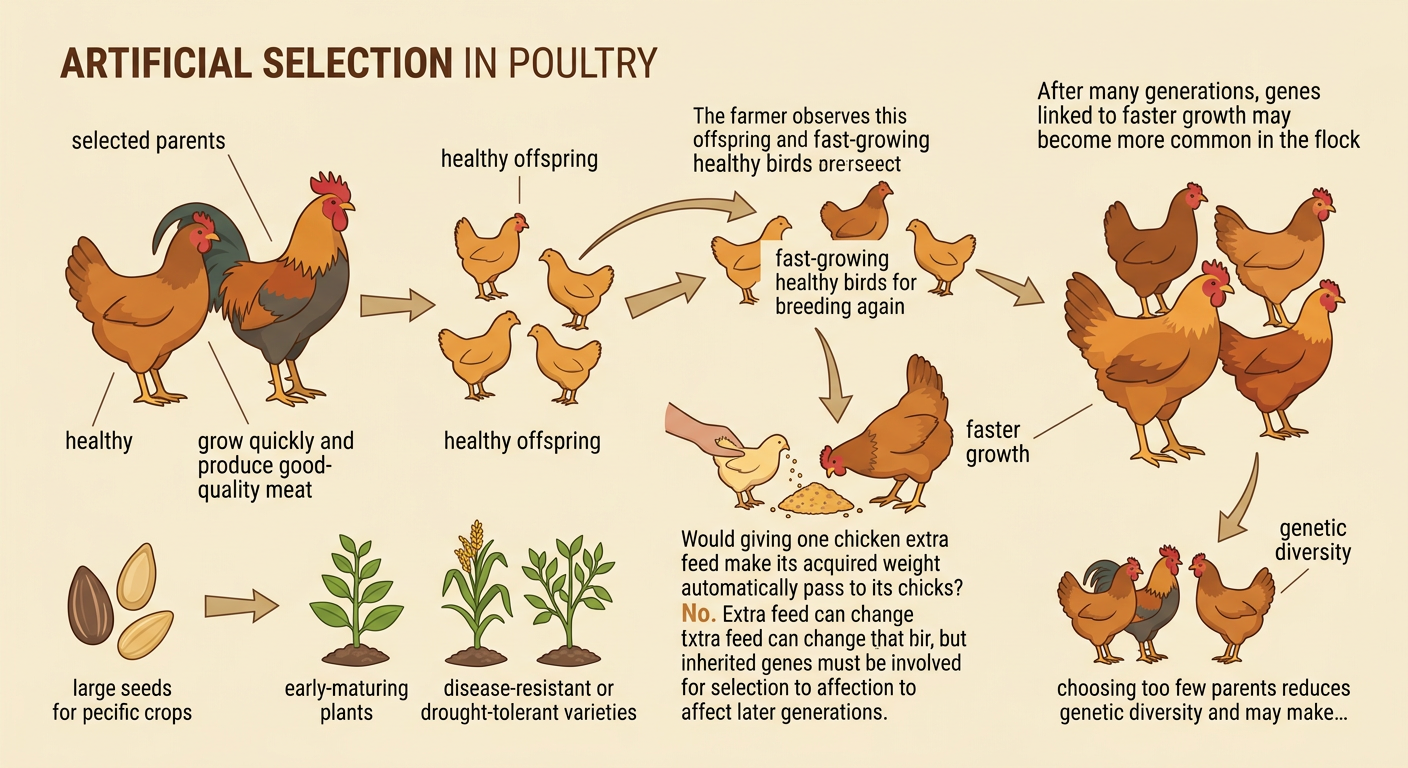
Artificial selection happens when people choose organisms with desired inherited traits to become parents of the next generation. A poultry farmer may select healthy hens and cocks that grow quickly and produce good-quality meat. Their offspring are observed, and the fastest-growing healthy birds may again be chosen for breeding. After many generations, genes associated with faster growth can become more common in the flock. Farmers also select crop plants that produce larger seeds, resist disease, mature early, or tolerate drought. Artificial selection requires inherited variation; feeding one chicken extra food may make it heavier, but that acquired weight is not automatically passed to its chicks. Breeders should also maintain genetic diversity because selecting only a few parents can reduce variation and increase vulnerability to disease. Good animal welfare, proper feeding, and disease control remain necessary even when birds inherit useful traits.
Comparing Natural and Artificial Selection
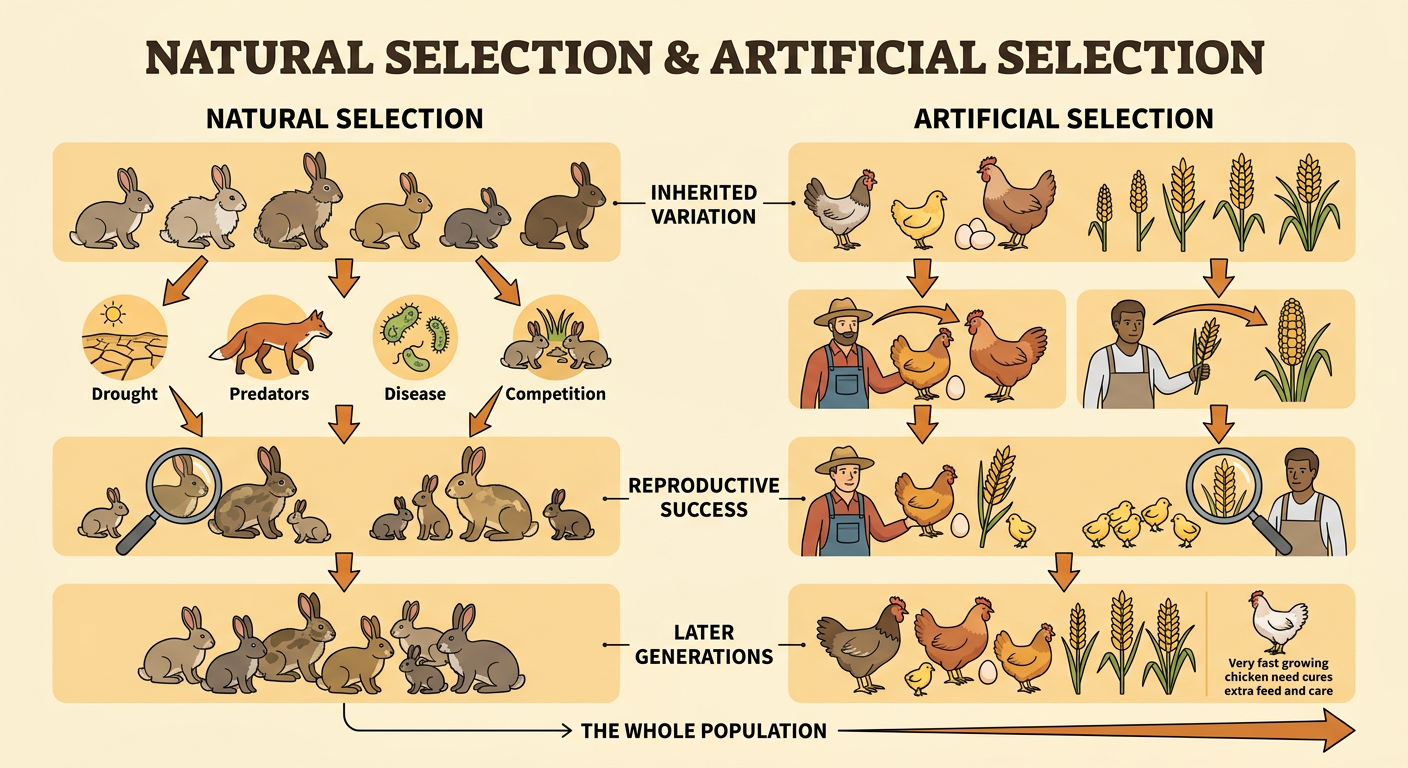
Natural selection and artificial selection both act on inherited variation and change the frequency of traits over generations. In both processes, some individuals leave more offspring, so their genes become more common. The main difference is who or what determines reproductive success. In natural selection, conditions such as drought, predators, disease, or competition favor traits that improve survival and reproduction. No person directs the process. In artificial selection, farmers or breeders deliberately choose parents with desired traits, such as high egg production or large grains. A farmer’s preferred trait may not help an organism survive in the wild. For example, a very fast-growing chicken may require extra feed and care. Neither process changes every individual at once. Populations change gradually as selected traits are passed to later generations.
Applying Selection to Local Crops and Animals
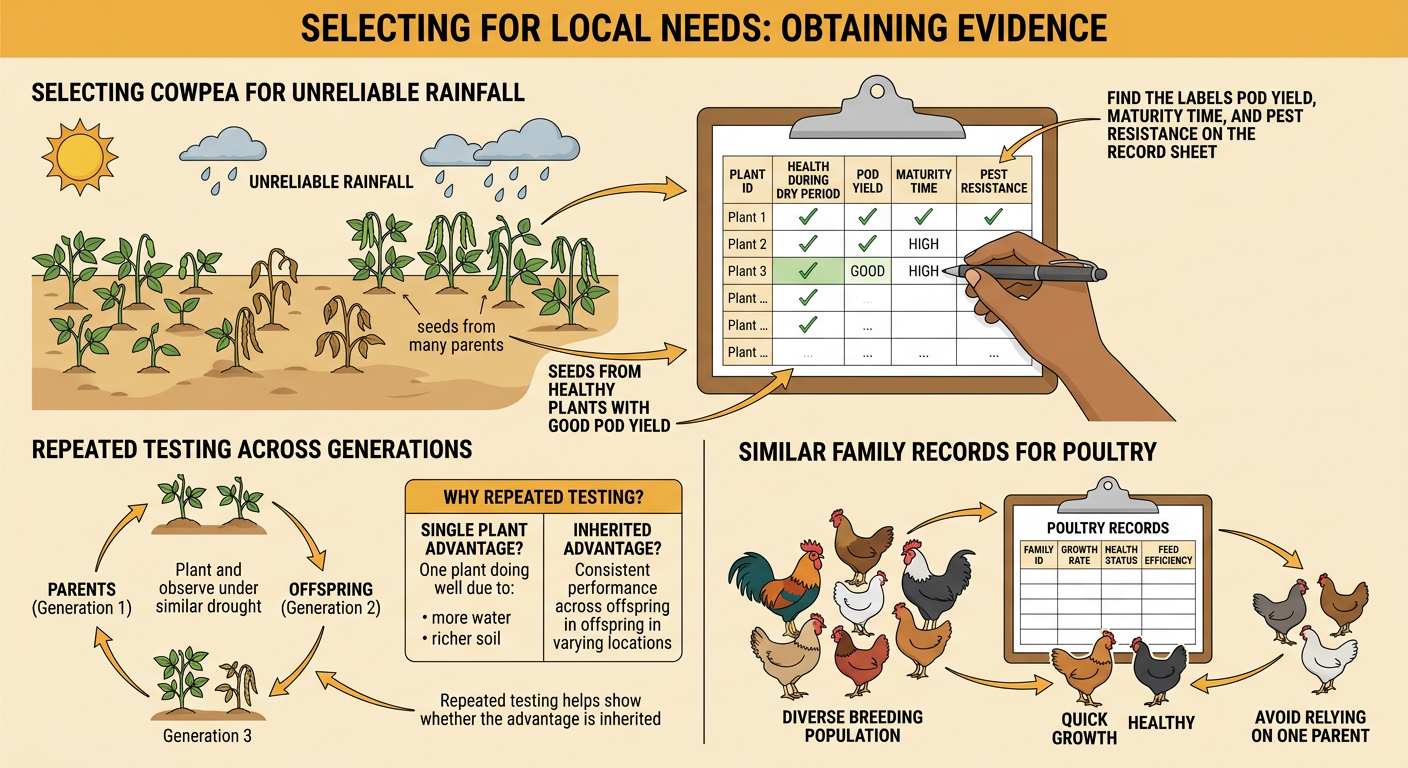
Selection can help farmers develop crops and animals suited to local needs, but choices should be based on evidence. Suppose farmers are selecting cowpea plants for an area with unreliable rainfall. They can plant seeds from many parent plants, record which plants remain healthy during dry periods, and compare pod yield, maturity time, and resistance to pests. Seeds from healthy, high-yielding survivors can be used for further breeding. Several generations of testing are needed because one plant may perform well simply because it received more water or grew in richer soil. Similar records can identify poultry families that grow quickly while remaining healthy on available feed. Farmers should select more than one useful trait and keep a diverse breeding population. Researchers and extension workers can also test new varieties safely before widespread use. Careful selection can improve food production without assuming that every observed difference is inherited.