
From Wheat Field to Bakery: Specialization and Trade
Students trace how wheat becomes bread to learn how farmers, millers, bakers, and sellers specialize and trade to meet community needs.

Illustrations are auto-generated and may be placeholders. They can be refreshed to match the narration.
Follow Wheat from Seed to Bread
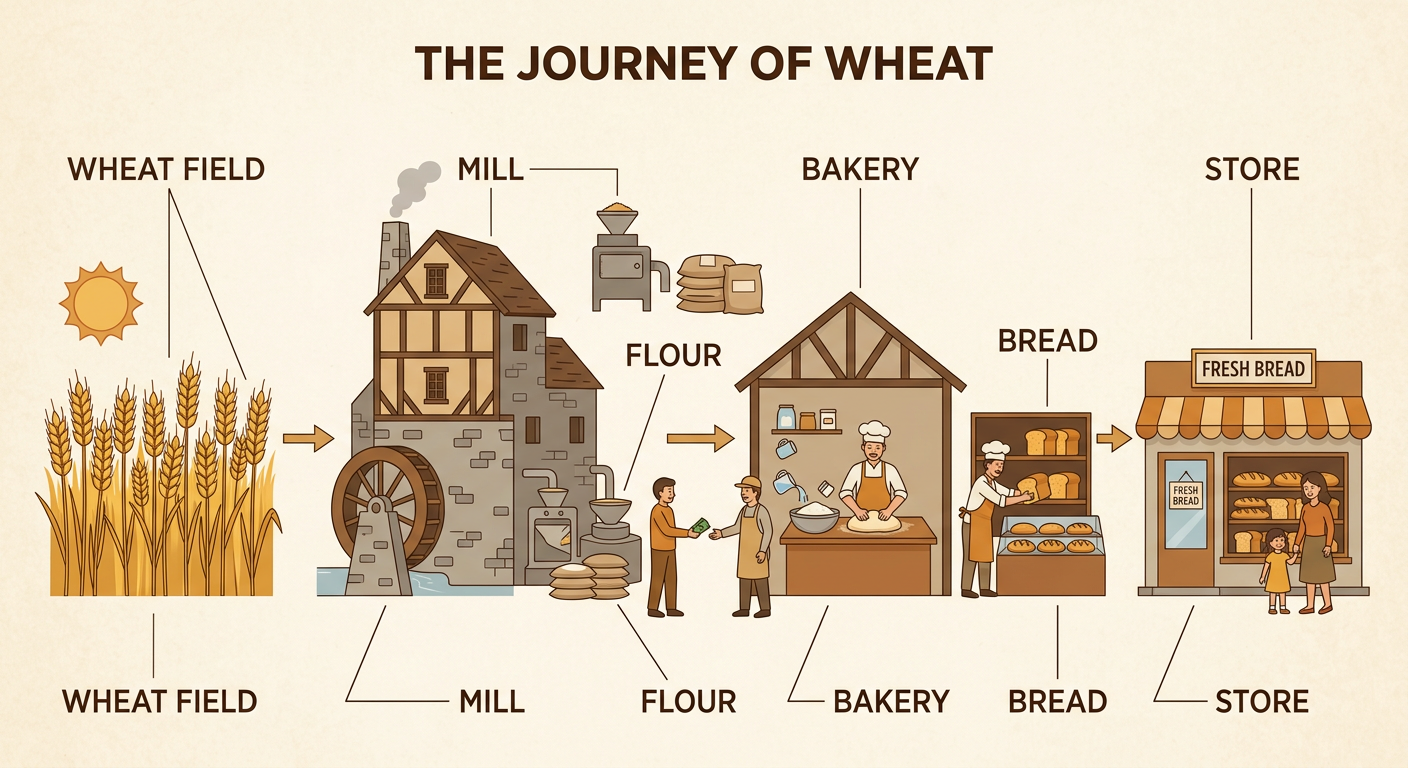
Bread begins with wheat seeds planted in prepared soil. Sunlight, water, air, and nutrients help the seeds grow into mature wheat plants. When the grain is ripe and dry, a farmer harvests the wheat. The grain is separated from the stalks and transported to a mill. At the mill, machines clean and grind the grain into flour. A bakery trades money for the flour. A baker mixes the flour with ingredients such as water, yeast, and salt. The dough is kneaded, allowed to rise, shaped, and baked. Finally, the bread is delivered to a store or sold at the bakery. For example, one bag of flour from a mill can help a baker make several loaves for community families.
Model the Wheat Life Cycle
Wheat is a flowering plant with a life cycle that repeats. The cycle begins with a wheat seed. With enough water, warmth, and air, the seed germinates, meaning it starts to grow. Roots push down into the soil, and a shoot grows upward. The young seedling develops more roots, leaves, and a stem. A mature plant produces flowers in a wheat head. After pollination, seeds called wheat grains develop in the head. These grains can be harvested for food, but some can be planted to begin the next generation. For example, a farmer may save part of a healthy harvest as seed for a future crop. A circular model shows that the production of new seeds completes the cycle rather than ending it.

Identify Specialized Community Jobs
Specialization happens when people and businesses focus on particular jobs or products. Wheat farmers specialize in growing and harvesting grain. Millers specialize in cleaning wheat and grinding it into flour. Truck drivers specialize in moving grain, flour, and bread safely between locations. Bakers use recipes, tools, and ovens to turn flour into bread. Sellers display the bread, help customers, and collect payment. Each worker develops skills and uses equipment suited to the job. For example, a farmer may know how to operate a combine, while a baker knows how to measure ingredients and control oven temperature. One person could try to do every task, but specialization often helps work get done more efficiently. It also allows each worker to trade for goods and services made by others.

Trace Trade Between Producers
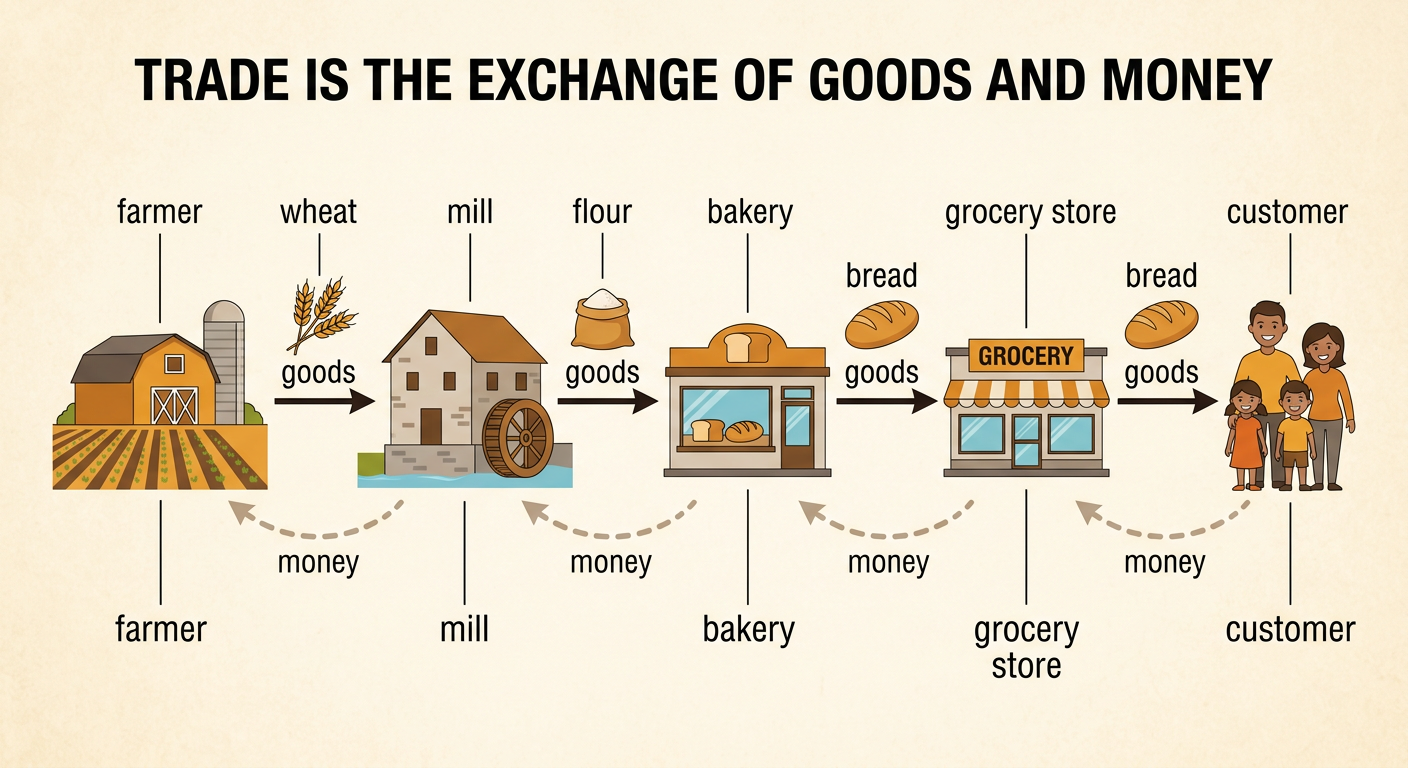
Trade occurs when people or businesses exchange goods, services, or money. A farmer sells wheat grain to a mill. The mill pays the farmer and grinds the grain into flour. Next, a bakery pays the mill for flour. The bakery uses the flour to produce bread and sells the bread to a grocery store or directly to customers. A grocery store may pay a delivery business to transport the loaves. Goods usually move toward the customer, while money moves back toward the producers and service providers. For example, when a family buys a loaf, part of its payment helps the store pay the bakery, the bakery pay the mill, and the mill pay the farmer. Trade allows each producer to specialize instead of owning a farm, mill, bakery, and store.
Interpret a Bread-Production Graph
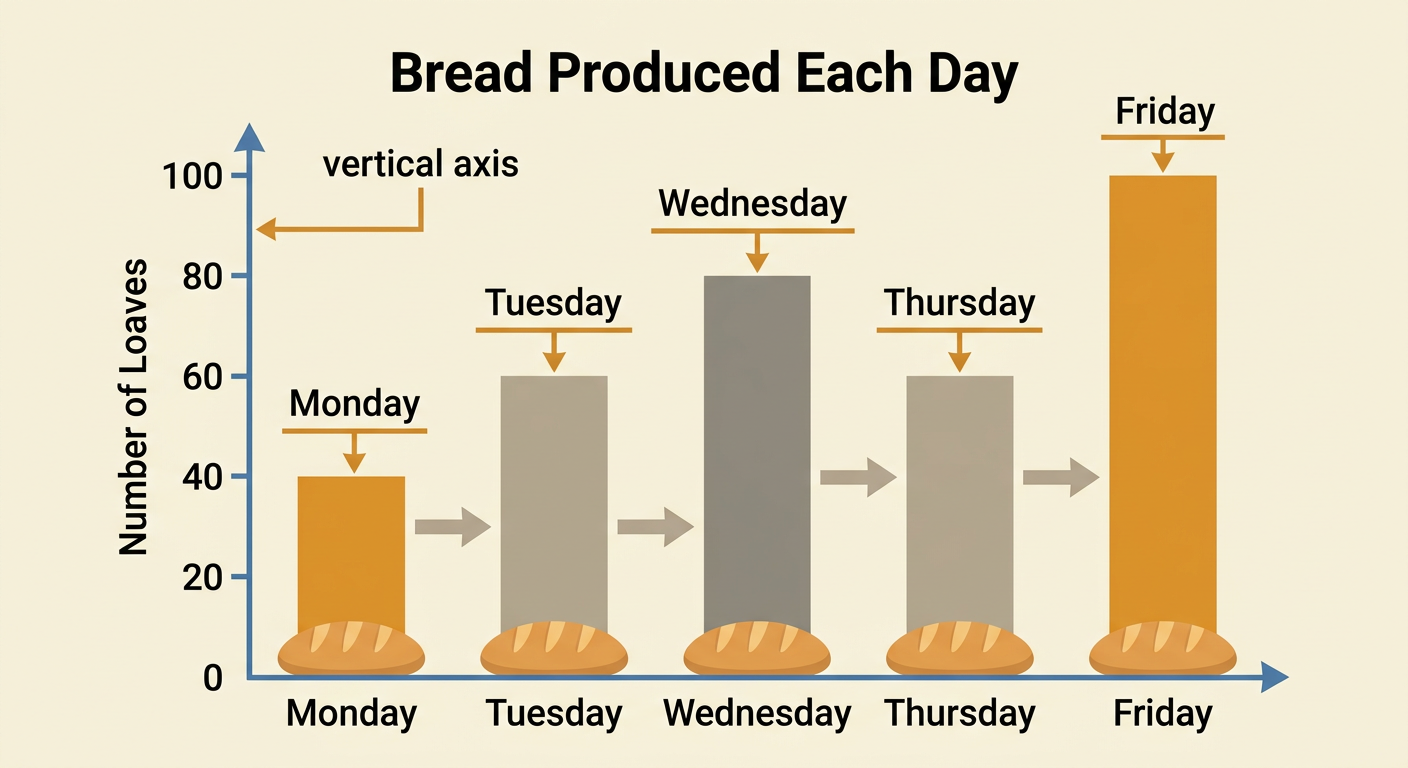
A scaled bar graph can compare how many loaves a bakery makes on different days. Suppose the vertical axis is marked from 0 to 100 loaves in intervals of 20. The bakery makes 40 loaves on Monday, 60 on Tuesday, 80 on Wednesday, 60 on Thursday, and 100 on Friday. Each bar rises to the number produced that day. Friday has the tallest bar, so it has the greatest production. Monday has the shortest bar, so it has the least. The bakery made 40 more loaves on Wednesday than on Monday because 80 minus 40 equals 40. It made 340 loaves altogether. A baker might use this information to prepare for greater Friday demand by ordering more flour and scheduling more workers.
Explain Community Interdependence
Interdependence means that people depend on one another. A bakery depends on farmers for wheat, millers for flour, drivers for transportation, and workers for tools, water, and energy. Farmers also depend on other people. They may need businesses that sell seeds, repair machines, and transport crops. Customers depend on the whole network to obtain bread, while each business depends on customers to buy its products. For example, if a truck cannot deliver flour, a bakery may run out and make fewer loaves. The store then has less bread to sell, and families have fewer choices. Communities solve many needs through specialization and trade. Because no worker produces everything alone, cooperation, reliable transportation, fair exchanges, and careful planning help the connected system function successfully.
