From Wheat to Bread: Producers, Goods, and Consumers
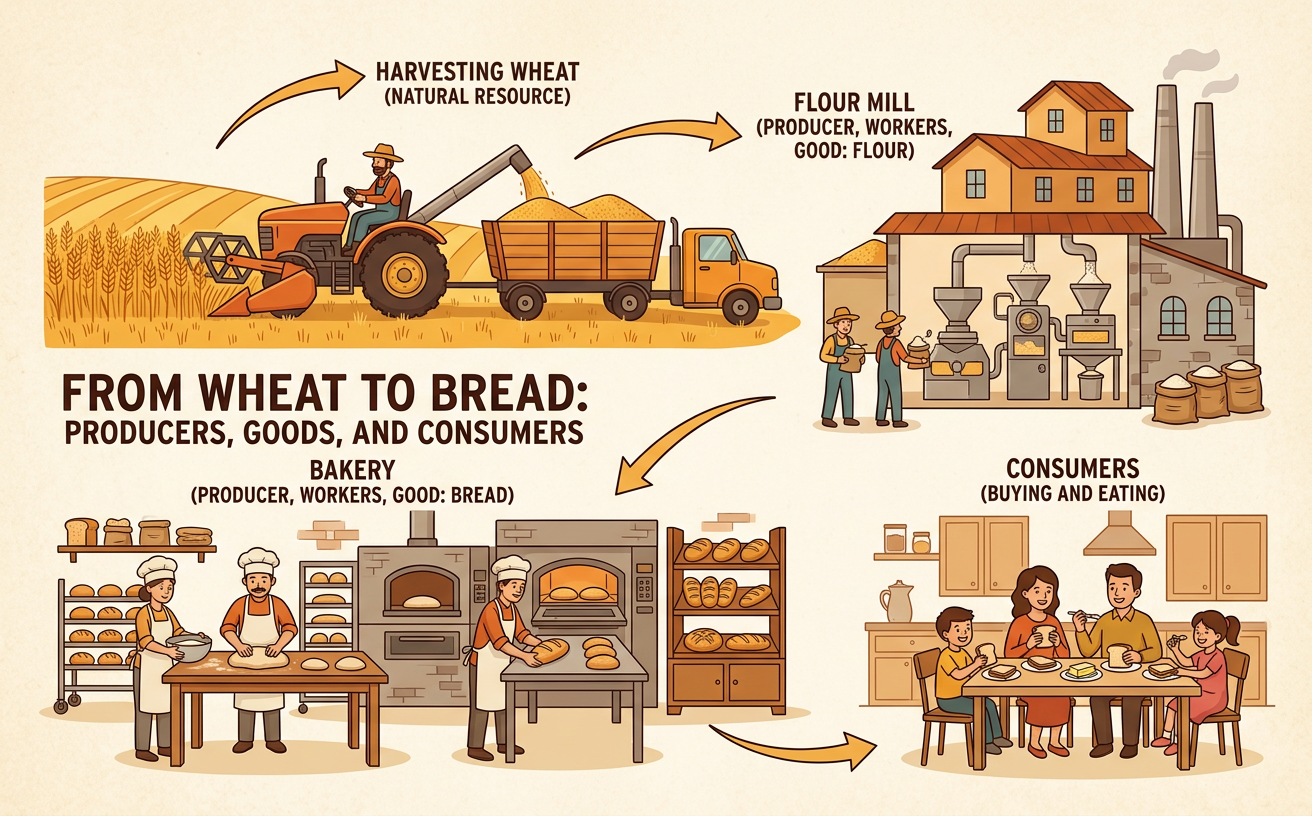
Students trace how wheat becomes bread and identify the natural resources, workers, producers, goods, services, and consumers involved.
Illustrations are auto-generated and may be placeholders. They can be refreshed to match the narration.
What Is a Good?
A good is something people make, grow, or collect that can be used or bought. You can see and touch most goods. Bread is a good because bakers make it and people can buy, carry, and eat it. Goods can meet needs or wants. Food, clothing, and homes help meet basic needs. A toy may meet a want. A service is work someone does for another person. For example, a baker makes bread, while a delivery driver provides the service of moving bread to a store. Imagine that Maya buys a loaf for her family’s lunch. The bread is the good, and the work needed to make and deliver it includes services.

Wheat as a Natural Resource
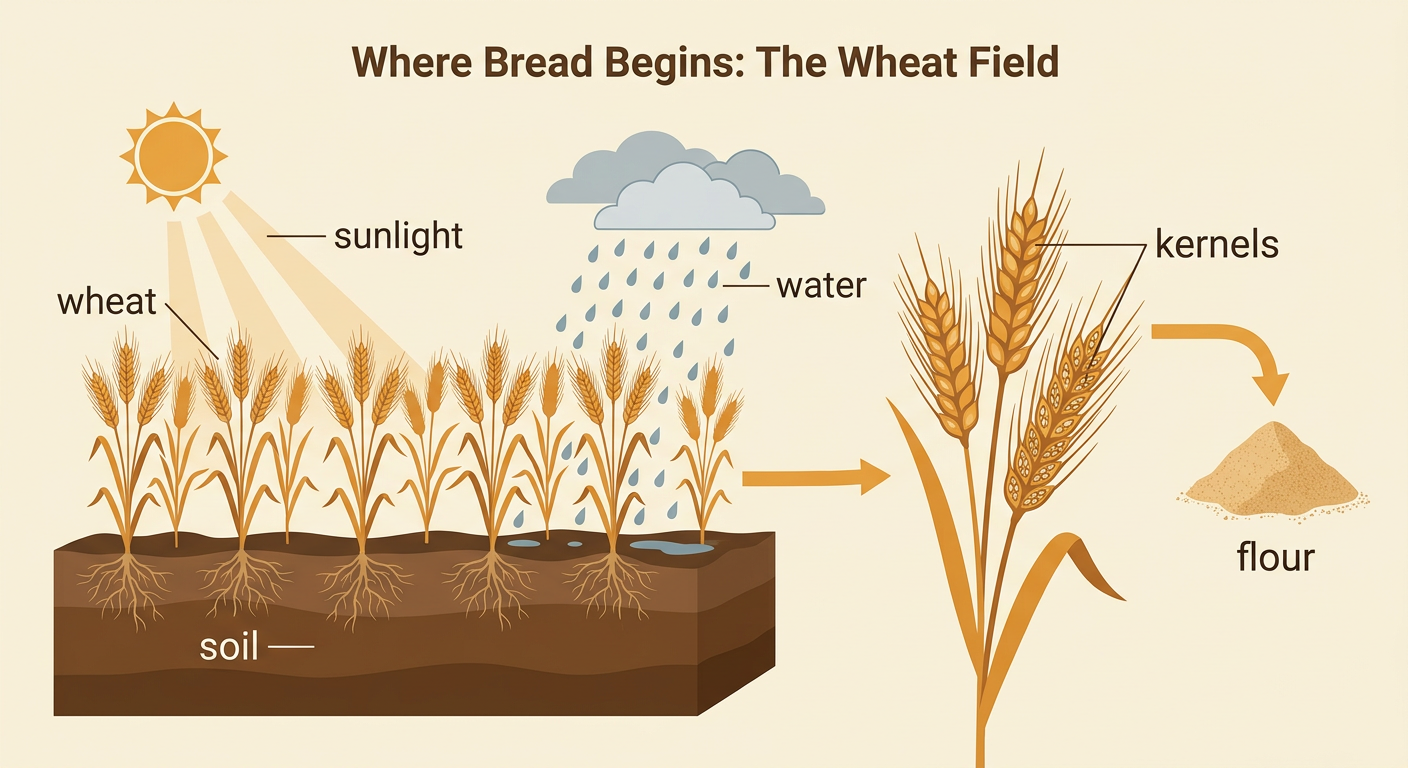
Bread begins with wheat, a crop that grows from seeds. Farmers grow wheat in places with suitable soil, water, sunlight, and space. These natural resources come from Earth and help the plants grow. Wheat plants form heads filled with small kernels. After the wheat is harvested, the kernels can be ground into flour. Flour is an important ingredient in bread. Different places have different land, weather, and water supplies, so some places are better for growing wheat than others. For example, a farmer may plant wheat in a sunny field with rich soil and enough rain. People use knowledge about seasons, soil, and weather to choose where and when to grow the crop.
From Farm to Bakery
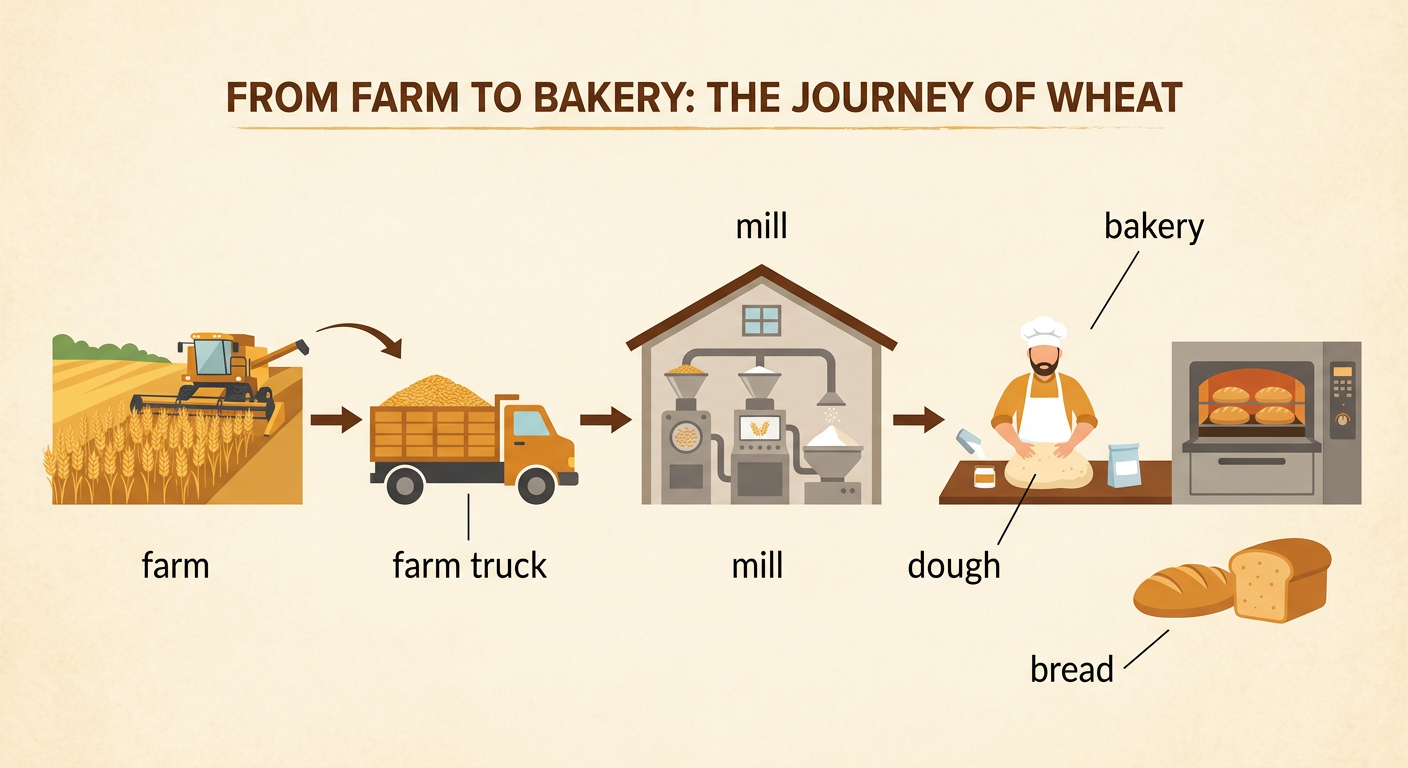
Wheat passes through several connected steps before it becomes bread. First, a farmer plants and cares for the wheat. When the wheat is ripe, a machine harvests it and separates the kernels from the rest of the plant. Next, a truck carries the kernels to a mill. At the mill, machines clean and grind the kernels into flour. The flour travels to a bakery. A baker measures flour, water, yeast, and salt, then mixes them to make dough. The dough rises because the yeast produces gas that forms tiny bubbles. Finally, the baker shapes and bakes the dough. Each step depends on the step before it. Without flour from the mill, the baker cannot make the loaf.
Producers and Service Workers
Producers are people or businesses that make goods or provide services. Many producers help create bread. A farmer produces wheat and needs knowledge about seeds, soil, weather, and farm tools. A mill worker uses machines safely to turn wheat kernels into flour. A baker follows a recipe, measures ingredients, shapes dough, and controls the oven temperature. These workers help produce goods: wheat, flour, and bread. Other workers provide useful services. A truck driver safely transports wheat and flour. A mechanic repairs farm or bakery machines. A store worker places bread on shelves and helps customers. For example, if a delivery truck breaks down, a mechanic’s repair service helps the bread journey continue. Producing bread requires different skills, tools, and teamwork.

Consumers Buy Bread
A consumer is a person who buys or uses goods and services. Families are consumers when they buy bread at a grocery store or bakery. The store receives bread from producers, displays it, and sets a price. A consumer chooses a loaf and pays for it with money. The business uses money from sales to pay workers and buy supplies, such as flour, bags, and electricity. Consumers may choose bread based on price, size, ingredients, or taste. For example, Jordan’s family needs bread for sandwiches. Jordan compares two loaves and selects one that the family likes and can afford. By buying the loaf, the family completes the bread journey from natural resources to a finished good that meets a human need for food.

Sequence the Bread Journey
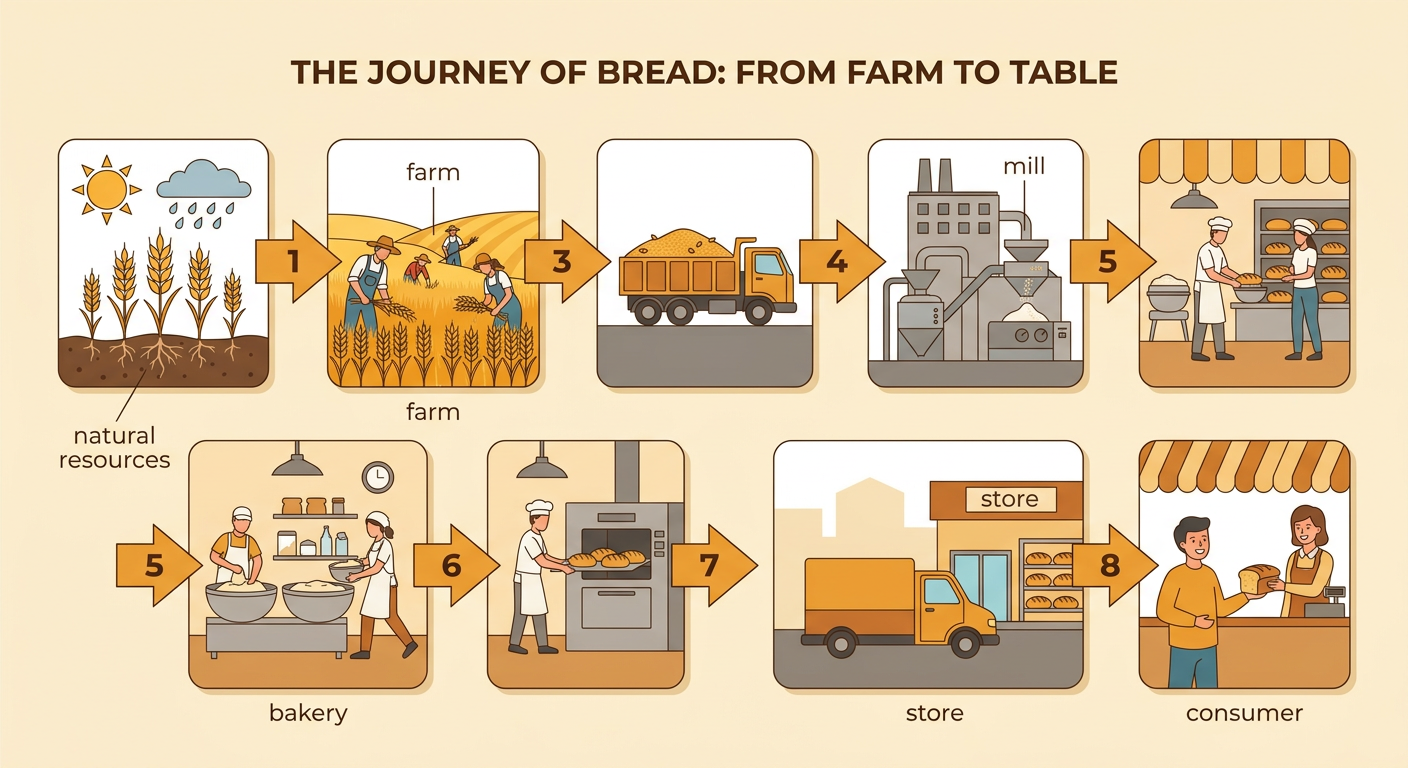
A sequence puts events in the order they happen. To model the bread journey, begin with the natural resources that help wheat grow. Then place the production steps in order: grow wheat, harvest kernels, transport the kernels, grind them into flour, mix dough, bake bread, deliver the loaves, and sell them to consumers. Arrows show how one step leads to the next. You can check the sequence by asking, “What must happen before this step?” For example, wheat must be ground before flour can be mixed into dough. The model also shows connections among places. Farms provide wheat, mills make flour, bakeries make bread, and stores sell it. Every place, resource, worker, and tool helps move the good toward the consumer.