Genes, DNA, Chromosomes, and Traits
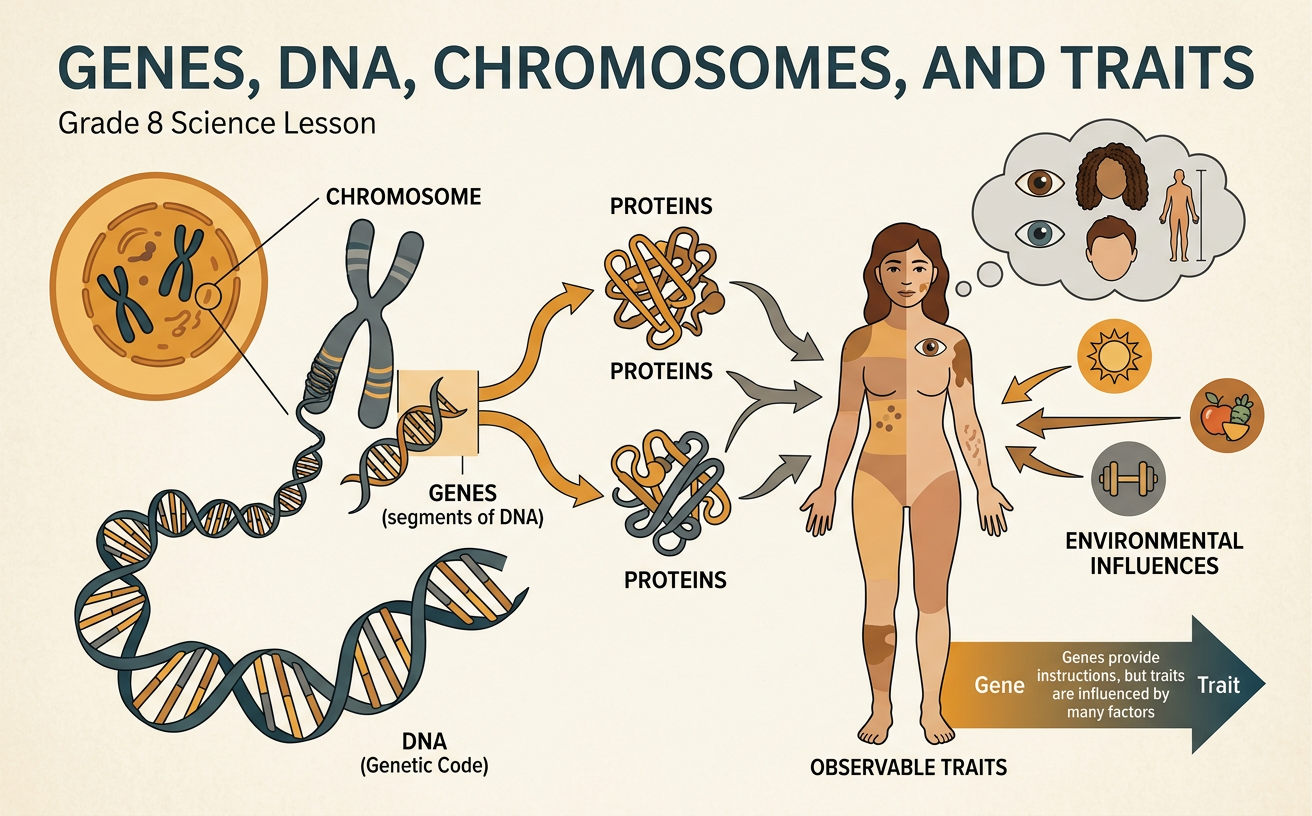
Students develop a foundational model linking DNA, genes, chromosomes, proteins, and observable traits while recognizing that genes influence traits rather than determining every trait by themselves.
Illustrations are auto-generated and may be placeholders. They can be refreshed to match the narration.
What Is Genetics?
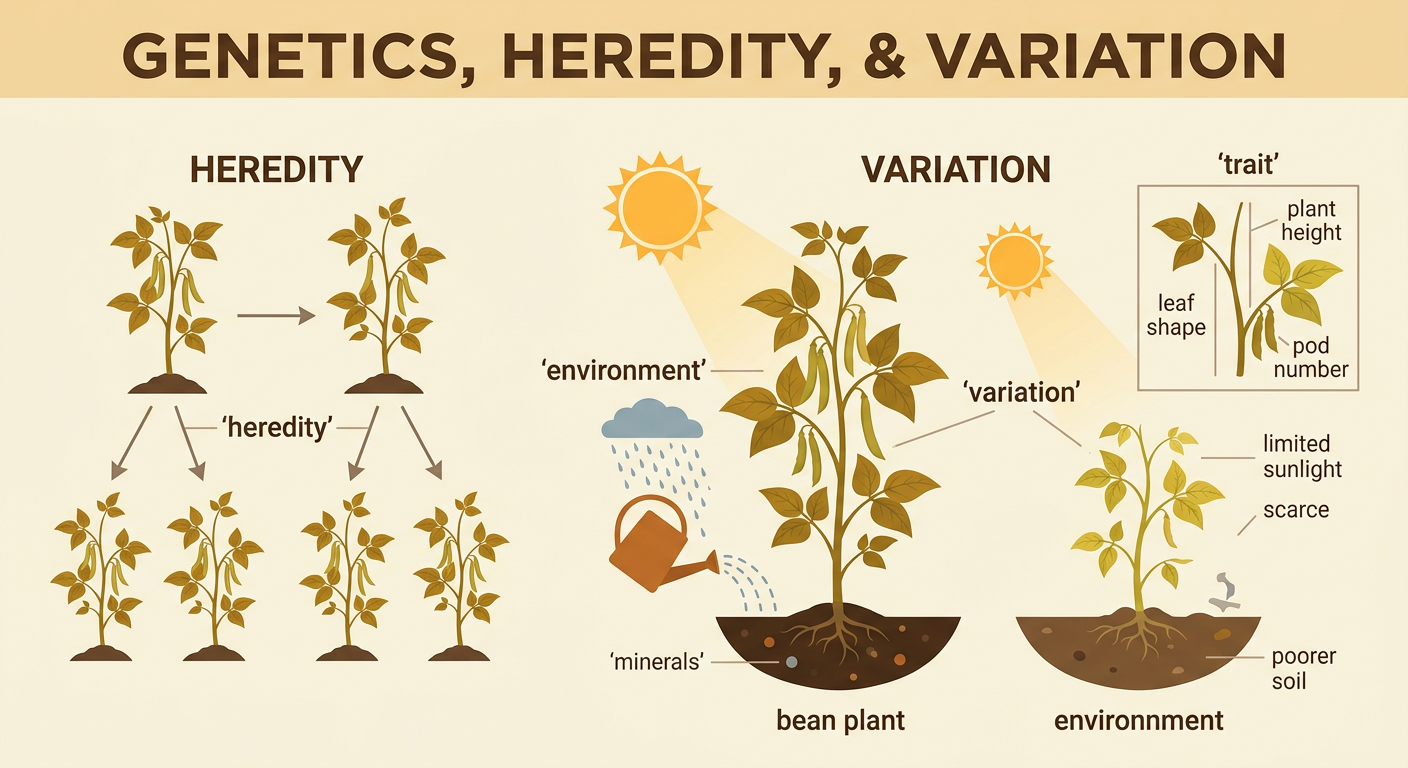
Genetics is the study of heredity and variation. Heredity is the passing of biological information from parents to offspring. Variation means that individuals of the same species can have different forms of a trait. A trait is an observable or measurable characteristic, such as blood type, eye color, or plant height. Genes influence many traits, but surroundings and life experiences can also matter. For example, two bean plants may inherit similar genes related to growth. If one receives enough light, water, and minerals while the other does not, they may reach different heights. Geneticists gather evidence by comparing DNA, proteins, family patterns, and observable traits. They use this evidence to develop explanations rather than assuming that one gene always produces one fixed result.
From Cells to Chromosomes
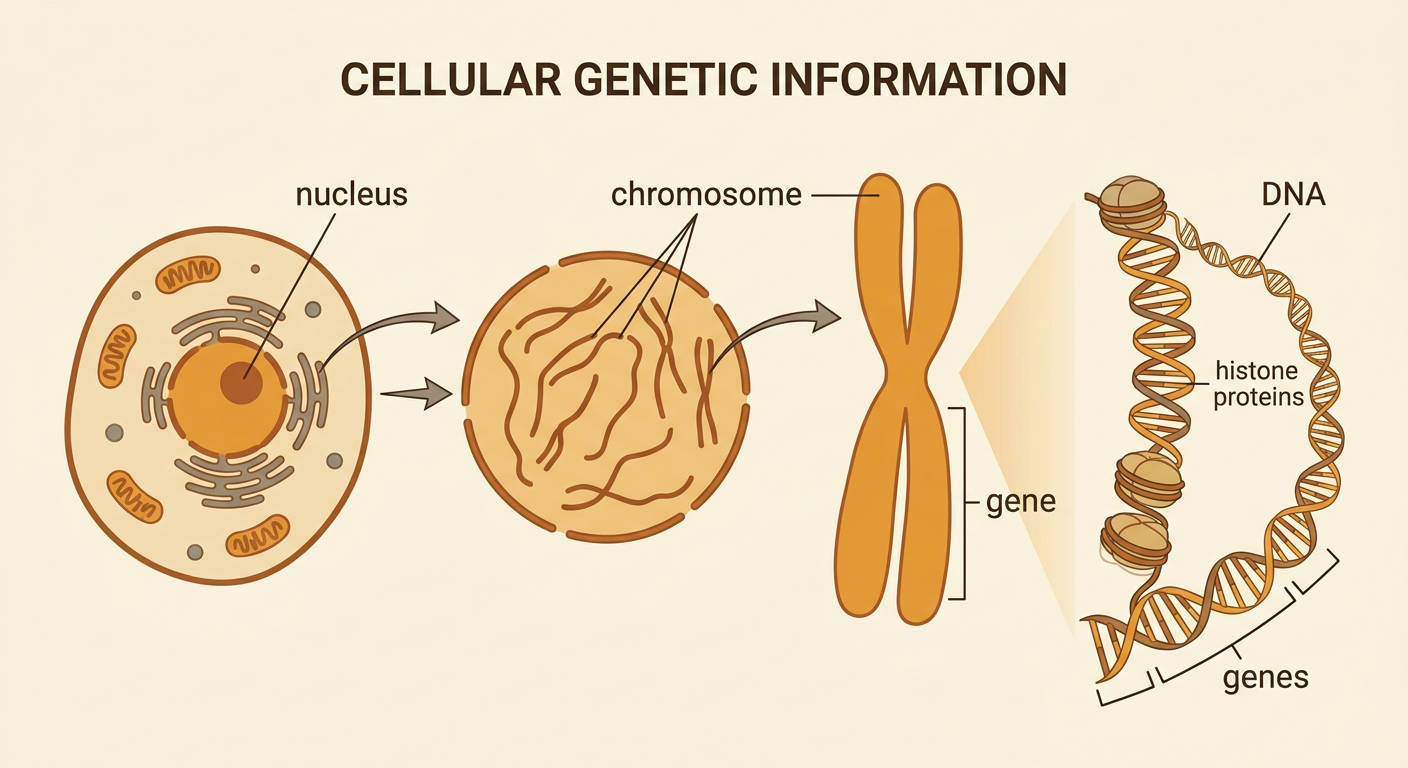
Most cells contain genetic information in a structure called the nucleus. Inside the nucleus are chromosomes, long packages made of DNA wrapped around proteins. Each chromosome contains many genes arranged along its DNA. Human body cells usually have 46 chromosomes organized into 23 pairs. One chromosome in each pair generally comes from the biological mother and the other from the biological father. Egg and sperm cells usually contain 23 unpaired chromosomes. When they join during fertilization, the resulting cell receives 23 pairs. Chromosomes are copied before most cell divisions so new cells can receive the same basic genetic information. A chromosome is not the same as a gene: a chromosome is a much larger DNA package, while a gene is a particular DNA segment located on a chromosome.
DNA and Genes
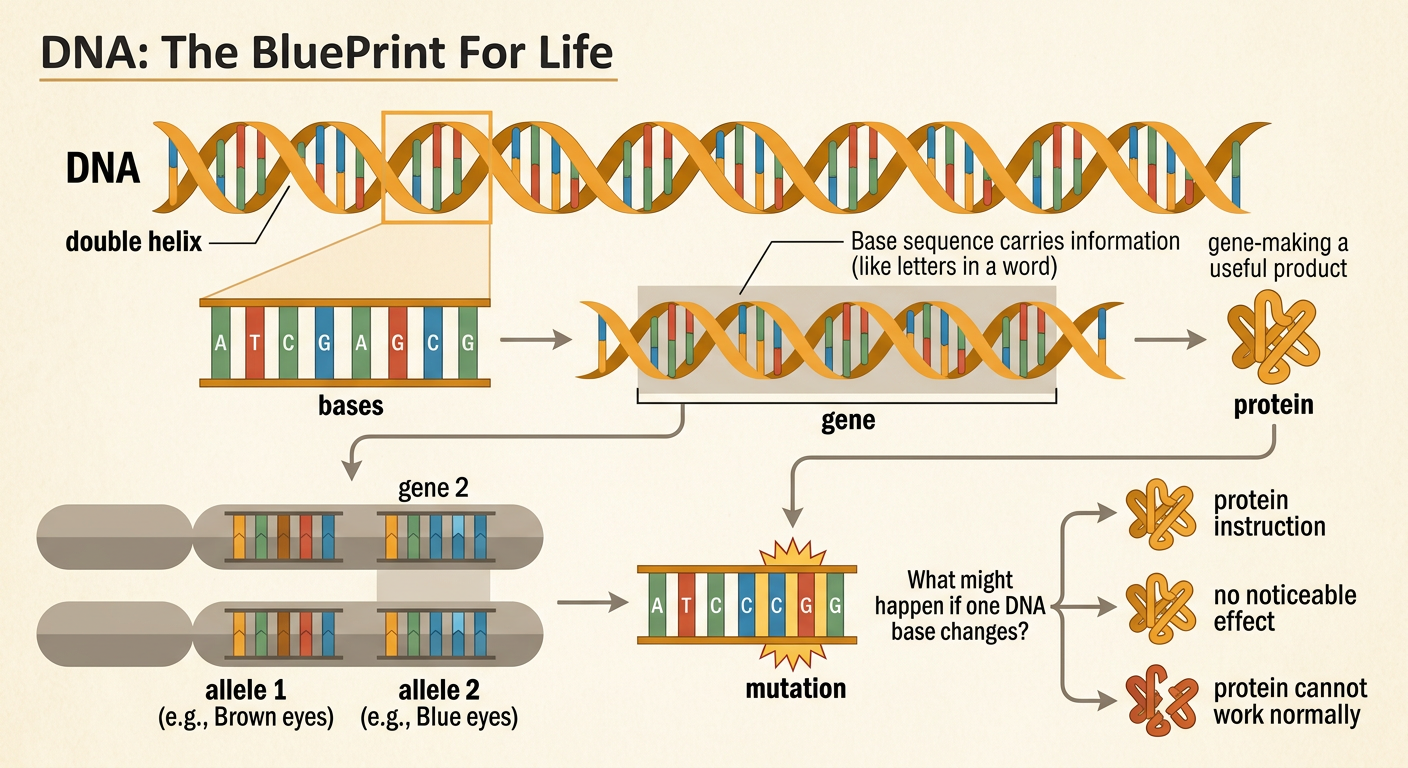
DNA, or deoxyribonucleic acid, is the molecule that stores inherited information. It has two strands twisted into a double helix. Each strand contains a sequence of chemical units represented by the letters A, T, C, and G. The order of these bases carries information, much as the order of letters changes the meaning of a word. A gene is a DNA sequence that contributes to making a functional product, often a protein. Different versions of the same gene are called alleles. An allele can arise when a mutation changes the DNA sequence. For example, replacing one DNA base may change a protein instruction, have no effect, or prevent the protein from working normally. The effect depends on where the change occurs and how it influences the gene’s product.
Genes, Proteins, and Traits
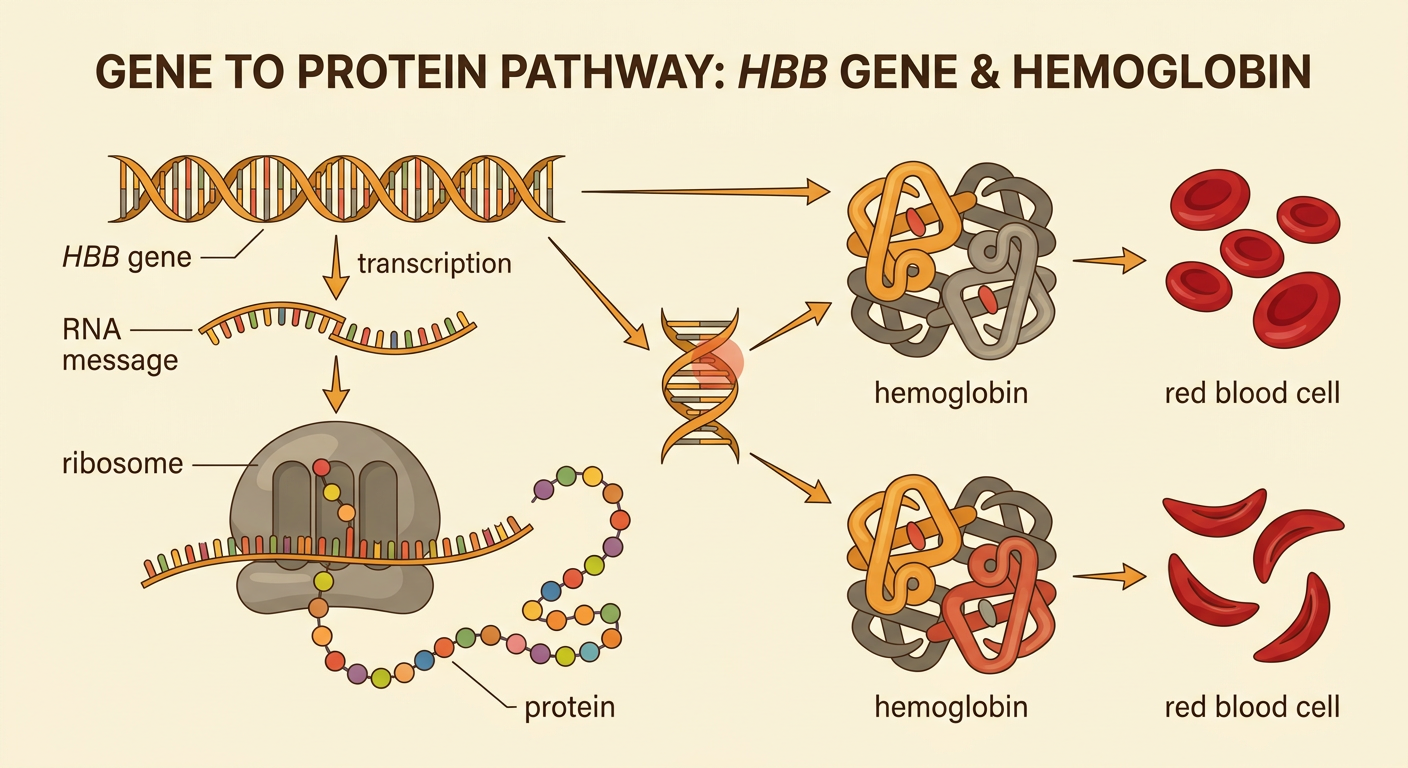
Many genes influence traits by providing instructions for proteins. First, a cell copies information from a gene into an RNA message. Cell structures called ribosomes then use the RNA message to assemble amino acids into a protein. Proteins can form structures, carry materials, send signals, or act as enzymes that speed up chemical reactions. A change in a gene may alter the protein’s amino acid sequence, amount, shape, or function. For example, the HBB gene contains instructions for part of hemoglobin, the protein that helps red blood cells carry oxygen. Certain changes in HBB can produce altered hemoglobin, which may affect red blood cell shape and a person’s health. However, a trait usually reflects interactions among multiple genes, proteins, and environmental conditions, not a simple one-gene-to-one-trait rule.
Modeling a Gene-to-Trait Pathway
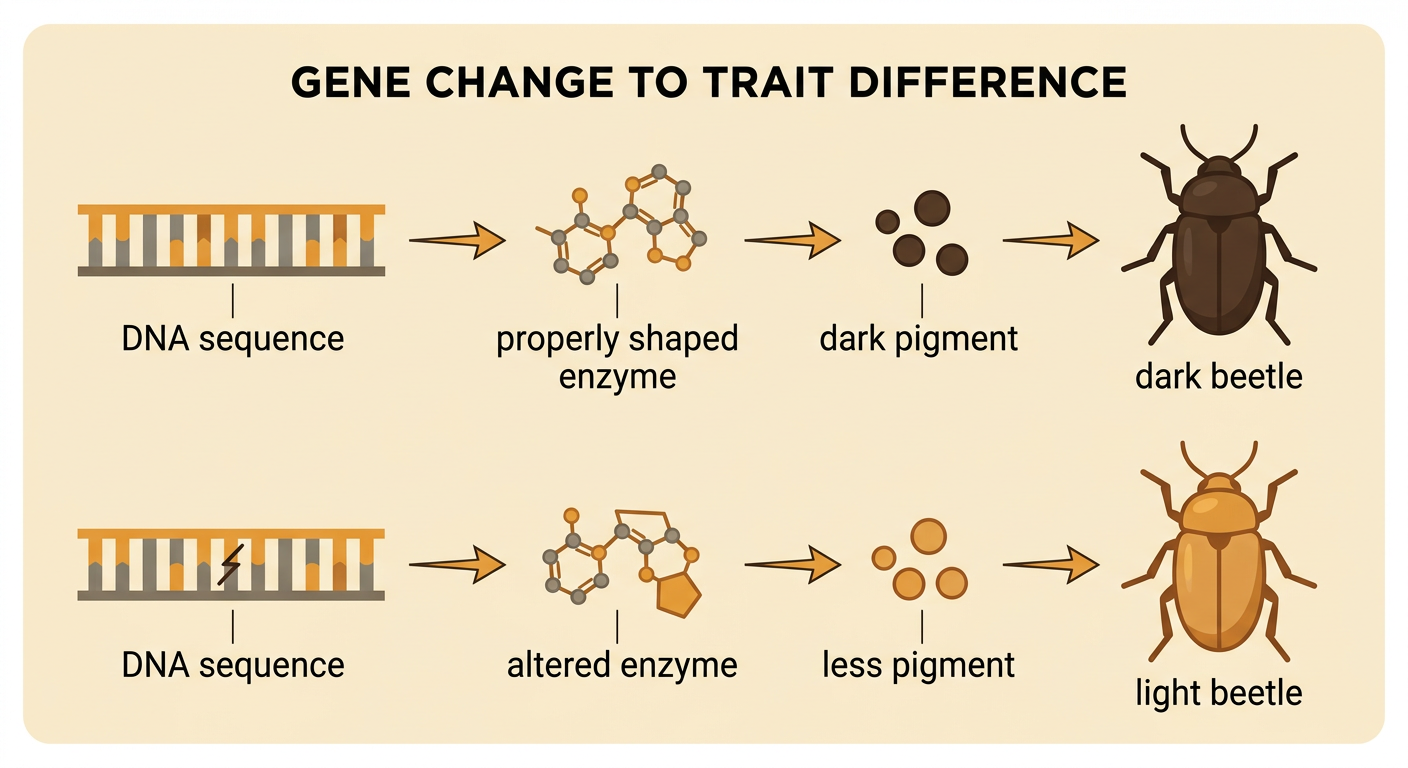
A scientific model can show a possible chain of cause and effect from a gene change to a trait difference. Consider a beetle pigment gene that provides instructions for an enzyme. In one allele, the DNA sequence leads to a properly shaped enzyme that helps produce dark pigment. A mutation in another allele changes an amino acid, causing the enzyme to function less effectively. Less pigment is produced, so the beetle’s outer covering appears lighter. The model should use arrows to connect the DNA sequence, protein structure or activity, cell product, and observable trait. Each arrow represents a relationship that must be supported by evidence. Researchers might compare DNA sequences, measure enzyme activity, and record body color. If all three sources agree, they support the claim that the gene change contributed to the color difference.
Inherited Does Not Mean Inevitable
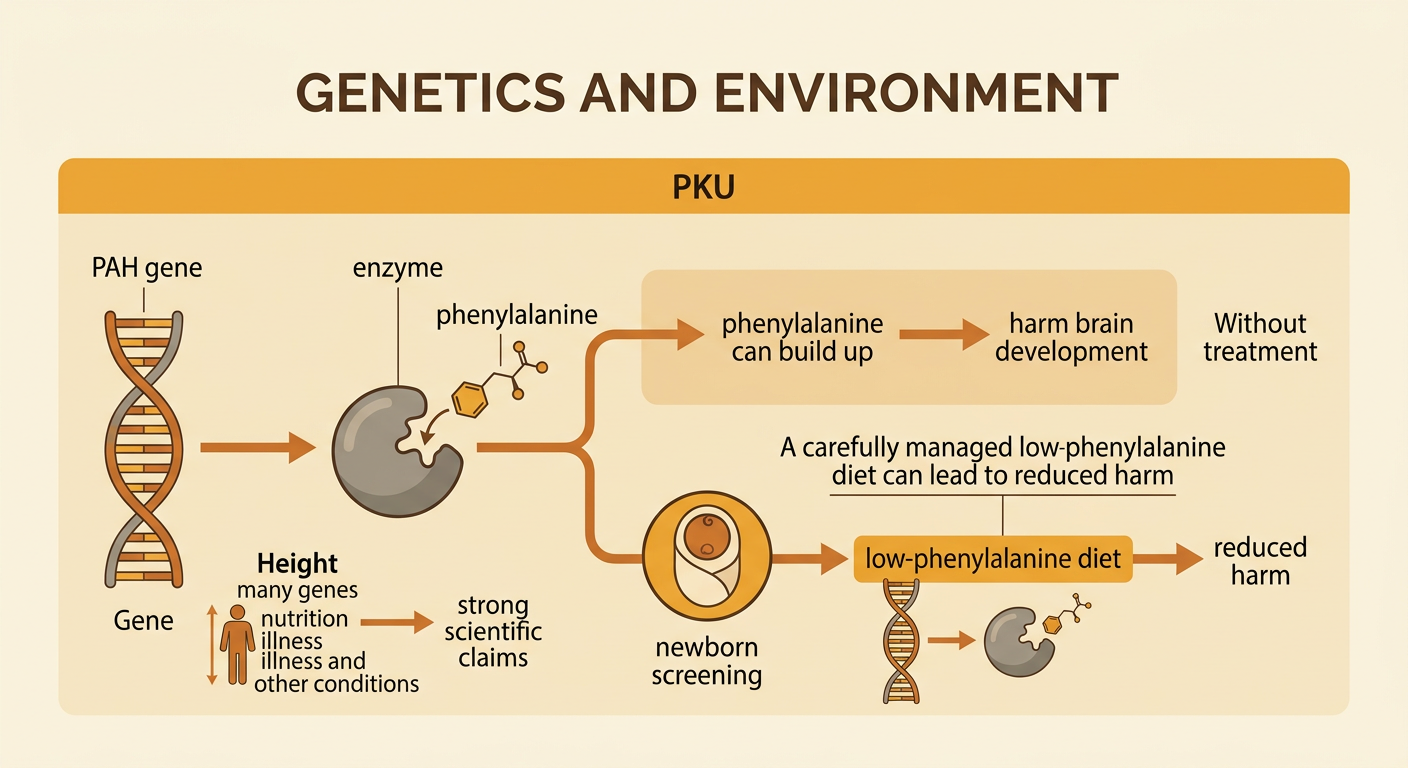
An inherited allele can influence an outcome without making that outcome unavoidable. Phenylketonuria, or PKU, provides an example. People with PKU inherit variants of the PAH gene that greatly reduce the function of an enzyme used to process the amino acid phenylalanine. Without treatment, phenylalanine can build up and harm brain development. Newborn screening can identify the condition, and a carefully managed low-phenylalanine diet can greatly reduce the risk of serious effects. The inherited gene variants remain present, but the environment changes the outcome. Other traits, such as height, are influenced by many genes along with nutrition, illness, and other conditions. A strong scientific claim should therefore identify the genetic evidence, consider environmental evidence, and avoid statements such as “the gene caused the trait” when the evidence supports only an influence or contribution.