Giving Clear Step-by-Step Instructions
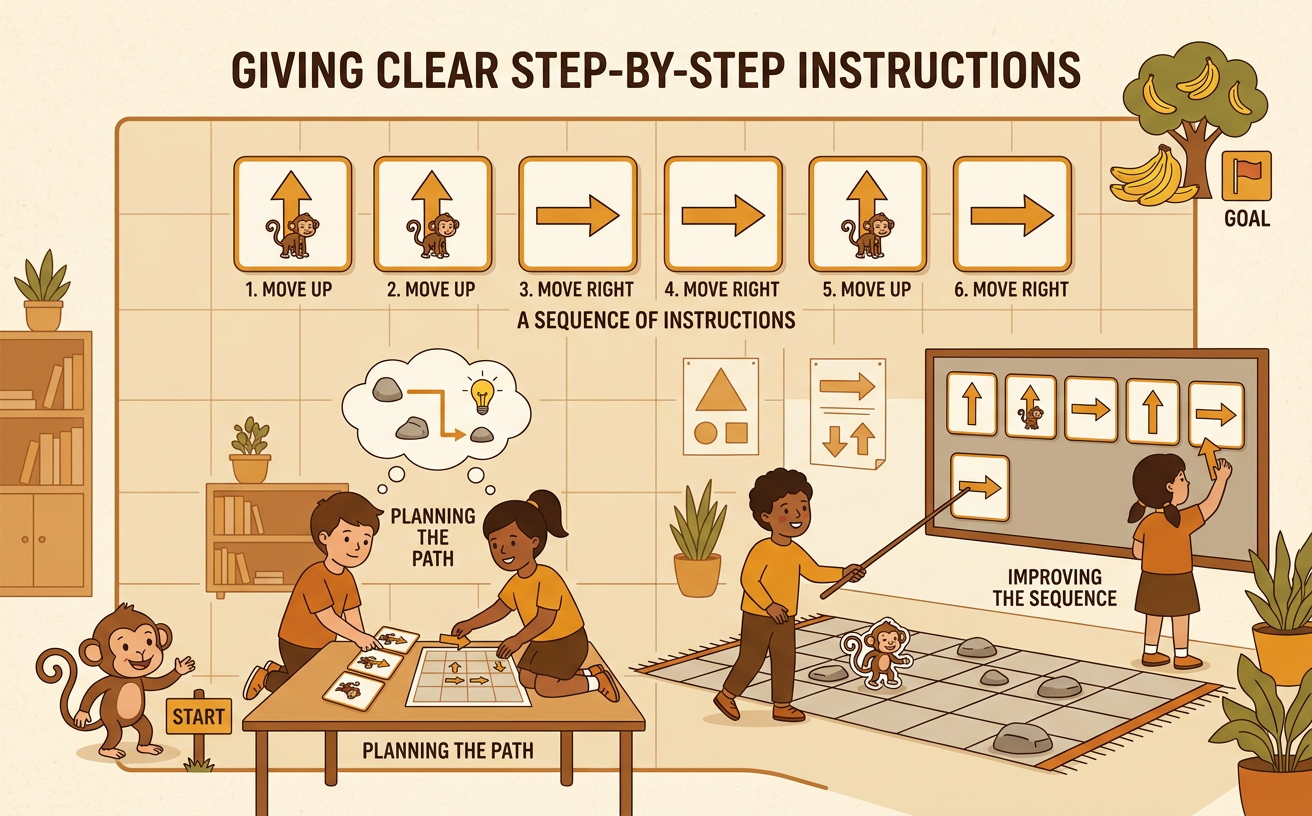
Students create, follow, and improve a simple sequence of picture-based instructions for moving a character to a goal.
Illustrations are auto-generated and may be placeholders. They can be refreshed to match the narration.
Meet the Classroom Robot
Imagine a classroom robot named Beep. Beep can move on a path of floor squares, but Beep does not know where to go by itself. We must give one clear direction at a time. We can use picture cards that say move forward, turn left, turn right, and stop. For example, if a star is one square in front of Beep, the instruction is move forward one square. Then Beep reaches the star and stops. Work with a partner to describe what Beep should do. Take turns speaking and listening. Point to the picture card as you name each action. Clear directions help everyone understand the plan.

Put Steps in Order
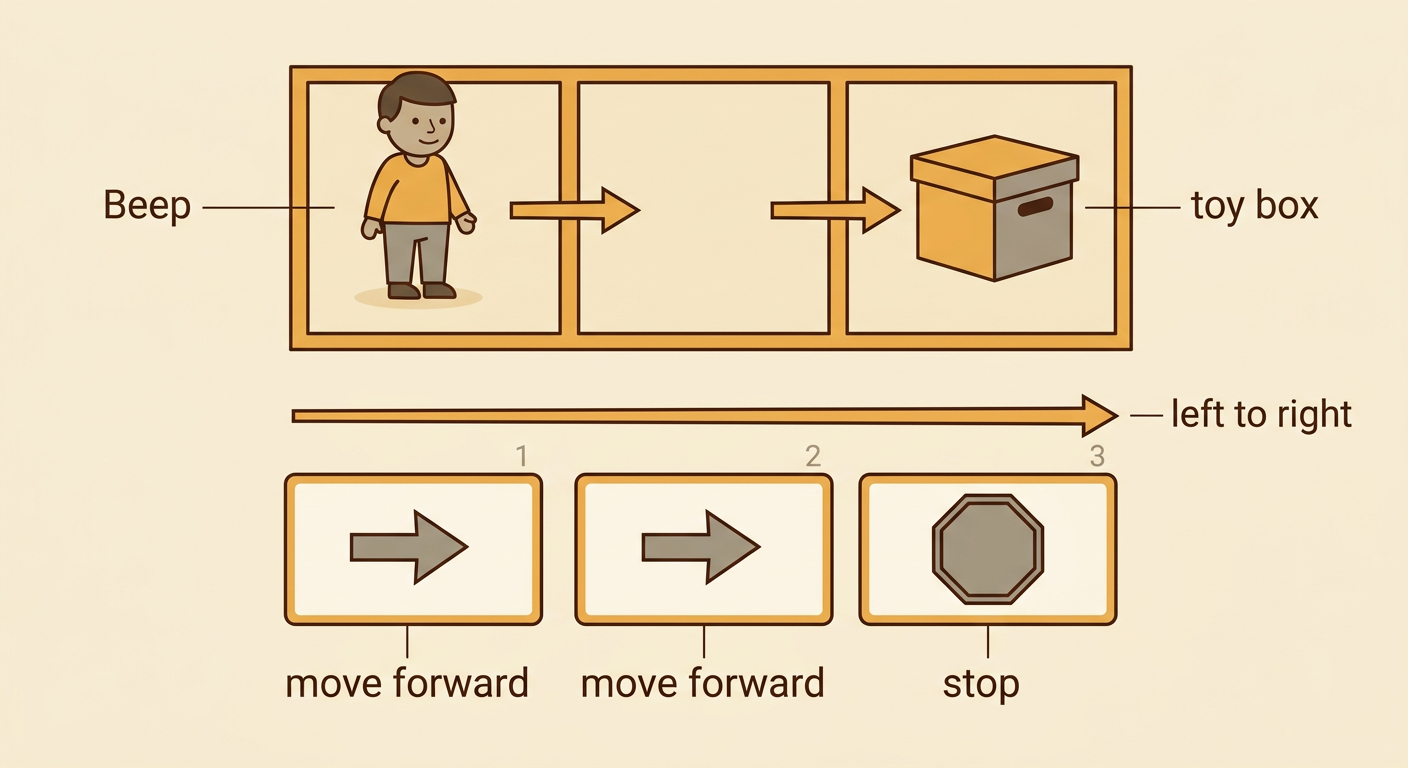
A set of instructions must be in the correct order. First, look at where Beep starts and where the goal is. Next, choose the picture cards Beep needs. Then place the cards from left to right in the order Beep should follow them. Suppose Beep must move across two squares to reach a toy box. Put down a move forward card, another move forward card, and a stop card. If the stop card comes first, Beep will not reach the toy box. With a partner, point to each card and say the steps aloud: “First, move forward. Next, move forward. Last, stop.” Ask your partner whether the order makes sense.
Follow the Algorithm
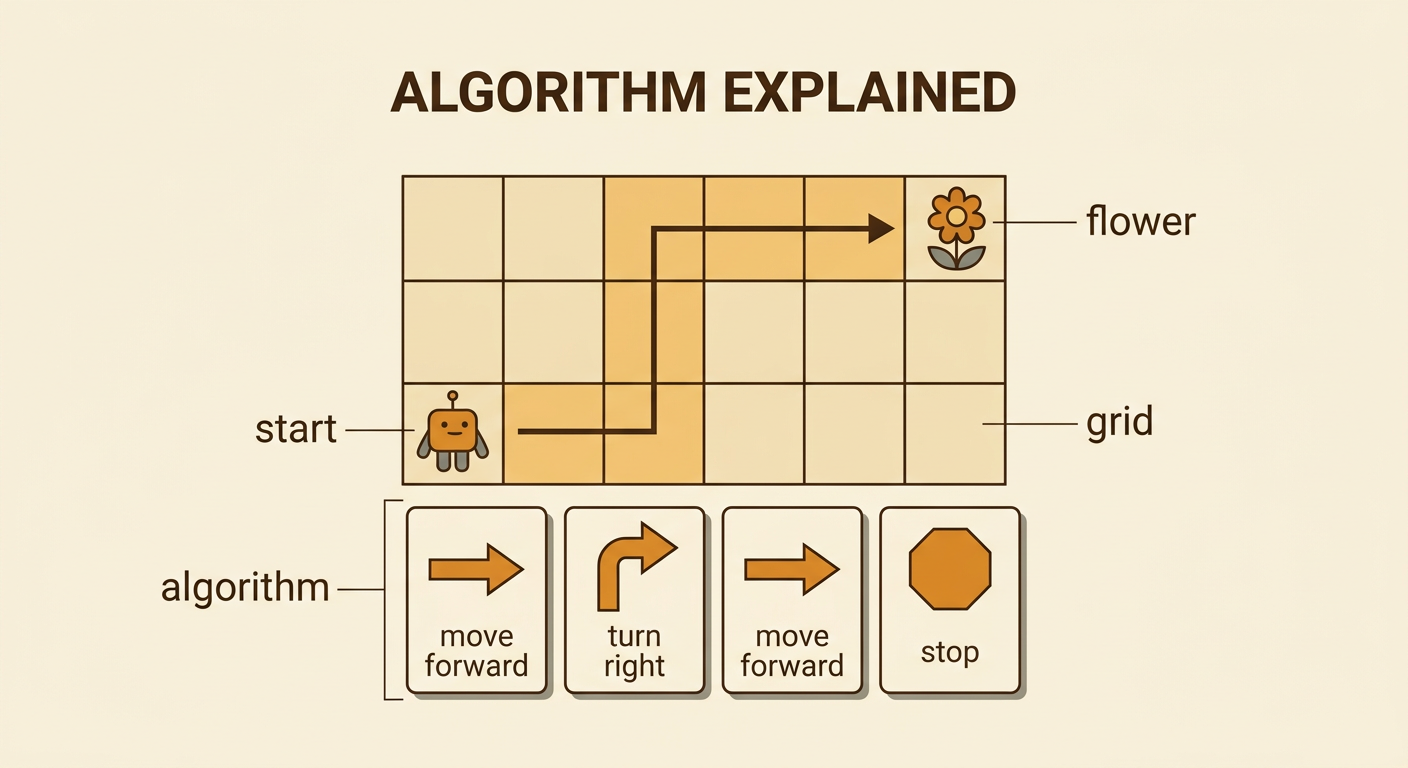
An algorithm is a list of steps for completing a task. Follow each step in order without skipping or changing it. One student can be Beep while a partner reads the picture cards. For example, the cards might show move forward, turn right, move forward, and stop. Beep moves one square forward, turns to face right, moves one more square, and stops at the flower. After each step, the partners can pause and check Beep’s place on the grid. The student reading the cards should use a clear voice. The student acting as Beep should listen carefully. When the algorithm is finished, talk together: Did Beep follow every step? Did Beep reach the goal?
Find and Fix a Mistake
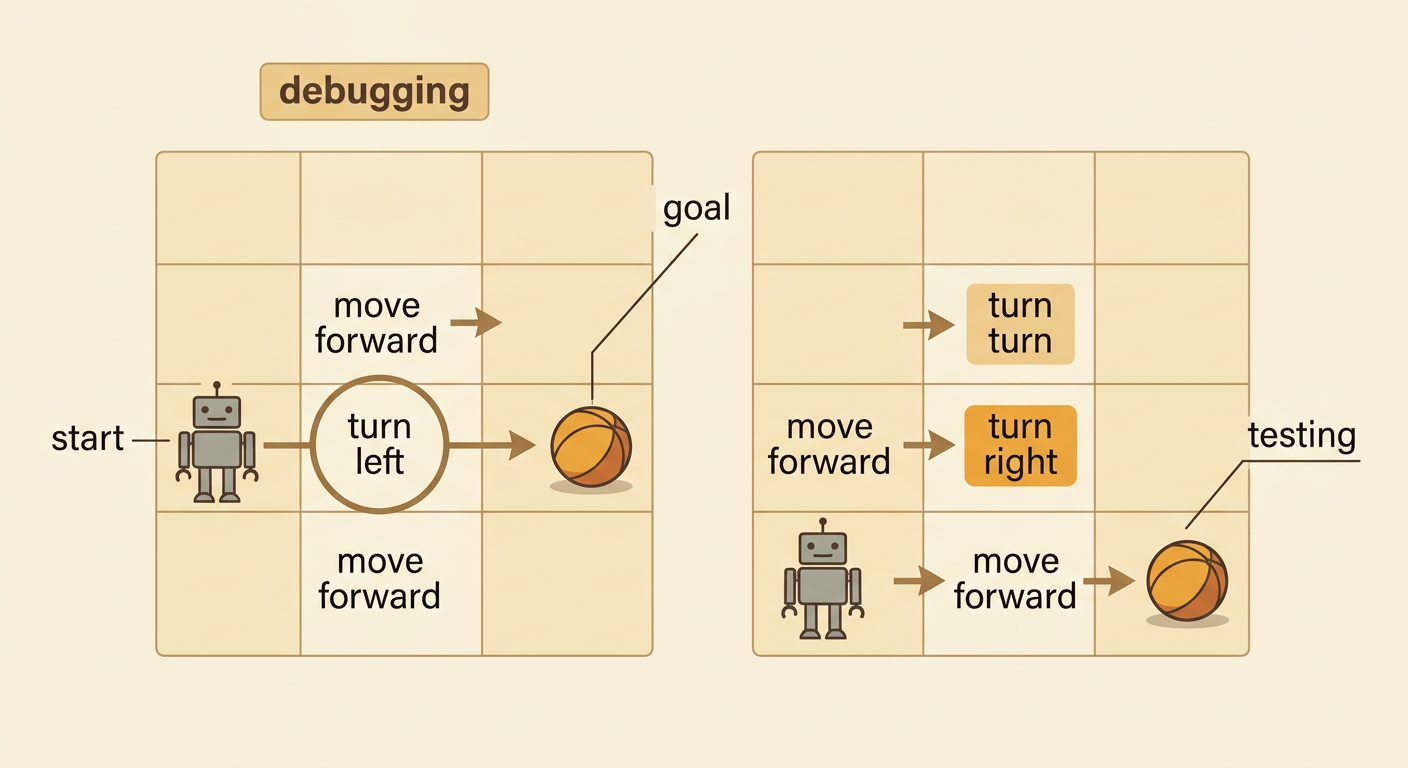
Sometimes instructions have a mistake. Finding and fixing that mistake is called debugging. Test the picture cards by following them one at a time. Imagine the goal is to the right, but the cards say move forward, turn left, and move forward. Beep ends up going away from the goal. Stop and ask, “Which step sent Beep the wrong way?” Replace the turn left card with a turn right card. Then start again and test the new instructions. Work with a partner and listen to each other’s ideas. One person can point out the mistake, and the other can suggest a change. It is okay when an algorithm does not work at first. Careful testing helps make it better.
Share Clear Instructions
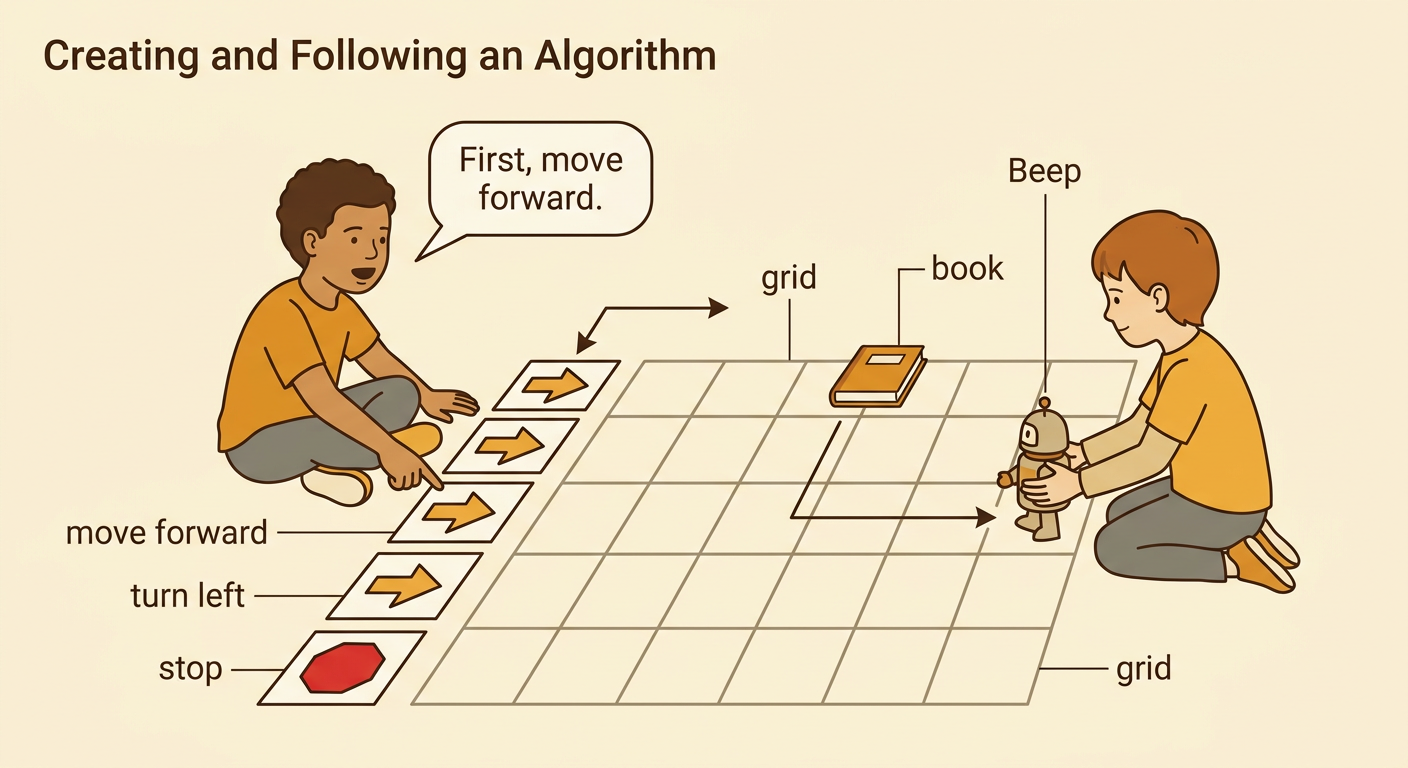
Now create an algorithm for a classmate to follow. Place Beep on a grid and choose a goal, such as a book. Arrange picture cards that lead Beep to it. Show the cards to your partner and explain the steps in order. You might say, “First, move forward. Next, turn left. Then, move forward. Last, stop.” Your partner should listen, ask a question if something is unclear, and follow the instructions. Watch what happens without moving the cards for your partner. After the test, talk together about the result. Say one thing that worked and one thing that could be clearer. Take turns so both partners get to create, explain, listen, and follow. Clear instructions make teamwork easier.