
Heating and Cooling Change Matter
Students observe how heating and cooling change matter, identify reversible and irreversible changes, and compare modern refrigeration with past cooling methods.
Illustrations are auto-generated and may be placeholders. They can be refreshed to match the narration.
Matter Can Change
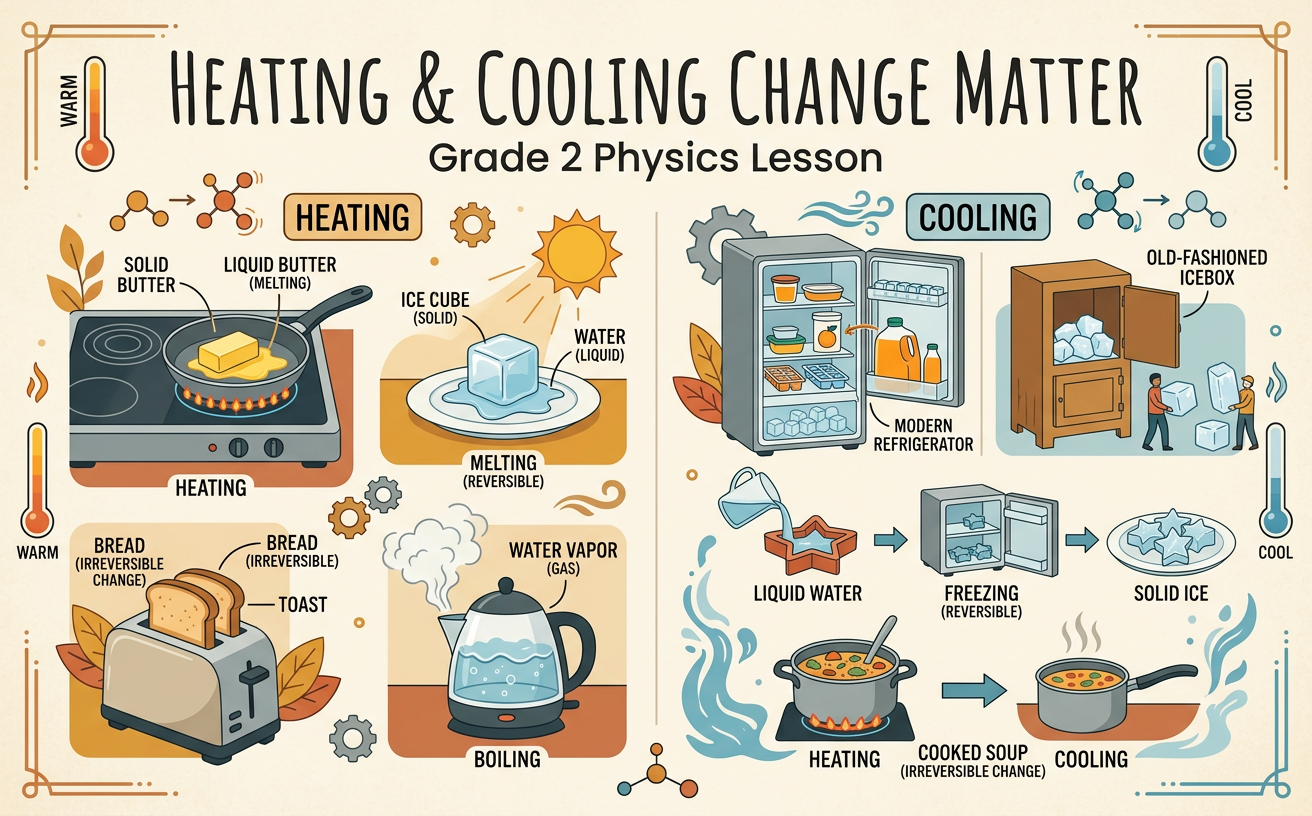
Matter is anything that takes up space, such as water, butter, clay, or wood. Heating and cooling can change how matter looks, feels, or acts. When an ice cube is warmed, it melts into liquid water. When liquid water becomes cold enough, it freezes into solid ice. The water is still the same kind of matter even though its form has changed. Heating does not always make matter melt. A metal spoon placed in warm water gets warmer but stays solid. Cooling does not always make matter freeze, either. Juice in a refrigerator gets cold but stays liquid. Scientists observe carefully to find out what changes. They describe the matter before and after heating or cooling and look for evidence, such as a change in shape, temperature, hardness, or state.

Observe Melting and Cooling
We can investigate how heating and cooling affect an ice cube. Place one ice cube in each of two clear cups. Put one cup in a warm place and the other in a cooler place. Observe the cubes at the same times, such as after 2, 4, 6, and 8 minutes. Do not touch or taste the materials. Record the size of each cube and the amount of liquid water in each cup. The cube in the warm place will usually melt faster because it gains heat more quickly. Next, place some melted water in a freezer with an adult's help. Later, observe that the liquid has become solid ice. Careful observations made before, during, and after the test provide evidence that heating causes melting and enough cooling causes freezing.

Reversible or Irreversible?
A reversible change can be undone so the material returns to an earlier form. Melting and freezing water are reversible changes. An ice cube can melt into water, and the water can freeze into ice again. Softening butter with gentle warmth can also be reversed by cooling it until it becomes firm. An irreversible change cannot easily be undone. When an egg is heated in a pan, it changes from a runny liquid to a firm cooked egg. Cooling the cooked egg will not make it raw again. Toasting bread is another irreversible change because the browned toast cannot become fresh bread again. To classify a change, ask: Can heating or cooling return the material to what it was before? Observations from a fair test help us answer with evidence.

Graph Our Observations
A graph helps us organize and compare measurement data. Suppose two equal ice cubes are placed in a warm place and a cool place. We measure how many minutes each cube takes to melt completely. The warm-place cube melts in 6 minutes, while the cool-place cube melts in 12 minutes. Make a bar graph with one bar for each location. Label the bottom with the locations and the side with minutes. Use a scale that counts by ones or twos, and draw each bar to the correct height. The taller bar shows that the cool-place cube took more time to melt. The difference is 6 minutes because 12 minus 6 equals 6. This graph supports the observation that an ice cube usually melts faster in a warmer location.

Keeping Things Cool: Past and Present
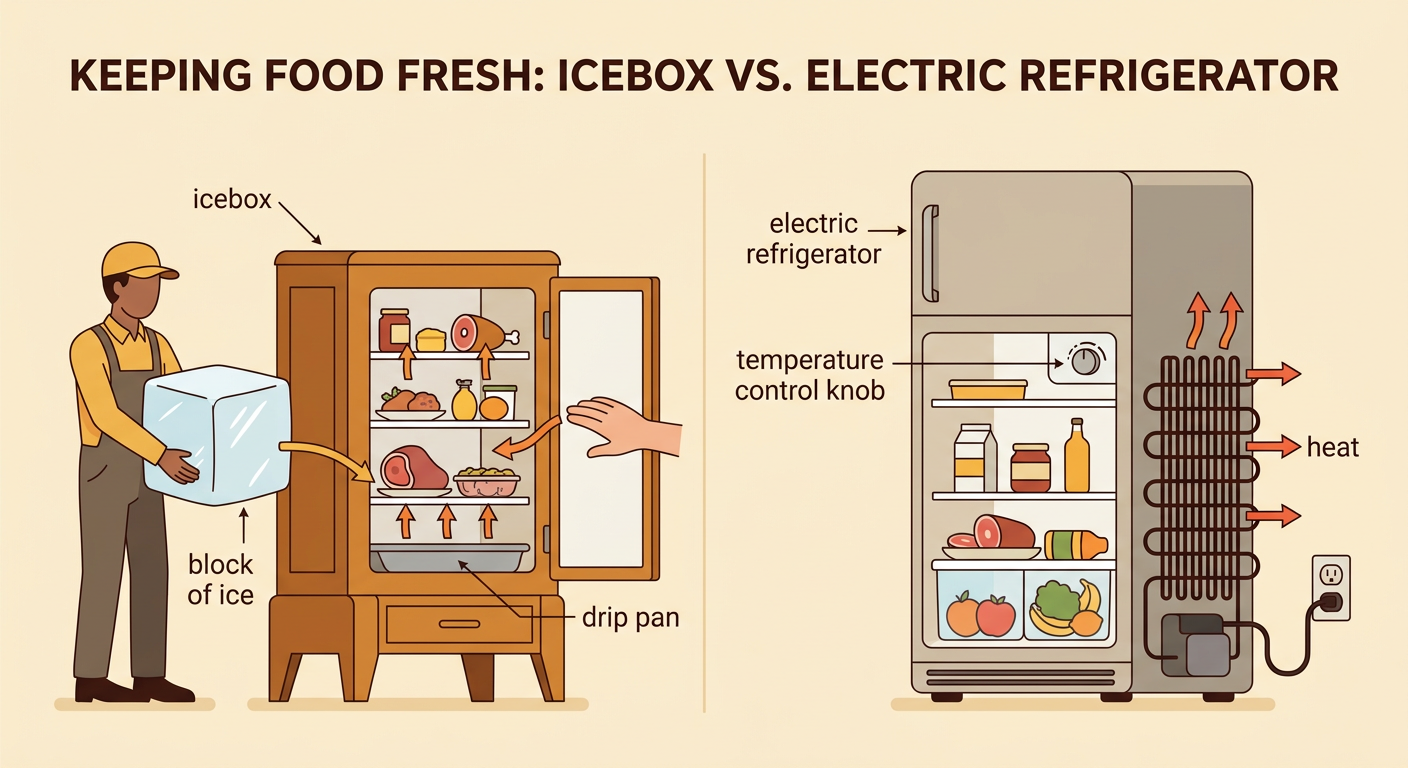
People have always needed ways to keep food cool and slow spoilage. Long ago, before electric refrigerators were common, some families used an icebox. An ice delivery worker brought a large block of ice, which was placed inside the insulated box. The ice absorbed heat as it melted, helping food stay cool for a while. Families had to replace the ice and empty melted water. Some people also stored food in cool cellars, underground rooms, or springhouses near cold water. Today, an electric refrigerator removes heat from its inside and releases that heat into the room. It can keep food at a steady cool temperature without a delivered block of ice. Both old and modern methods help keep food cool, but refrigerators are usually more convenient and easier to control.
Make an Evidence-Based Claim
An evidence-based claim tells what you think and supports it with observations or information. Begin with a question: Can the change caused by heating or cooling be reversed? Then write a claim, give evidence, and explain your reasoning. For example, claim that melting an ice cube is reversible. As evidence, state that the solid ice became liquid water when warmed and became solid ice again when cooled in a freezer. Explain that the same water changed form and returned to its earlier solid state. You can also claim that cooking an egg is irreversible. The egg became firm when heated, but cooling did not turn it back into a raw egg. Use notes, measurements, graphs, class investigations, or reliable books as evidence. Strong arguments match the claim to the evidence and do not rely only on guesses.
