
Helping Living Things in Our Schoolyard
Students identify simple ways people can reduce harm to plants and animals by caring for shared outdoor spaces.

Illustrations are auto-generated and may be placeholders. They can be refreshed to match the narration.
Meet Our Schoolyard Neighbors
Our schoolyard is home to many living things. Grass, trees, flowers, insects, birds, and squirrels may live or visit there. Plants need sunlight, water, air, and space to grow. Animals need food, water, air, shelter, and safe places to move. We share this outdoor space with them. We can observe living things gently without touching or chasing them. For example, a butterfly may drink nectar from a flower. If we watch from a short distance, the butterfly can eat safely. A tree may give shade to people and shelter to a bird. During a schoolyard walk, look carefully for plants and animals. Talk with a partner about what you notice and what each living thing might need.

Notice Ways People Can Cause Harm
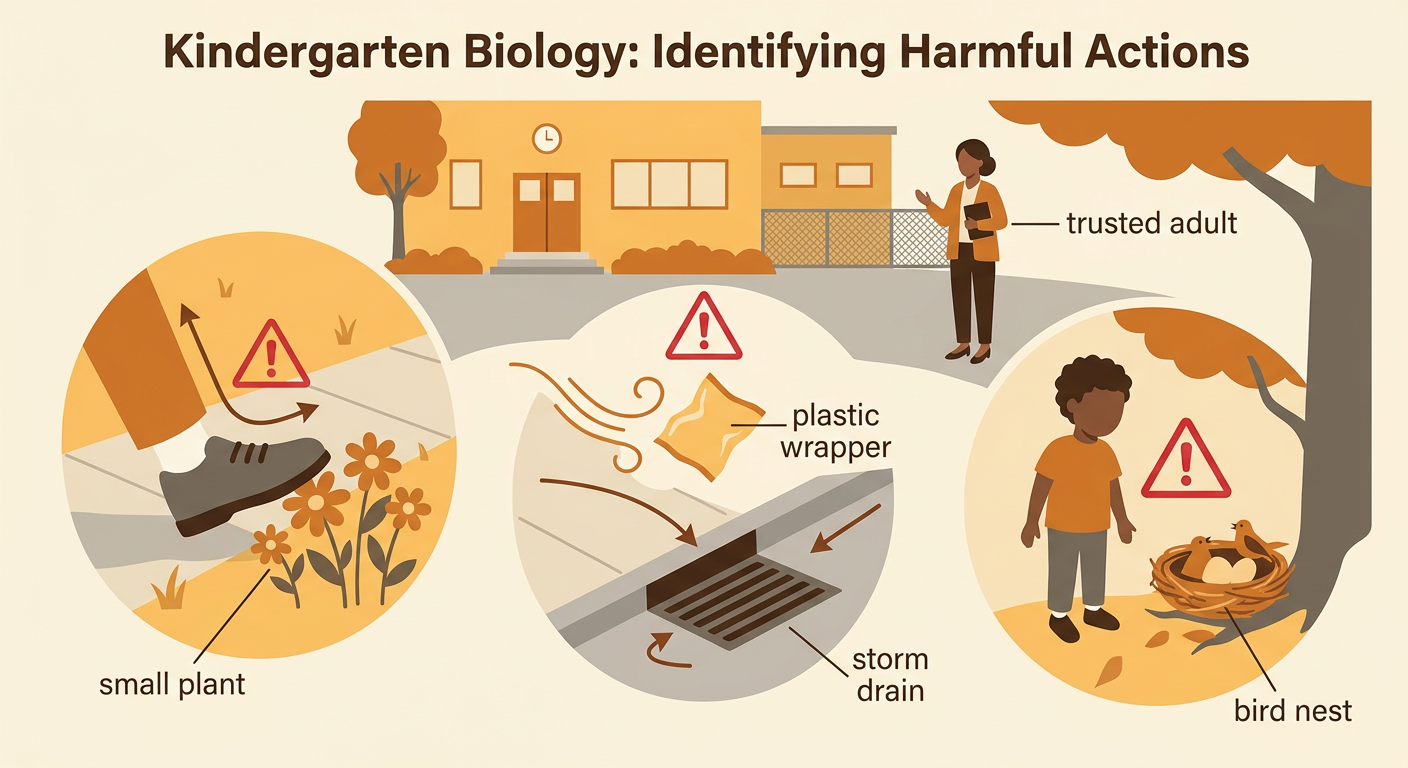
People sometimes harm living things, even when they do not mean to. Stepping on small plants can bend or break them. Chasing a bird can stop it from resting or eating. Pulling leaves from a healthy plant can damage the plant. Litter can make the land and water unsafe. For example, a plastic wrapper left on the ground might blow near an animal or wash into a storm drain when it rains. Loud shouting close to a nest may frighten birds. We can notice these problems without blaming anyone. Ask, “What is happening? Who or what could be harmed?” If you see sharp, dirty, or unknown trash, do not touch it. Tell a teacher or another trusted adult so it can be handled safely.
Sort Helpful and Harmful Actions
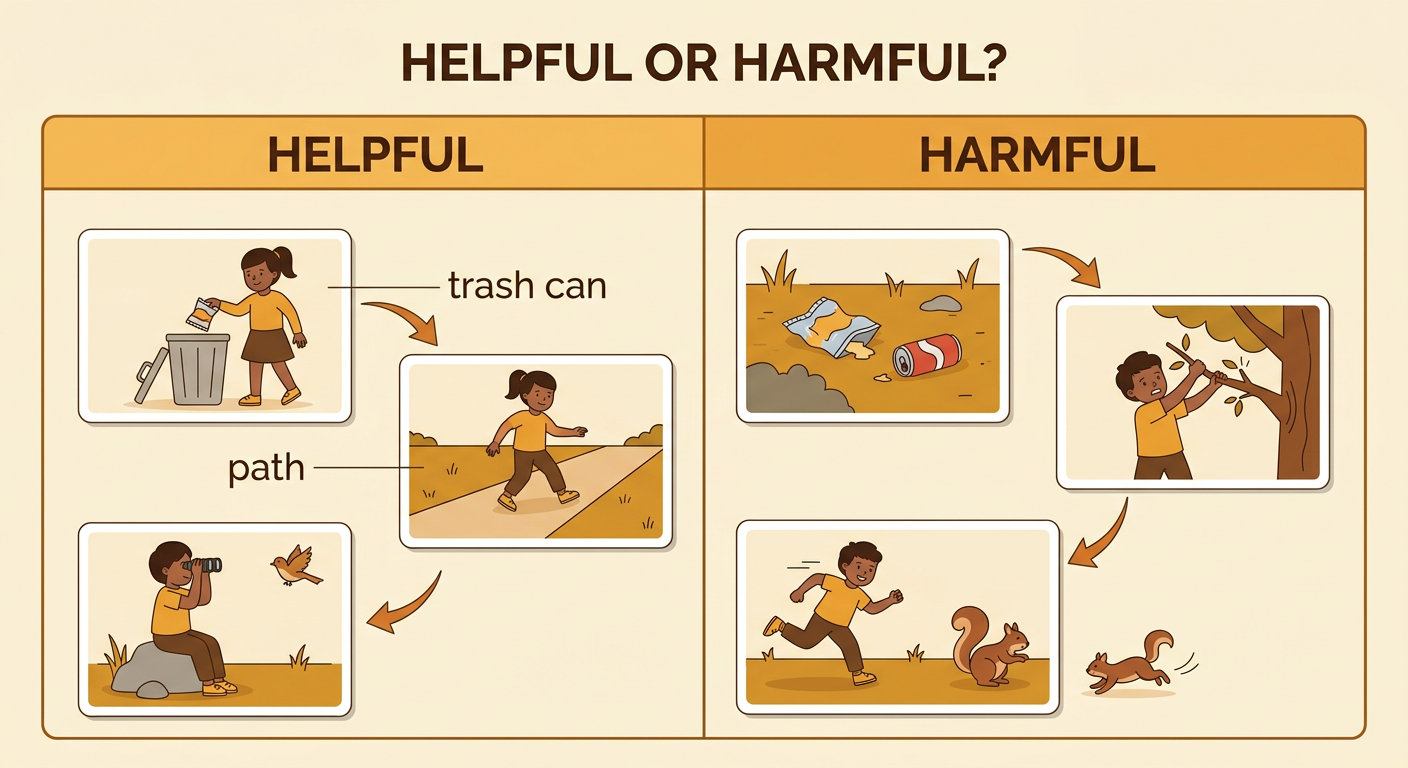
We can sort schoolyard actions into two groups: helpful and harmful. Helpful actions protect living things and keep shared spaces clean. Walking on a path, using a trash can, watching animals quietly, and leaving healthy plants in the ground are helpful. Harmful actions can damage a home, frighten an animal, or leave pollution behind. Chasing animals, breaking branches, dropping litter, and stepping in a garden are harmful. Think about this example: Maya finishes a snack and puts the wrapper in a trash can. Her action is helpful because the wrapper cannot blow across the land or into water. Take turns with a partner. Name an action, decide where it belongs, and explain your thinking. Listen carefully if your partner has a different idea.
Choose a Schoolyard Solution
A solution is an idea that helps fix or prevent a problem. First, choose one schoolyard problem. Then think of a safe action people can take. If children often step into a flower bed, one solution is to make a friendly sign that says, “Please stay on the path.” Another solution is to ask an adult to mark the path clearly. Classmates may have different points of view. One child may want a sign with words. Another may want a sign with pictures so everyone can understand it. Listen to both ideas and compare them. You might combine the ideas by making a sign with words and pictures. Choose a solution that is safe, kind, and possible for the class to do. Explain how it will reduce harm.

Share a Promise to Help
A promise tells what you plan to do. Choose one action you can repeat when you use the schoolyard. You might say, “I promise to put my litter in a trash can,” or “I promise to watch insects without touching them.” Draw a picture of your promise and practice saying it clearly. Then share it with a partner or the class. Take turns speaking and listening. Ask a question such as, “How will your promise help?” Your partner may choose a different action because they noticed a different problem. Compare your ideas with respect. Many different promises can work together. For example, one student can protect plants by staying on the path while another keeps the land clean. Small actions, repeated by many people, can make the schoolyard safer for living things.
