
Helping Wildlife in Our Community
Students examine how litter and habitat changes can affect local wildlife, then propose one action people can take to protect living things.
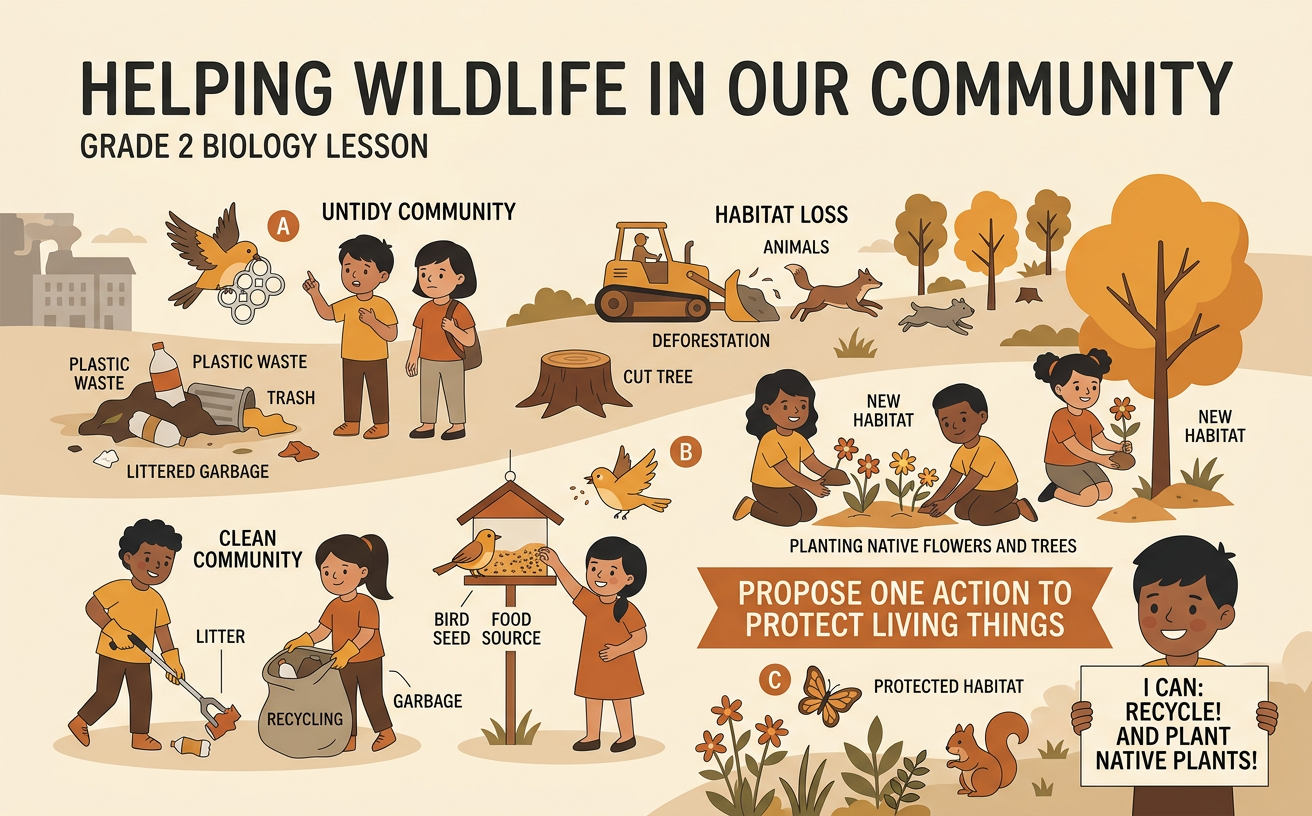
Illustrations are auto-generated and may be placeholders. They can be refreshed to match the narration.
Wildlife in Our Community
Wildlife includes animals and plants that live outdoors without being cared for as pets or farm animals. Birds, squirrels, butterflies, frogs, trees, and wildflowers may share our community. Each living thing needs a habitat, or a place that provides food, water, shelter, and space. For example, a city park can provide seeds for birds, tree holes for squirrels, flowers for bees, and a pond for frogs. Even a small garden can be an important habitat. Look for wildlife from a safe distance, and do not touch or feed wild animals. As you observe, think about what each living thing needs and which parts of the community help meet those needs.

Notice Human Impacts
People change places through their everyday activities. Some changes help wildlife, while others can cause harm. Planting native flowers can give insects food. Leaving clean water in a birdbath can help birds drink. However, litter on the ground can wash into a stream when it rains. Cutting down many plants may remove food and shelter. Building a road can divide one habitat into smaller areas. Imagine a pond near a playground. If people drop plastic wrappers, rainwater may carry the wrappers toward the pond. The pond then looks different and may become less safe for animals. When you study a place, notice what people have added, removed, cleaned, or left behind.

How Animals Are Affected
Changes to a habitat can affect an animal’s ability to find what it needs. A bird may use grass and twigs to build a nest. If plants are removed, the bird may have less nesting material and less shelter. Litter can also be dangerous. An animal might mistake a small piece of plastic for food, or its body could become tangled in string. Dirty water may not provide a healthy place for frogs, fish, or insects. For example, a duck searching near a pond could find a plastic ring instead of natural food. We can compare a clean pond edge with a littered pond edge to predict which one better meets the duck’s needs. Animals need habitats that are safe and suitable.

Choose a Helpful Action
A helpful action should reduce harm to land, water, air, or living things. First, name a local problem. Next, think of actions people can safely take. Then choose one action that directly addresses the problem. If litter is washing toward a stream, students could pick up trash with adult supervision and use gloves or litter grabbers. They could also place a reminder sign near a trash can. If butterflies have little food, the community could plant native flowers with permission. Consider whether the action is safe, possible, and helpful. Do not touch sharp objects, unknown plants, or wild animals. One small action may not solve every problem, but many people repeating a helpful action can make a meaningful difference.

Share and Support a Solution
Sharing a solution can encourage other people to help. State your opinion clearly, name the action you support, and give reasons. You might write, “I think our class should clean litter from the park with adult help. Litter can wash into the pond and make the habitat less safe. A cleanup will protect the pond and the animals that live there.” The words “because,” “so,” and “also” can connect your opinion to your reasons. Add facts from your observations, such as where you saw litter or which animals use the area. End by reminding readers why the action matters. Before sharing, check that your writing includes an opinion, at least two reasons, and a closing sentence. A clear message helps others understand and support your solution.
