
Helping Wildlife When Habitats Change
Students analyze animal-population data and use evidence to choose a solution that helps wildlife survive an environmental change.
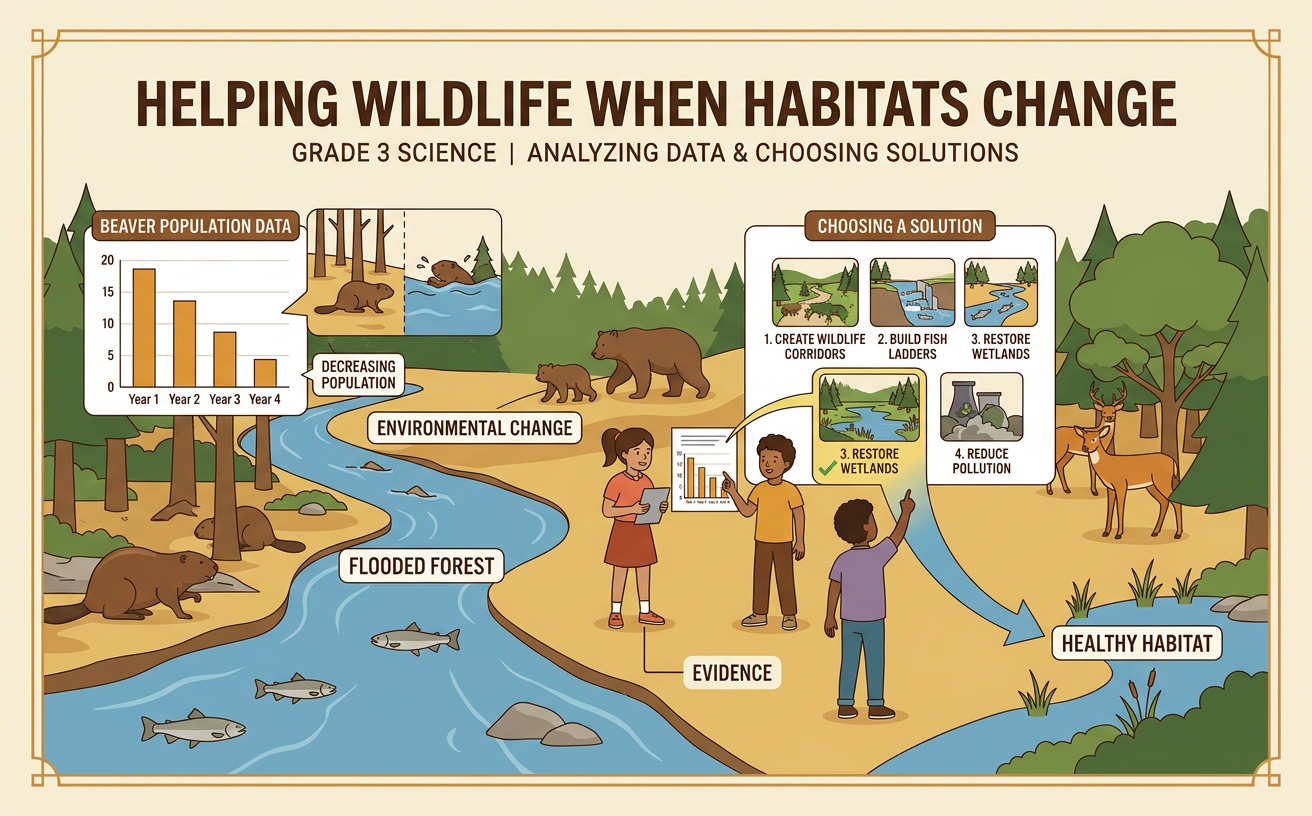
Illustrations are auto-generated and may be placeholders. They can be refreshed to match the narration.
Explore a Changing Habitat
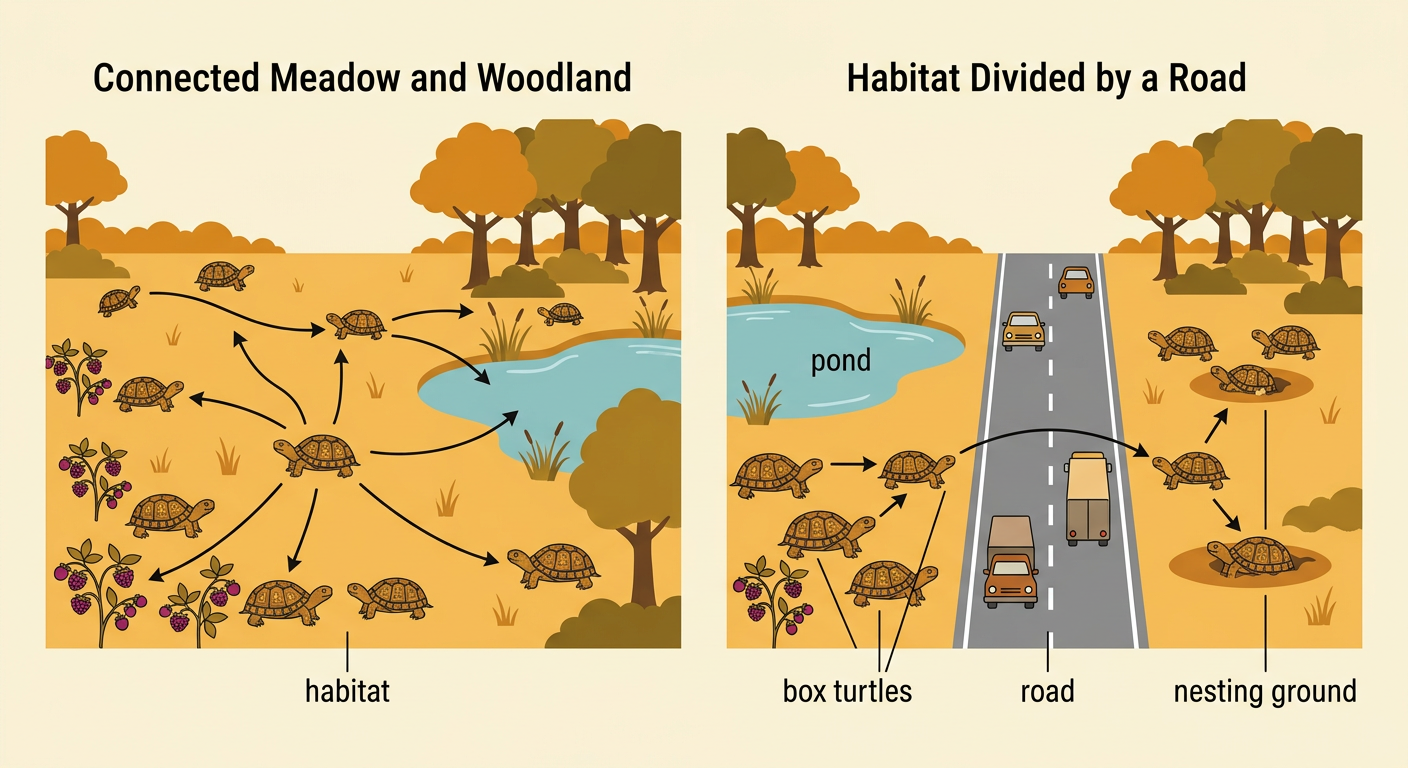
A habitat provides animals with food, water, shelter, and space. When people or natural events change a habitat, some animals may have trouble meeting their needs. Imagine a community builds a road through a meadow and small woodland. The road helps families travel to school, stores, and farms, but it also divides the habitat into two parts. Box turtles may need to cross the road to find food, water, or nesting places. Fast-moving vehicles can make that trip dangerous. People’s needs and values influence how they change places. A community that values both safe travel and wildlife can plan ways to meet both needs. Scientists begin by observing the changed habitat and asking which animals are affected.
Graph Wildlife Population Data
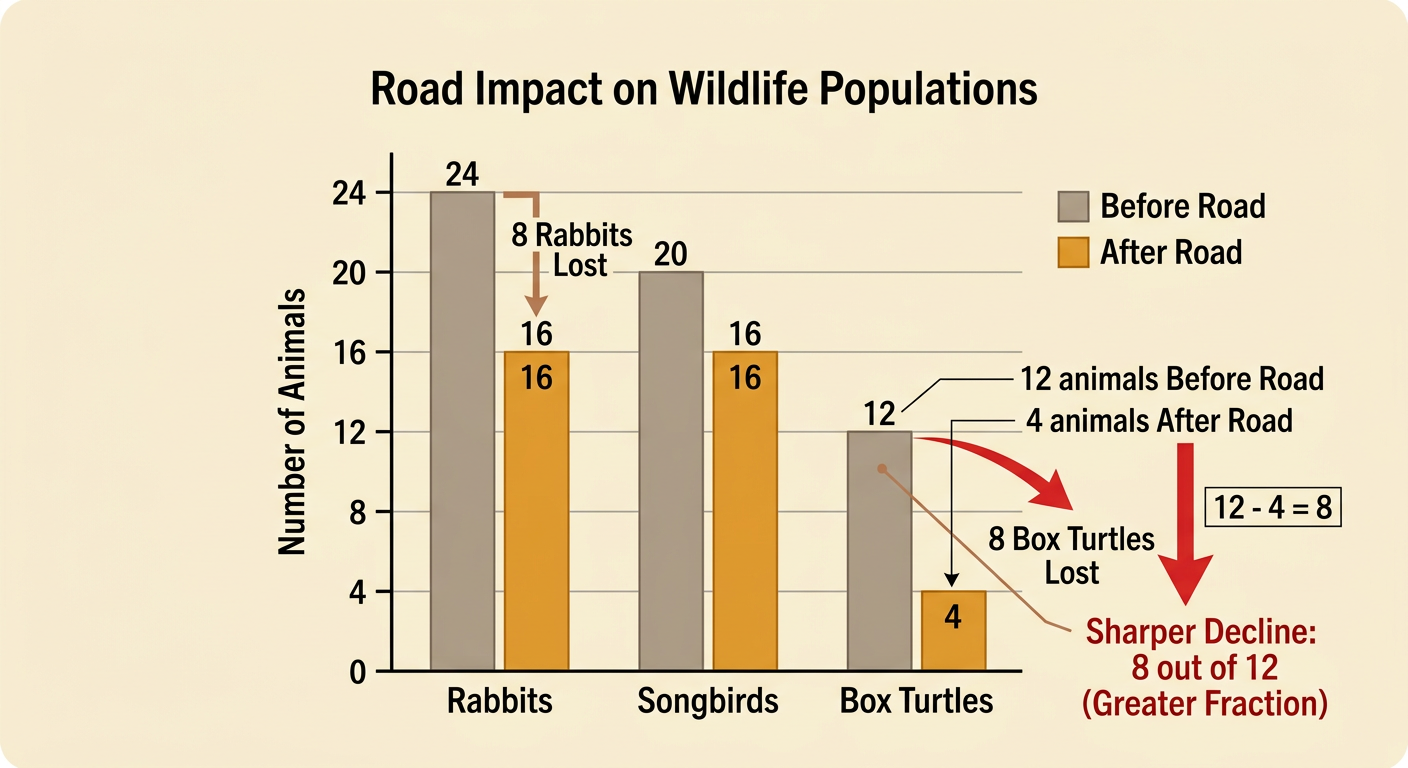
Population data tell how many animals of one kind live in an area. Scientists counted animals in the same habitat and season before the road was built and one year afterward. They found 24 rabbits before and 16 after, 20 songbirds before and 16 after, and 12 box turtles before and 4 after. Make a scaled bar graph with animal types along the bottom and number of animals along the side. Let each grid step represent 4 animals. A turtle bar at 12 reaches three steps, while a turtle bar at 4 reaches one step. Compare each pair of bars. The turtle population decreased by 8 animals, which is the greatest fraction of its original population. Graphs make patterns easier to see and help scientists use evidence.
Identify the Problem
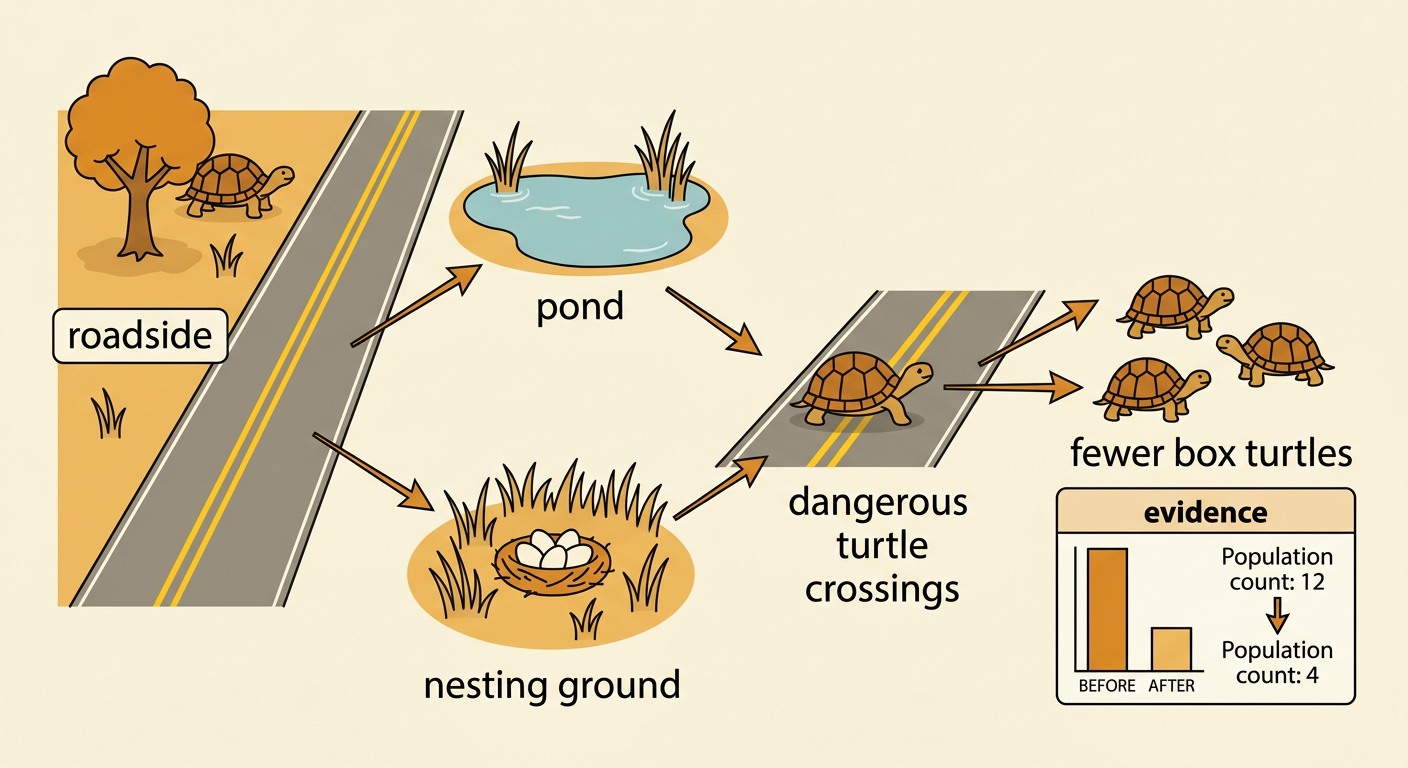
Use the graph and habitat observations to state the problem clearly. The data show that all three animal populations decreased, but box turtles had the sharpest decline. Their population fell from 12 to 4, a decrease of 8 turtles. Observers also saw turtles near the roadside, and the road separates the pond from nesting ground. This evidence suggests that turtles are having difficulty moving safely between resources. A useful problem statement is: “The new road divides the box turtle habitat and makes travel between the pond and nesting ground dangerous.” This statement names the environmental change, the animal affected, and the challenge it faces. It does not claim that the road is the only possible cause, because more observations may still be needed.
Compare Possible Solutions
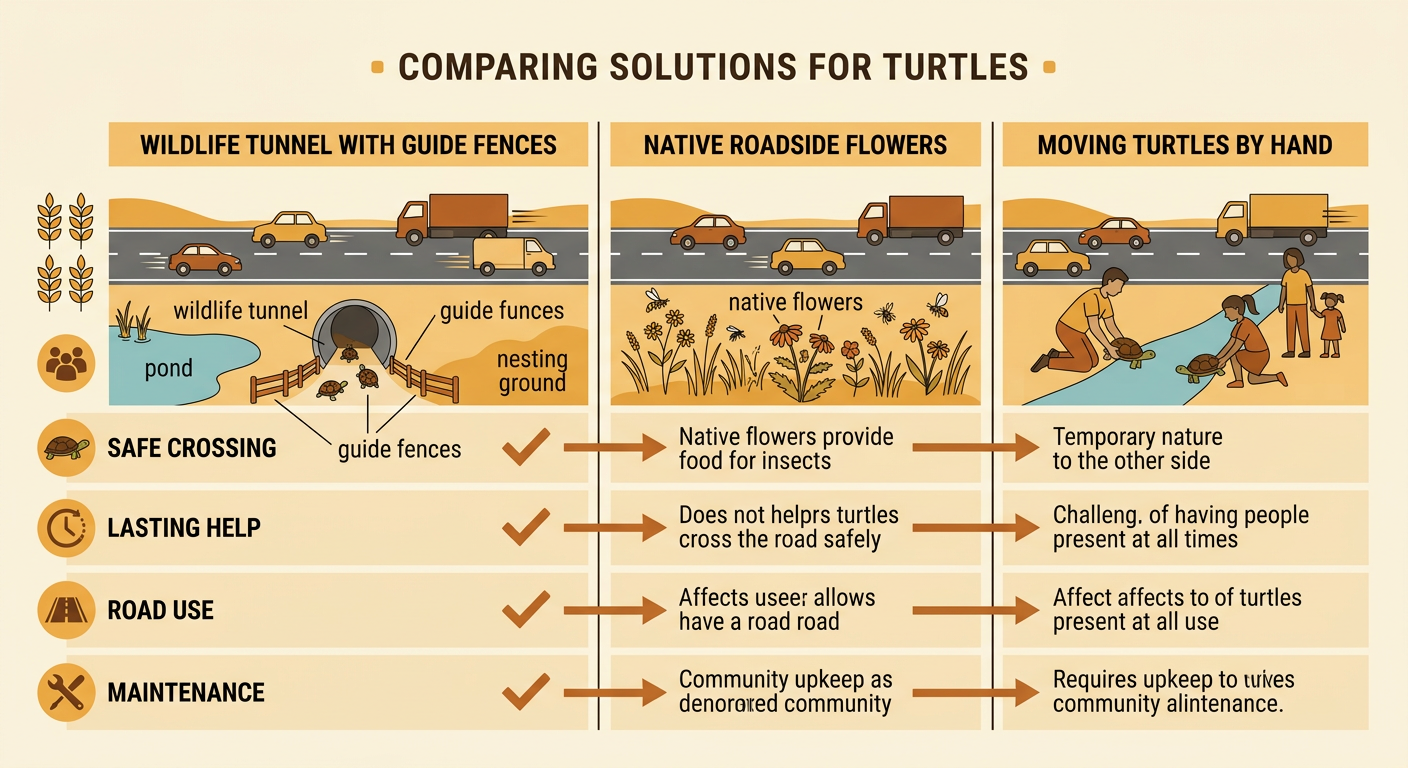
A good solution should help turtles, keep people safe, and be possible for the community to maintain. One choice is a wildlife tunnel under the road with short guide fences that direct turtles toward it. This reconnects the pond and nesting ground while vehicles remain on the road. Another choice is planting native flowers beside the road. Flowers provide food for insects, but they do not give turtles a safe crossing. A third choice is moving every turtle by hand. This might help briefly, but turtles may return, and people cannot watch the road all day. Community culture also matters. Residents may value farming, quick travel, and caring for local wildlife. Comparing costs, safety, lasting effects, and community values shows that the tunnel and guide fences best address the identified problem.
Make and Support a Claim
A claim tells which solution you think is best. Support it with reasons and evidence. For example: “The community should build a wildlife tunnel with guide fences.” One reason is that the tunnel directly solves the problem by helping turtles move between the pond and nesting ground without crossing traffic. The graph provides evidence that action is needed: the box turtle population fell from 12 to 4 after the road divided the habitat. A second reason is that people can continue using the road to reach school, stores, and farms. End by explaining why the solution has merit, or value: it balances wildlife protection with community travel needs. After the tunnel is built, scientists should count turtles during the same season each year to see whether the population increases.
