How Animal Behaviors Support Reproduction
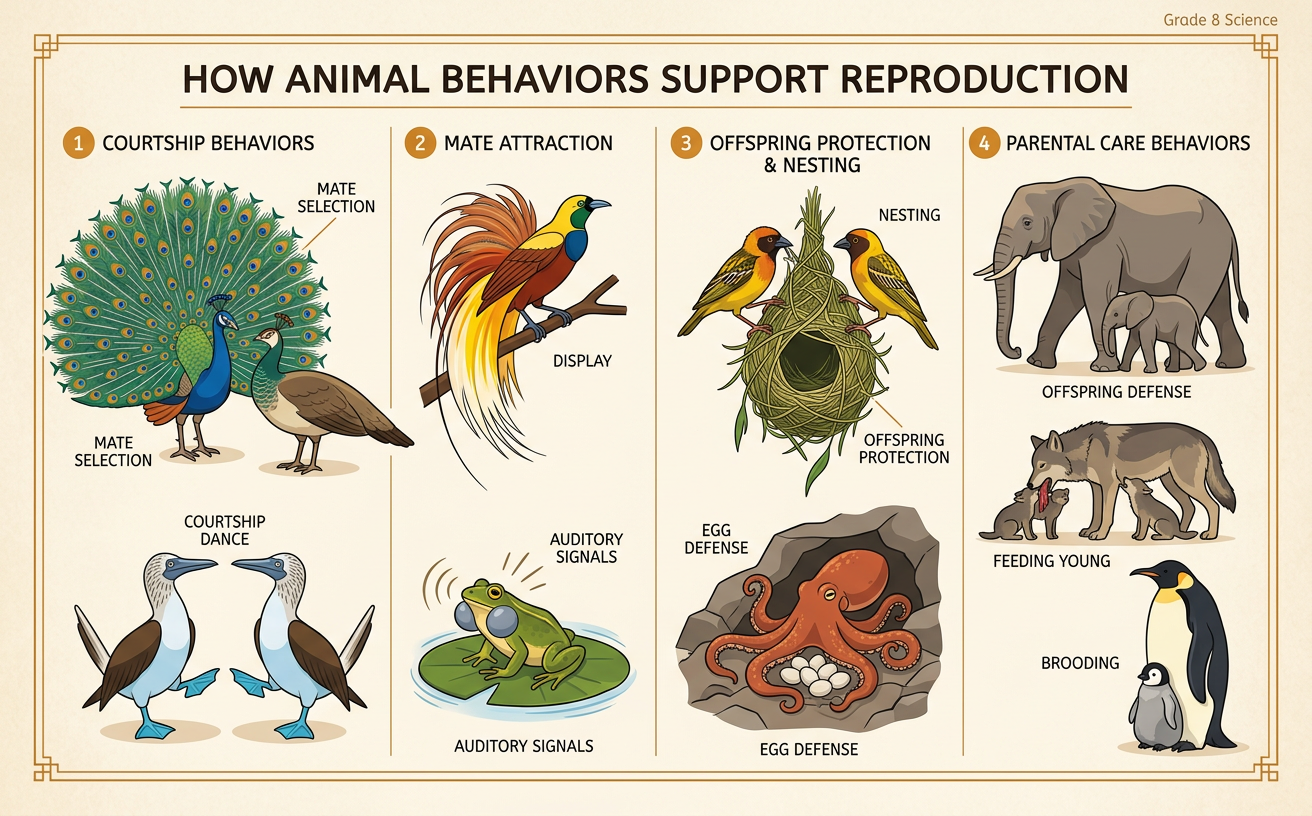
Students examine and classify courtship, mate attraction, nesting, egg protection, and parental-care behaviors that increase animals’ chances of reproducing successfully.
Illustrations are auto-generated and may be placeholders. They can be refreshed to match the narration.
Observe: What Is the Animal Doing?
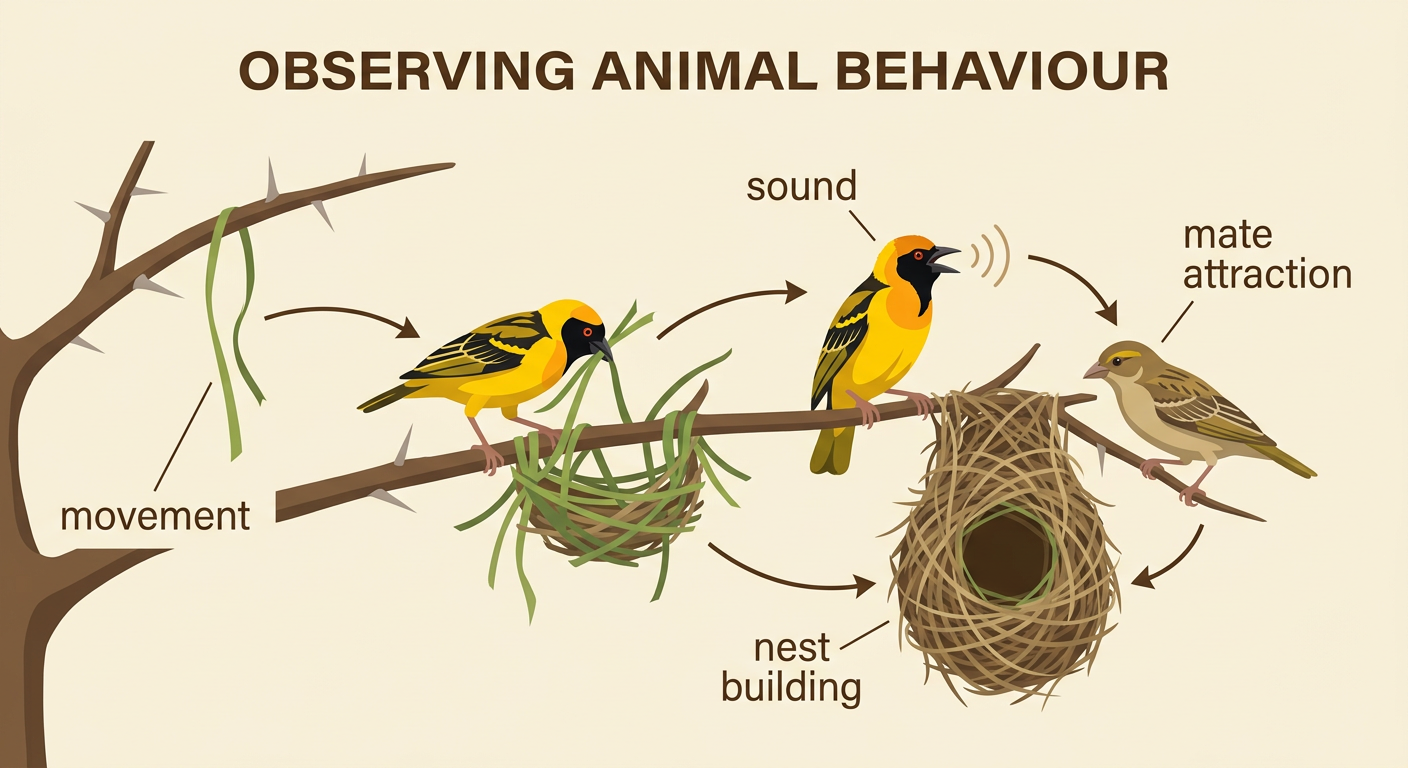
Animal behavior is an action or response that can be observed. Begin by recording exactly what the animal does before deciding why it does it. Note the movement, sound, location, timing, and other animals present. For example, a male weaver bird may carry strips of grass, weave them around a branch, hang near the finished nest, and call while a female inspects it. These observations can be classified as nest building and mate attraction. Avoid unsupported statements such as, “The bird wants a family.” Instead, use visible evidence: the bird built a nest, displayed near it, and attracted a female. Careful observations help scientists connect behaviors with results, such as mating, egg laying, hatching, or offspring survival. Repeated observations provide stronger evidence than seeing an action only once.
Courtship and Mate Attraction
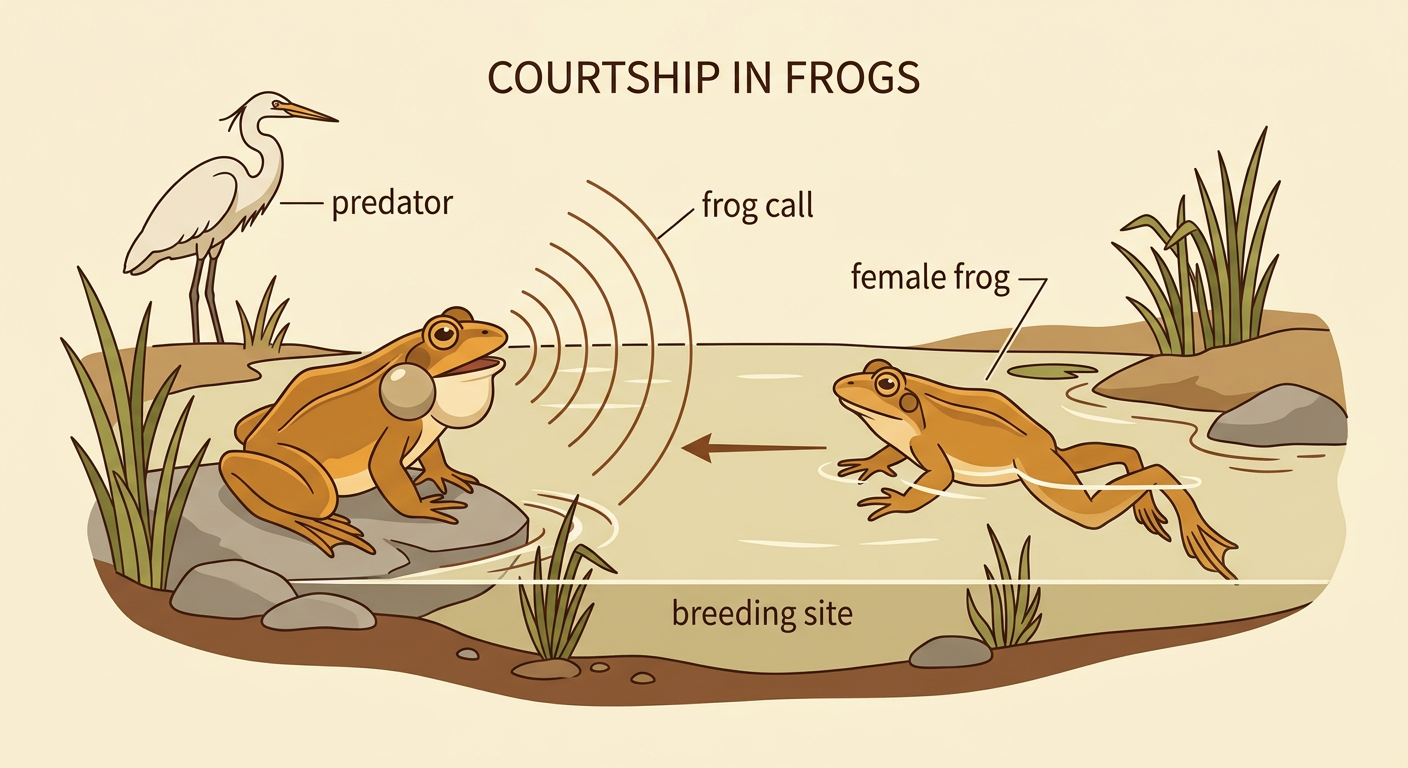
Mate-attraction behaviors help animals locate or draw the attention of possible partners. These signals may be sounds, colors, scents, lights, movements, or structures. Courtship happens when animals exchange signals or perform actions before mating. For example, a male frog may produce a species-specific call from near water. A female of the same species can recognize the call and move toward it. She may respond more strongly to a call that is loud, frequent, or produced from a suitable breeding site. Courtship signals also help animals identify members of their own species, reducing the chance of unsuccessful mating. However, calling can use energy and may attract predators. Evidence that females approach calling males, while silent males receive fewer visits, supports the explanation that calling increases a frog’s likelihood of mating and reproducing successfully.
Nesting and Protecting Young
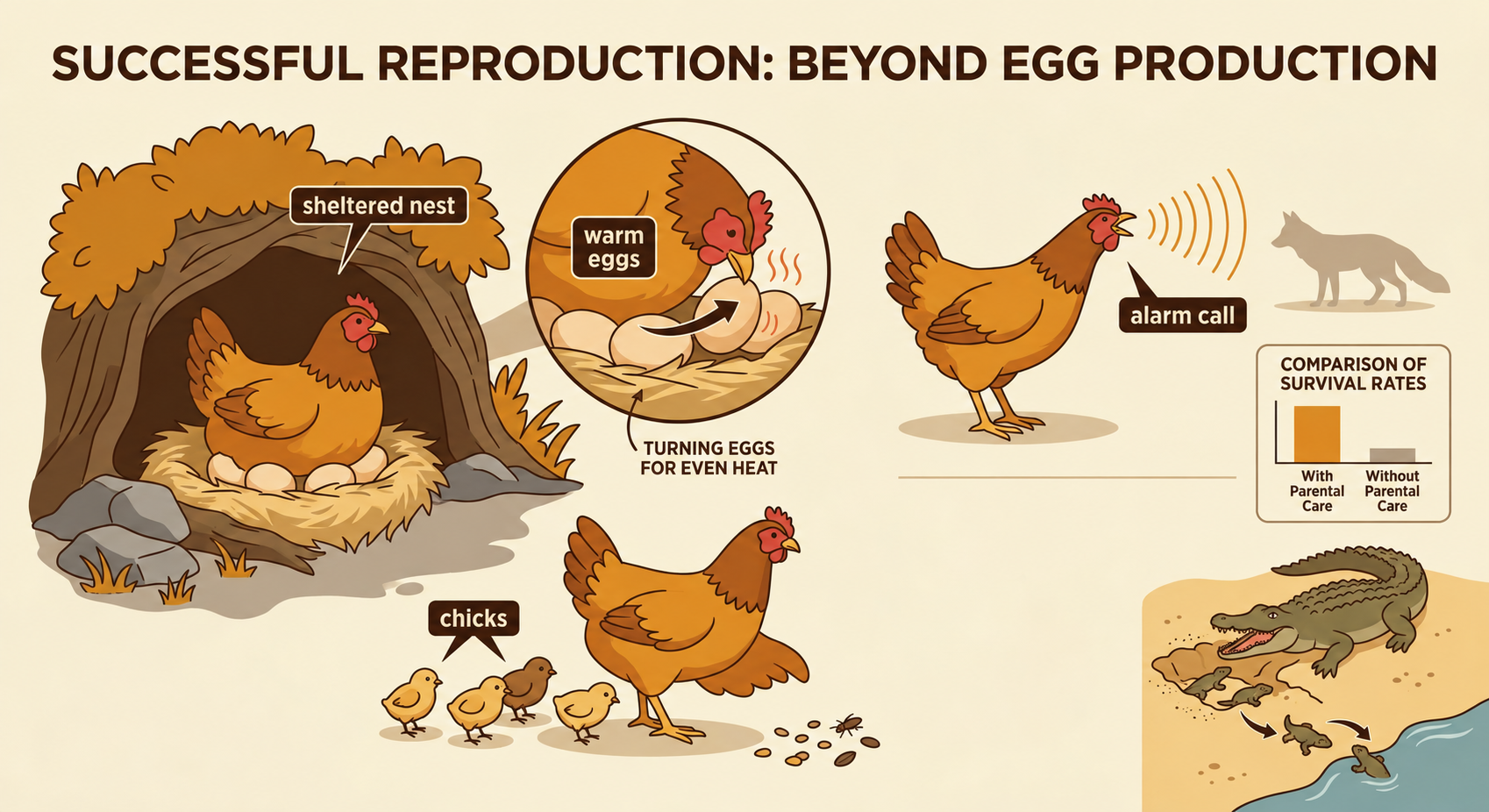
Reproduction is not successful simply because eggs are produced. Eggs and young animals must also survive long enough to develop. Nesting behaviors provide a place for eggs or newborn young, while protection and parental care reduce dangers such as predators, harmful temperatures, and lack of food. A hen, for example, makes or selects a sheltered nest, sits on her eggs to keep them warm, and turns them so they heat more evenly. She may give alarm calls, defend the nest, and lead chicks toward food after hatching. These actions require time and energy, but they can increase the number of surviving offspring. Similar care occurs in other animals: some fish guard eggs, and crocodile mothers defend nests and help hatchlings reach water. Comparing the survival of protected and unprotected young provides evidence about the value of parental behavior.
Match Behaviors to Their Purposes
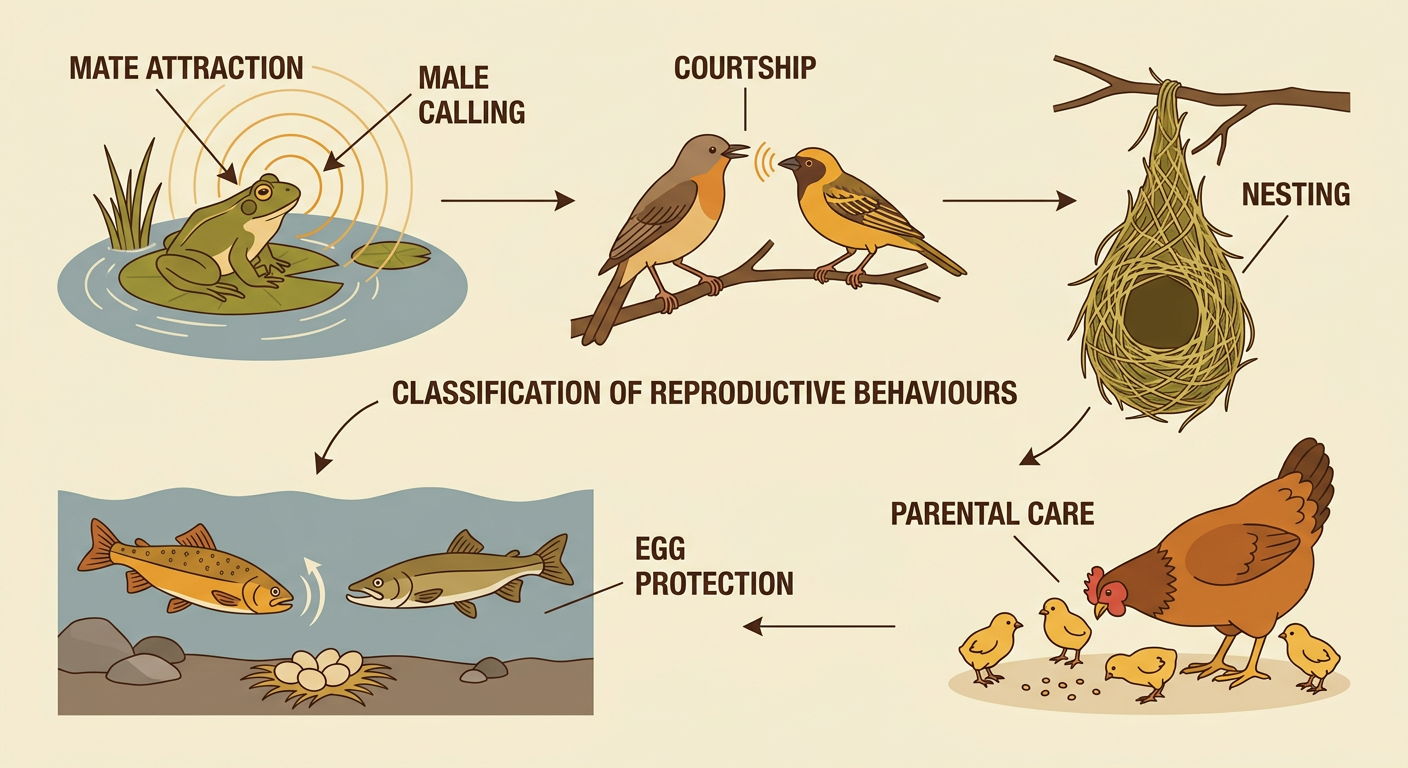
Reproductive behaviors can be grouped by the main purpose they serve. Mate attraction brings possible partners together; a frog’s call is an example. Courtship allows animals to exchange signals before mating; two birds may perform matching movements. Nesting creates a suitable place for eggs or young; a weaver bird constructs a hanging grass nest. Egg protection reduces damage or predation; a fish may chase predators away from its eggs. Parental care supports offspring after eggs are laid or after birth; a hen keeps chicks close and guides them to food. Some behaviors have more than one purpose. A nest may protect eggs and also attract a mate, while a warning call may protect both eggs and young. To classify a behavior, identify what happens and connect it to the reproductive result that it is most likely to improve.
Build an Evidence-Based Explanation
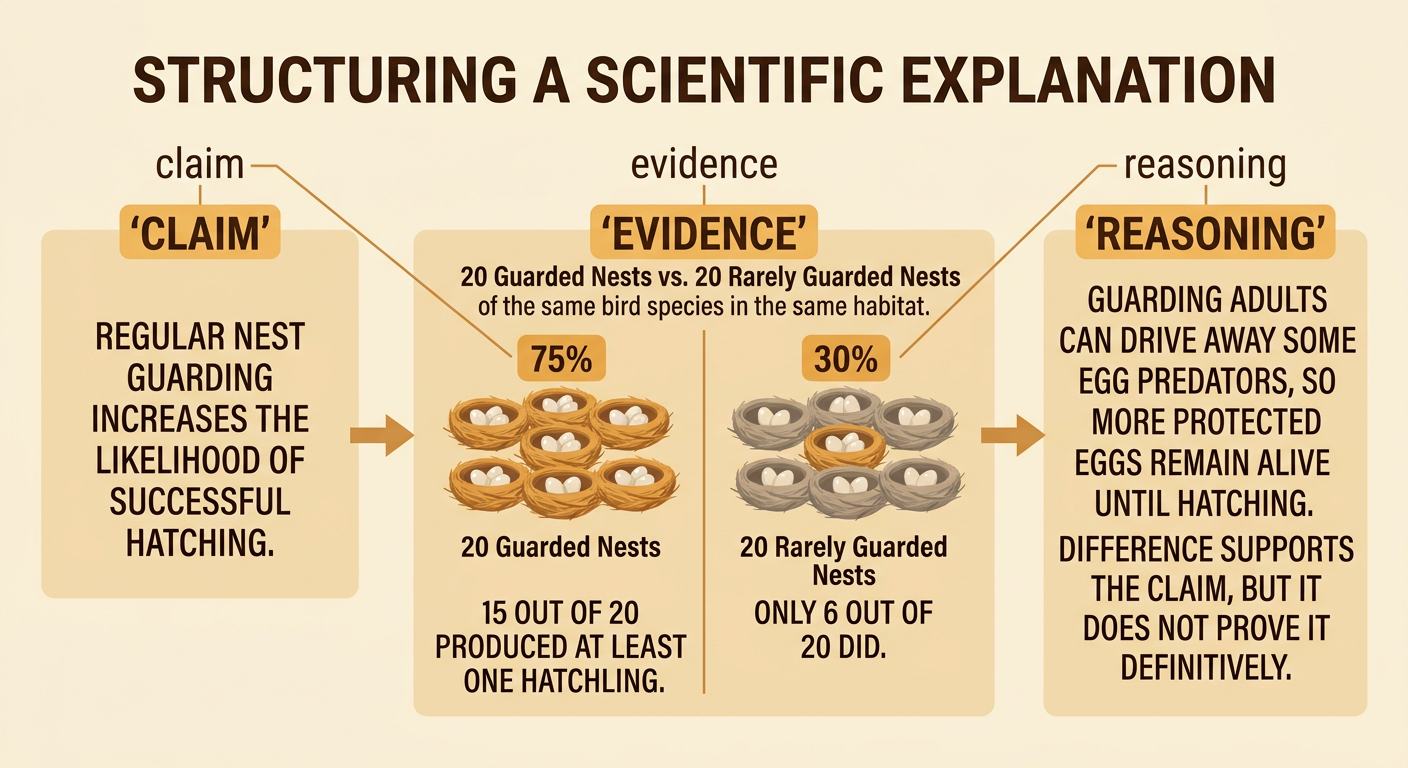
An evidence-based explanation includes a claim, relevant evidence, and reasoning that connects them. Suppose students observe 20 nests that are regularly guarded and 20 nests of the same bird species that are rarely guarded in the same habitat. Fifteen guarded nests produce at least one hatchling, compared with six rarely guarded nests. The claim could be: regular nest guarding increases the likelihood of successful hatching. The evidence is that 75% of guarded nests produced hatchlings, while only 30% of rarely guarded nests did. The reasoning is that adults can drive away some egg predators, so more protected eggs remain alive until hatching. This pattern supports the claim, although other factors, such as nest location or weather, could also affect the results. Repeating the study and recording those factors would make the explanation stronger and more reliable.