
How Animal Parents Help Their Young
Students examine examples of animal parents feeding, protecting, and guiding their young and explain how these behaviors help baby animals survive.
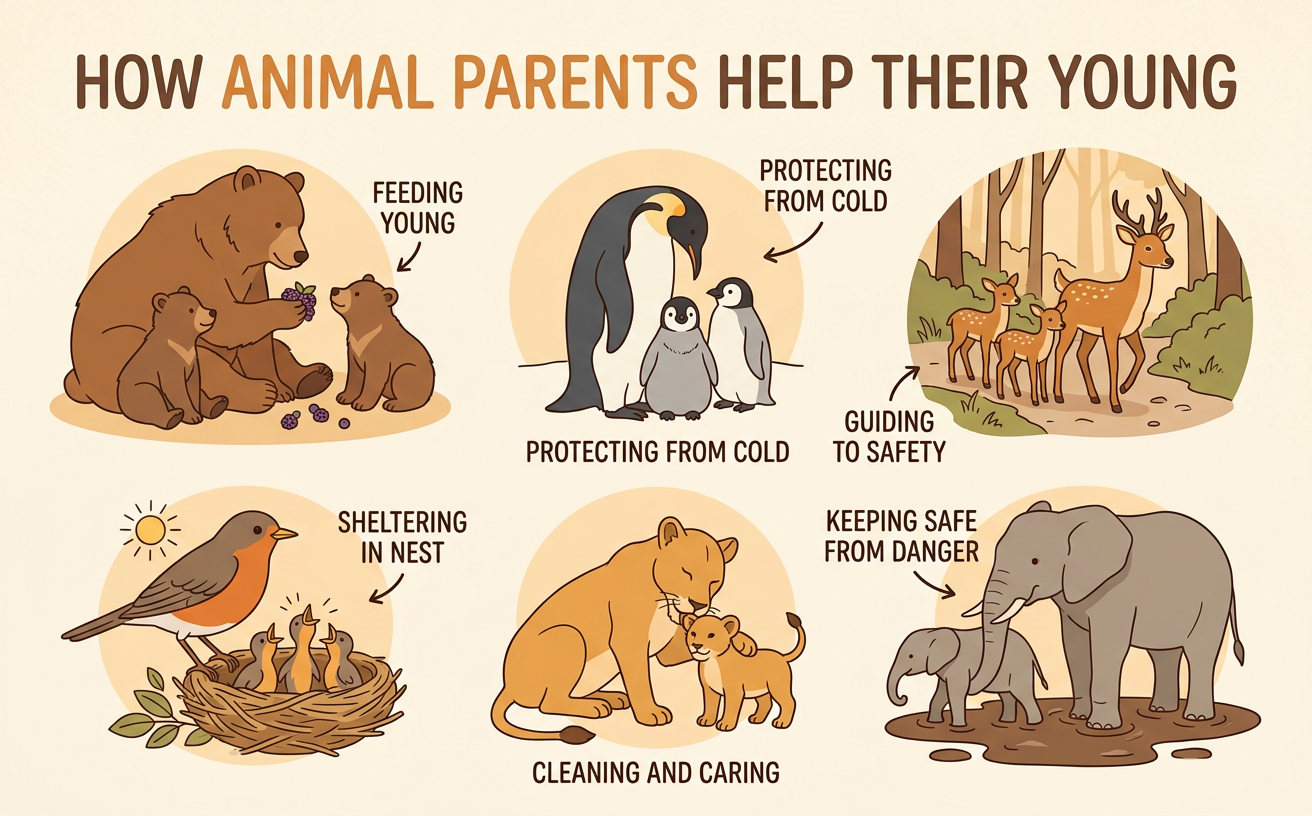
Illustrations are auto-generated and may be placeholders. They can be refreshed to match the narration.
Meet Animal Parents and Babies
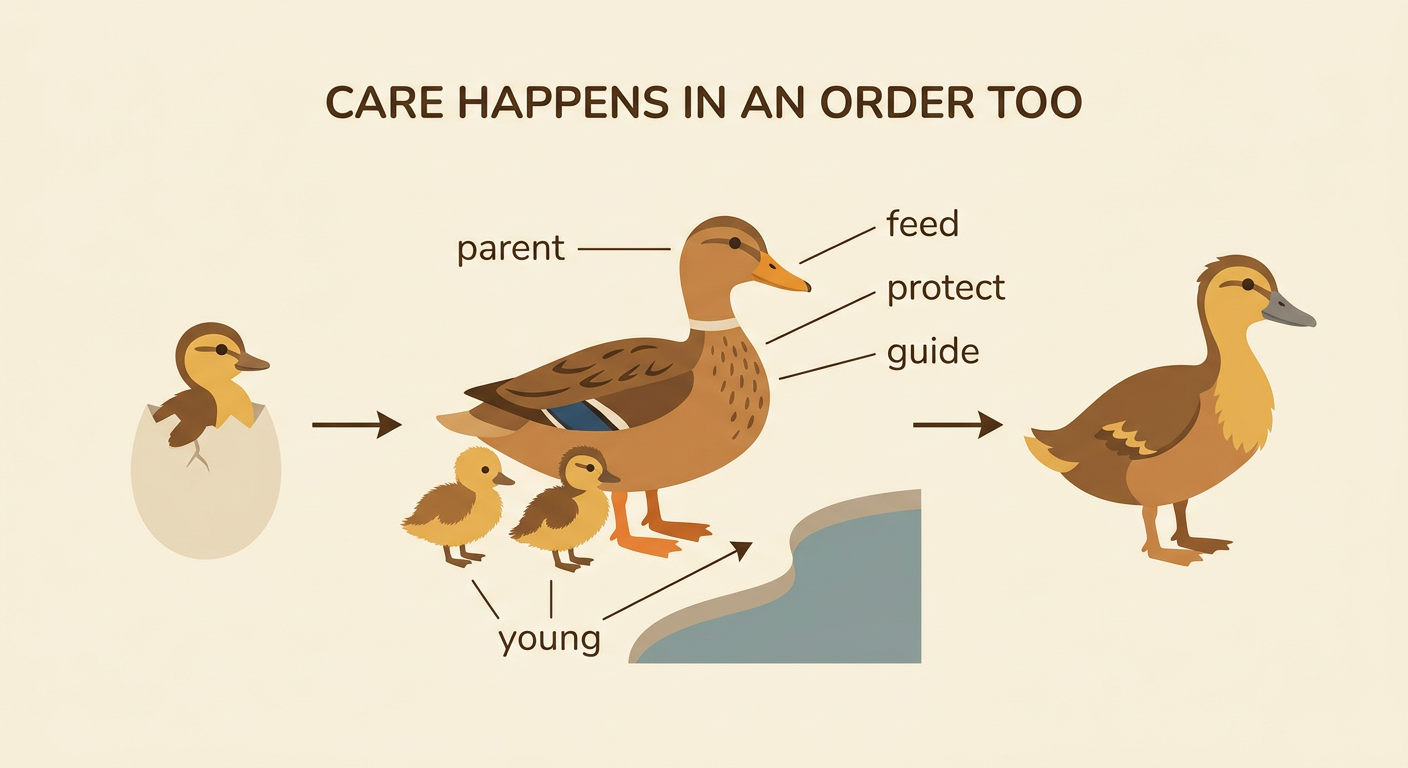
Many baby animals need help while they grow. An adult animal that has a baby is called a parent. A baby animal is also called young or offspring. A mother duck stays near her ducklings and leads them to places with food and water. A lion mother gives milk to her cubs and watches for danger. Parent birds may bring insects to their chicks. These actions help the young animals live and grow. We can observe a pattern: many parents feed, protect, or guide their young. Care also happens in an order. First, a baby is born or hatches. Next, the parent cares for it. Then, the baby grows and learns. Ask questions as you look: What is the parent doing? How does the action help the baby?
Ways Parents Help
Animal parents can help their young in different ways. Feeding gives babies food or milk for energy and growth. A robin carries a worm to its hungry chicks. Protecting keeps babies safer from danger, bad weather, or other animals. A penguin parent shelters its chick close to its warm body. Guiding shows babies where to go or what to do. An elephant mother leads her calf to water and keeps it near the herd. Some parents help in more than one way. For example, a wolf parent may bring food, guard the den, and lead growing pups outside. Listen for key details when someone describes animal care. Is the parent giving food, keeping a baby safe, or showing the baby where to go? The details help you name the kind of care.

Match the Parent to the Care
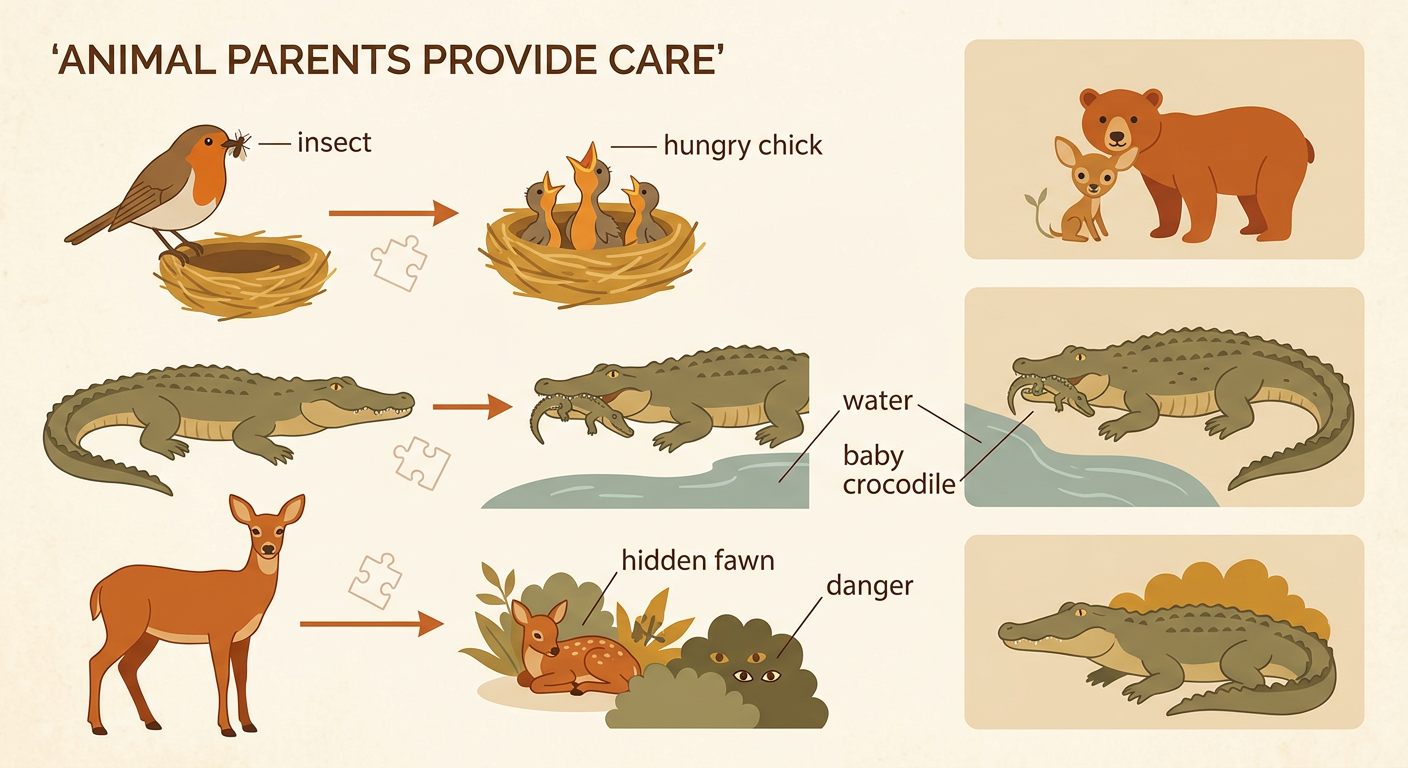
We can match each animal parent to the care it gives by looking for clues. A baby bird opens its beak while a parent brings an insect. This parent is feeding its young. A crocodile mother may gently carry newly hatched babies in her mouth to help move them to water. This is guiding and protecting, not eating them. A deer mother stands alert beside her hidden fawn. She is watching for danger and protecting it. To make a match, ask, “What does this baby need?” Then look at what the parent is doing. Food matches a hungry baby. Shelter or guarding matches a baby facing danger. Leading matches a baby that needs to reach a safe place. Explain your match using a detail you can see or hear: “I matched the bird with feeding because it brings food to the chicks.”
Sort Feeding, Protecting, and Guiding
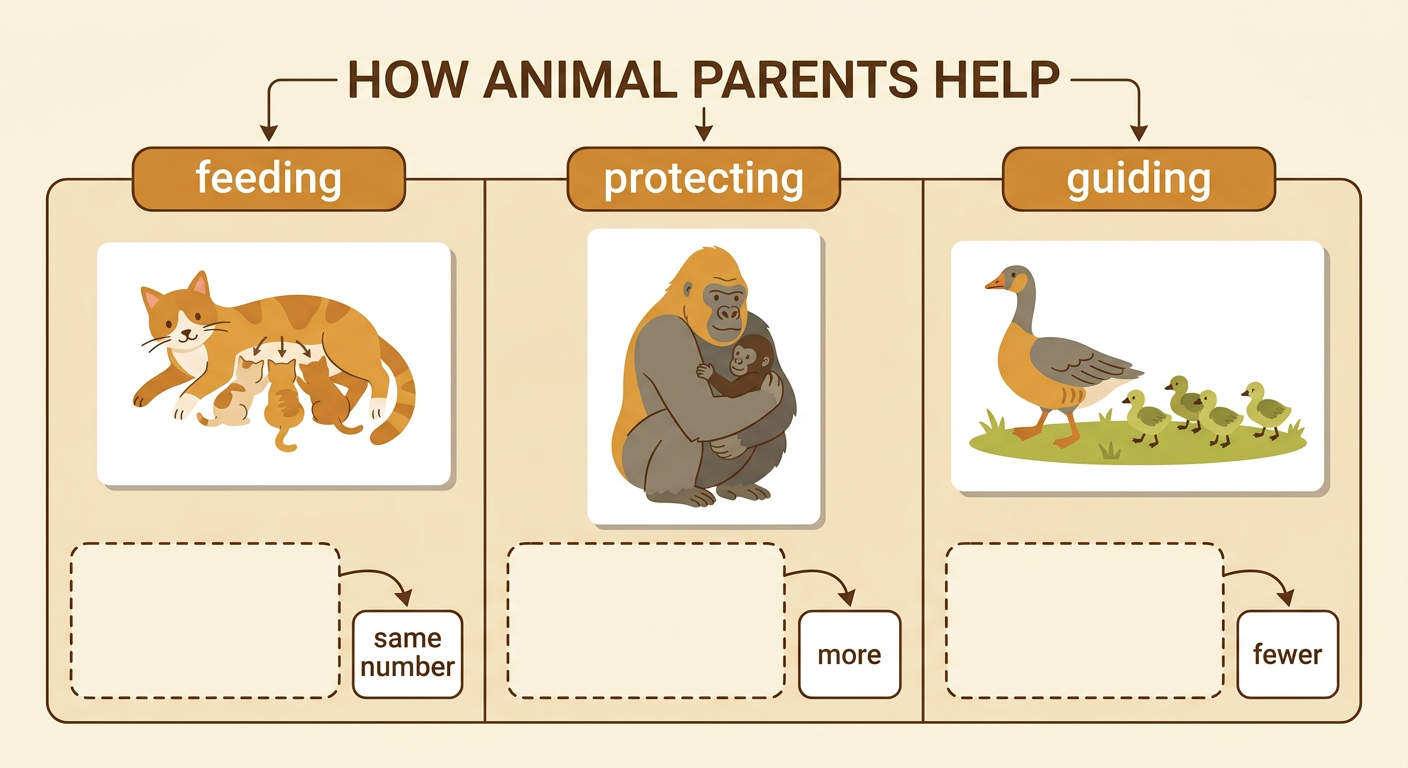
Sorting means putting examples into groups that share a feature. Make three groups called feeding, protecting, and guiding. Place a picture of a mother cat nursing kittens in the feeding group because the kittens are getting milk. Place a picture of a gorilla holding its baby close during danger in the protecting group. Place a picture of a goose leading goslings across the grass in the guiding group. Look closely before you sort. Ask, “What is the parent doing right now?” One animal may belong in different groups at different times. A goose can guide goslings to water and also stand between them and danger. Sort the action shown, not only the kind of animal. After sorting, count the pictures in each group. Tell which group has more, fewer, or the same number of examples.
Explain How Care Helps
To explain how care helps, name the parent’s action and tell why the baby needs it. Use the word because to connect the ideas. You might say, “The robin feeds its chicks because food gives them energy to grow.” You could say, “The penguin shelters its chick because the chick needs to stay warm.” You could also say, “The elephant guides its calf because the calf needs to find water and stay with the herd.” Put events in order when you explain them. First, a sea turtle hatches. Next, it moves toward the ocean. Unlike many birds and mammals, most sea turtle parents do not stay to care for their hatchlings. This reminds us that animal care is not the same for every species. Look, listen, ask questions, and use details to explain how feeding, protecting, or guiding can help young animals survive.
