How Animal Parents Help Their Young
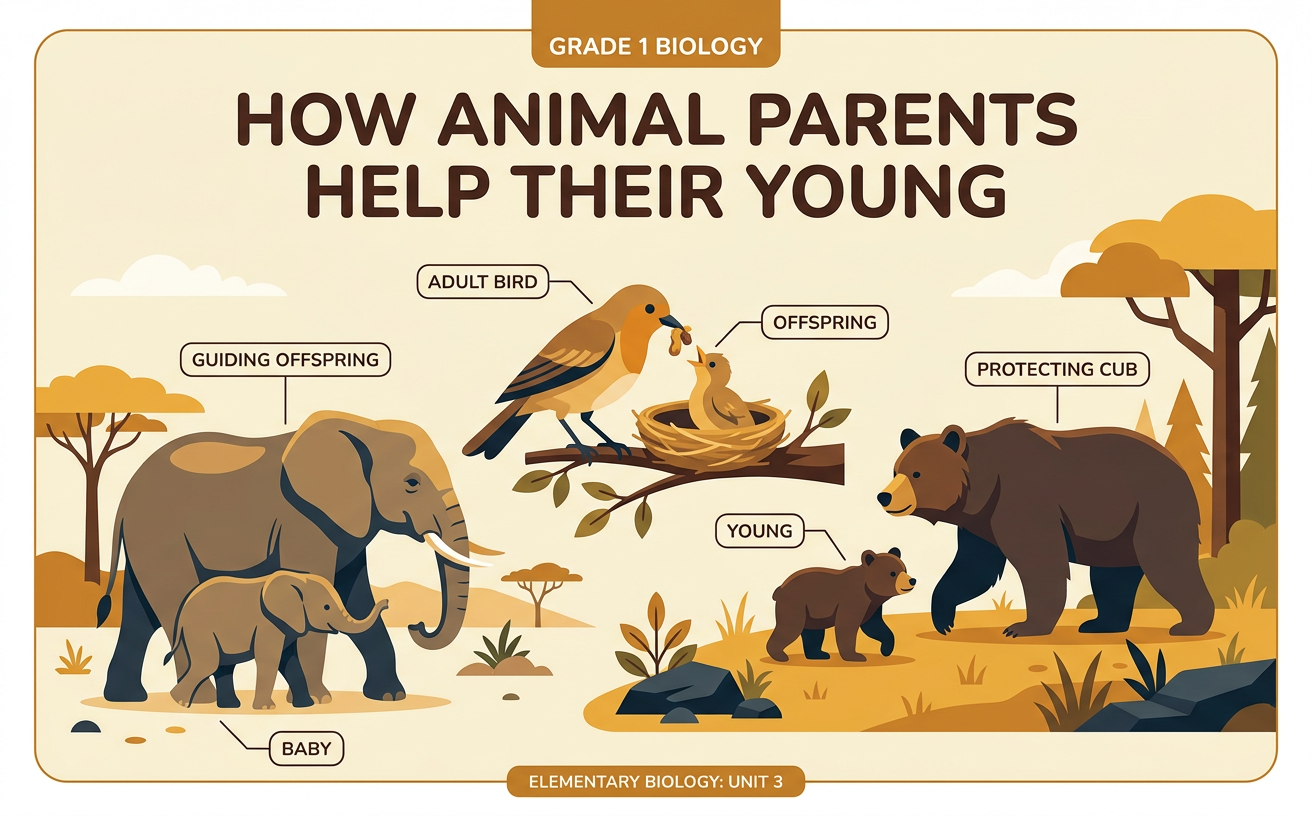
Students observe examples of animal parents feeding, protecting, and guiding their young and identify how these behaviors help offspring survive.
Illustrations are auto-generated and may be placeholders. They can be refreshed to match the narration.
Meet Animal Families
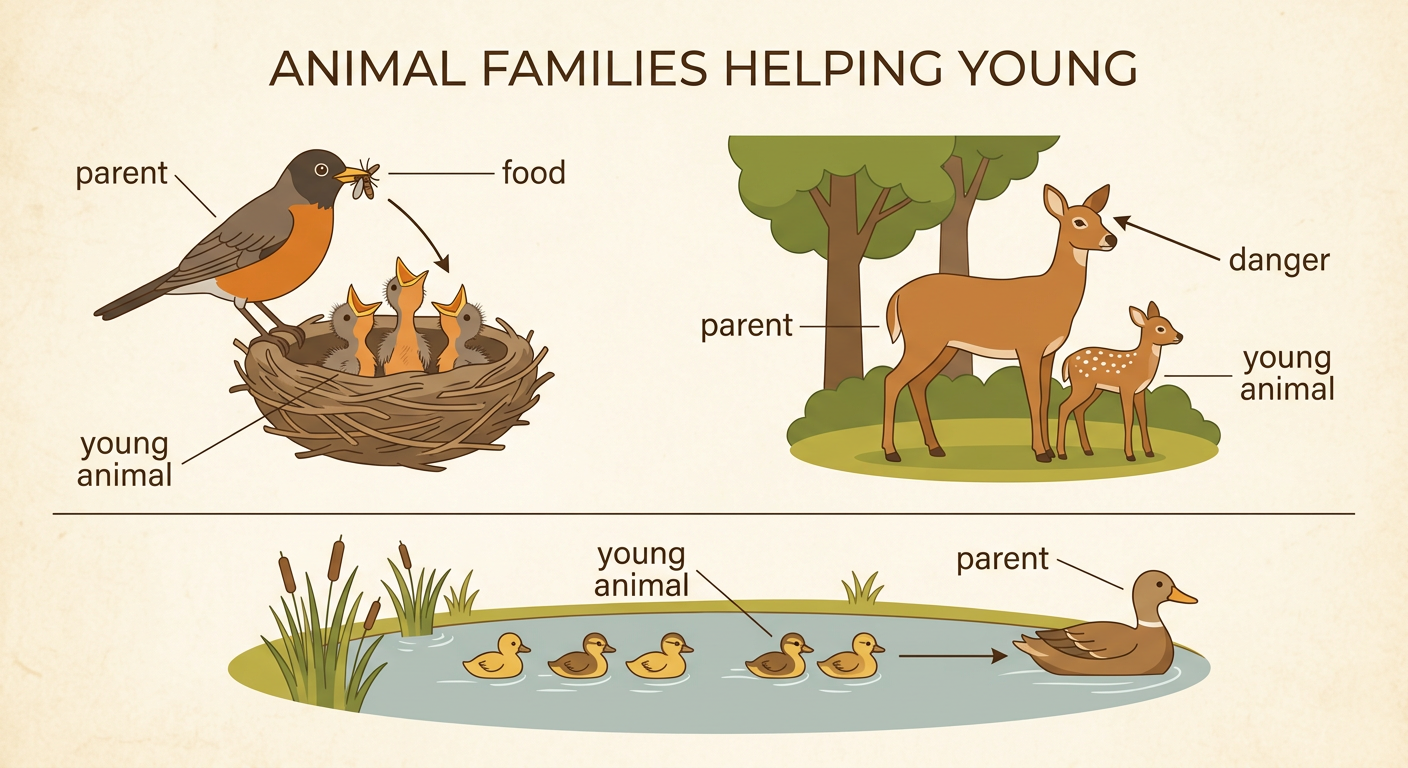
Animal families include parents and their young. Young animals need help because they are still growing and learning. A bird may bring food to its chicks. A mother deer may stay near her fawn and watch for danger. A duck may lead her ducklings to water. These parent behaviors help the young animals get what they need to live. As you read about animal families, ask questions such as, “What does the parent do?” and “How does that action help the young?” Look for key details in the words and pictures. Remember that animal families can look different, and either one parent or both parents may care for the young.
Ways Parents Help
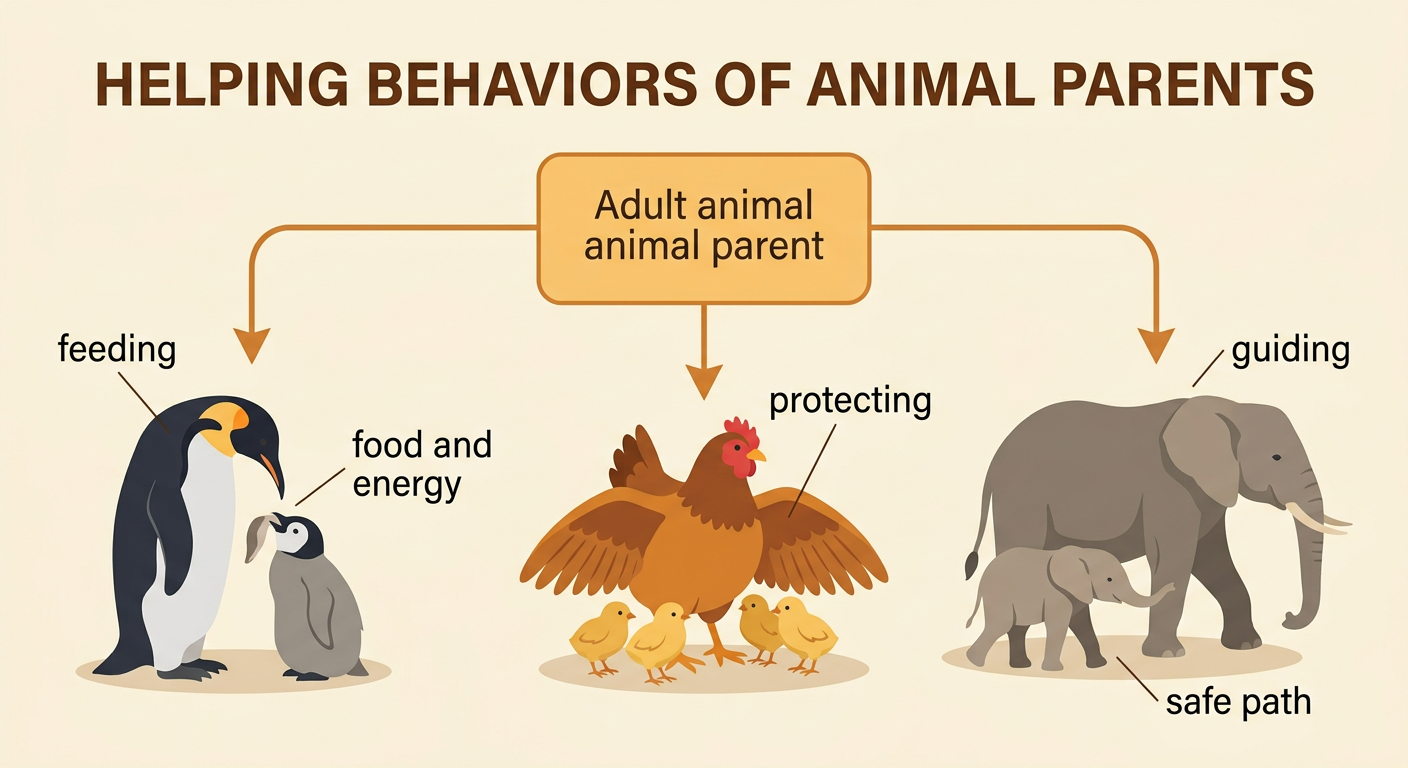
Animal parents often help their young by feeding, protecting, or guiding them. Feeding gives young animals energy to grow. For example, adult penguins bring food from the ocean and feed it to their chicks. Protecting helps keep young animals safe from danger. A mother hen may spread her wings over her chicks when danger is near. Guiding helps young animals find food, water, shelter, or a safe path. An elephant mother may guide her calf as the herd travels. Some parents use more than one helping behavior. Ask, “Which behavior do I notice?” Then use details from the example to explain how the behavior helps the young animal survive.
Observe Pictures and Videos
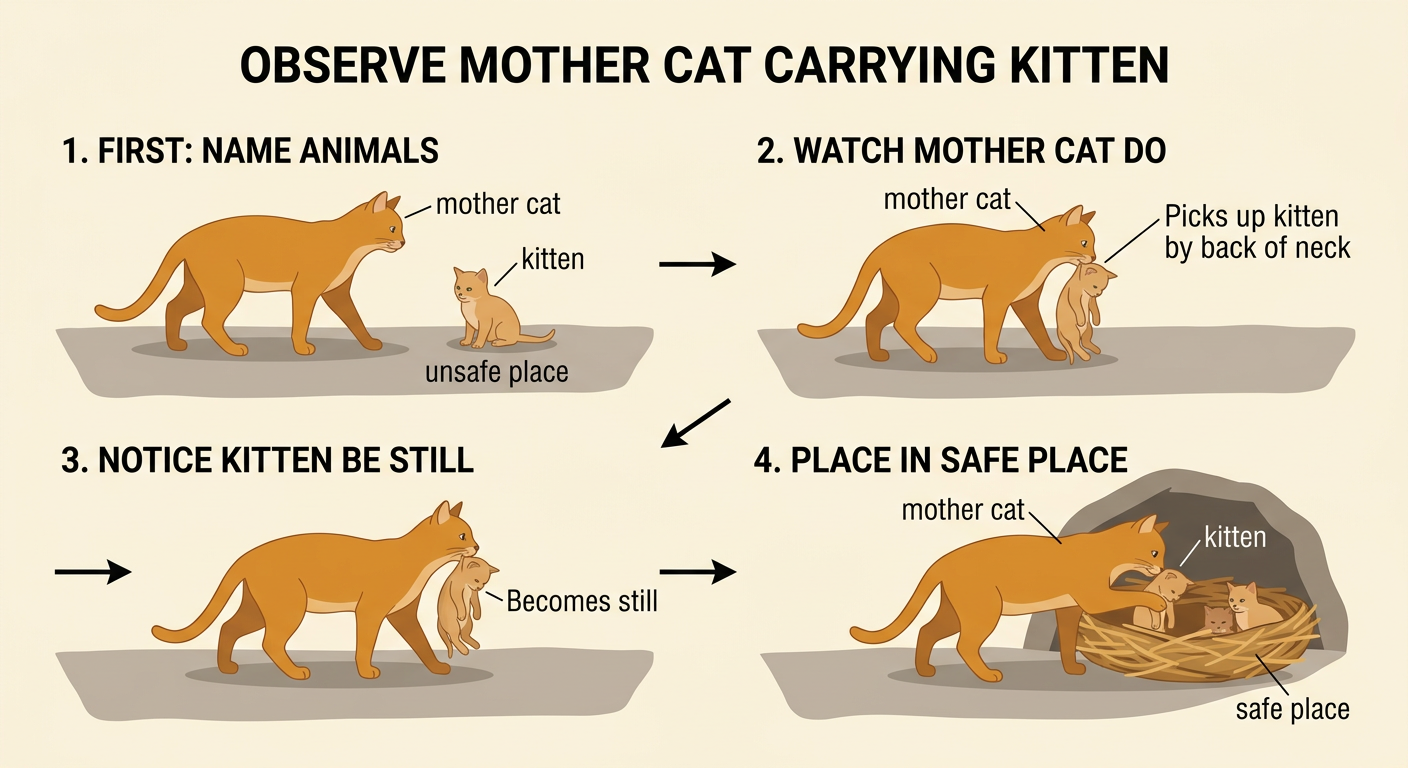
Pictures and videos can show animal behavior in action. Observe carefully before deciding what is happening. First, name the animals you see. Next, watch what the parent does. Then, notice how the young animal responds. In a video, a mother cat may carry a kitten by the loose skin at the back of its neck to move it to a safer place. The kitten becomes still while it is carried. Key details include where the cat begins, where she moves the kitten, and what happens next. Ask, “What did I see?” and “How might this help the kitten?” Use only details shown in the picture, video, or text when you answer.
Find the Behavior Pattern
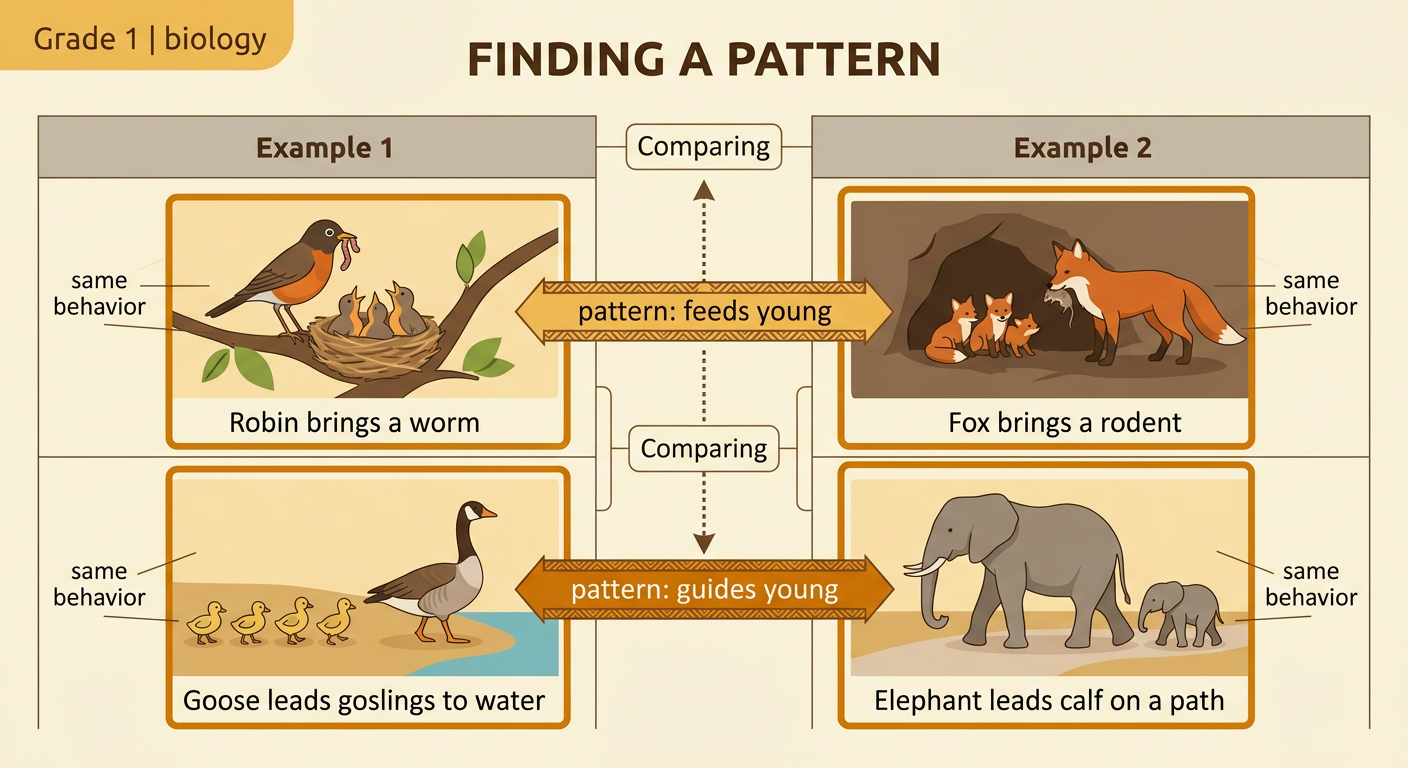
A pattern is something that happens again and again. Across many animal families, parents act in ways that help their young survive. A robin brings food to its chicks, and a fox brings food to its kits. The animals and foods are different, but the helping pattern is the same: a parent feeds its young. A goose leads goslings toward water, and an elephant leads a calf along a safe route. Again, the animals are different, but both parents guide their young. To find a pattern, compare at least two examples. Ask, “What is the same?” You may find the pattern “parent feeds young,” “parent protects young,” or “parent guides young.”
Match Help to Survival
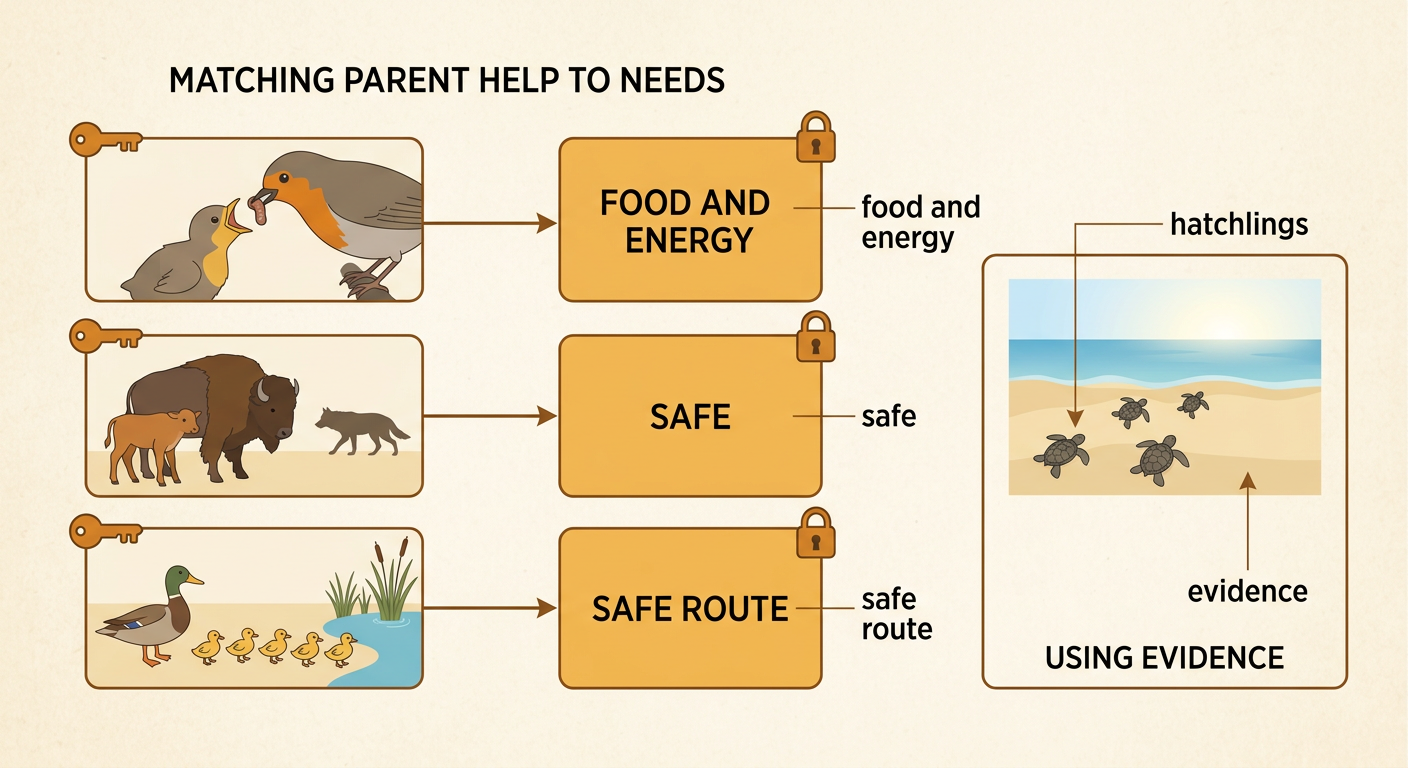
Each helping behavior meets a need of the young animal. Match the parent’s action to how it helps survival. Feeding provides food and energy for growth. Protecting lowers the chance that the young animal will be harmed. Guiding helps the young find water, shelter, food, or a safe route. For example, a mother sea turtle does not guide her hatchlings to the ocean. The hatchlings move toward the brighter horizon over the sea on their own. This reminds us not to guess that every animal parent gives every kind of help. Use evidence from a text, picture, or video. Say, “The parent protects the young by standing near it, and this helps keep it safe.”
Share What You Learned
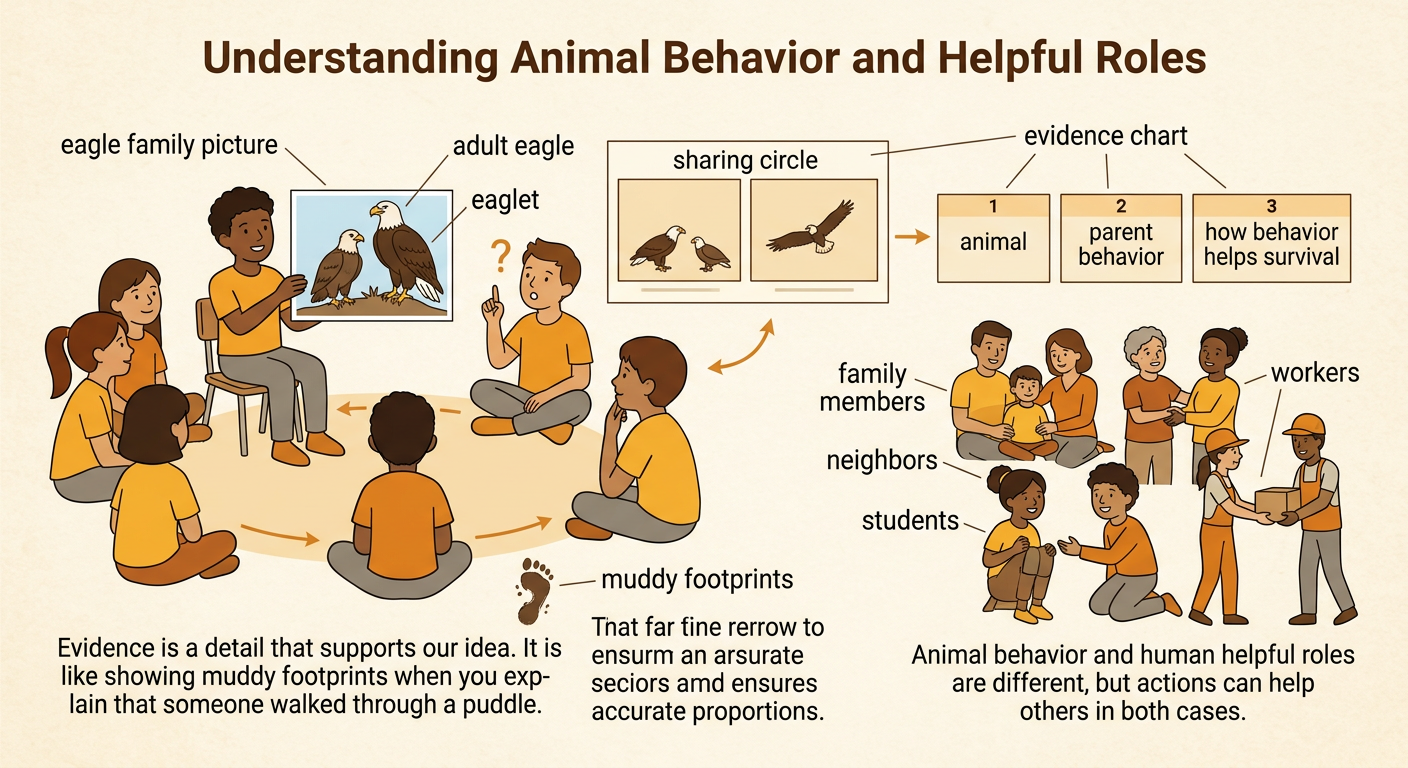
Share one animal example using clear details. Begin by naming the animal. Tell what the parent does and explain how the behavior helps the young survive. You might say, “The adult eagle brings food to the eaglet. The food gives the eaglet energy to grow.” A classmate can ask, “What detail showed feeding?” You can answer using the text, picture, or video as evidence. Listen to other students because each person can add an important idea. In a human community, people also play many helpful roles, even when they are not official leaders. Students, family members, neighbors, and workers can care for others and share useful knowledge. Animal behavior and human community roles are different topics, but both show that actions can help others.