How Animal Parents Help Their Young Survive
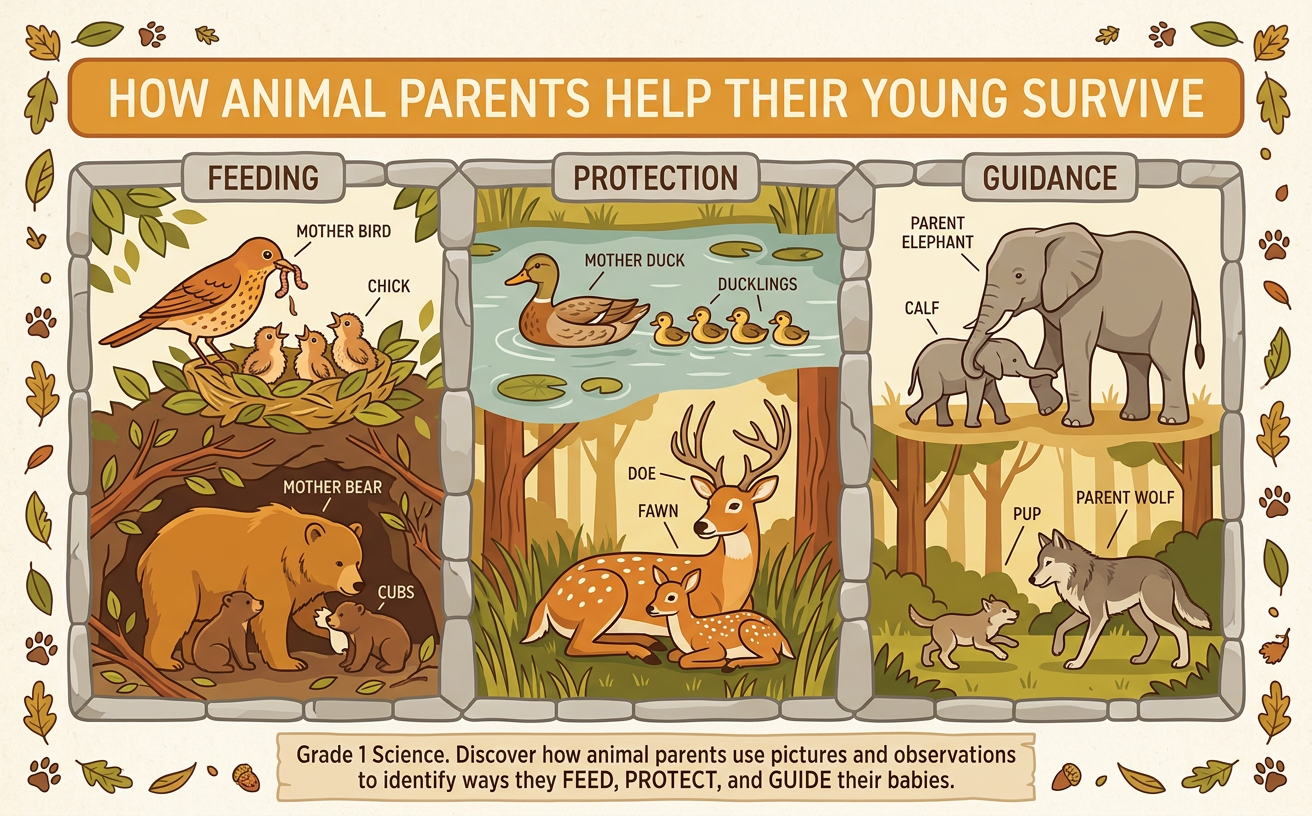
Students use pictures and simple observations to identify ways animal parents feed, protect, and guide their young.
Illustrations are auto-generated and may be placeholders. They can be refreshed to match the narration.
Meet Animal Families
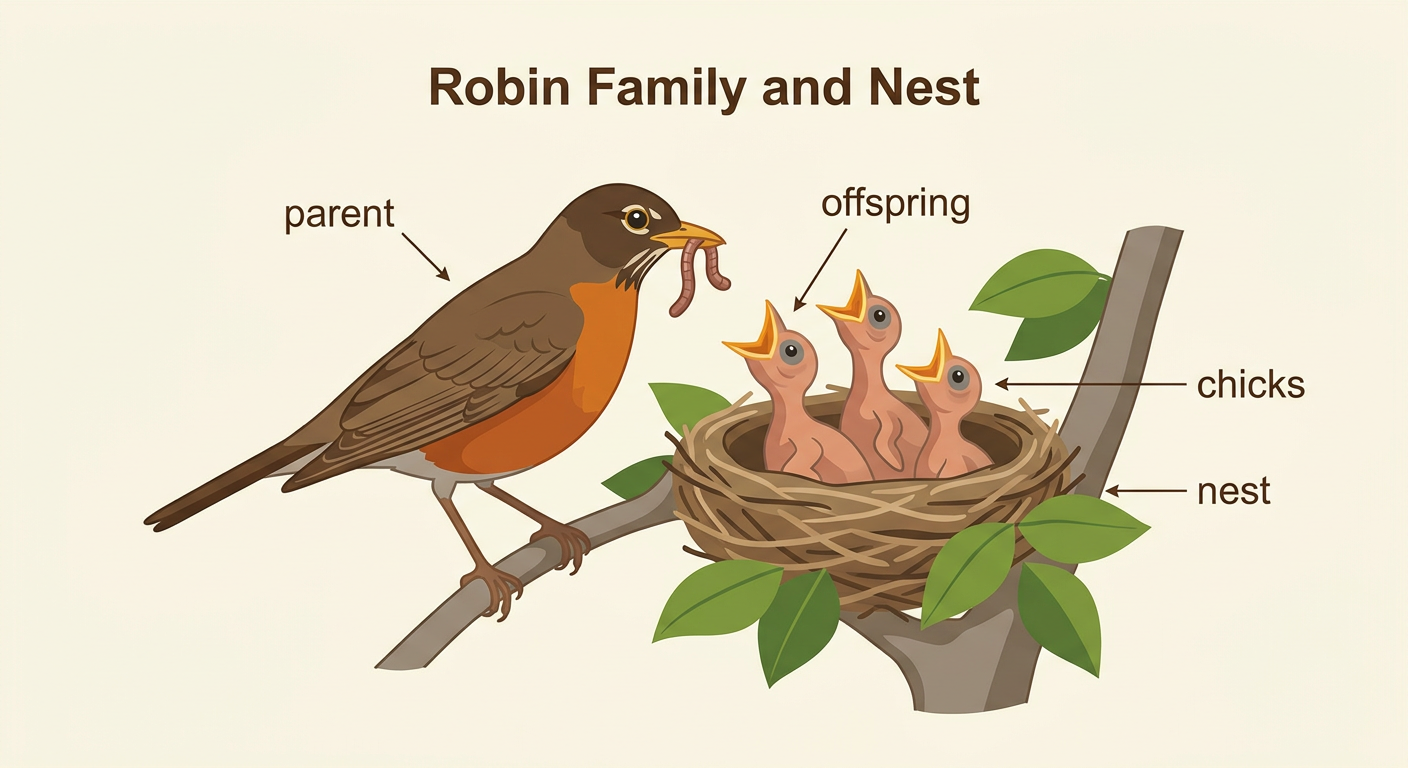
An animal family may include a parent and its young. Young animals are also called offspring. A young bird is a chick, a young dog is a puppy, and a young duck is a duckling. Many animal parents help their offspring get what they need to live and grow. Parents may bring food, keep danger away, or lead their young to safe places. For example, a robin builds a nest where its chicks can rest. The parent brings insects to the nest and places the food into the chicks’ open mouths. The nest and the parent’s care help the chicks stay fed and protected. Not every kind of animal cares for its young in the same way, but we can look for helpful behaviors in many animal families.
Notice Parent and Young Behaviors
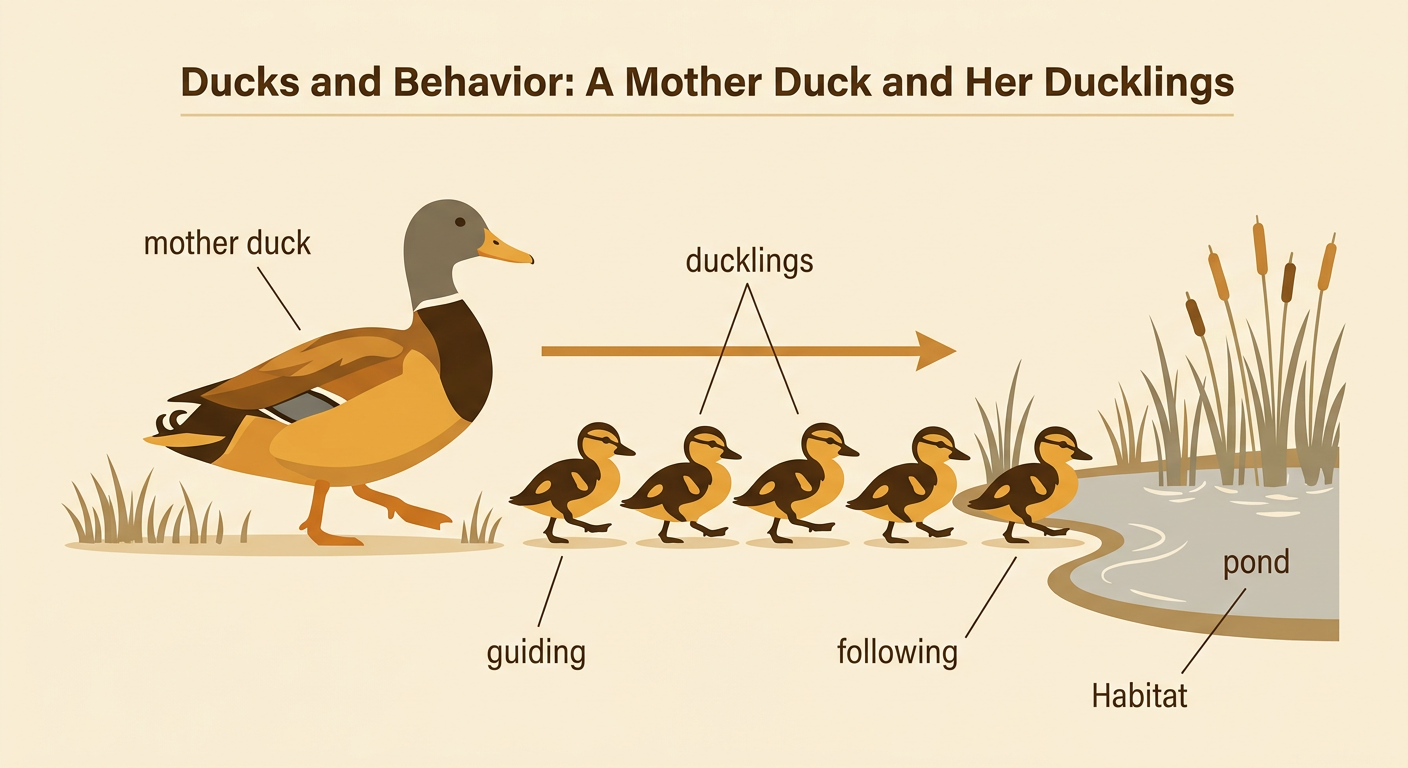
A behavior is something an animal does. We can study a picture by looking closely at the actions of the parent and the young. Ask, “What is the parent doing?” Then ask, “What are the young doing?” In one picture, a mother duck walks in front of a line of ducklings. The ducklings follow her from the grass to a pond. The parent is guiding, and the young are following. Staying together can help the ducklings reach water and avoid getting lost. Notice only what the picture shows before making an idea about why the behavior helps. Words such as carries, feeds, guards, calls, leads, follows, and hides describe actions. Careful observations give us information that we can use to answer questions about animal families.
Match Behaviors to Survival Needs
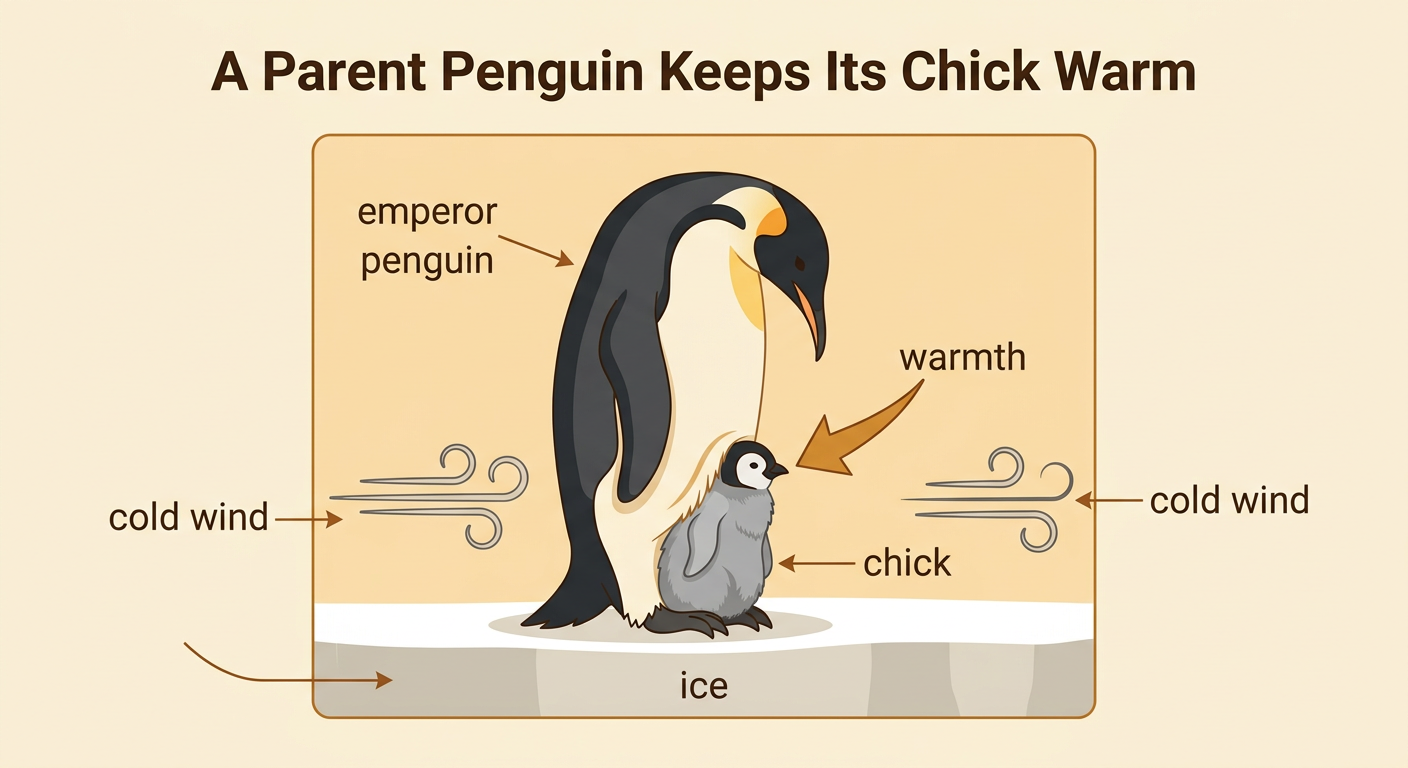
Young animals need food, water, warmth, shelter, and safety. A parent’s behavior can help meet one or more of these survival needs. Feeding helps a young animal get energy to grow. Guarding or hiding the young helps protect them from danger. Leading the young helps them find food, water, or shelter. In a cold Antarctic habitat, an emperor penguin parent balances a small chick on its feet and covers it with a warm fold of skin and feathers. This keeps the chick off the ice and protects it from cold wind. The weather and habitat affect the kind of care that is useful. To match a behavior to a need, complete this idea: “The parent _____, so the young can _____.” For the penguin, the parent covers the chick, so the chick can stay warm.
Find Patterns Across Animals
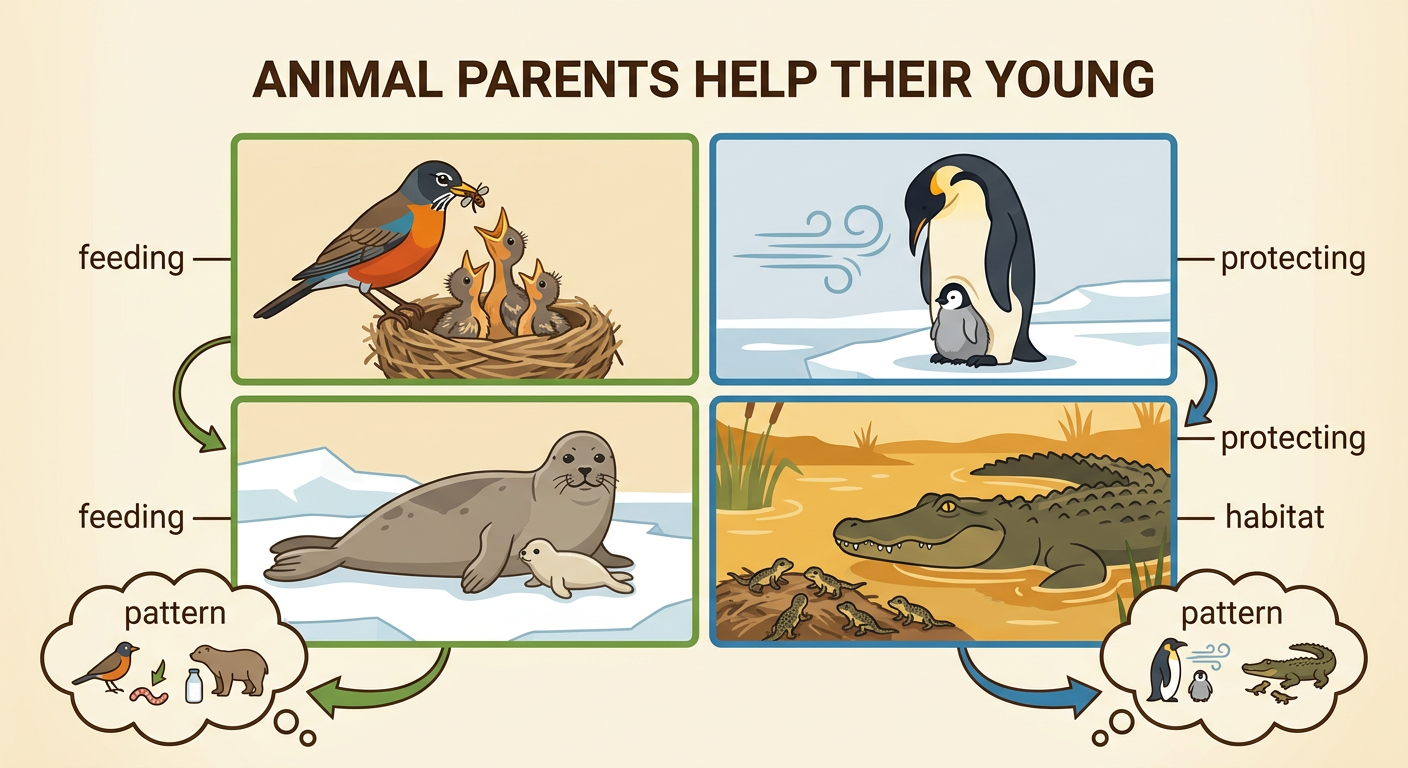
A pattern is something that happens again and again. Animal parents may use different actions, but the actions can help their young in similar ways. A robin brings insects to its chicks, while a seal mother feeds her pup milk. The foods are different, but both parents feed their young. A penguin shields its chick from cold wind, while an alligator guards its nest and hatchlings in a warm wetland. Both behaviors protect the young, but each fits a different habitat. Look across several pictures and sort the behaviors into groups such as feeding, protecting, and guiding. Then describe the pattern you notice. One pattern is that parents often stay near young animals that cannot yet care for themselves. Habitats, weather, and available food can change how an animal parent provides care.
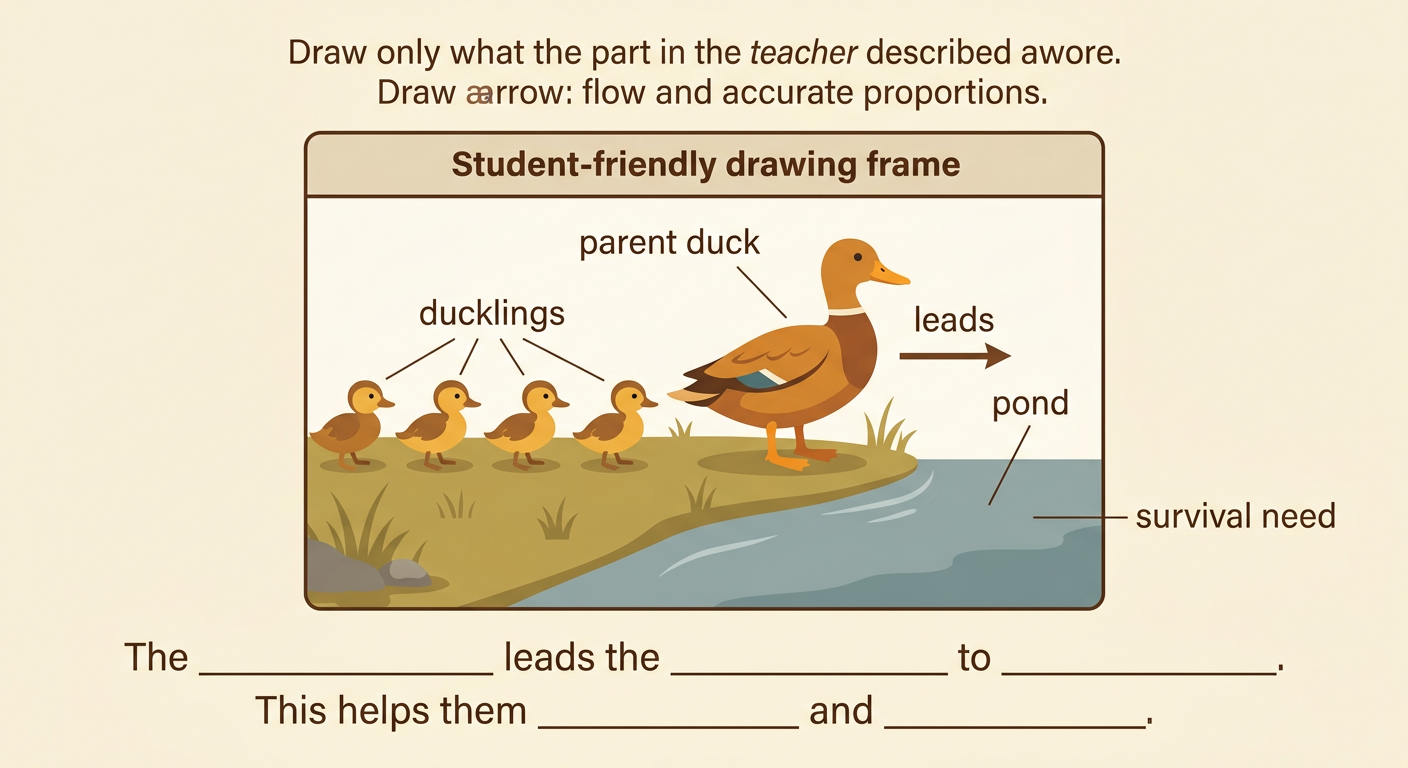
Draw and Explain One Example
Choose one animal family from a picture or another source provided by your teacher. Look for the parent, the young, the parent’s behavior, and the survival need. Draw the habitat and the action you observed. Add labels so another person can understand your evidence. Then write one or two sentences that answer this question: “How does the parent help its young survive?” For example, draw a parent duck leading ducklings to a pond. You might write, “The parent duck leads the ducklings to water. This helps them find a place with food and stay together.” Use facts you observed in the source instead of adding actions that were not shown. Check that your drawing and words name both the behavior and how it helps. Share your work and explain the evidence you used.