
How Animal Parents Help Their Young Survive
Students use pictures and observations to identify ways animal parents feed, protect, and teach their young to help them survive.
Illustrations are auto-generated and may be placeholders. They can be refreshed to match the narration.
Meet Animal Families
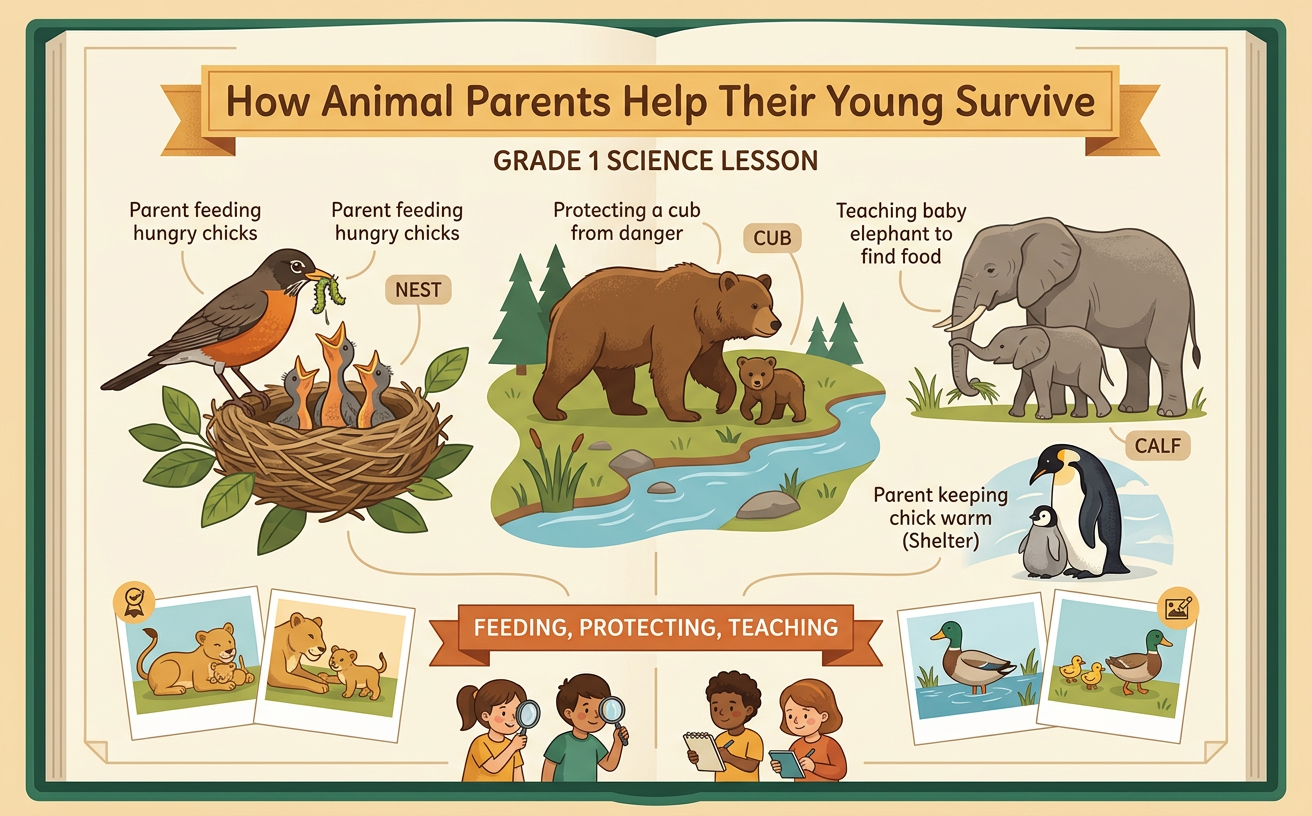
Animals begin life as young, or offspring. Many young animals need help from a parent to stay alive. Look at clear photographs, short videos, and nonfiction books about animal families. These sources can help answer the question, “How do animal parents help their young survive?” Notice who is the parent and who is the young animal. For example, a robin parent brings worms and insects to its chicks. The chicks open their beaks to receive food. This food gives the chicks energy to grow. When choosing a source, ask whether it shows or tells what the animals really do. A labeled photograph or a science video can give useful evidence. A pretend animal story may be fun, but it may not show real animal behavior.

Notice Parent Behaviors
A behavior is something an animal does. Watch carefully for parent behaviors that help young animals. Describe what you can see before deciding how the behavior helps. You might say, “The adult eagle places food in the nest,” instead of only saying, “The eagle is helpful.” Animal parents may feed their young, protect them from danger, or guide them as they learn. For example, a mother duck leads her ducklings toward water and stays close while they swim. The ducklings follow her. This behavior guides the young animals to a place where they can find food and move safely. Use pictures or videos to look again and check your observation. Careful observations give evidence about what the parent does and how the young respond.

Sort Ways Parents Help
Sort animal behavior pictures into three groups: feed, protect, and teach or guide. A feeding picture shows a parent giving or helping young find food. A protecting picture shows a parent guarding, sheltering, carrying, or warning young. A teaching or guiding picture shows a parent leading young or helping them practice a skill. For example, an adult meerkat may bring food to pups, stand watch for danger, and help pups learn how to handle food. One animal family can show more than one kind of help. Look for the main behavior shown on each card and place it in the best group. Tell a partner why you chose that group. Use what you can see in the picture as evidence for your answer.

Create a Class Data Chart
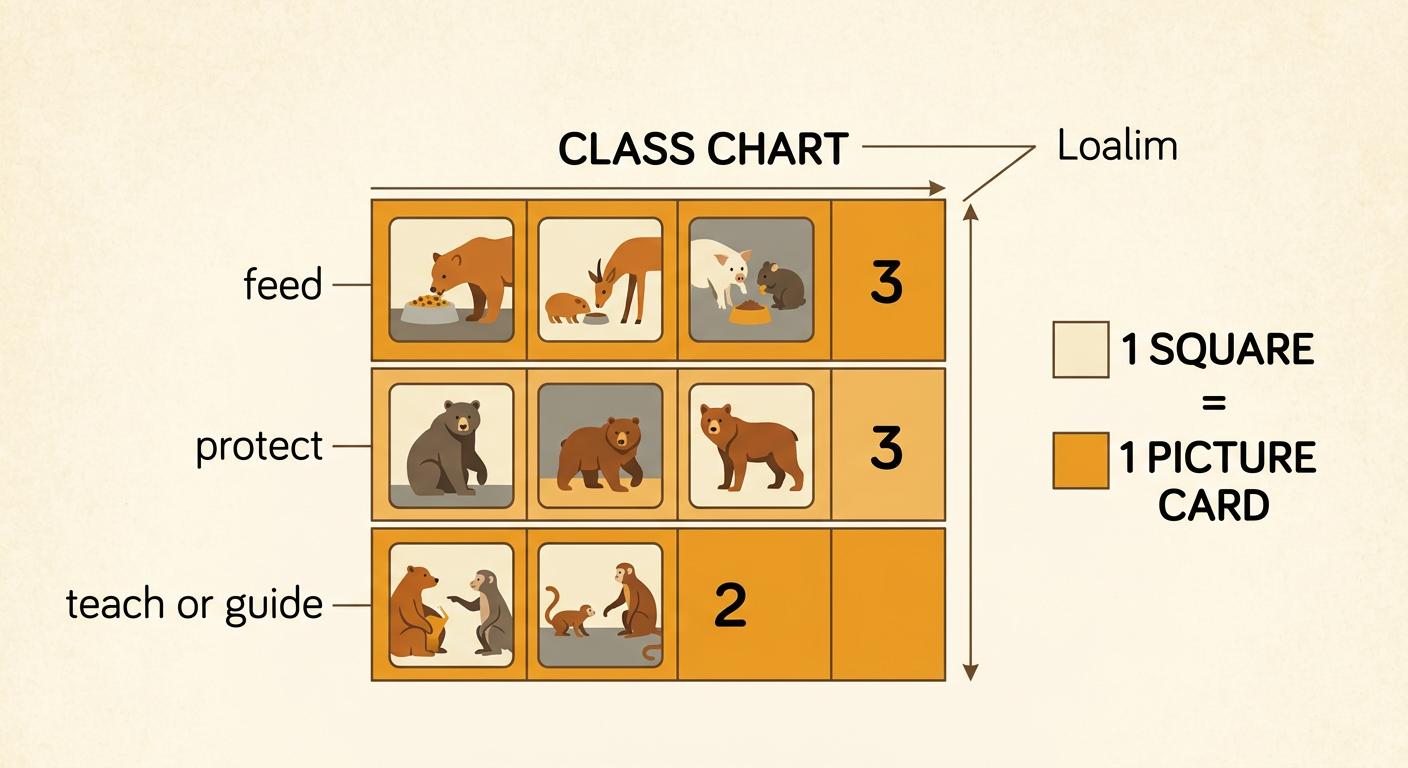
After sorting the picture cards, count how many are in each group. Make a class chart with no more than three categories: feed, protect, and teach or guide. Draw one tally mark or place one square for each card. Suppose the class sorts eight cards. Three show feeding, three show protecting, and two show teaching or guiding. The chart should show 3, 3, and 2. Compare the groups. Feed and protect have the same number. Teach or guide has one fewer picture than each of the other groups. Check the chart by counting the cards and marks again. Then answer questions such as, “Which behaviors appeared most often?” The chart organizes observations so the class can see and discuss a pattern.
Explain a Survival Pattern
A pattern is something that happens again across different examples. Look at the pictures, observations, and class chart. Many animal parents behave in ways that help their young get food, avoid danger, or learn useful skills. These actions can help the young survive and grow. For example, robins feed chicks, penguins shelter chicks from cold weather, and ducks guide ducklings toward water. The animals are different, but the parent behaviors meet important needs. Explain the pattern with evidence: “Animal parents help their young survive by feeding, protecting, or guiding them. I observed a robin bringing food to its chicks.” Your evidence should come from a useful source, such as a photograph, video, nonfiction text, or the class data chart. Compare your explanation with a partner’s explanation.
