
How Body Systems Work Together During Exercise
Students measure changes in pulse and breathing rate to explain how the respiratory and circulatory systems work together to deliver oxygen throughout the body.

Illustrations are auto-generated and may be placeholders. They can be refreshed to match the narration.
Meet the Respiratory and Circulatory Systems
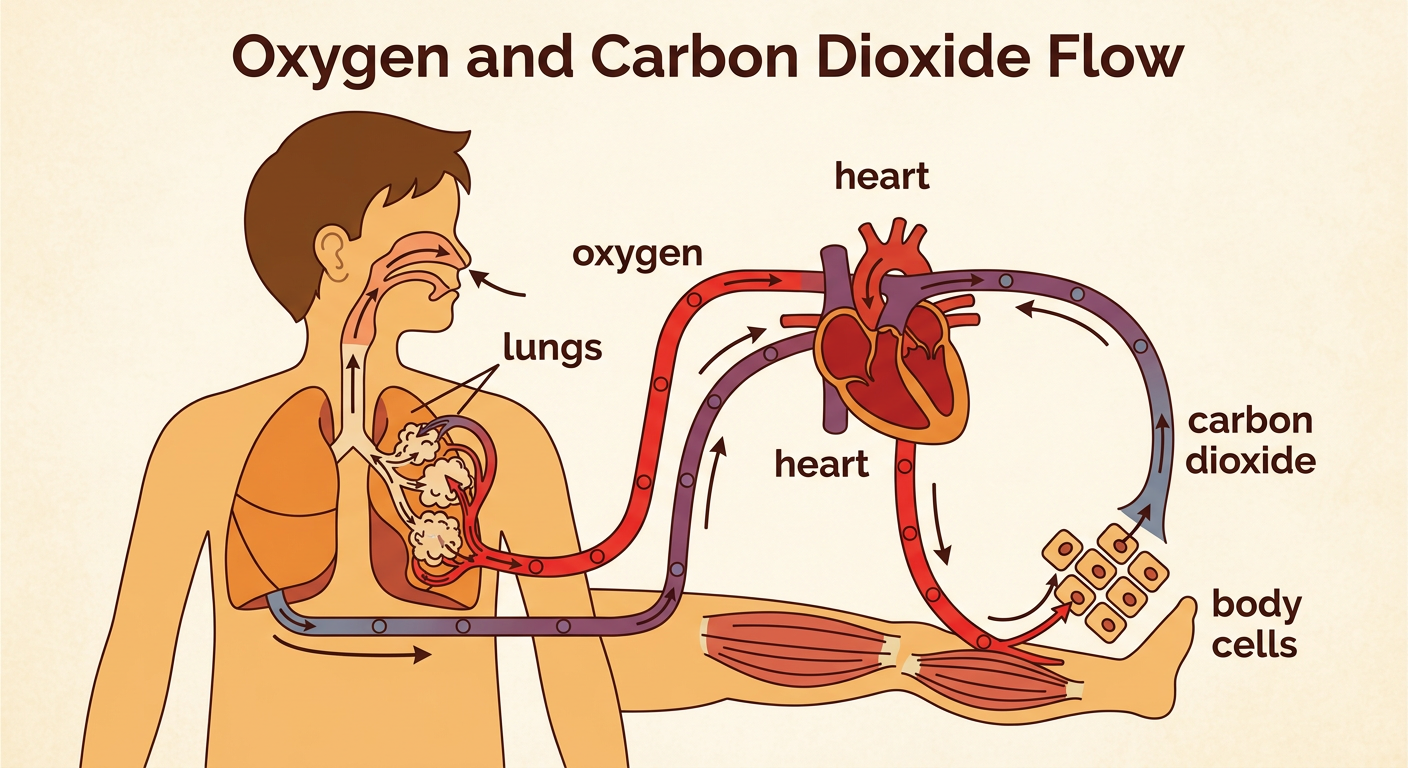
Your respiratory system brings oxygen into your body and removes carbon dioxide. When you inhale, air travels through the nose or mouth, down the trachea, and into the lungs. Oxygen moves from tiny air sacs in the lungs into nearby blood vessels. Your circulatory system includes the heart, blood, and blood vessels. The heart pumps oxygen-rich blood to body cells. Cells use oxygen and nutrients to release energy for movement and other life processes. Blood then carries carbon dioxide back to the lungs, where you exhale it. For example, when you climb stairs, your leg muscles need more energy. The respiratory and circulatory systems work together to supply those active muscles with more oxygen.
Measure Resting Pulse and Breathing
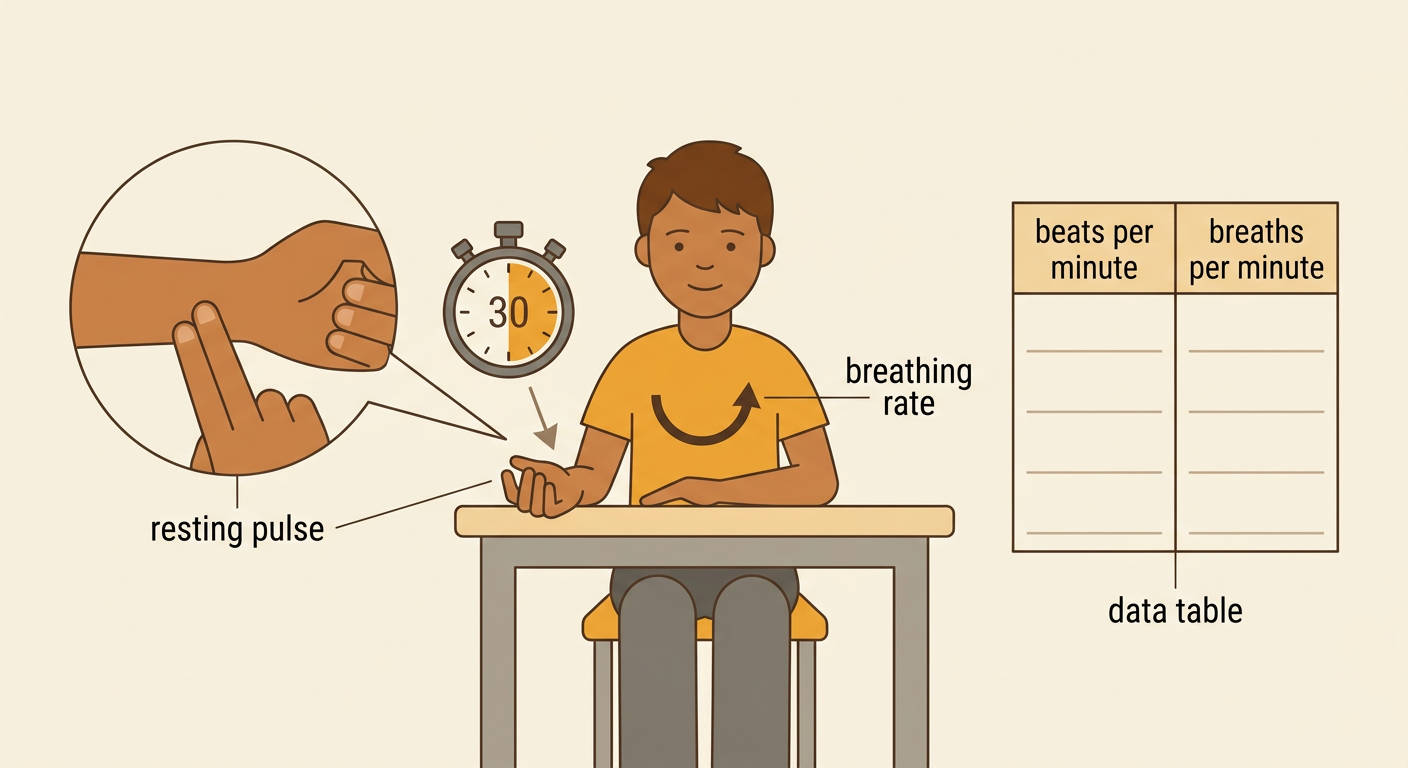
Begin by sitting quietly for five minutes so your body is at rest. To measure pulse, place two fingers gently on the thumb side of your wrist. Do not use your thumb because it has its own pulse. Count the beats for 30 seconds, then multiply by two to find beats per minute. To measure breathing rate, count each rise of your chest as one breath. Count for 30 seconds and multiply by two to find breaths per minute. Record both measurements in a data table. For example, a student might measure 76 beats per minute and 18 breaths per minute while resting. Measurements differ among people, so compare your own resting and exercise results rather than judging another student’s fitness.
Observe Changes After Exercise
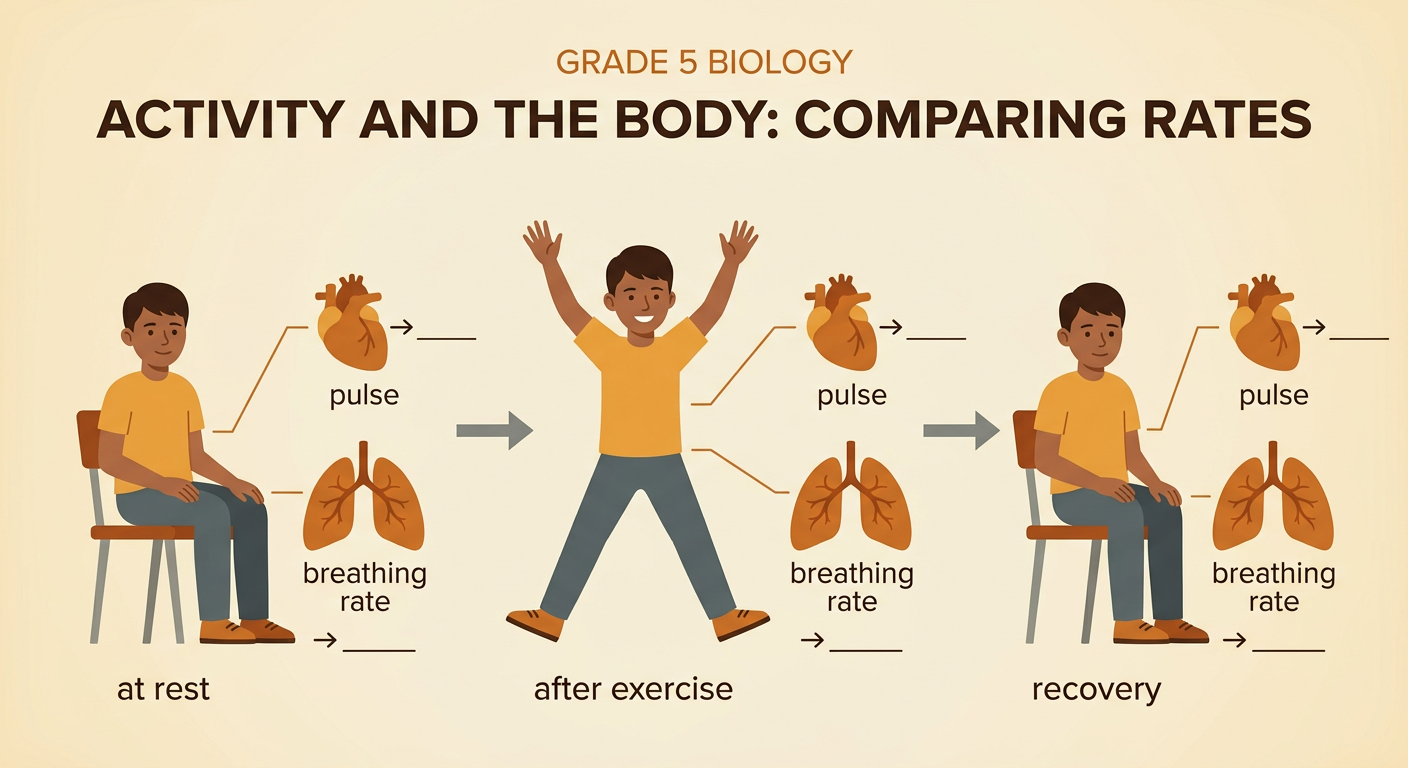
Choose a safe activity, such as marching in place or doing jumping jacks, and continue for one minute. Stop if you feel pain, dizziness, or trouble breathing. Immediately after the activity, measure pulse and breathing rate using the same 30-second method. Measure again after two or three minutes of quiet recovery. Keep the activity time and counting method the same so the comparison is fair. You may find that both rates rise after exercise and then move toward their resting levels during recovery. For example, a pulse might change from 76 beats per minute at rest to 124 after exercise, then fall to 88 after recovery. Active muscles require energy more quickly, so oxygen delivery and carbon dioxide removal must also speed up.
Graph and Compare the Data
Organize your measurements before making a graph. Put the conditions—rest, after exercise, and recovery—along the horizontal axis. Put rate per minute on the vertical axis. Because pulse and breathing rates have different values, use two clearly labeled graphs or two different colors with a key. Choose equal intervals, such as 10 units, so the scale is consistent. Plot each measurement accurately and give the graph a title. Suppose a student’s breathing rates are 18, 34, and 22 breaths per minute. The graph shows an increase of 16 breaths per minute after exercise and a decrease of 12 during recovery. Compare the overall pattern in both graphs: rates usually rise during exercise and fall afterward. Use exact graph values when describing the pattern.

Explain How the Systems Work Together
Use a claim, evidence, and reasoning sequence to explain your results. Your claim might be: During exercise, the respiratory and circulatory systems work together more quickly to support active muscles. Evidence should include exact measurements, such as, “My pulse rose from 76 to 124 beats per minute, and my breathing rose from 18 to 34 breaths per minute.” Then connect the evidence to science ideas. Faster breathing brings more oxygen into the lungs and removes carbon dioxide more quickly. A faster heartbeat moves blood between the lungs and body cells more rapidly. These internal structures support survival and behavior by helping muscles release the energy needed for movement. During recovery, lower rates show that the muscles need less oxygen than during exercise. Together, the data and scientific explanation form an evidence-based argument.
