
How Can We Tell a Chemical Reaction Happened?
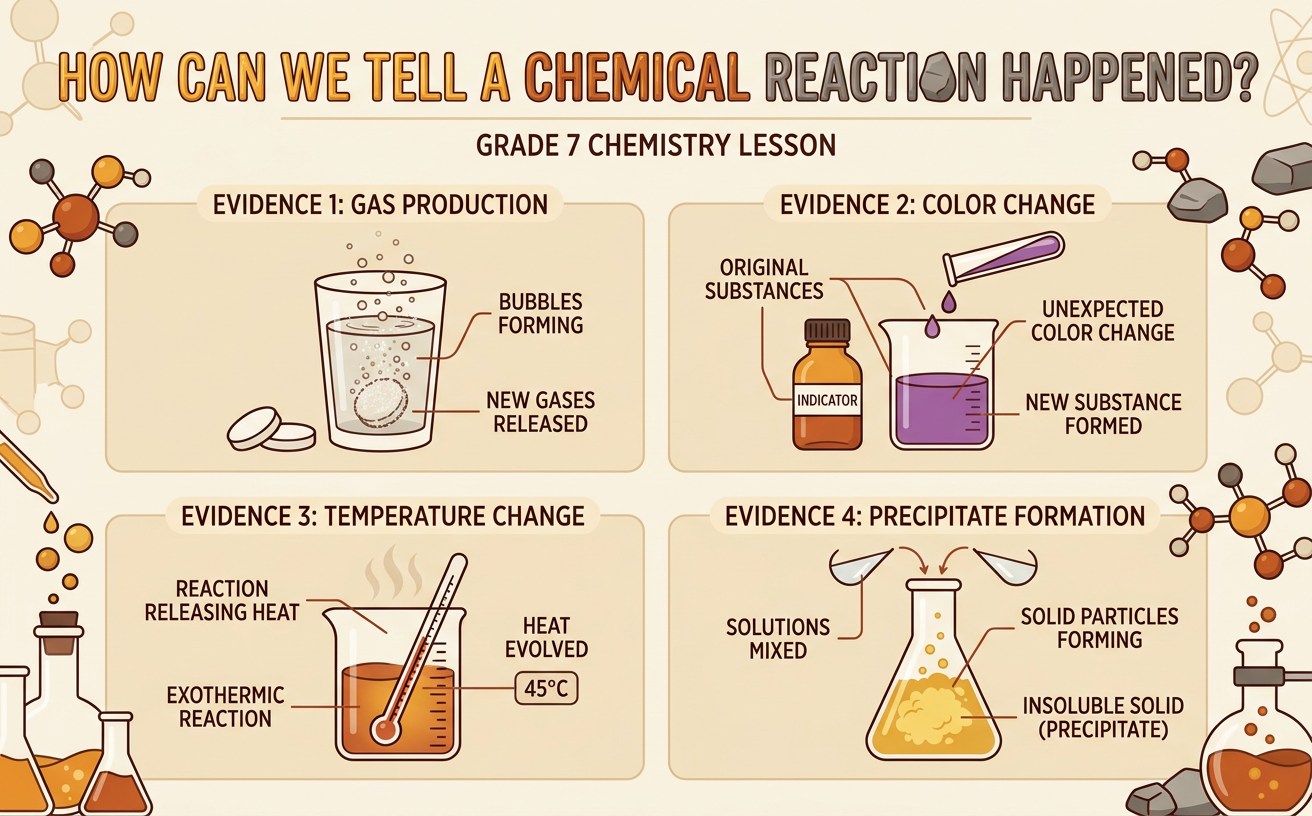
Students analyze observations and property data from familiar changes to identify evidence that new substances formed during a chemical reaction.
Illustrations are auto-generated and may be placeholders. They can be refreshed to match the narration.
Physical Change or Chemical Reaction?
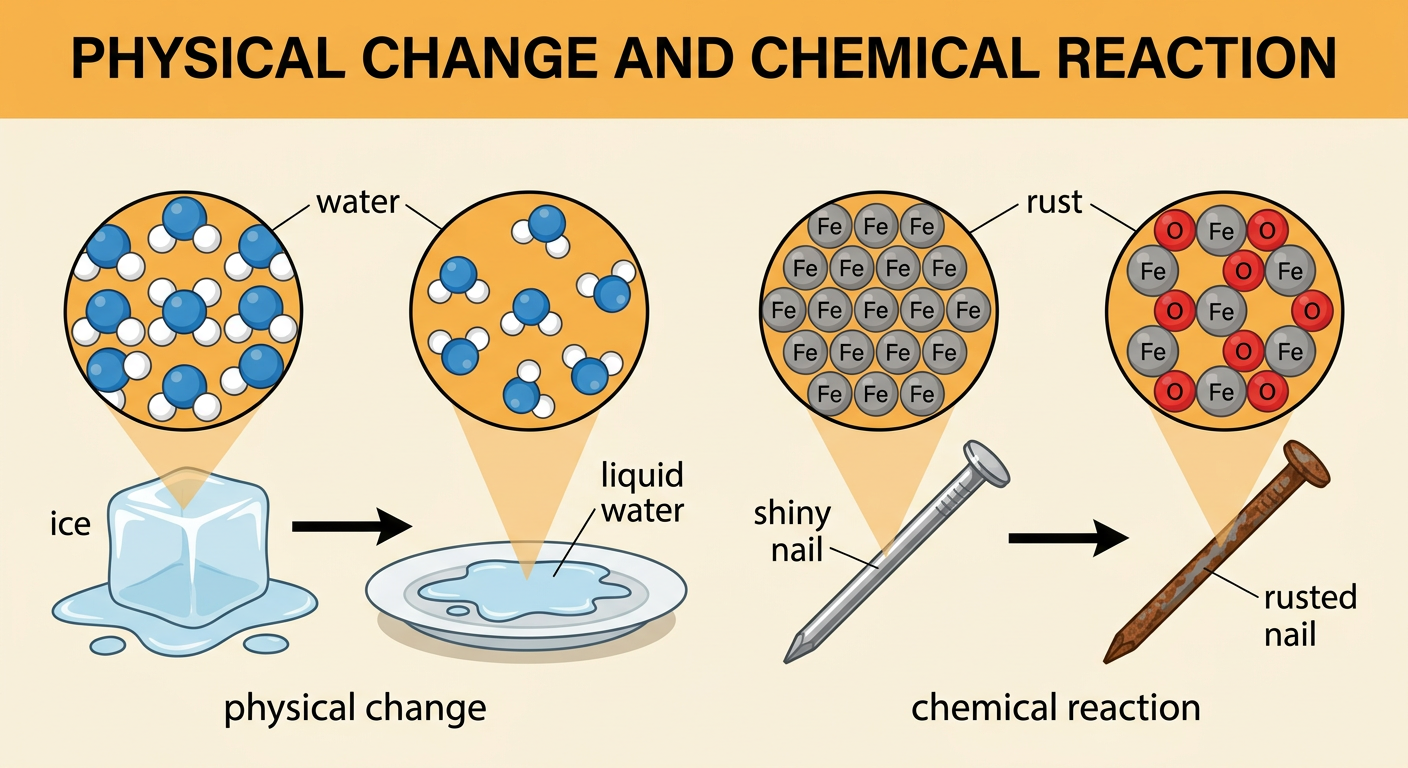
Changes in matter can be physical or chemical. In a physical change, the substance keeps its chemical identity even though its size, shape, or state changes. Ice melting is physical because both the ice and liquid are water. In a chemical reaction, atoms rearrange and form one or more new substances with different properties. An iron nail rusting is chemical because iron reacts with oxygen and water to form rust, which has a different color, texture, and strength. Ask whether the material can still be identified by its original characteristic properties. A change in appearance alone is not enough: cutting metal changes its shape but not its identity. Look for several observations and compare property data from before and after the interaction.
Observe a Simple Reaction
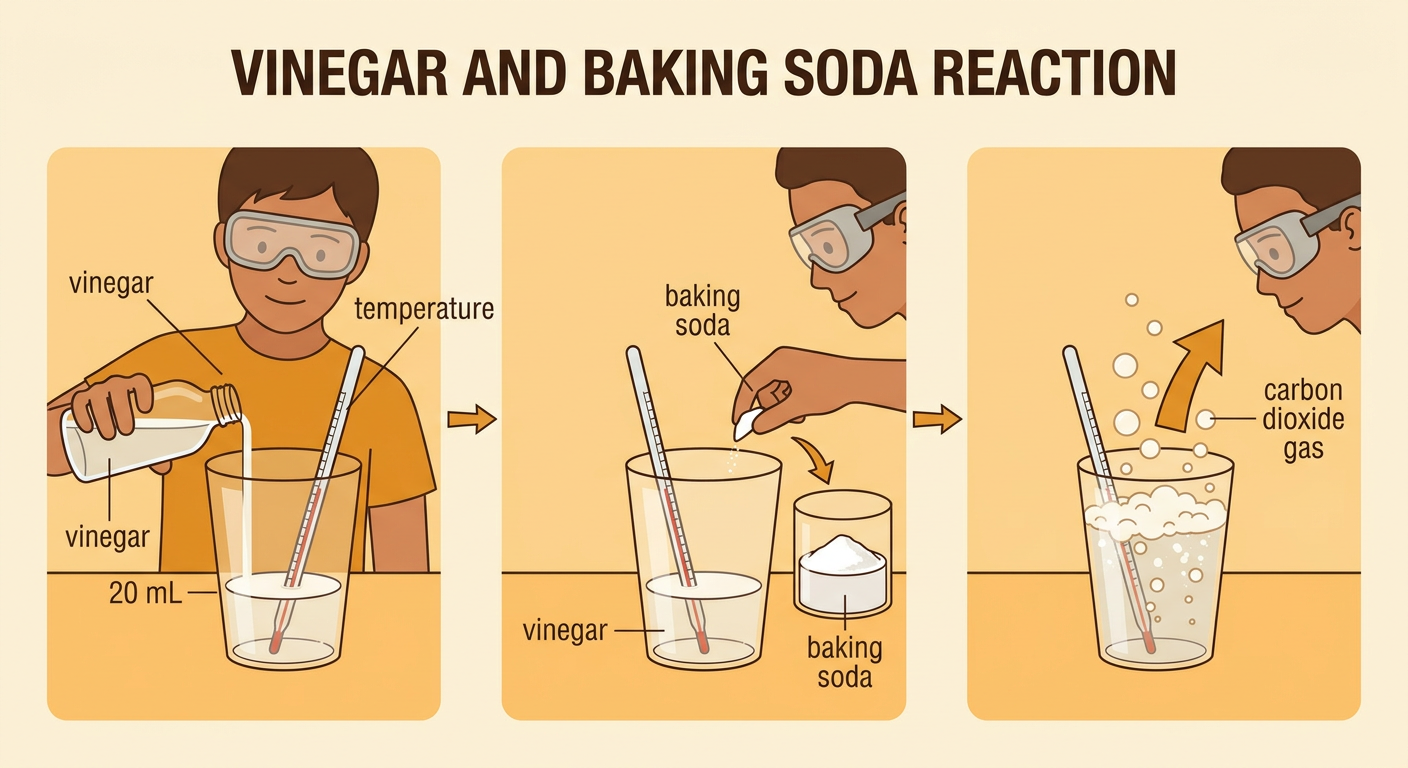
Students can safely observe a reaction between vinegar and baking soda. Wear safety goggles and do not taste the materials. First, place 20 milliliters of vinegar in a clear cup. Record its color, state, and temperature. Next, observe 5 grams of baking soda and record its properties. Add the baking soda to the vinegar and watch closely. Record the order in which changes occur, including bubbling, foaming, and any temperature change. The bubbles contain carbon dioxide gas produced by the reaction. The other products are water and sodium acetate dissolved in the liquid. Follow each step in order so that observations can be compared fairly. Keep the cup open because gas production can increase pressure in a sealed, rigid container. Clean the work area as directed by the teacher.
Identify Evidence of New Substances
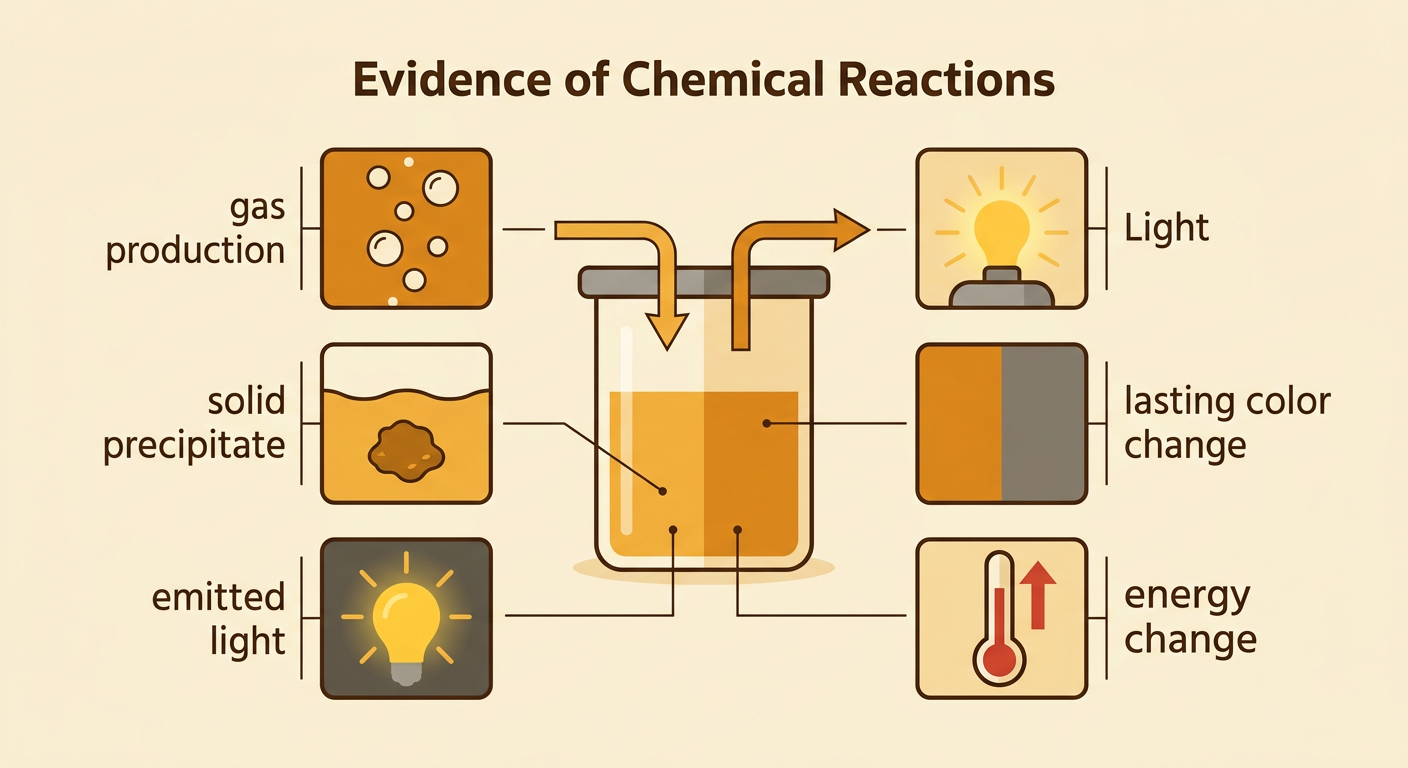
Evidence of a chemical reaction may include gas production, formation of a solid precipitate, light emission, a lasting color change, or an unexpected energy change. These signs matter because they may reveal substances with properties that were not present before. For example, mixing two clear solutions can produce a cloudy solid that settles to the bottom. The solid is evidence of a new substance because neither starting solution contained visible solid particles. However, one observation is not always conclusive. Bubbles can also appear when water boils, and a color can change when food coloring is diluted. Scientists therefore combine observations with property measurements and knowledge of the materials. Strong evidence shows that the products have characteristic properties different from those of the starting substances.
Analyze Before-and-After Data
Consider sample data from vinegar and baking soda mixed in a closed, flexible bag. Before mixing, the total mass was 56.8 grams, the temperature was 22 degrees Celsius, and the vinegar had a pH of 2.5. After mixing, the total mass was still 56.8 grams, the temperature was 17 degrees Celsius, the liquid had a pH of 6.2, and the bag had inflated with carbon dioxide gas. The equal masses show that matter remained in the closed system; they do not show that no reaction occurred. The new gas, changed pH, and temperature decrease together support the conclusion that substances with different properties formed. Quantitative measurements are useful because they allow students to compare exact values rather than relying only on descriptions such as cold or bubbly.

Apply Evidence to Corrosion Choices
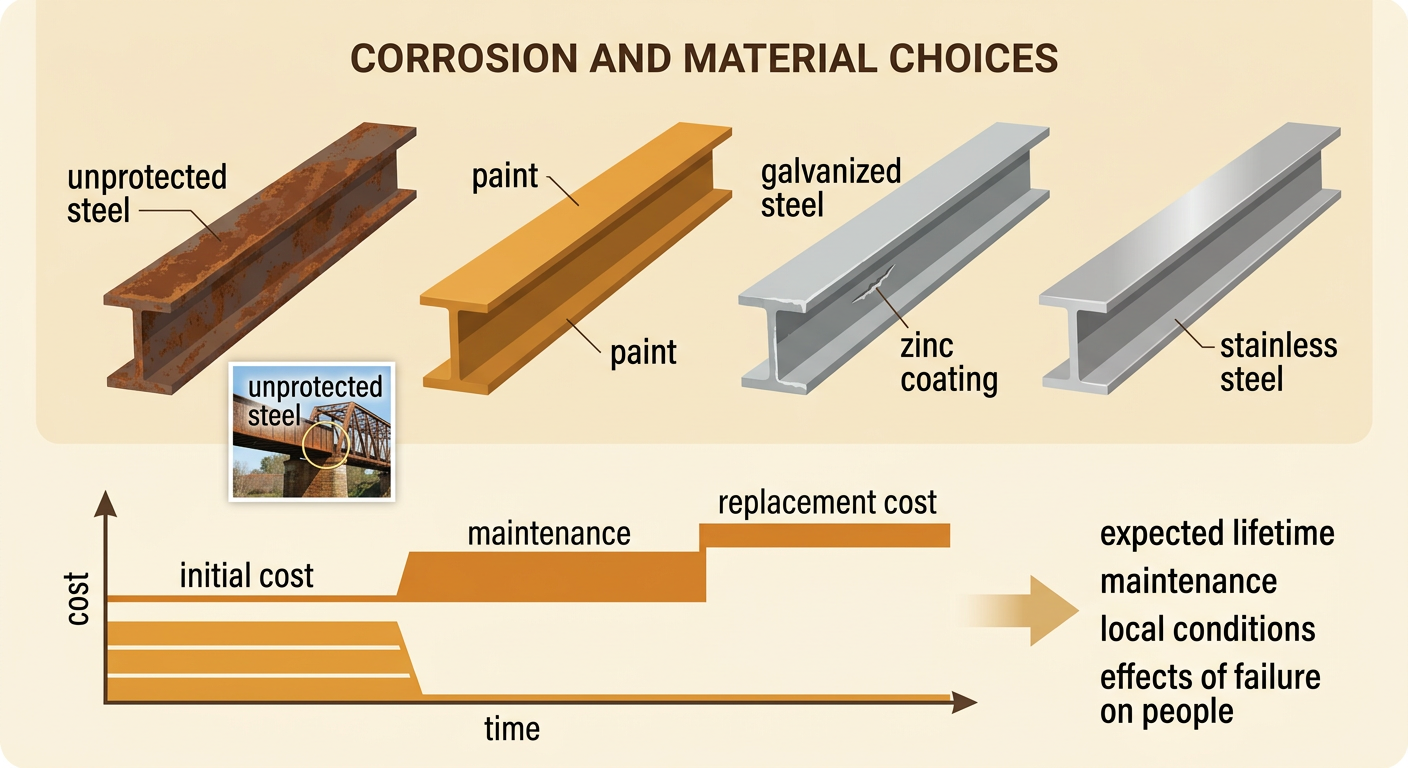
Corrosion is a chemical process that damages metals. When iron is exposed to oxygen and water, it forms rust, a new substance that is weaker and more brittle than iron. Communities must consider both cost and performance when choosing materials for bridges, pipes, vehicles, and playground equipment. Unprotected steel may cost less at first, but repeated painting, repairs, and replacement can cost more over time. Paint blocks water and oxygen, while a zinc coating protects galvanized steel even if part of the surface is scratched. Stainless steel resists corrosion well but usually costs more to purchase. Choosing a corrosion-resistant material can improve safety, reduce waste, and prevent service disruptions. Decision makers should compare the initial price, expected lifetime, maintenance needs, environmental conditions, and possible effects of failure on people.
Exit Claim with Evidence
Finish the lesson by writing a claim, evidence, and reasoning statement. A strong claim answers whether a chemical reaction occurred. Evidence lists specific observations or measurements, and reasoning explains why those data support the claim. For the vinegar and baking soda example, a student might write: A chemical reaction occurred when the substances were mixed. The bag inflated with a new gas, the pH changed from 2.5 to 6.2, and the temperature decreased from 22 degrees Celsius to 17 degrees Celsius. These changes show that products with properties different from the starting materials formed. Avoid using only vague statements such as it looked different. Select at least two relevant pieces of evidence, include numbers when available, and connect each piece of evidence to the formation of new substances.
