
How Chapters Build a Story
Students analyze how individual chapters contribute to the setting, plot, and overall structure of a literary text.

Illustrations are auto-generated and may be placeholders. They can be refreshed to match the narration.
Review Story Structure
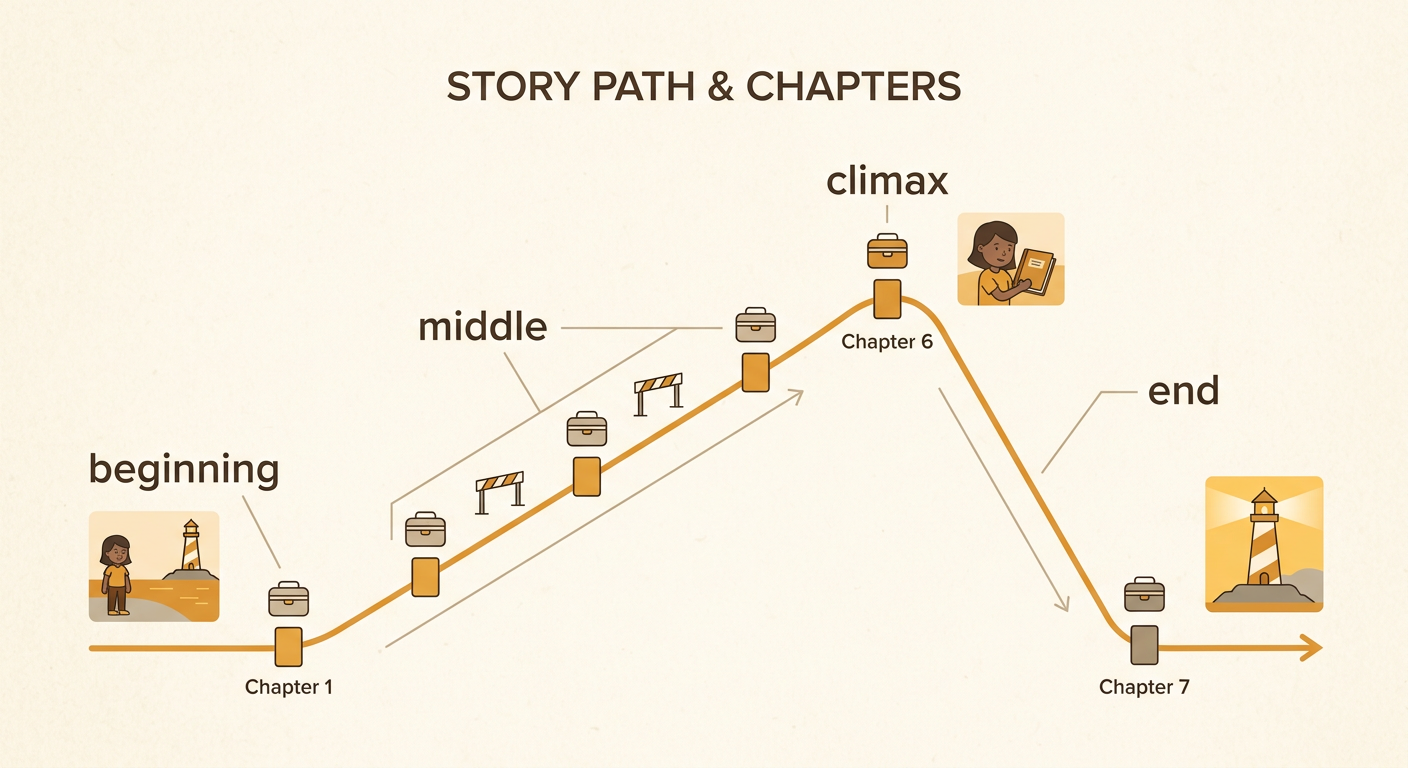
Most stories have a beginning, middle, and end. In the beginning, the author introduces the characters, setting, and main problem. In the middle, characters respond to the problem, face obstacles, and make important choices. The action often rises toward a turning point called the climax. In the end, the problem is resolved, and readers learn what has changed. Chapters divide these parts into manageable sections. For example, in a story about Maya searching for a lost lighthouse journal, Chapter 1 might introduce Maya and the seaside town. Chapters 2 through 5 could show her following clues and overcoming setbacks. Chapter 6 might reveal where the journal is hidden, and Chapter 7 could explain how finding it helps save the lighthouse. Each chapter supports one part of the complete story structure.
Identify Each Chapter’s Focus
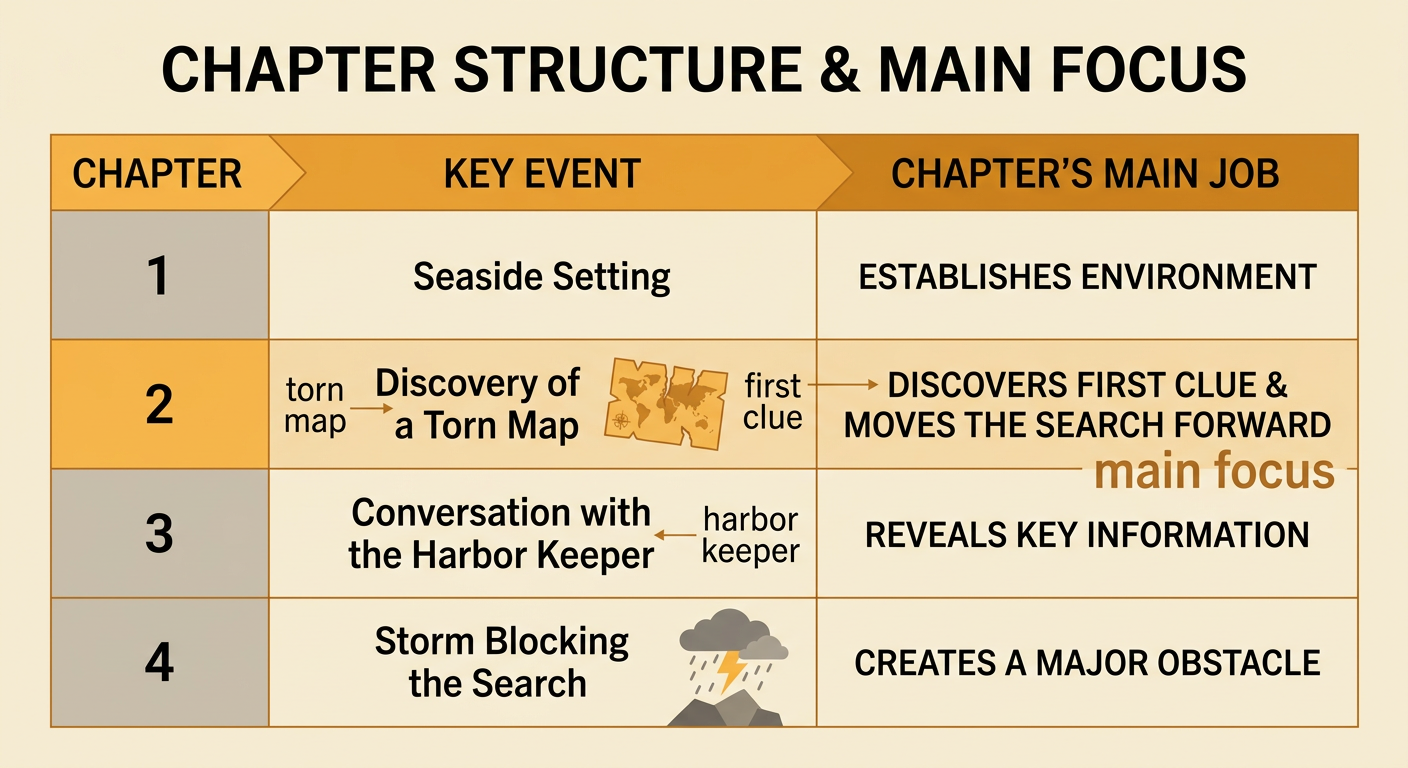
Each chapter usually has a main focus, such as introducing a character, revealing a clue, creating a conflict, or showing a decision. To identify the focus, ask what important event happens and why it matters. Do not list every small detail. Instead, summarize the chapter’s main job in one clear sentence. In the lighthouse story, Chapter 2 might show Maya discovering a torn map inside her grandfather’s toolbox. Its focus is not simply that Maya enters the shed or opens a box. Its focus is that she finds the first clue to the journal’s location. Chapter 3 might focus on Maya asking the harbor keeper about a symbol on the map. Naming each chapter’s focus helps readers see why the author included it and how it moves the story forward.
Track Changes Across Chapters
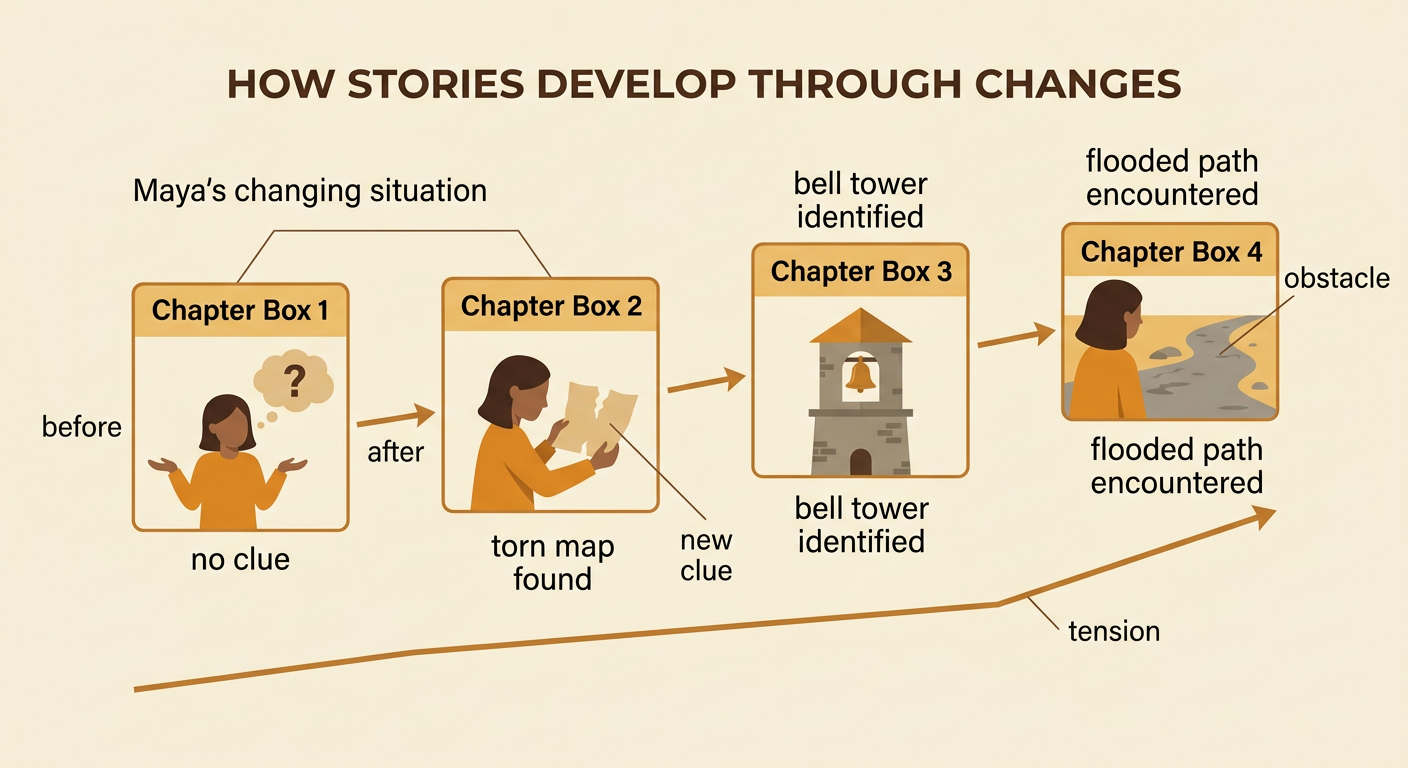
Stories develop because something changes from one chapter to the next. A character may gain knowledge, the setting may shift, a conflict may become more serious, or a relationship may improve. Track these changes by comparing what is true before and after each chapter. For example, at the start of Chapter 2, Maya has no idea where the journal might be. By the end, she has a torn map. In Chapter 3, she learns that the map’s star symbol points to an old bell tower. In Chapter 4, a storm floods the path, making her search more difficult. These changes connect the chapters. The new clue leads to a destination, and the new obstacle raises the tension. Following such changes helps readers understand how the author develops the setting, characters, and conflict over time.
Connect Chapters to the Overall Plot
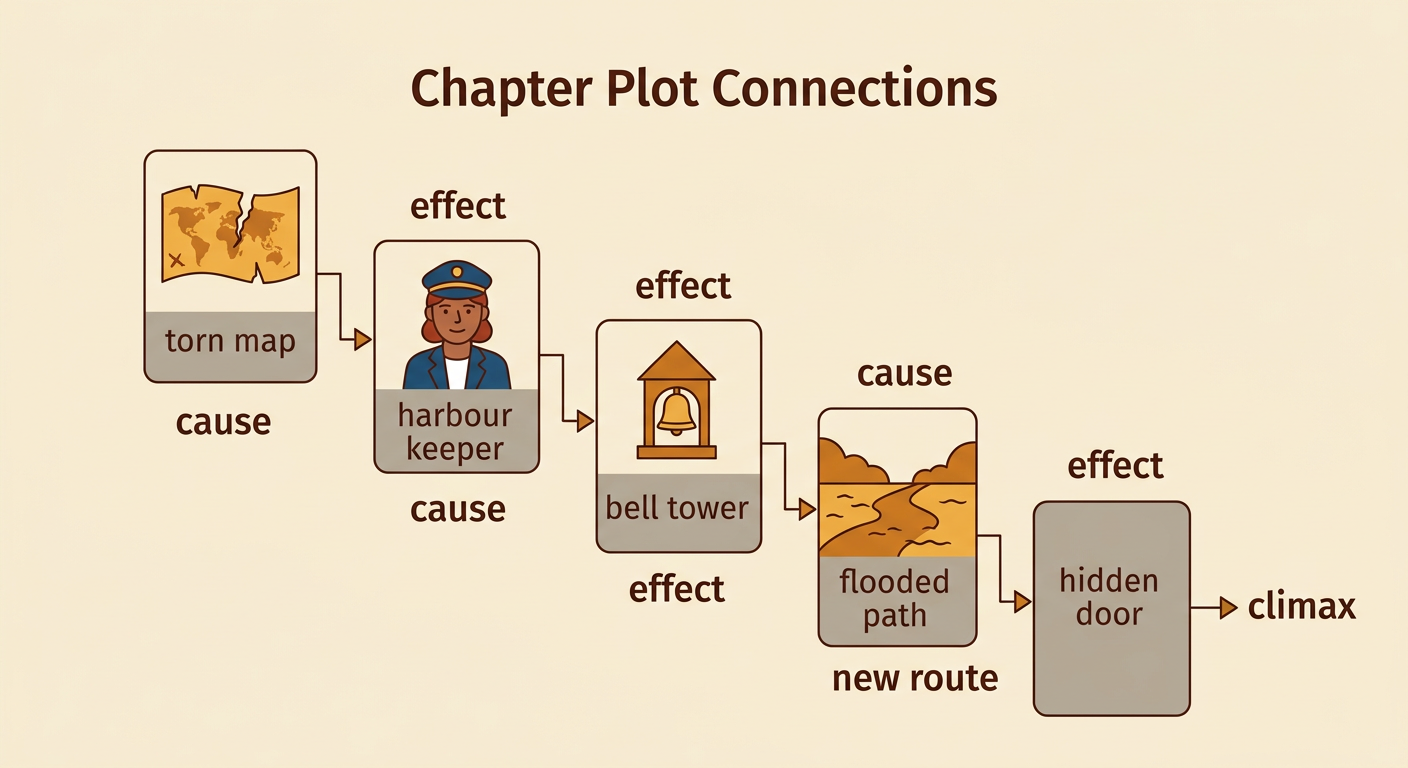
A chapter contributes to the overall plot when it causes, prepares for, or explains another event. Readers can connect chapters by using cause-and-effect language such as because, so, and therefore. Suppose Chapter 2 reveals the torn map. Because Maya finds the map, she visits the harbor keeper in Chapter 3. His explanation sends her to the bell tower in Chapter 4. The flooded path forces her to find another route in Chapter 5, where she notices a hidden door. That discovery prepares readers for the climax, when Maya finally locates the journal. Even a quiet chapter can be important if it provides information, develops a relationship, or prepares for a later choice. Ask, “What would be missing if this chapter were removed?” The answer often reveals how that chapter supports the larger plot.
Explain How the Structure Builds the Story
To explain how chapters build a story, describe both what each chapter does and how the chapters work together. Use specific events and connect them to the story’s beginning, rising action, climax, and resolution. For example, you might explain: “Chapter 1 introduces Maya, the seaside setting, and the threat to the lighthouse. Chapters 2 and 3 begin the rising action by revealing the map and explaining its symbol. Chapters 4 and 5 increase suspense through the storm and the hidden door. Chapter 6 forms the climax because Maya finds the journal just before the lighthouse meeting. Chapter 7 resolves the conflict when the journal proves the lighthouse’s historical value.” This explanation does more than summarize. It shows how the chapter order builds tension, links causes and effects, and leads readers through a complete plot.
