
How Characters Respond to Challenges
Students identify a major story challenge and explain how a character responds through actions, words, and feelings.

Illustrations are auto-generated and may be placeholders. They can be refreshed to match the narration.
Meet the Character
A character is a person or animal who takes part in a story. To understand a character, notice what the story tells you about that character. Look for the character’s name, traits, goals, and relationships. A trait is a word that describes what someone is like, such as kind, curious, or brave. Imagine a story about Maya, a girl who loves flying her red kite. Maya is patient and careful. Her goal is to keep the kite high in the sky during a windy afternoon at the park. These details introduce Maya before a challenge occurs. Knowing that she is patient and careful will help you understand why she makes certain choices later. As you read any story, ask, “Who is the main character, and what does this character want?”

Identify the Challenge
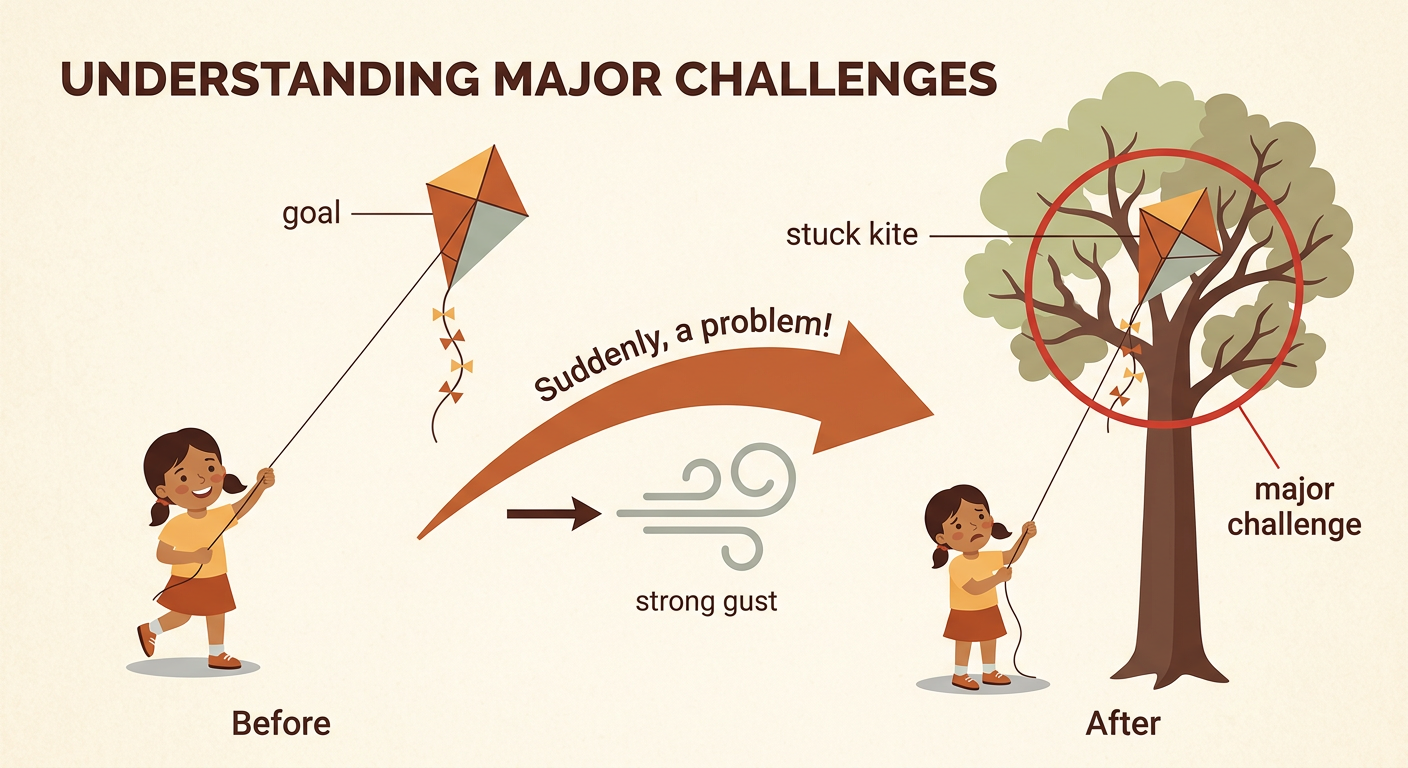
A challenge is a difficult problem that a character must face. A major challenge is important because it changes what happens next in the story. To find it, ask, “What problem keeps the character from reaching a goal?” In the story about Maya, a strong gust blows her kite into a tall tree. The string catches on a branch, and Maya cannot pull the kite down. This is the major challenge because Maya’s goal was to fly her kite, but now the kite is stuck. A small detail, such as Maya’s shoe coming untied, would not be the major challenge unless it became important to the story. Look for signal words such as but, suddenly, problem, or could not. They often help readers notice when a challenge begins.
Notice Words, Actions, and Feelings
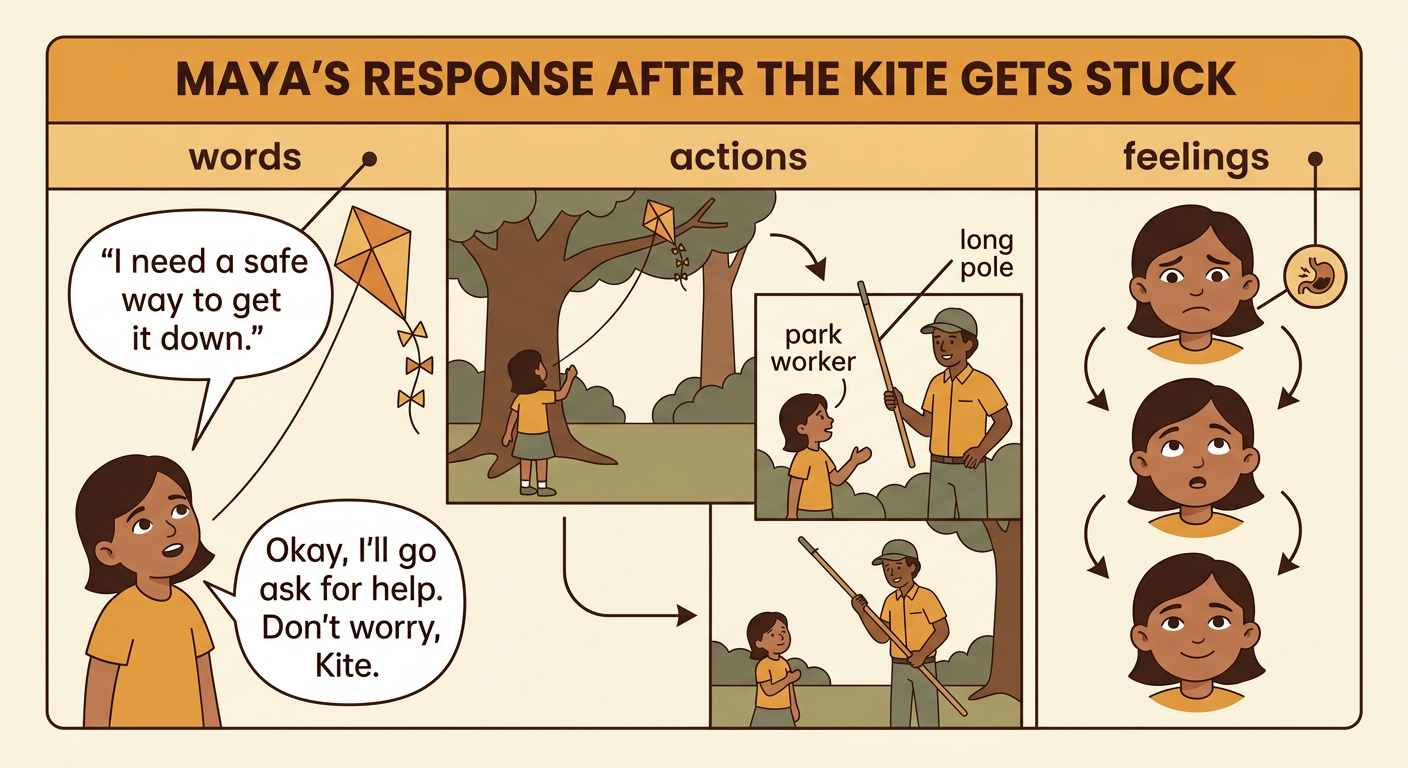
A character responds to a challenge through words, actions, and feelings. Words are what the character says. Actions are what the character does. Feelings are emotions, such as worry, sadness, hope, or relief. After Maya’s kite gets stuck, she says, “I need a safe way to get it down.” Those are her words. She steps away from the tree, looks at the high branch, and asks a nearby park worker for help. Those are her actions. The story says her stomach feels tight at first, but she becomes hopeful when the worker brings a long pole. Those details show her feelings. Readers may also infer, or figure out, a feeling from clues. Maya does not climb the tree or give up. Her careful actions suggest that she is concerned but calm enough to make a safe plan.
Explain the Character’s Response
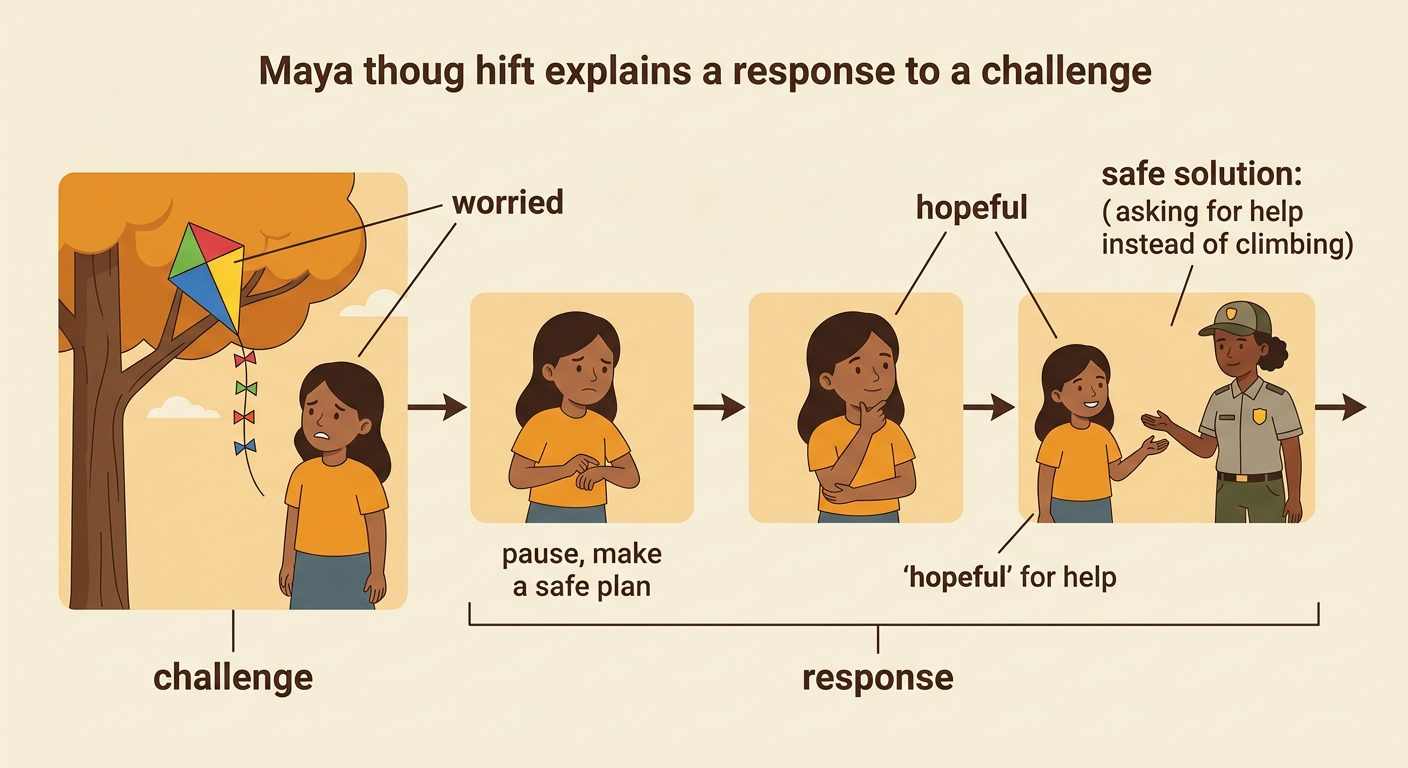
To explain a character’s response, connect the challenge to what the character does, says, and feels. Begin by naming the challenge. Then describe the response in the order it happens. You can use this sentence frame: “When ___ happened, the character responded by ___.” For example: “When Maya’s kite became stuck in the tree, she responded by staying calm, thinking about safety, and asking a park worker for help.” You can add, “At first she felt worried, but then she felt hopeful.” This explanation shows more than one action and tells how Maya’s feelings changed. It also shows how her response fits her traits. Because Maya is patient and careful, she studies the problem instead of climbing the tree. A strong explanation makes the connection between the challenge and the character’s choices clear.
Support the Answer with Story Details
Story details are facts and clues from the text that support your answer. A strong answer tells what the character did and gives specific evidence from the story. Do not write only, “Maya handled the problem well.” Explain how you know. You might say, “Maya responded carefully when her kite got stuck. She said that she needed a safe way to get it down. Then she stepped away from the tree and asked a park worker for help. These details show that she did not panic or take an unsafe risk.” The quoted words and described actions are evidence. Feelings can also support an answer. Maya’s tight stomach shows worry, while her hopeful feeling shows that the help changed her response. Before finishing, check that every detail directly relates to the major challenge and supports your explanation.
