How Characters Shape a Story
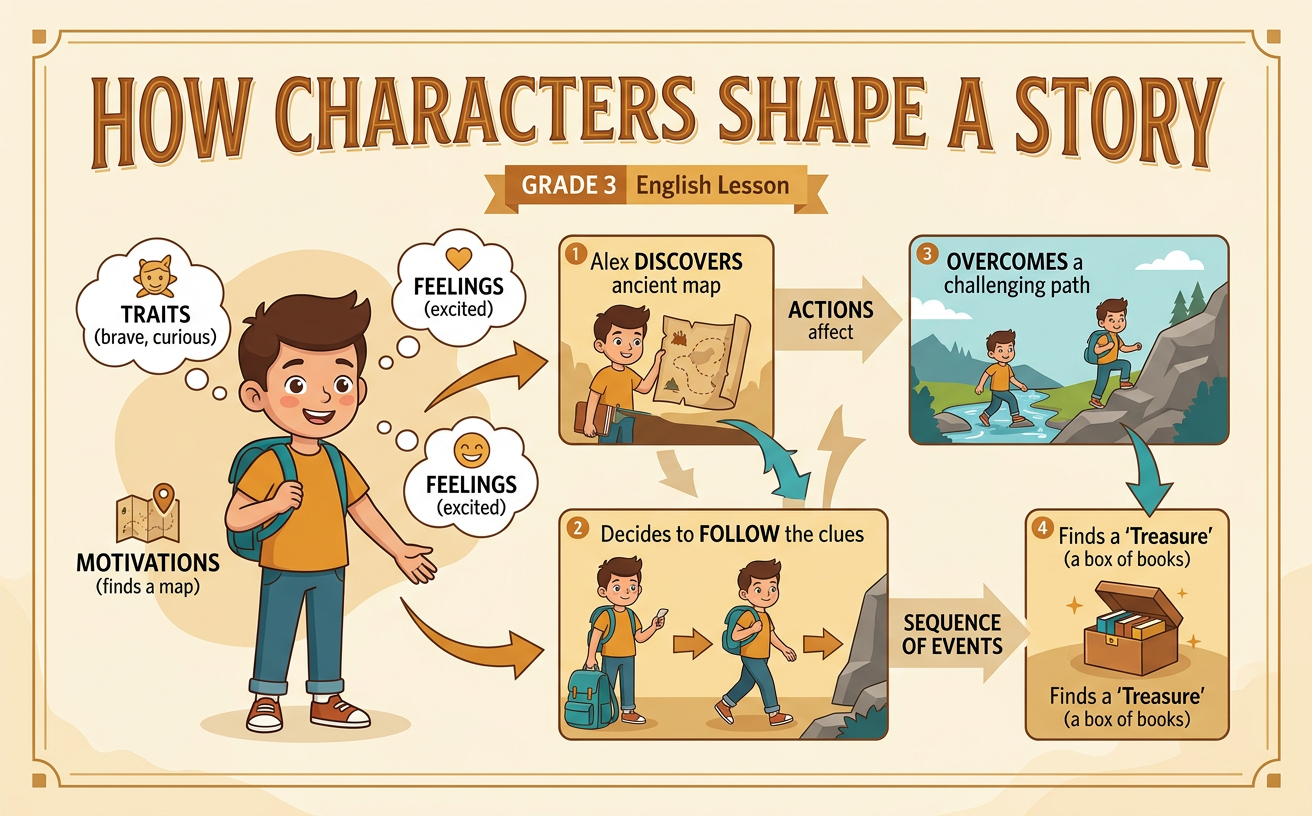
Students identify a character’s traits, motivations, and feelings and explain how the character’s actions affect the sequence of events.
Illustrations are auto-generated and may be placeholders. They can be refreshed to match the narration.
Meet the Main Character
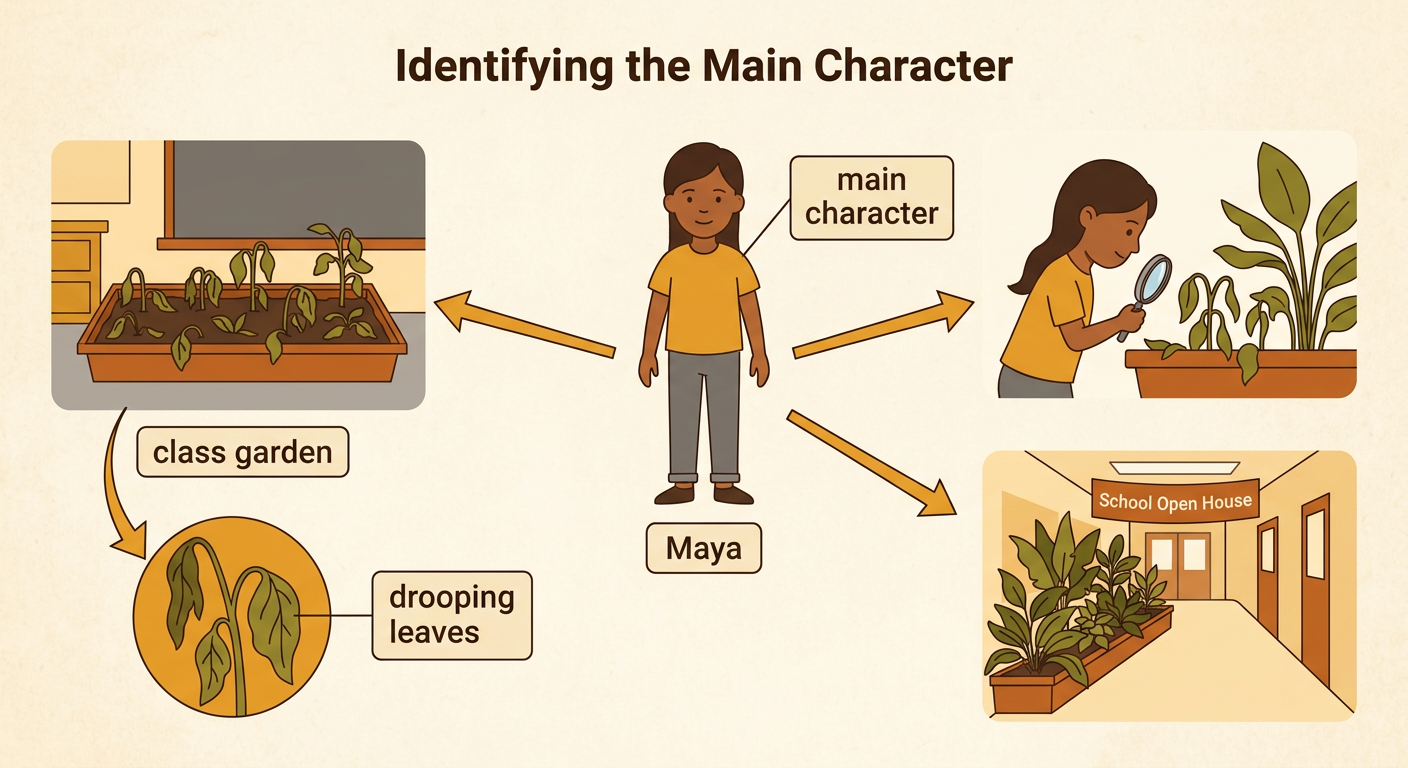
The main character is the person or animal at the center of a story. This character faces an important problem, makes choices, and takes actions that move the story forward. To identify the main character, ask: Who is the story mostly about? Who faces the main problem? In a story about a class garden, Maya is the main character. She has promised to care for the plants before the school open house. One morning, she discovers that the leaves are drooping. The story follows Maya as she investigates the problem and tries to save the garden. Other characters, such as her teacher and classmates, may help, but Maya’s choices guide the main events. Paying close attention to the main character helps readers understand why the story unfolds as it does.
Identify Traits and Feelings
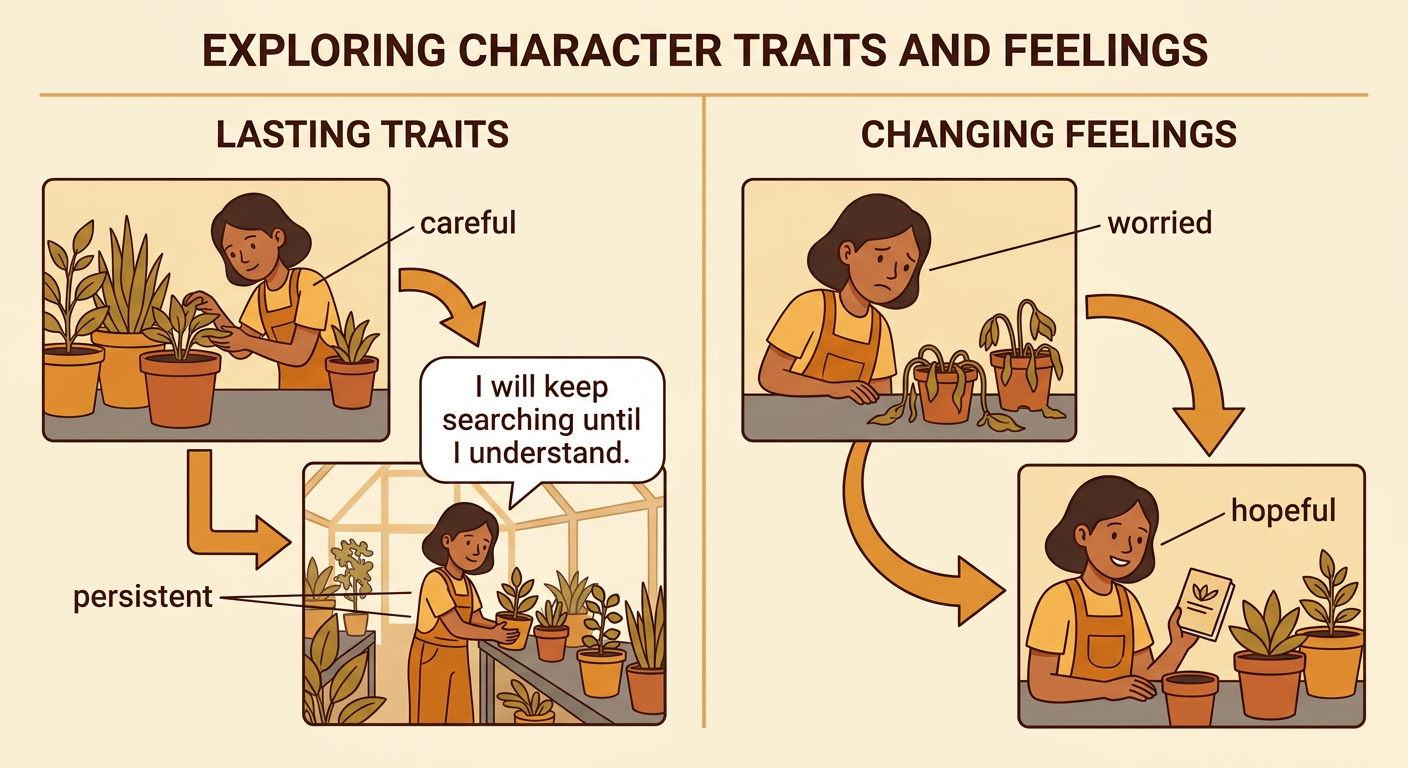
A trait describes what a character is usually like, while a feeling describes an emotion at a particular moment. Readers learn about traits and feelings from a character’s words, thoughts, and actions. In the garden story, Maya checks every pot instead of giving up. This action shows that she is careful and persistent. Those are traits because they describe how she tends to behave. When Maya first sees the drooping leaves, she feels worried. Later, after finding the problem, she feels hopeful. Worried and hopeful are feelings because they can change as events happen. Do not choose a trait or feeling only because it sounds possible. Look for clues in the story. If Maya says, “I will keep searching until I understand,” her words support the trait persistent.
Discover the Character’s Motivation
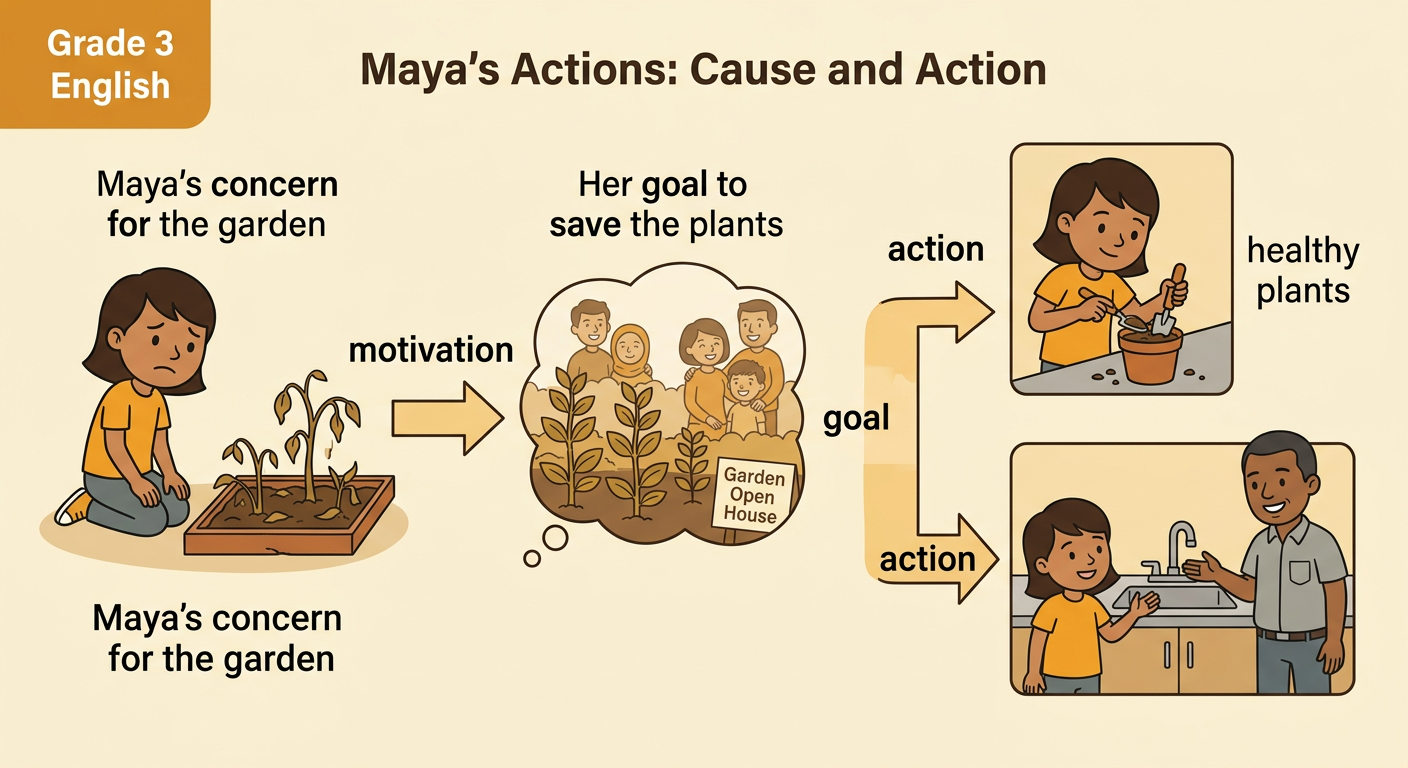
A motivation is the reason a character wants or does something. It answers the question, “Why did the character act that way?” A motivation may come from a need, a goal, a belief, or concern for someone else. Maya examines the soil and water because she wants to save the class garden before families arrive for the open house. Her goal motivates her to keep working even when the answer is not obvious. A reader can connect motivation and action with the word because: Maya tests the soil because she wants the plants to become healthy. Feelings can also support motivation. Maya feels responsible for the garden, so she asks the custodian whether the classroom faucet is working. Understanding her motivation makes her actions sensible and helps readers predict what she might do next.
Connect Actions to Events
A story’s sequence of events is the order in which things happen. A character’s action can cause the next event, creating a chain of cause and effect. First, Maya notices the drooping plants. She chooses to test the soil and discovers that it is dry. Next, she checks the watering can and finds it empty. Then she asks the custodian for help and learns that the classroom faucet is broken. Because Maya reports the problem, the faucet is repaired. She waters the plants, and they begin to recover before the open house. If Maya had ignored the leaves, the investigation and repair might not have happened. When explaining the sequence, use words such as first, next, because, and as a result. These words show how Maya’s actions connect one event to another.

Explain with Text Evidence
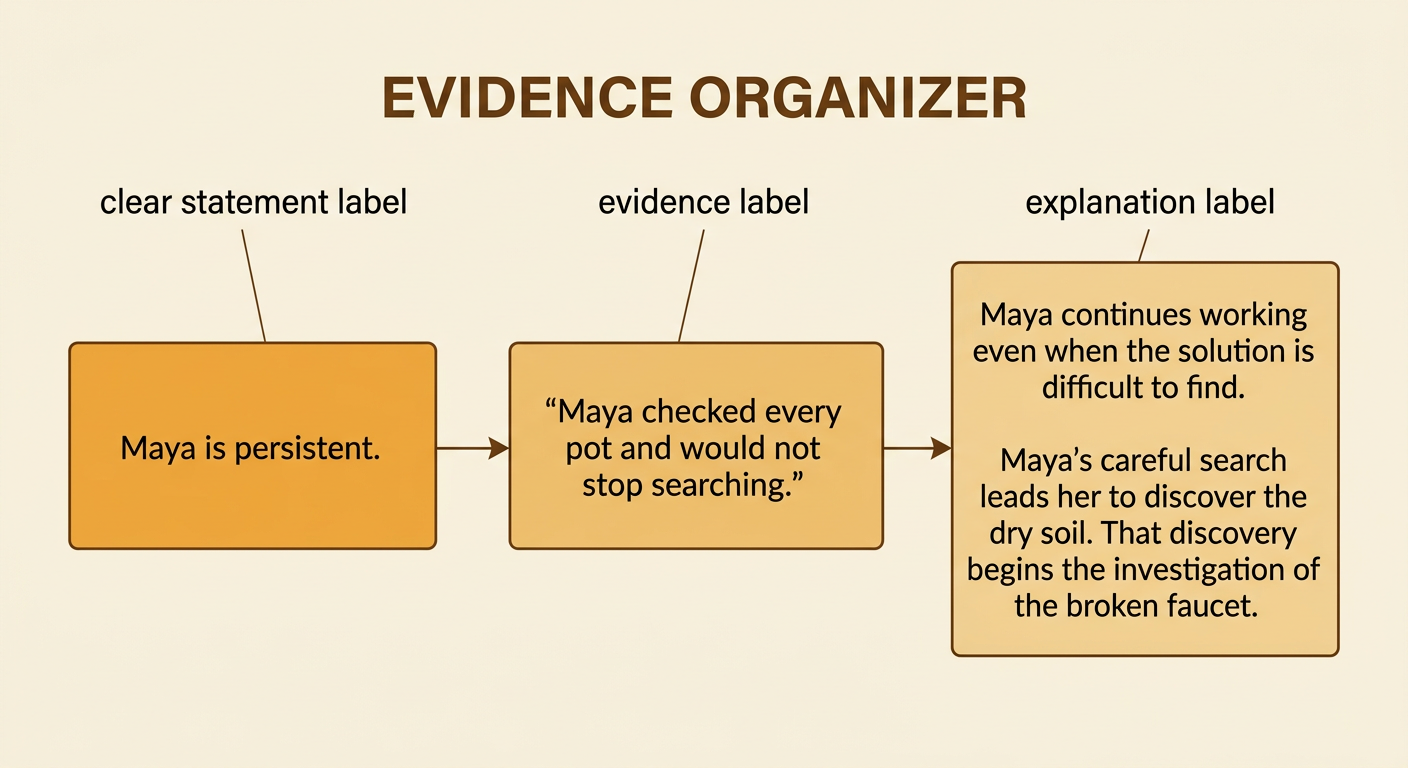
Text evidence is a detail from the story that supports an idea. To explain a character, first make a clear statement, then give evidence, and finally tell how the evidence proves the statement. For example: Maya is persistent. The story says, “Maya checked every pot and would not stop searching.” This evidence shows persistence because Maya continues working when the solution is difficult to find. You can also explain how her action affects events: Maya’s careful search leads her to discover the dry soil, which begins the investigation of the broken faucet. Strong explanations connect the evidence directly to the idea instead of dropping in a detail without explaining it. Useful sentence starters include “The story shows,” “For example,” and “This matters because.” Always choose evidence that truly supports the trait, motivation, feeling, or action you are describing.