How Citizens Can Reduce Community Waste
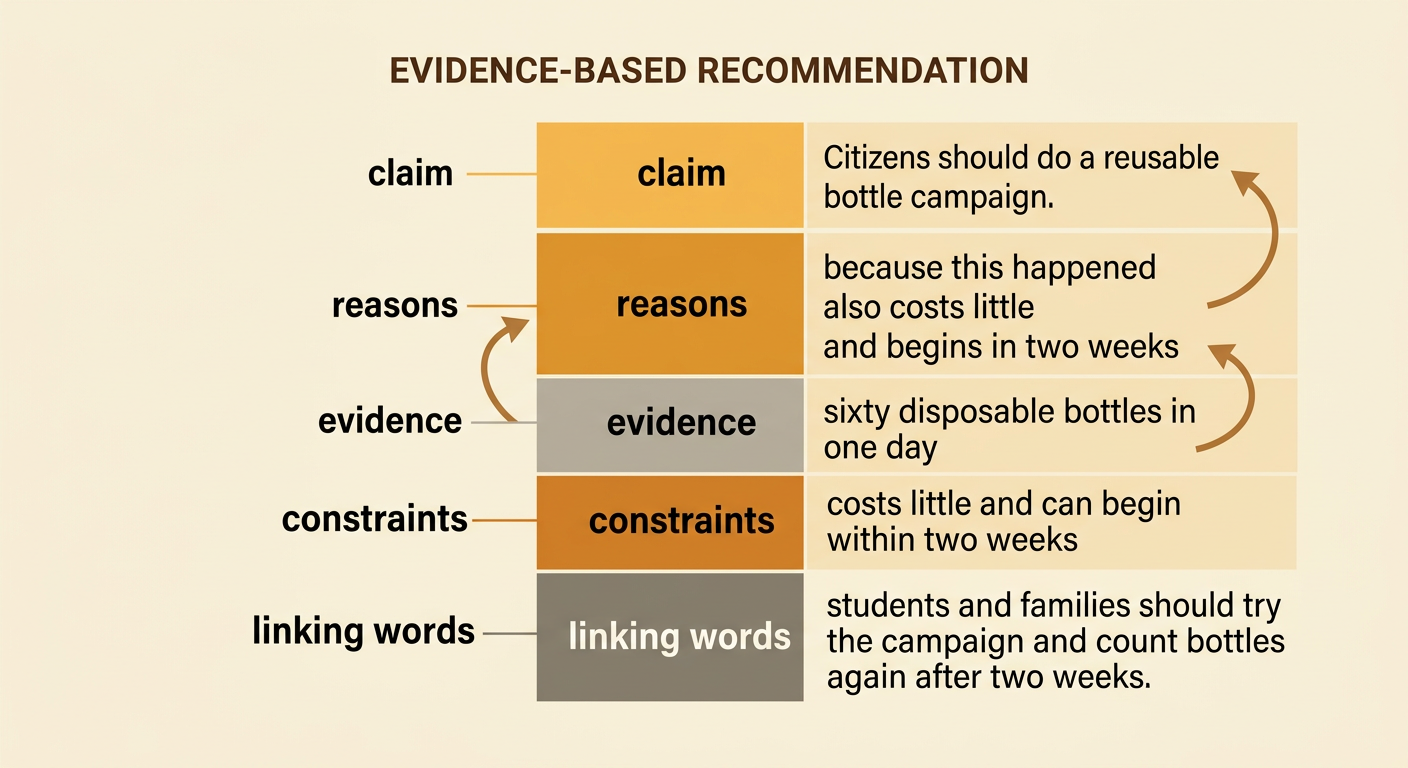
Students examine a community waste problem, compare possible solutions, and recommend an action citizens can take to help.
Illustrations are auto-generated and may be placeholders. They can be refreshed to match the narration.
What Happens to Community Waste?
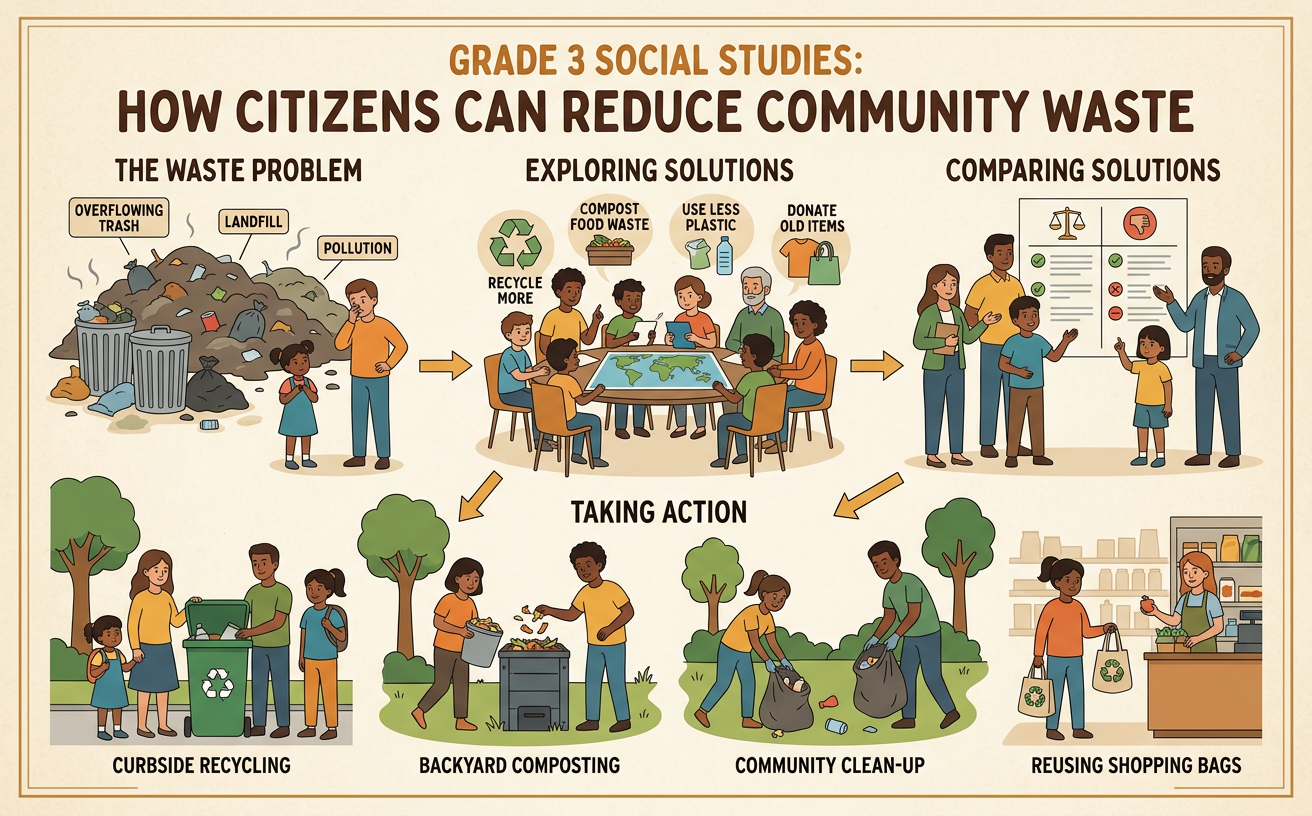
Community waste includes unwanted items from homes, schools, parks, and businesses. A collection truck usually carries trash to a transfer station, landfill, or waste-processing facility. Recyclable materials may go to a sorting facility, and food scraps or yard waste may go to a composting site. Local rules decide what can be recycled or composted. Waste becomes a community problem when it fills trash containers, attracts pests, creates litter, or uses limited landfill space. For example, students might observe that their school cafeteria throws away many single-use bottles and wrappers each day. Before suggesting a solution, citizens should define the problem clearly. They can count bags, sort a small sample safely with adult help, or record which items are commonly discarded. Accurate information helps the community focus on the most important source of waste.
Citizens' Rights and Responsibilities
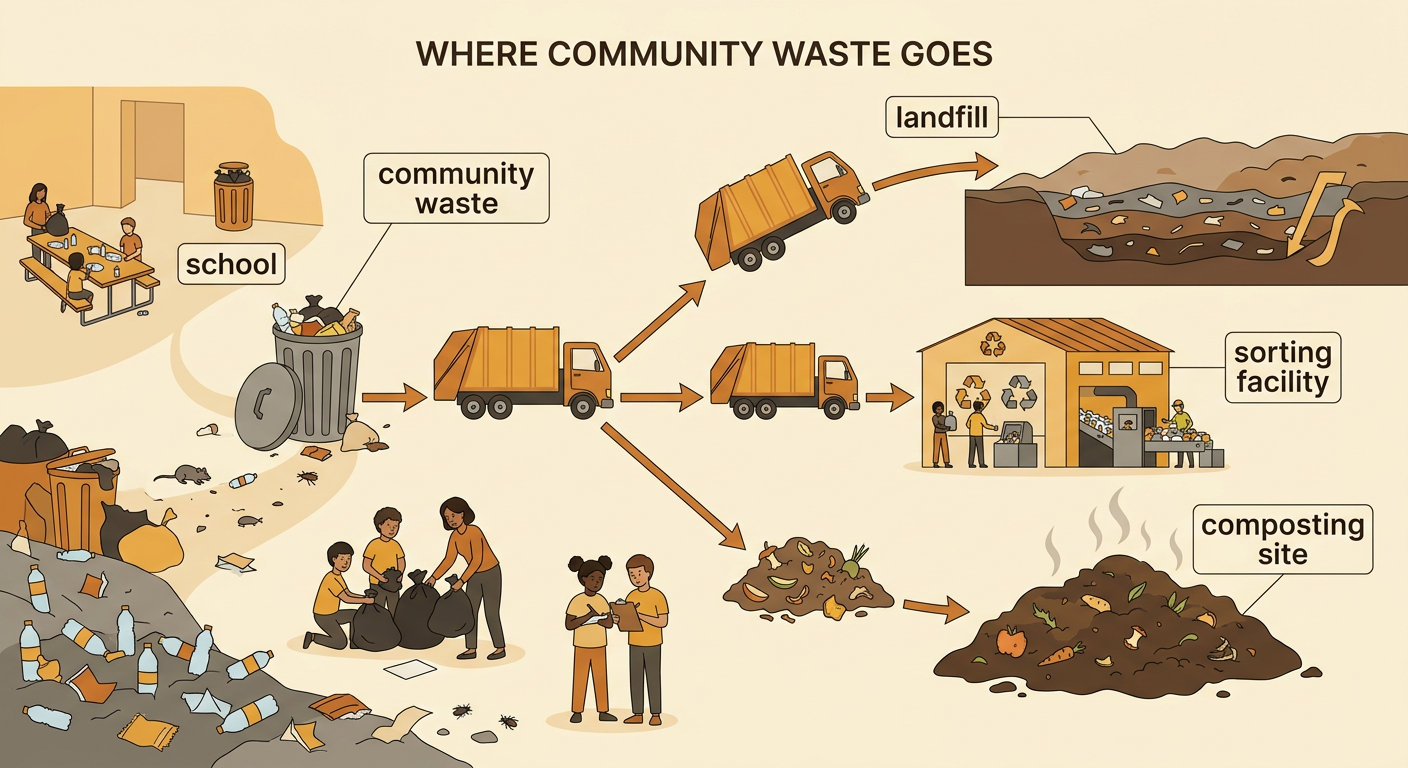
In a democracy, citizens have the right to share ideas about community problems. They may speak at public meetings, write to local leaders, join community groups, or sign petitions. Children can participate by speaking respectfully, gathering information, and working with trusted adults. Rights come with responsibilities. Responsible citizens listen to other viewpoints, follow safety rules, check facts, care for shared places, and help carry out fair decisions. For example, a third-grade class might notice overflowing trash cans at a park. Students could count the cans, photograph the problem with permission, and write to the parks department. They should also listen if park workers explain limits such as cost or available staff. Democracy works best when people do more than complain. Citizens participate responsibly by proposing realistic ideas and helping with solutions, such as joining a supervised cleanup or creating signs that explain proper sorting.
Comparing Waste-Reduction Solutions
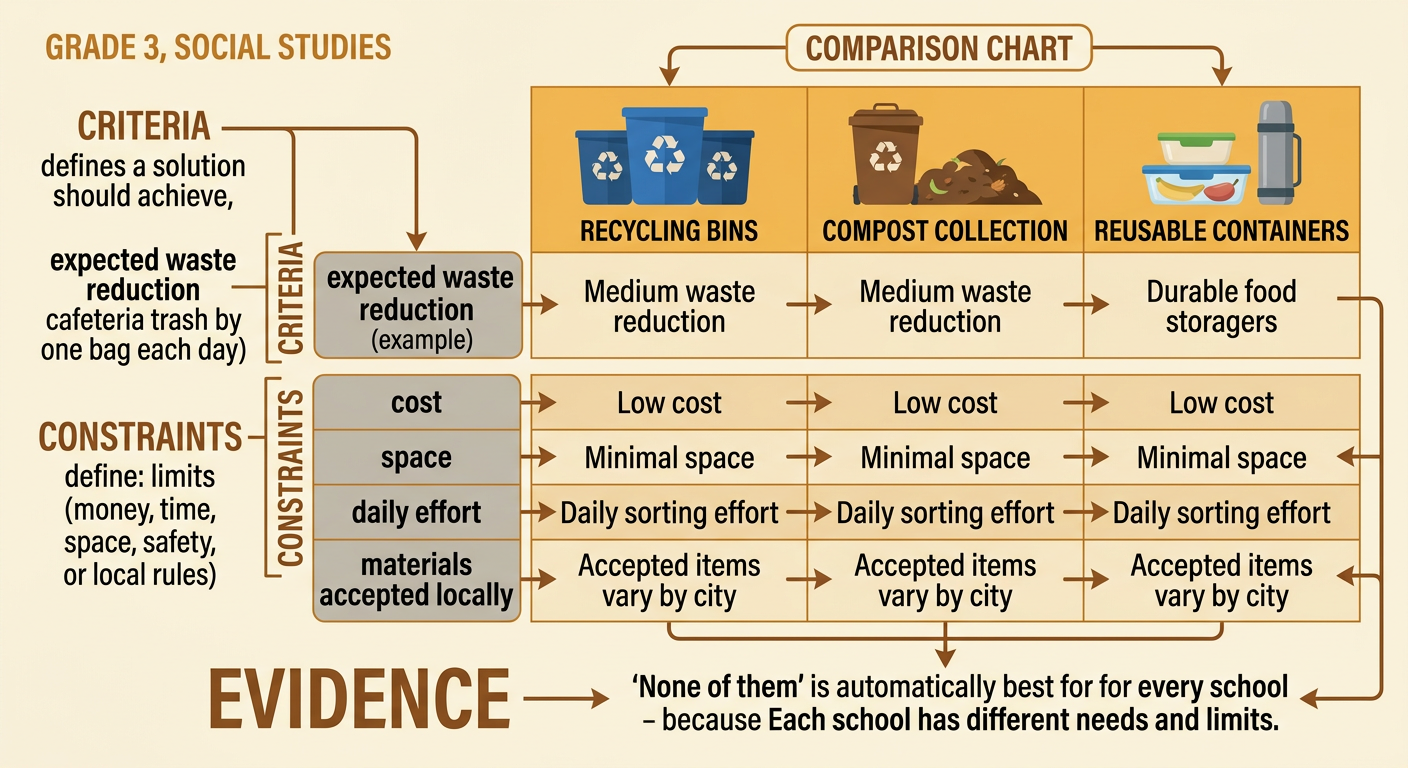
Communities often have several possible ways to reduce waste. Citizens should compare solutions instead of choosing the first idea they hear. First, they identify criteria, which are the results a solution should achieve. A criterion might be reducing cafeteria trash by one bag each day. They also identify constraints, which are limits such as money, time, space, safety, and local recycling rules. Suppose a school compares three ideas: add labeled recycling bins, start a compost collection, or encourage reusable lunch containers. Recycling bins may be easy to use, but only locally accepted materials belong in them. Composting can reduce food waste, but it requires collection space and regular pickup. Reusable containers can prevent waste, but families must remember to bring them. A comparison chart can show how well each option meets the criteria and constraints. Evidence makes the comparison fair and useful.
Choosing a Practical Community Action
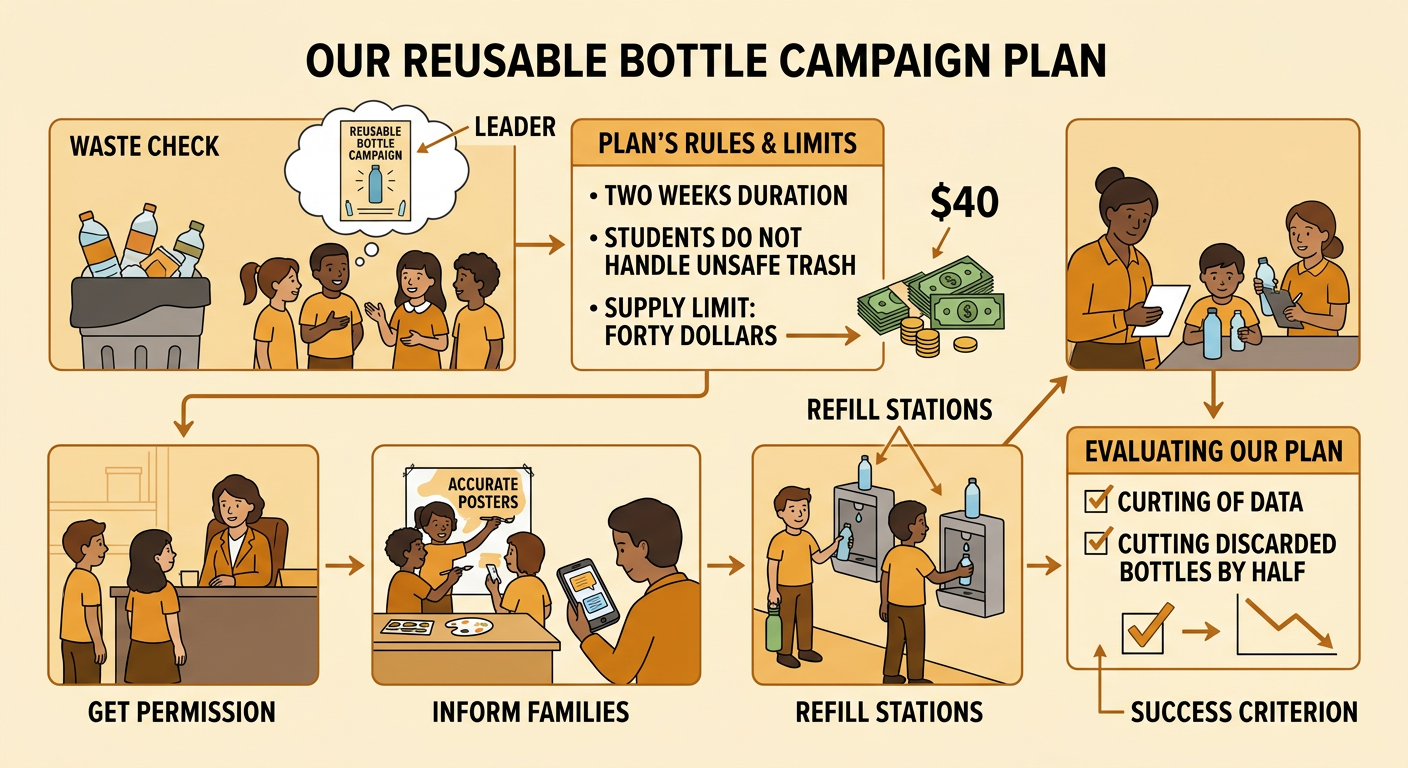
A practical community action is safe, affordable, possible to complete, and likely to improve the problem. After comparing ideas, citizens can choose one action and create a plan. Imagine that a school waste check finds many disposable drink bottles in cafeteria trash. Students might recommend a two-week “Bring a Reusable Bottle” campaign. Their success criterion could be reducing discarded drink bottles by half. Their constraints might include a $40 supply limit, two weeks of preparation, and no students handling unsafe trash. The plan could include asking the principal for permission, making accurate posters, sending families a message, and counting visible bottles with adult supervision. Students could also identify refill stations and remind everyone not to share bottles. If some families do not have reusable bottles, donated clean bottles could be offered. A small, organized action can be more effective than a large plan that the community cannot maintain.
Writing an Evidence-Based Recommendation
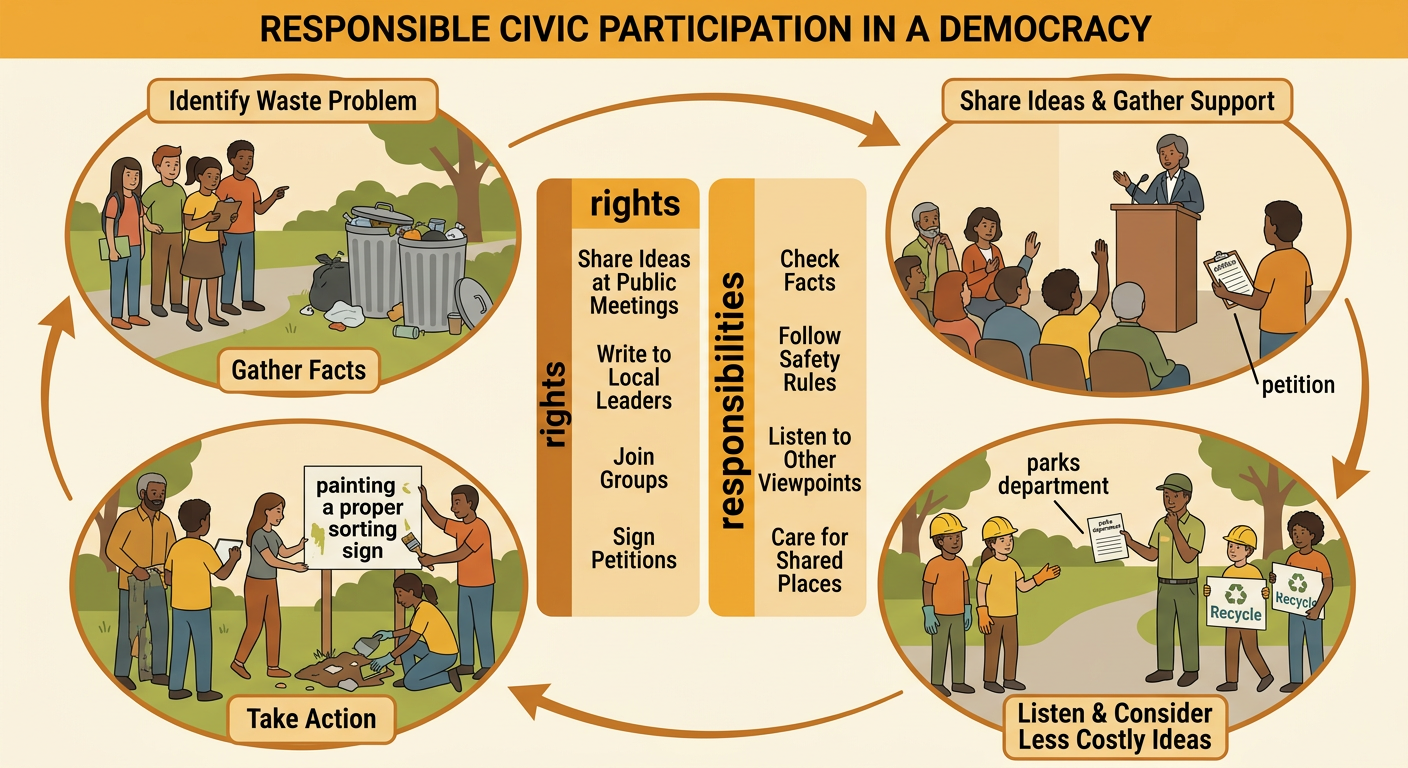
An evidence-based recommendation is an opinion supported by facts and reasons. Begin with a clear claim that states what citizens should do. Next, give reasons and connect each reason to evidence. Use linking words such as because, also, and therefore. Include relevant constraints to show that the recommendation is realistic. For example, a student might write, “Our school should hold a reusable-bottle campaign because our waste check found 60 disposable bottles in cafeteria trash on one day. The campaign costs little, can begin within two weeks, and may prevent many bottles from becoming waste. Although adding recycling bins could help, preventing waste means fewer bottles need to be processed. Therefore, students and families should try the campaign and count bottles again after two weeks.” End by restating the recommendation or asking citizens to act. Strong opinion writing uses accurate evidence, explains the reasoning, and remains respectful of people who prefer another solution.