How Climate Shapes a Biome
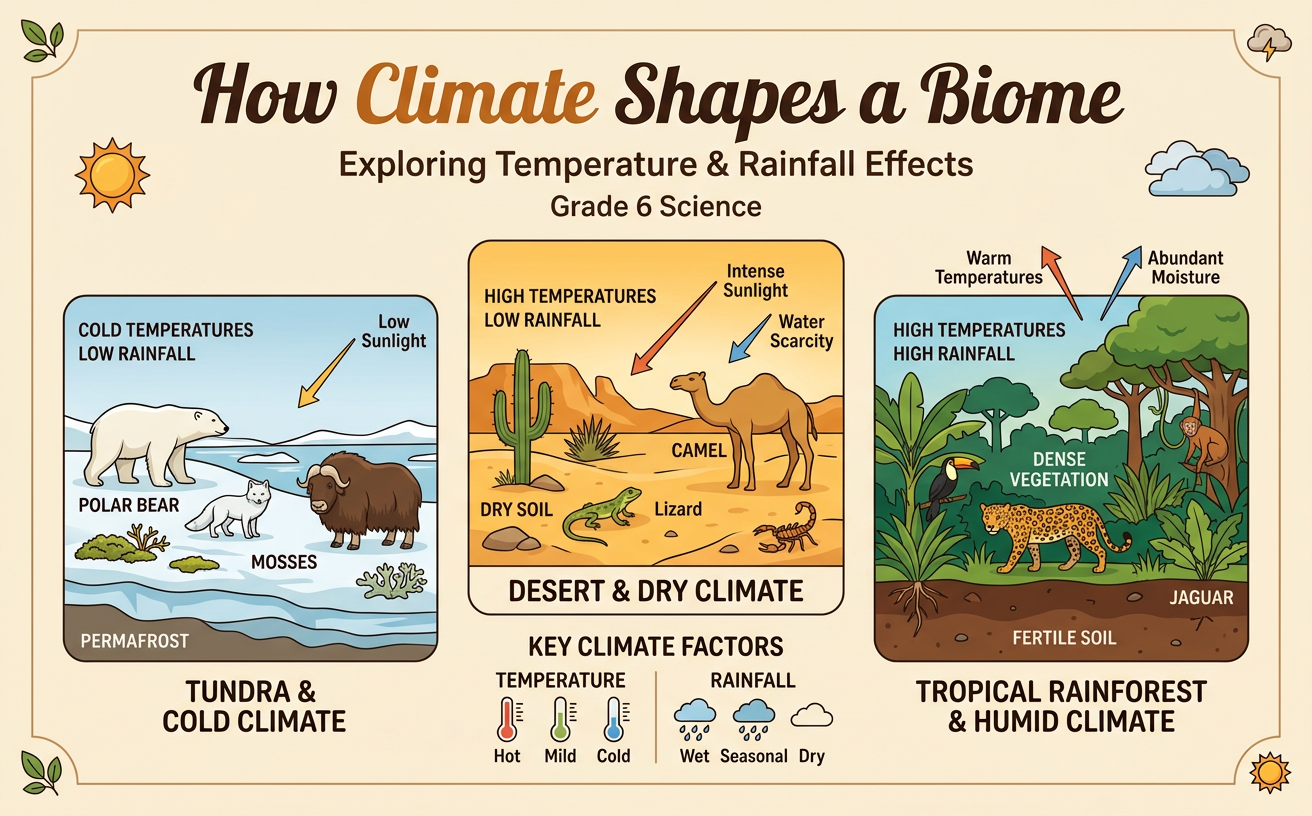
Students examine how long-term patterns of temperature and rainfall shape a biome’s soil, vegetation, and animal life.
Illustrations are auto-generated and may be placeholders. They can be refreshed to match the narration.
What Makes an Area a Biome?
A biome is a large region with a particular climate and typical communities of plants and animals. Climate means the usual weather conditions measured over many years, not the weather on one day. Places in the same biome often have similar temperature, rainfall, soil, vegetation, and animal life. However, a biome can include several smaller habitats, such as a riverbank, grassland, or rocky area. For example, much of the central United States belongs to the temperate grassland biome. It has a dry season, a rainy season, grasses, scattered trees, and animals suited to open land. The boundaries between biomes are not always sharp because conditions may change gradually from one region to another.
Temperature and Rainfall Patterns
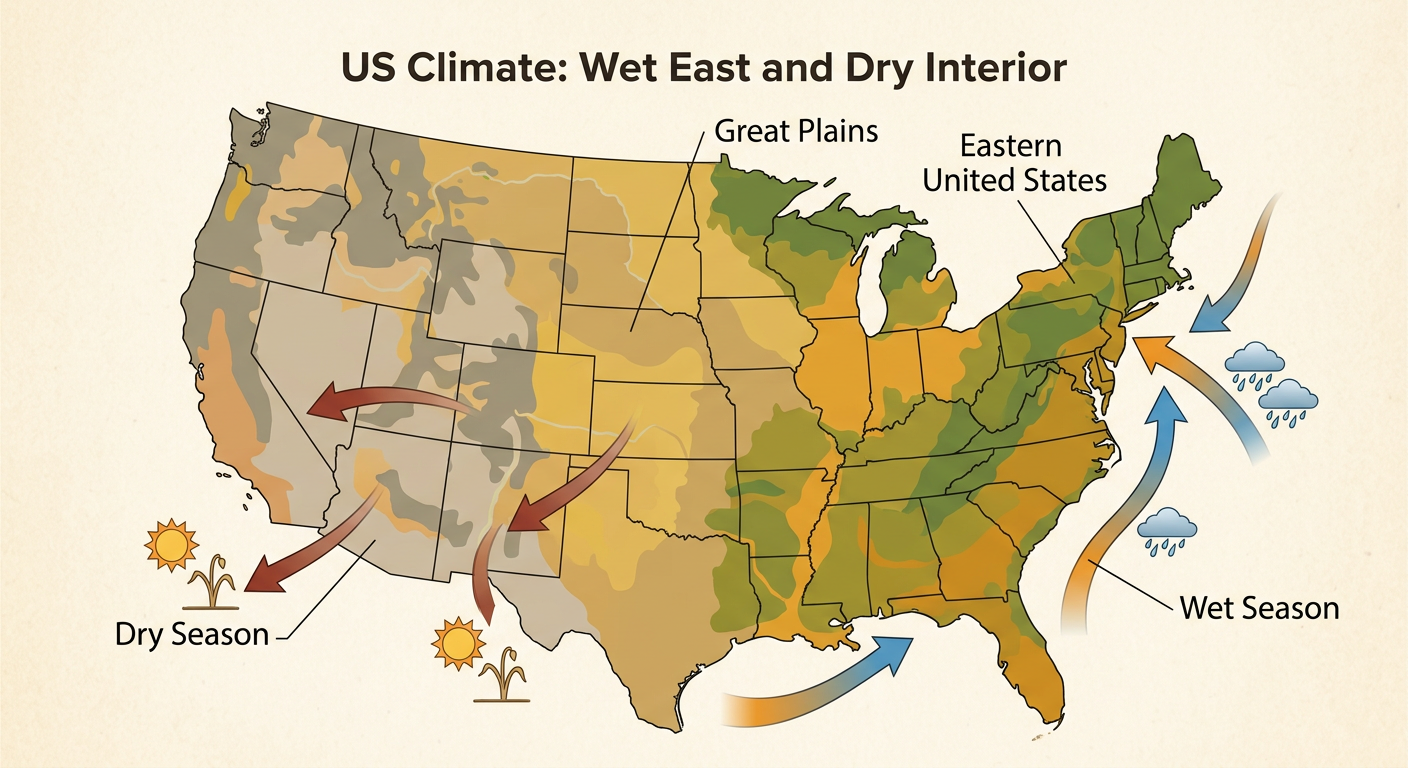
Temperature and precipitation are two major parts of climate. Scientists study their patterns across many years, including average monthly temperature, total precipitation, and the timing of wet and dry seasons. These patterns control how much water and warmth are available to living things. The eastern United States generally receives more precipitation than the western Great Plains, so forests are more common in the east while grasslands and drier vegetation occur farther west. Precipitation timing also matters. In a prairie grassland, grasses may grow rapidly during the wet season and become dry during the long dry season. A single storm does not define a biome. The repeated pattern of seasonal temperatures, seasonal rain, and dry months helps determine which plants and animals can survive there.
Soil, Water, and Sunlight
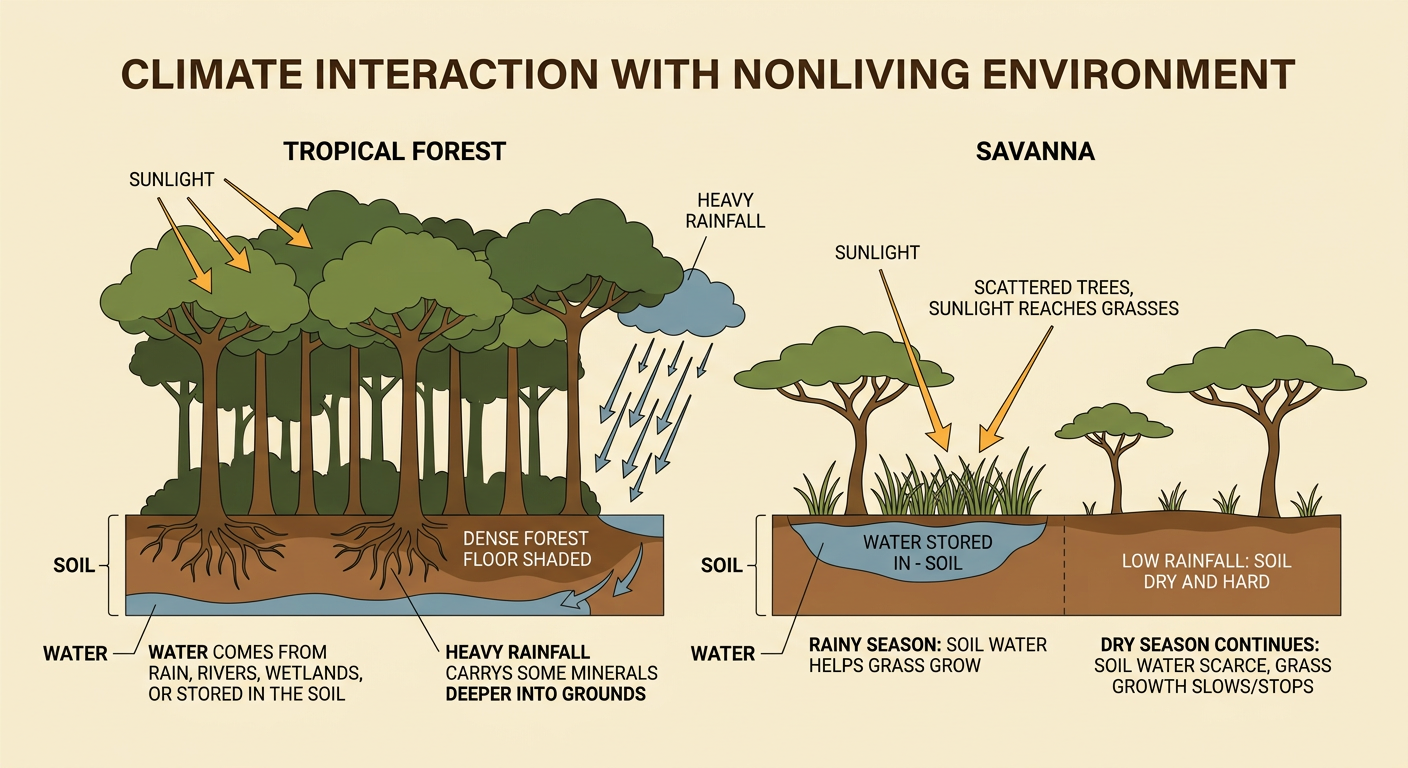
Climate works with other nonliving factors to shape a biome. Soil provides plants with minerals, water, and support for their roots. Heavy rainfall can wash some minerals deeper into the ground, while low rainfall can leave soil dry and hard. Water may come from rain, rivers, wetlands, or water stored in soil. Sunlight supplies the energy plants use to make food. In a dense tropical forest, tall trees capture much of the sunlight, so the forest floor is shaded. In a savanna, widely spaced trees allow sunlight to reach grasses. For example, grasses may grow well in sunny savanna soil during the rainy season but stop growing or dry out when soil water becomes scarce during the dry season.
How Plants Fit Biome Conditions
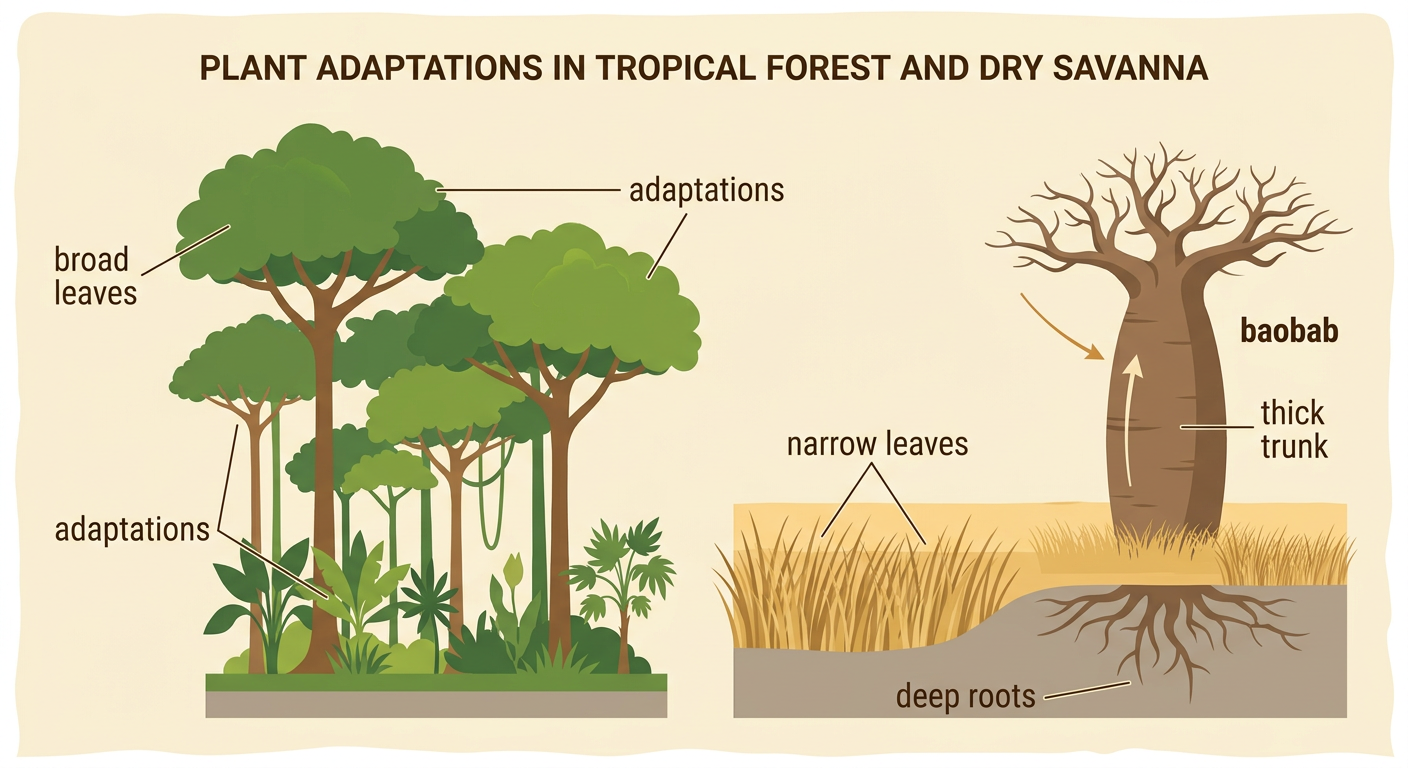
Plants have features called adaptations that help them survive the conditions of their biome. In a tropical forest, broad leaves can capture sunlight, and some trees grow tall to reach light above other plants. In a dry savanna, plants must survive months with little rain. Many grasses have narrow leaves that reduce water loss, and their growing points are close to or below the ground, allowing them to regrow after grazing or fire. Some savanna trees have deep roots that reach water below the surface. The baobab provides a clear example: its thick trunk stores water, and it can shed its leaves during the dry season to reduce water loss. These features make the plant better suited to seasonal rainfall and heat.
How Animals Survive in a Biome
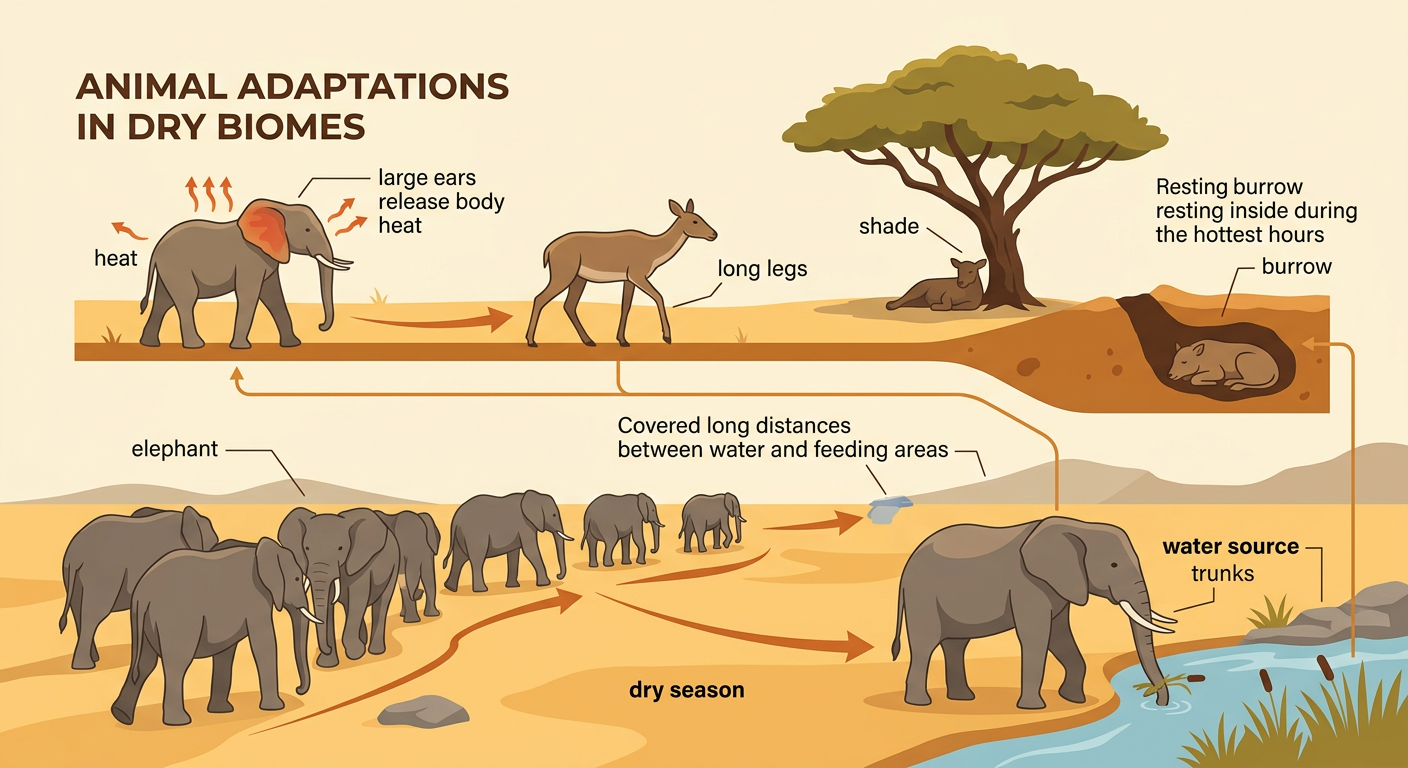
Animals also have adaptations that match a biome’s climate, water supply, vegetation, and food sources. Some adaptations are body features, while others are behaviors. In a hot savanna, large ears can help an animal release body heat, and long legs can support movement across open ground. Some animals rest in shade or burrows during the hottest part of the day. Others move to new areas when water and fresh grass become scarce. For example, elephants may travel long distances between feeding areas and water sources during the dry season. Their trunks help them drink and gather many kinds of plant food. Animals depend on plants directly or indirectly, so changes in rainfall that affect vegetation also affect shelter, feeding, breeding, and survival.
Connecting Climate to Biome Life
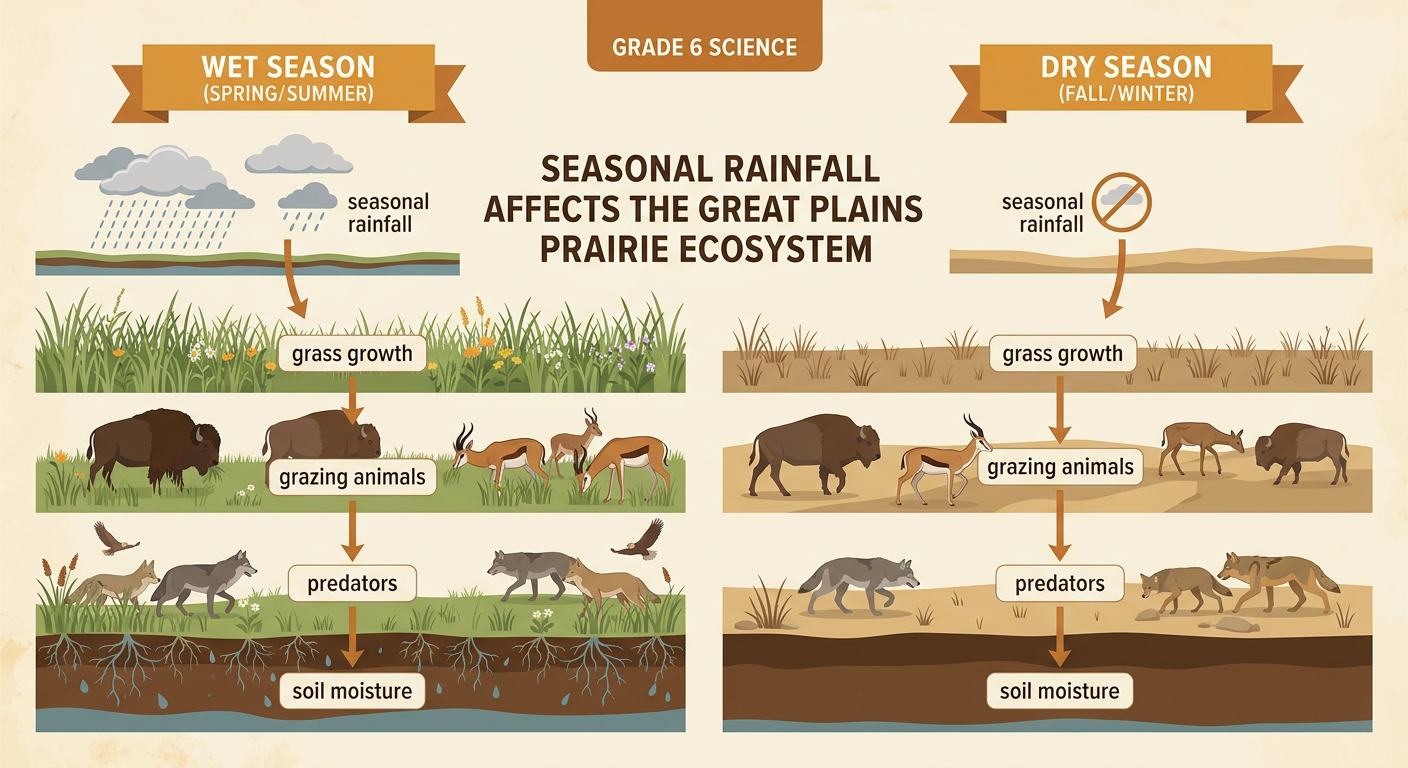
Climate shapes a chain of connected conditions in a biome. Long-term temperature and rainfall influence soil moisture and the supply of surface water. These conditions affect which plants can grow, and the vegetation then provides food and shelter for animals. For example, seasonal rainfall on the Great Plains prairie supports rapid grass growth during the wet season. Grazing animals feed on the grass, while predators depend on those grazing animals. During a severe or unusually long dry period, soil moisture falls, grasses become scarce, and animals may move, compete for water, or die. Other nonliving factors, including soil type, sunlight, wind, and fire, also influence the community. To explain biome life, trace the links from climate to resources, plants, and animals rather than studying each part alone.