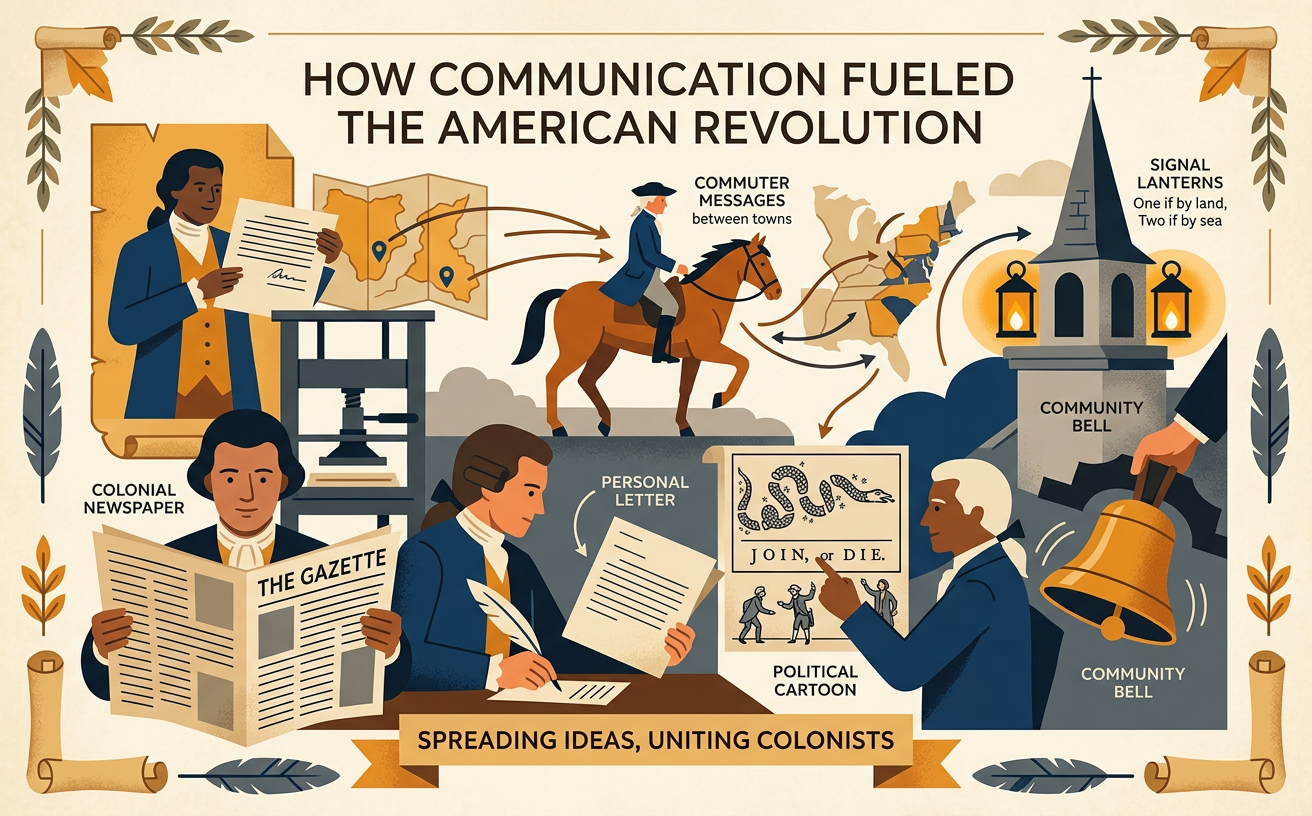
How Communication Fueled the American Revolution
Students examine how newspapers, letters, political cartoons, and signal lanterns spread information and helped unite colonists during the American Revolution.
Illustrations are auto-generated and may be placeholders. They can be refreshed to match the narration.
Communication in the Colonies
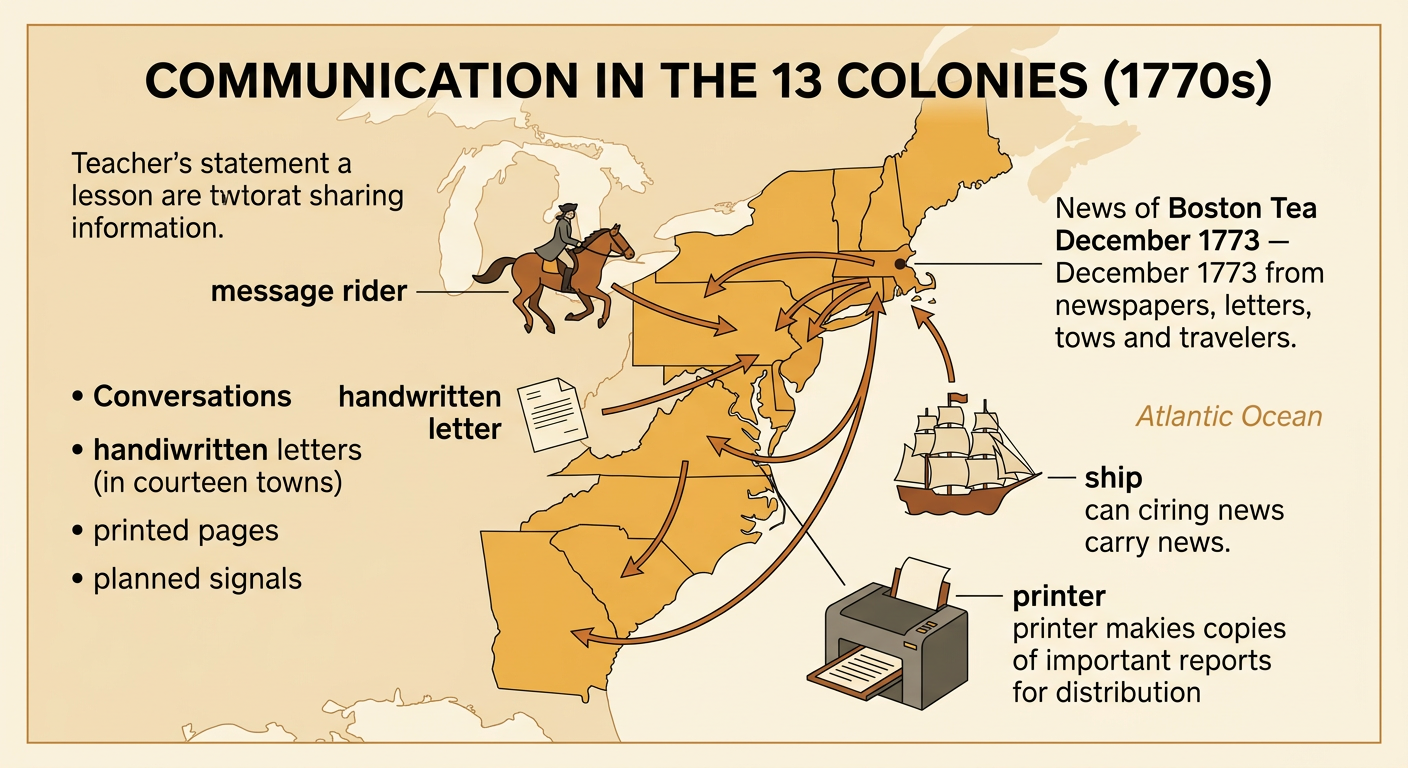
In the 1770s, the thirteen colonies had no telephones, radios, or internet. Information traveled through spoken conversations, handwritten letters, printed materials, and planned signals. Riders carried messages between towns, while ships transported news across the Atlantic Ocean. Printers copied important reports so that many people could read and discuss them. Messages often moved slowly, and people sometimes received incomplete or incorrect information. Even so, communication connected colonists who lived far apart. For example, news of the Boston Tea Party in December 1773 spread through newspapers, letters, and travelers. Colonists in other places learned that protesters had dumped British tea into Boston Harbor. Some supported the protest, while others opposed it. By sharing news and opinions, colonists began thinking about how events in one colony could affect all the colonies.
Newspapers and Political Cartoons
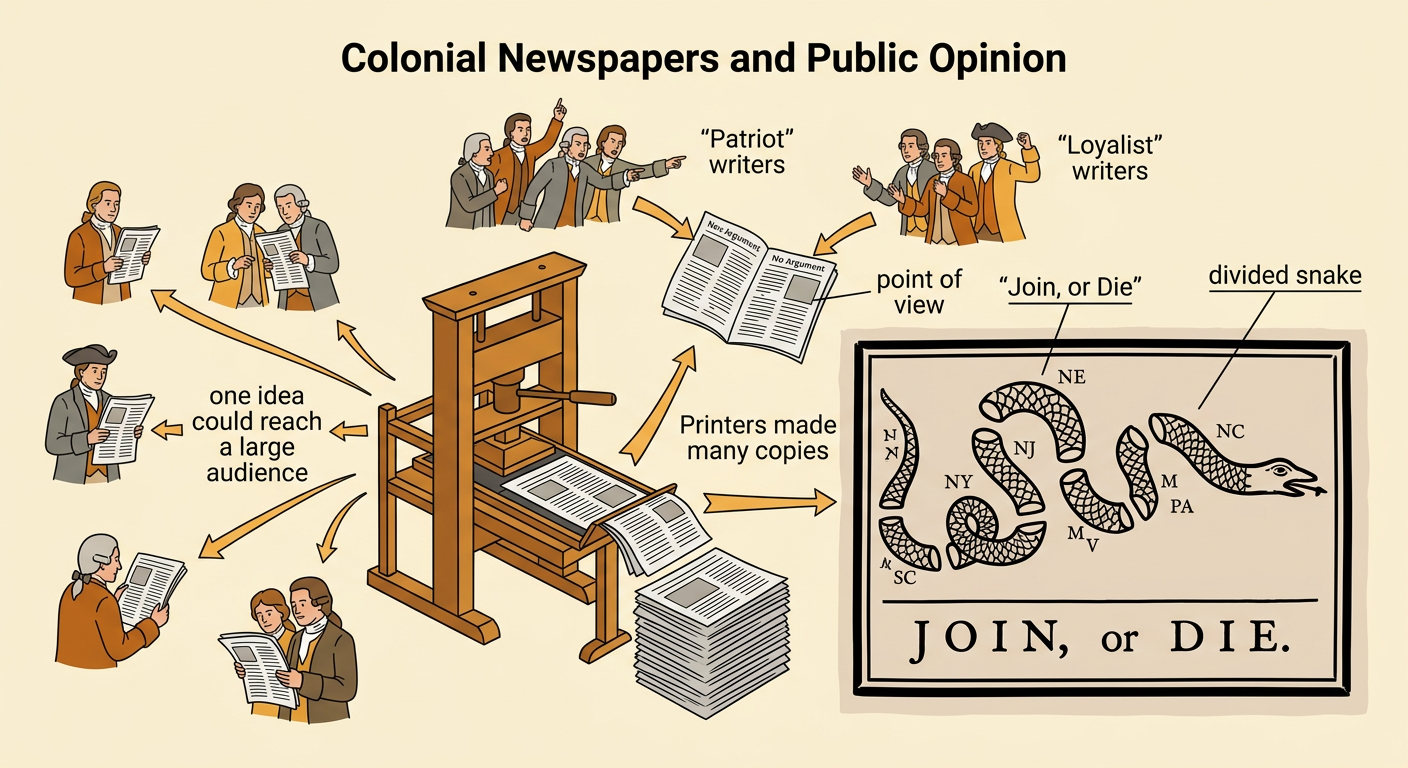
Colonial newspapers reported events and printed arguments about British laws, taxes, and military actions. Printers could produce many copies of the same message, allowing ideas to reach large audiences. Patriot writers used newspapers to argue that British policies threatened colonial rights. Loyalist writers defended Britain and criticized resistance. Political cartoons also communicated ideas through memorable pictures and symbols. Benjamin Franklin’s “Join, or Die” image, first published in 1754 for a different colonial conflict, showed a snake divided into sections. During the revolutionary era, the image was reused to support colonial unity. Readers understood the warning: separate colonies were weaker than colonies acting together. Newspapers and cartoons did not simply list facts. They selected details and expressed points of view, so readers needed to consider who created each message and why it was published.
Letters and Committees of Correspondence
Letters allowed colonial leaders to share detailed news, plans, and opinions. Because one letter reached only a few people, communities sometimes copied letters or read them aloud at meetings. In 1772, Boston created a Committee of Correspondence to communicate with other Massachusetts towns about colonial rights and British actions. Other colonies later formed similar committees. These organized networks helped information move more regularly from place to place. For example, after Britain passed the Coercive Acts in 1774 to punish Massachusetts, committees spread news about the laws. Colonists in other regions responded by sending supplies to Boston and supporting a meeting of representatives at the First Continental Congress. The committees did not make every colonist agree, but they created connections among distant communities. A British action in one colony could now produce discussion and organized responses across several colonies.

Lanterns and Other Signals
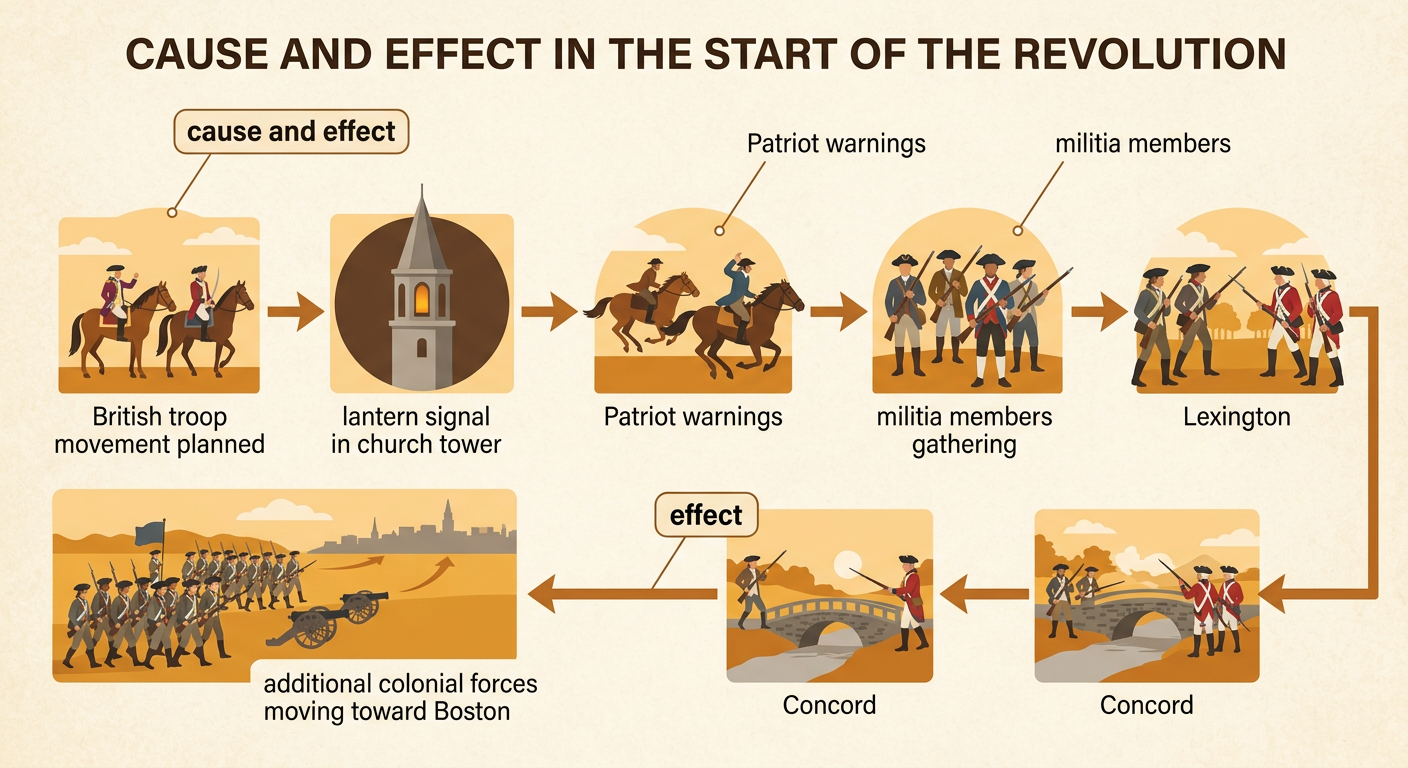
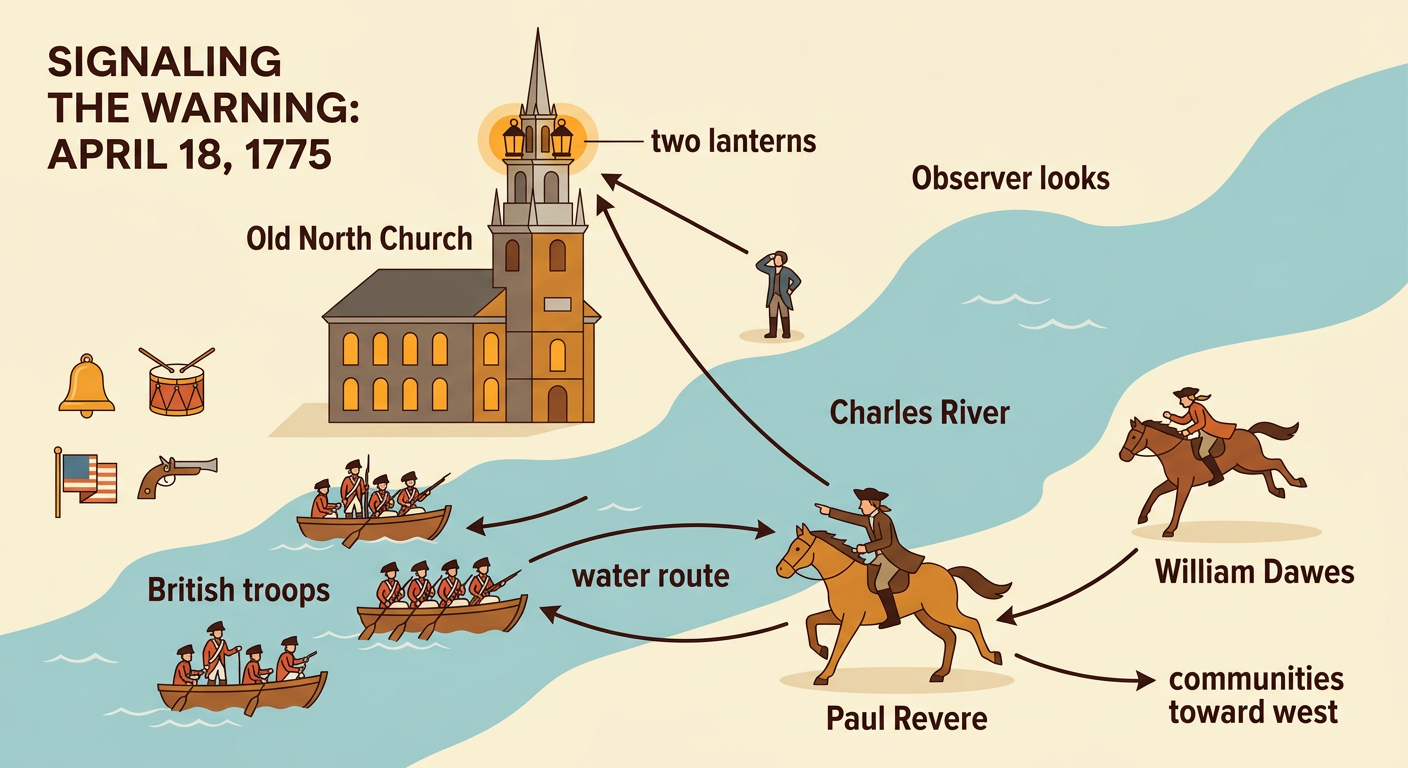
Colonists also used simple patterns to send urgent information quickly. On the night of April 18, 1775, Patriot leaders expected British troops to move from Boston toward Lexington and Concord. A plan called for lanterns to be displayed in the steeple of Boston’s Old North Church: one lantern if the troops traveled by land and two if they traveled by water. Two lanterns appeared, signaling the water route. Riders, including Paul Revere and William Dawes, then carried warnings to communities outside Boston. Lanterns solved one communication problem because a visible pattern could cross the Charles River faster than a person carrying a letter. Other signals, such as bells, drums, flags, and alarm guns, also used recognizable sounds or sights. However, signals could carry only simple messages, and bad weather, distance, or misunderstanding could make them fail.
How Messages Influenced Colonial Action
Communication helped turn separate events into a larger movement. Reports about taxes, protests, punishments, and armed conflict traveled through newspapers, letters, cartoons, riders, and signals. These messages shaped how people understood events and what they chose to do next. For example, the lantern signal and riders’ warnings on April 18, 1775, gave local militia members time to gather before British troops reached Lexington. Fighting began there the next morning and continued at Concord. News of the battles then spread, encouraging more militia members to surround Boston. This sequence shows cause and effect: an expected troop movement caused Patriots to send warnings; the warnings helped militia members prepare; the fighting caused more colonists to join the conflict. Communication did not cause every disagreement or battle by itself. However, it made rapid action, shared arguments, and cooperation across long distances more possible.