How Communities Prepare for Severe Weather
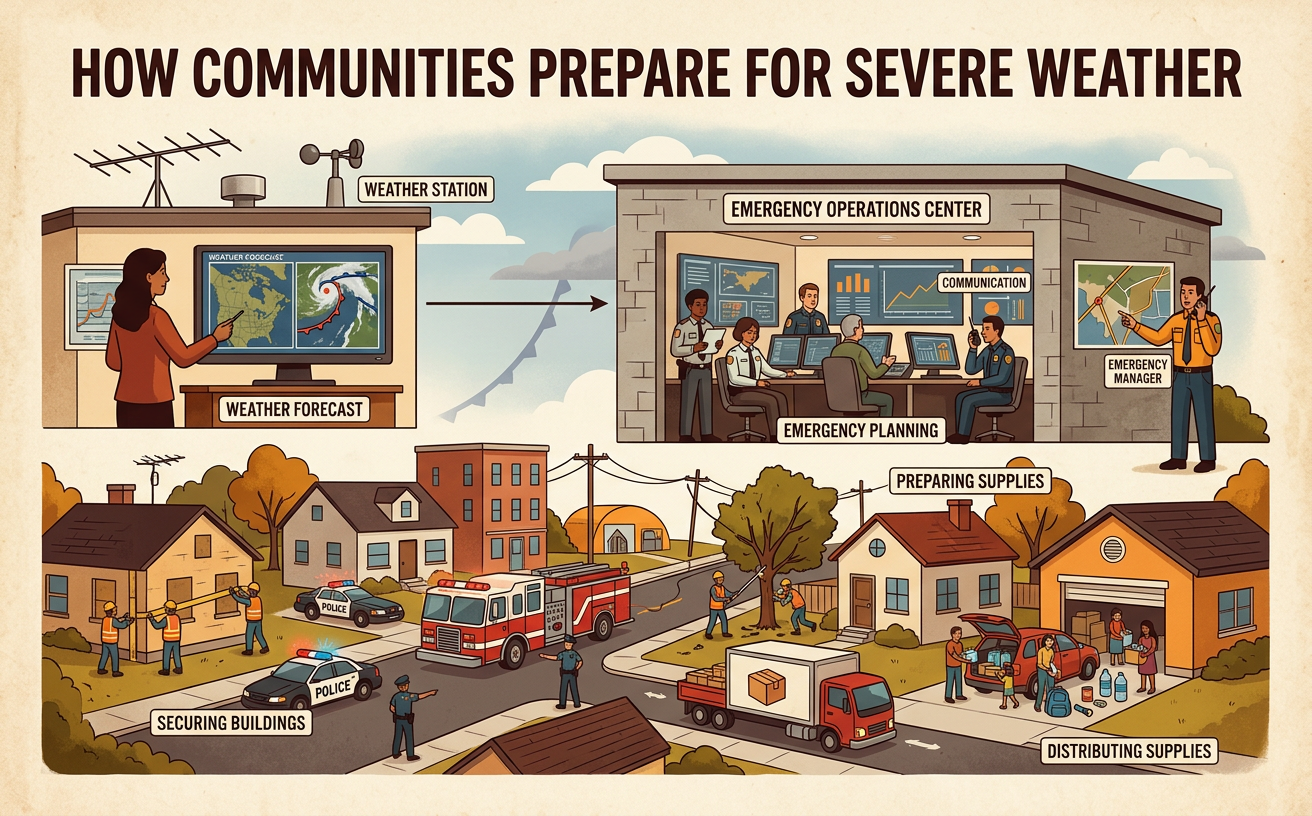
Students explore how weather forecasts help community leaders and emergency workers keep people safe during severe weather.
Illustrations are auto-generated and may be placeholders. They can be refreshed to match the narration.
What Is Severe Weather?
Severe weather is weather that may hurt people, damage buildings, or make travel dangerous. Thunderstorms can bring lightning, heavy rain, strong winds, and sometimes hail. Tornadoes are spinning columns of air that reach from a storm cloud to the ground. Hurricanes are large storms that form over warm ocean water and can cause strong winds, heavy rain, and flooding. Winter storms may bring deep snow, ice, and very cold temperatures. For example, a strong thunderstorm can knock down tree branches and cause streets to flood. Not every rainy or snowy day is severe. Weather experts watch for conditions that could become dangerous. Communities learn about local weather risks so they can plan ways to keep people safe.

Using Weather Forecasts
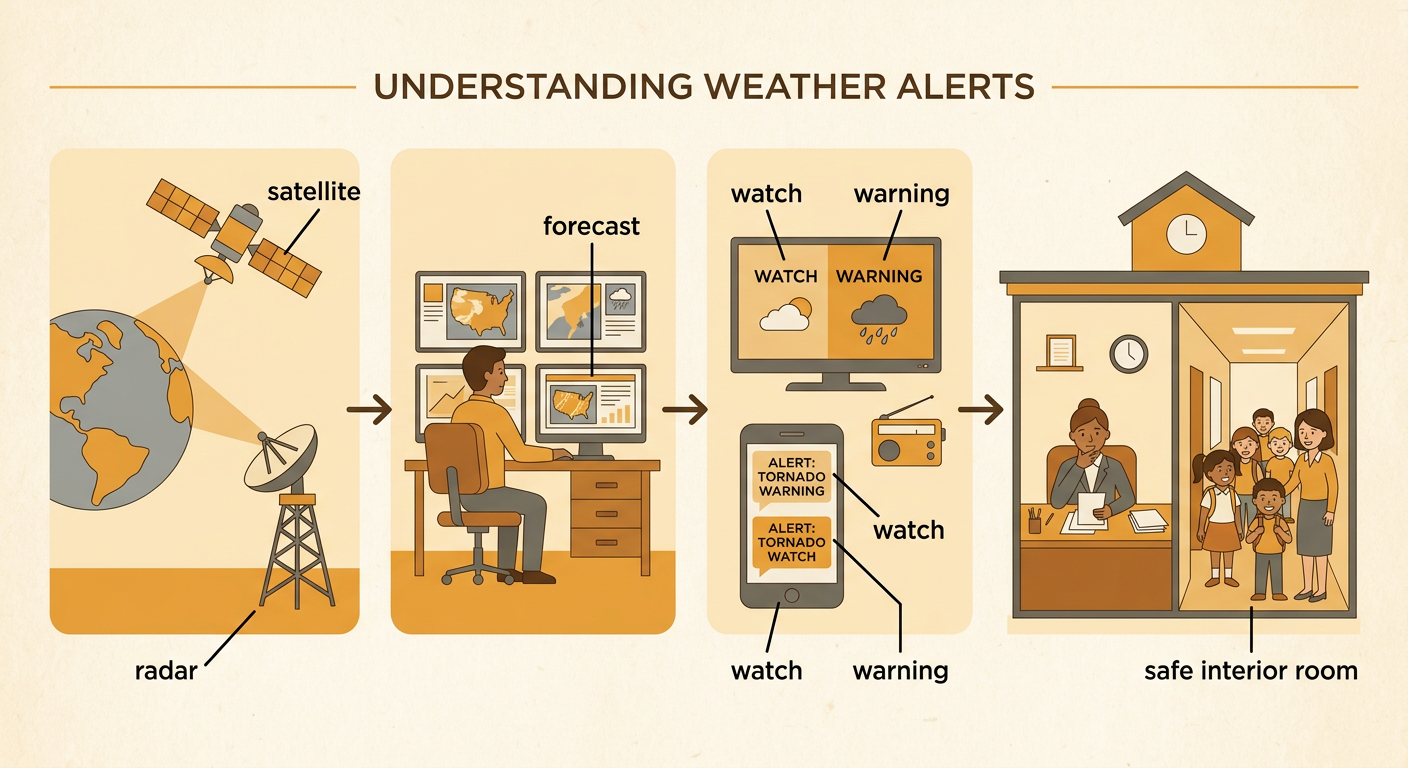
A weather forecast tells what weather is expected in a certain place and time. Meteorologists study information from weather satellites, radar, weather stations, and computer models. They share forecasts on television, radio, websites, and phone alerts. A watch means dangerous weather is possible, so people should get ready. A warning means dangerous weather is happening or will happen soon, so people should act quickly. For example, a tornado watch may lead a school principal to review the shelter plan. If a tornado warning is issued, students and teachers move to a safe interior room. Forecasts are not perfect, but they give communities useful time to prepare. Students can ask, “When will the storm arrive?” and “What danger should we expect?”
Community Leaders and Emergency Workers
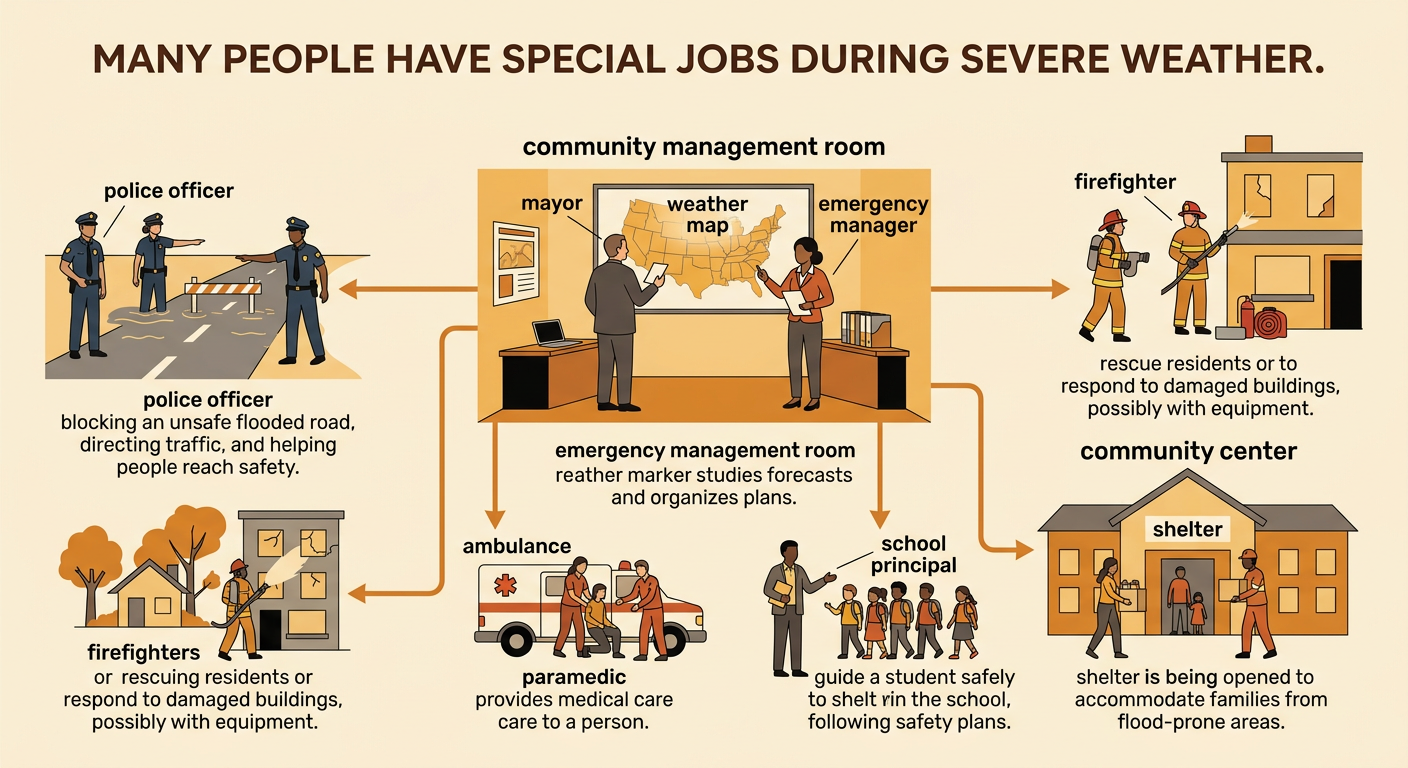
People in authority have responsibilities during severe weather. A mayor helps make community decisions and shares important information. Emergency managers study forecasts, organize plans, and may open shelters. Police officers block unsafe roads and help people reach safe places. Firefighters rescue people and respond to fires or damaged buildings. Paramedics give medical care, while utility workers repair power lines only when conditions are safe. School principals and teachers follow safety plans to protect students. For example, if a hurricane is approaching, local leaders may tell families in a flood-prone area to leave early. Emergency workers may open a shelter at a community center. Each person has a different job, but they communicate and work together to protect the community.
Preparing and Responding Safely
Preparing means getting ready before severe weather arrives. Families can make an emergency kit with water, food, flashlights, batteries, needed medicine, and a battery-powered radio. They should know where to shelter and how to contact one another. During a tornado warning, people should go to a basement or a small interior room on the lowest floor, away from windows. During flooding, people should move to higher ground and never walk, swim, or drive through floodwater. After a storm, children should stay away from fallen power lines, damaged buildings, and moving water. For example, when a winter storm is forecast, a family can charge phones, gather blankets, and stay indoors. People should listen to trusted alerts and follow directions from local authorities.

Create a Community Safety Plan
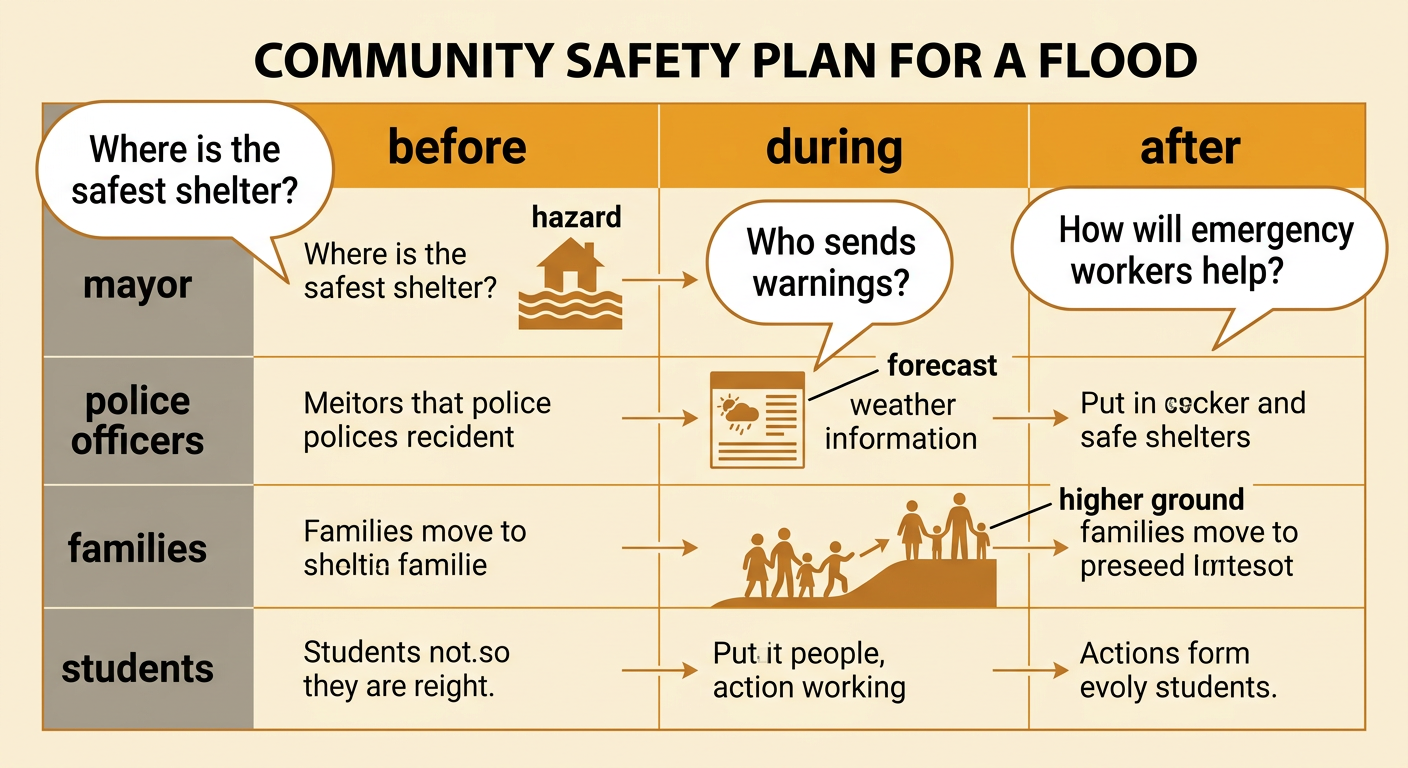
Work with classmates to create a safety plan for one kind of severe weather in your community. First, name the hazard and use a forecast to decide what people need to know. Ask questions such as, “Where is the safest shelter?” “Who sends warnings?” and “How will emergency workers help?” Next, list the responsibilities of community leaders, school workers, families, and students. Put the steps in order: prepare before the event, respond during it, and stay safe afterward. For example, a flood plan might tell the mayor to share evacuation information, police officers to close flooded roads, and families to move to higher ground. Take turns speaking, listen to each idea, and ask helpful follow-up questions. Then present the plan and explain how the forecast helps everyone act safely.