How Communities Prepare for Weather Hazards
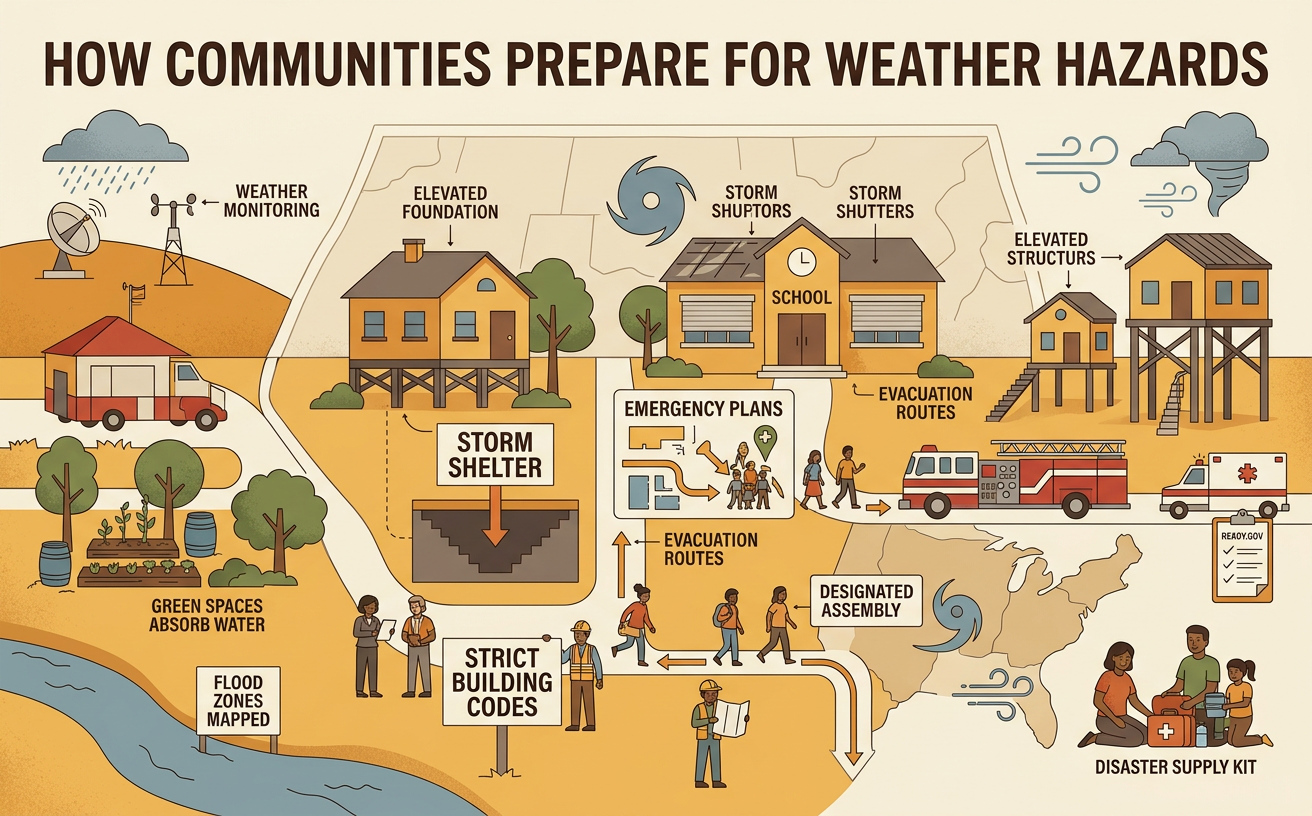
Students examine how communities adapt their buildings, rules, and emergency plans to reduce the effects of floods, hurricanes, tornadoes, and other weather hazards.
Illustrations are auto-generated and may be placeholders. They can be refreshed to match the narration.
Weather Hazards in Communities
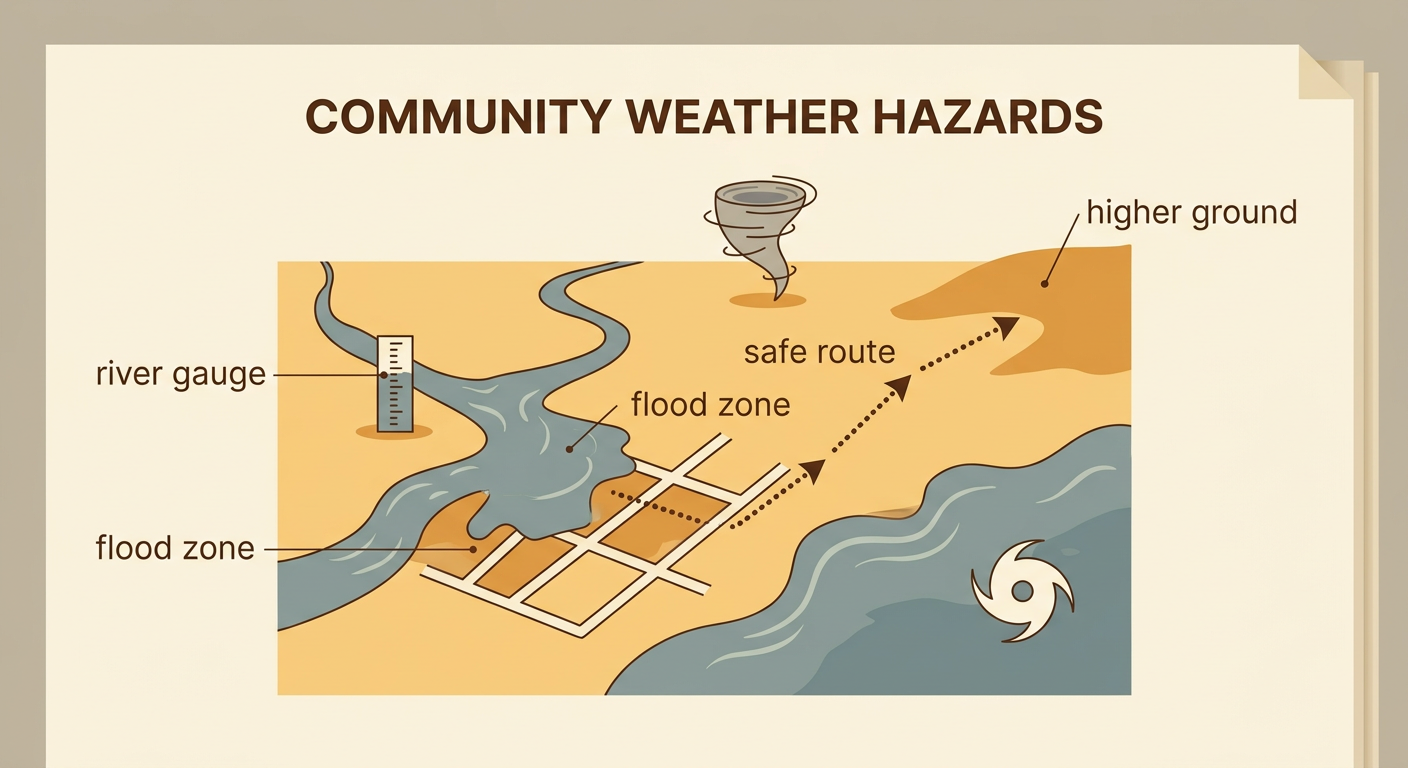
A weather hazard is a weather event that can harm people, buildings, roads, or land. Floods can cover streets and enter homes. Hurricanes can bring strong winds, heavy rain, and storm surge near a coast. Tornadoes can damage buildings with very fast winds. Blizzards, heat waves, and wildfires caused by hot, dry conditions can also threaten communities. The hazards a community prepares for depend on its location and past experiences. For example, a town beside a river may mark flood zones, watch the water level, and practice moving residents to higher ground. A community cannot stop dangerous weather, but it can reduce harm by learning about local risks, warning people, and preparing safe places and routes before an emergency happens.
Reading a Community Safety Text
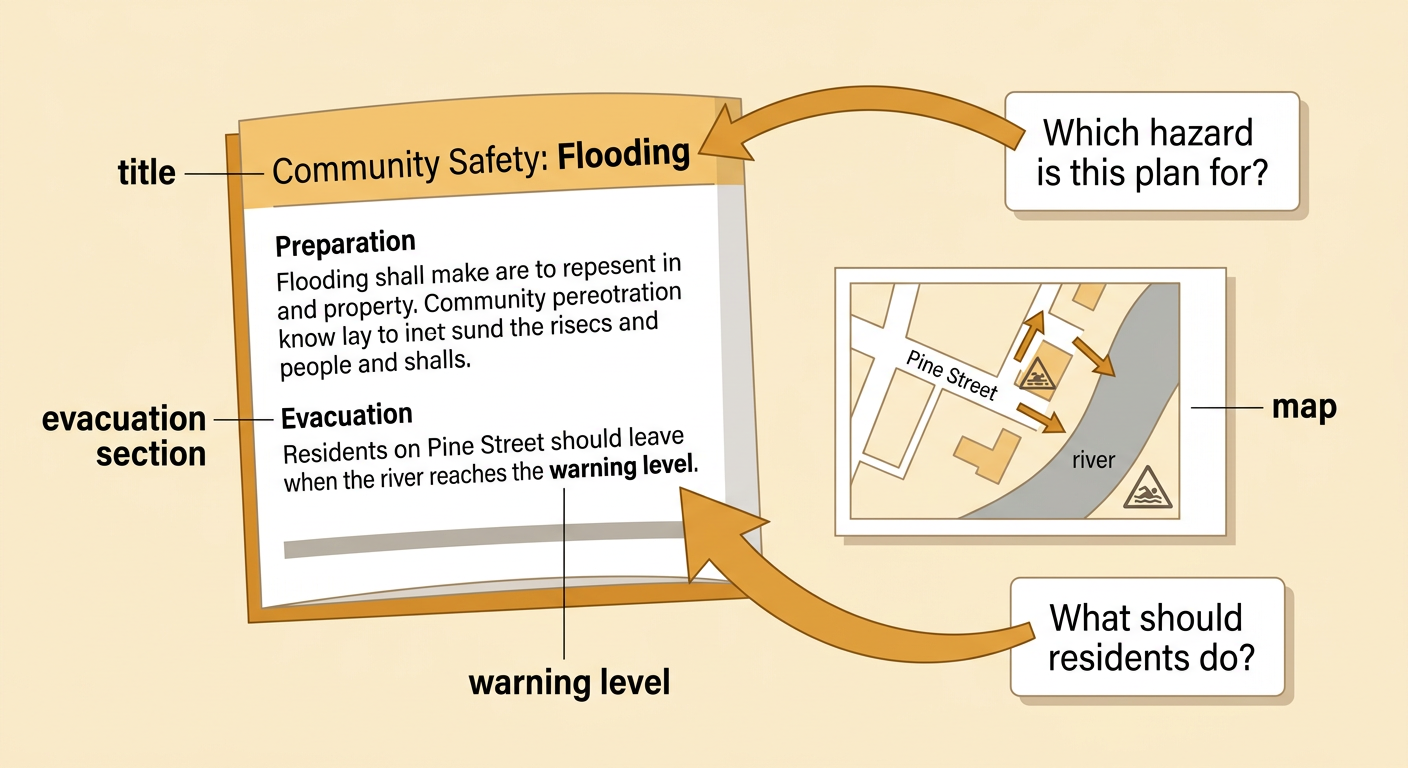
An informational text gives facts and details about a topic. Before reading a community safety text, look at its title, headings, map, captions, and bold words. Ask questions such as, “Which hazard is this plan for?” and “What should residents do?” Then find sentences that answer each question. Refer explicitly to the text by naming the section or quoting an important detail. For example, a flood safety text might state, “Residents on Pine Street should leave when the river reaches the warning level.” A reader can answer, “According to the evacuation section, Pine Street residents should leave when the river reaches the warning level.” This answer is stronger than a guess because it points to exact evidence. Readers should also compare words and diagrams because each may provide different useful information.
Ways Communities Adapt
Communities adapt by changing buildings, rules, land use, and emergency plans. In flood-prone places, builders may raise homes above expected floodwater or avoid building in the lowest areas. Coastal communities may use storm shutters, stronger roof connections, and evacuation routes for hurricanes. In tornado regions, schools and homes may have safe rooms on a low level and away from windows. Warning sirens, phone alerts, shelters, practice drills, and emergency supply centers also reduce risk. Culture can shape these choices. People use knowledge passed down through families, local building traditions, languages spoken in the community, and shared ways of helping neighbors. For example, a coastal town may send hurricane warnings in several languages and use community centers as shelters so more residents can understand the message and reach a familiar place.

Evaluating a Safety Solution
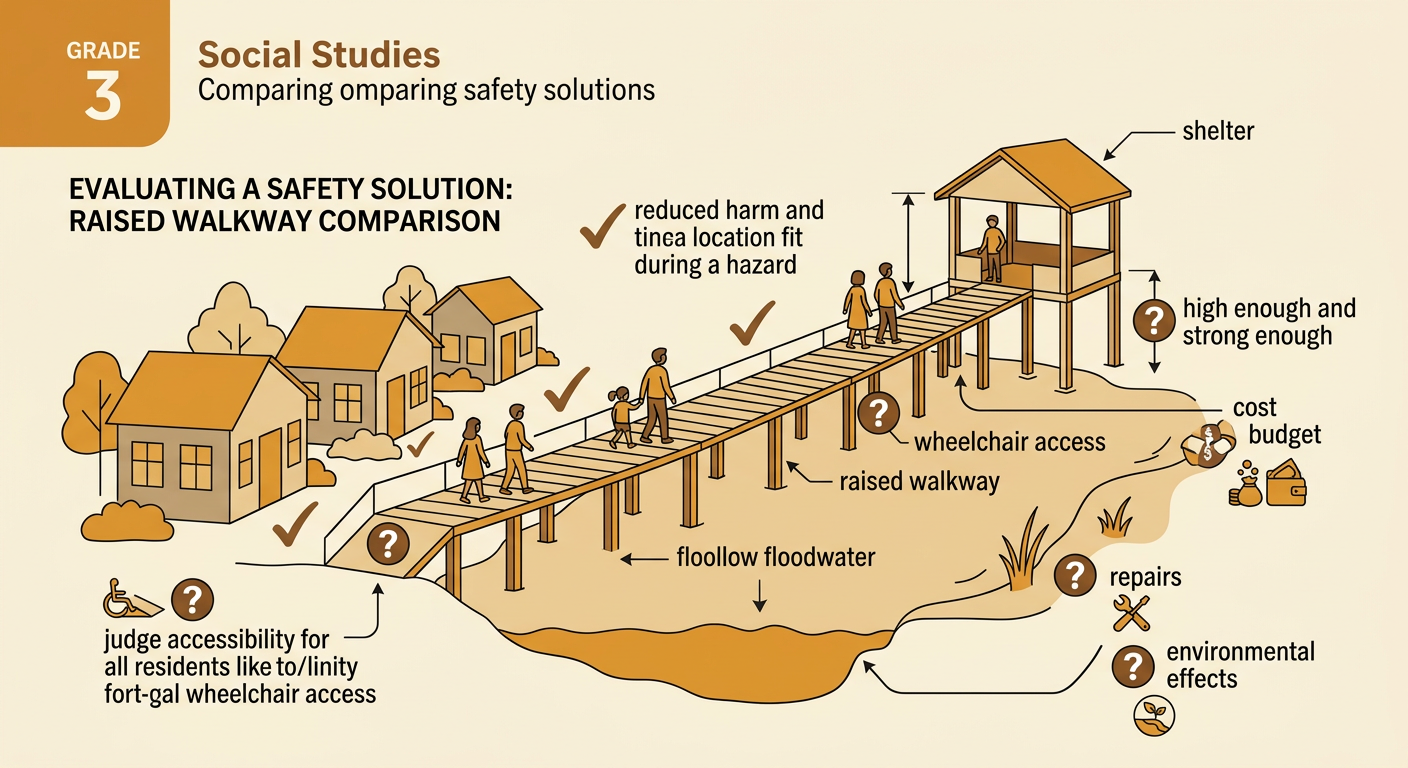
To evaluate a safety solution, decide how well it meets important criteria. A useful solution should reduce harm, work during the expected hazard, fit the location, and be possible for the community to build or use. Cost, maintenance, access, and effects on the environment also matter. Imagine that a riverside town is considering a raised walkway to connect homes with a shelter. The walkway could help people travel above shallow floodwater, including residents who cannot drive. However, leaders must ask whether the walkway is high enough, strong enough, wide enough for wheelchairs, and affordable to repair. They should compare it with other choices, such as an earlier evacuation plan. No solution removes all risk. Evidence from maps, tests, past floods, and residents' needs helps the community judge the solution's benefits and limits.
Making an Evidence-Based Claim
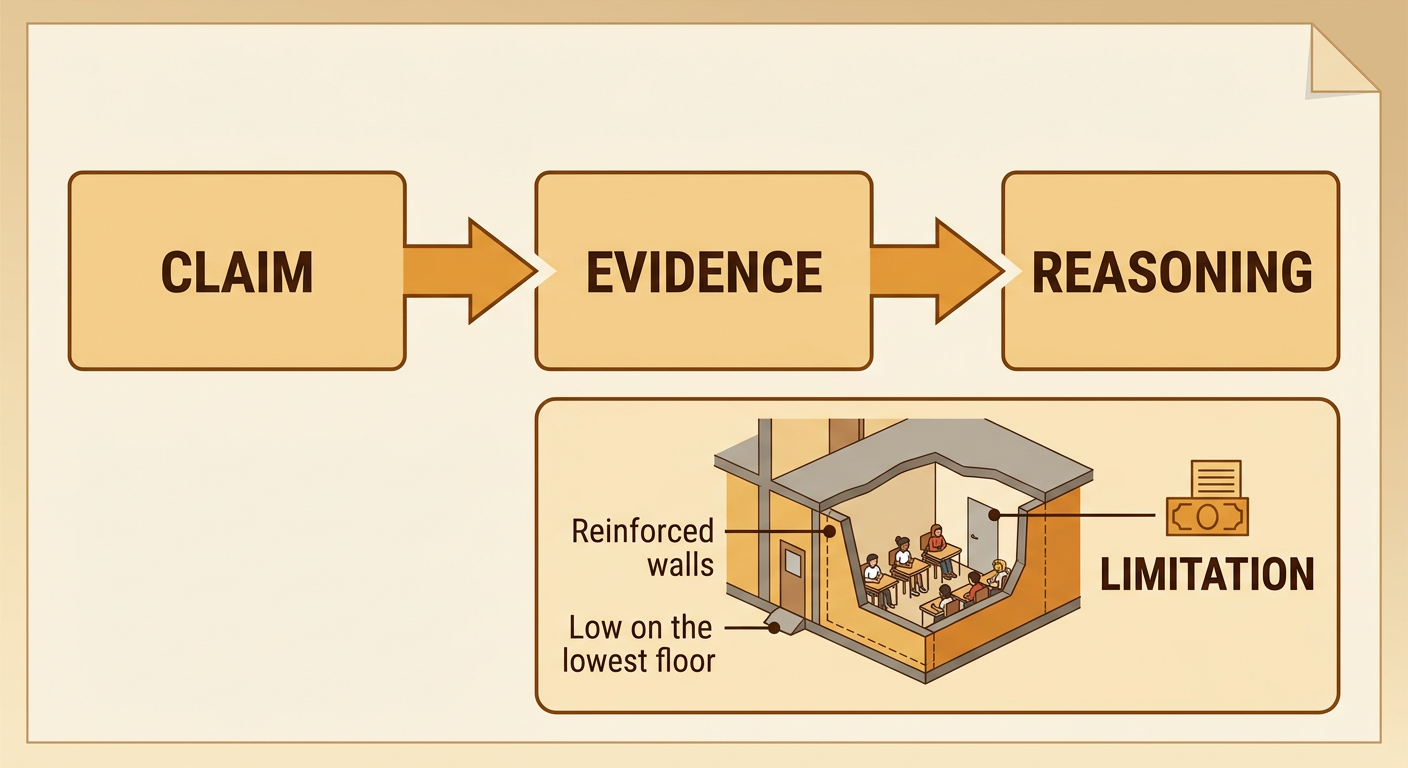
An evidence-based claim tells what you think and supports it with facts. Begin with a clear claim about whether a design solution is useful. Next, give evidence from a text, map, test, or example. Then explain how the evidence supports the claim. For example: “A tornado safe room is a strong solution for an elementary school.” Evidence might show that the room is on the lowest floor, has reinforced walls, is away from windows, and is large enough for every student. The reasoning is that these features protect people from strong winds and flying debris. A complete claim can also name a limitation, such as the cost of construction. Use phrases such as “According to the text” and “This evidence shows” to connect ideas. Strong claims are based on reliable information, not only personal opinion.