How Communities Protect Earth’s Resources
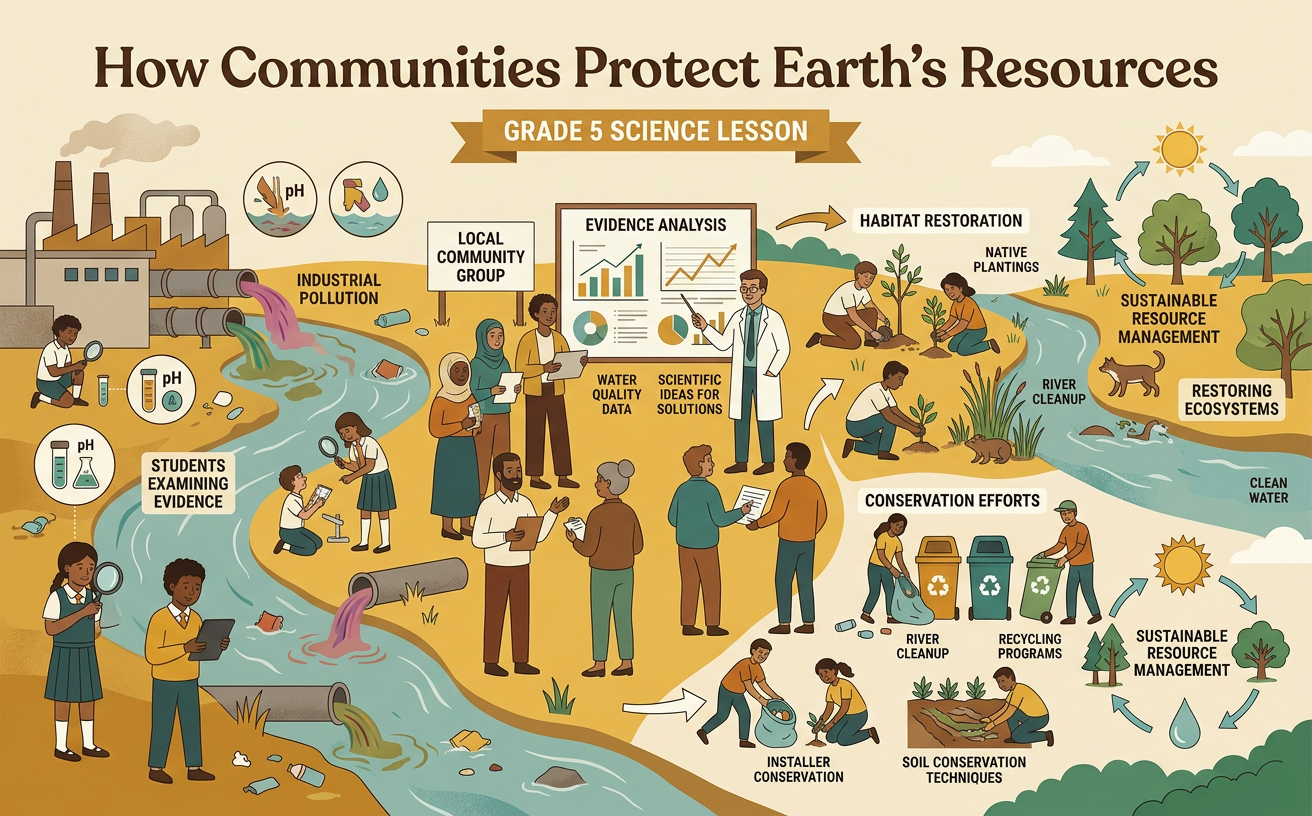
Students examine evidence about a local environmental problem and explain how communities use scientific ideas to protect natural resources.
Illustrations are auto-generated and may be placeholders. They can be refreshed to match the narration.
Earth’s Resources and Environmental Challenges
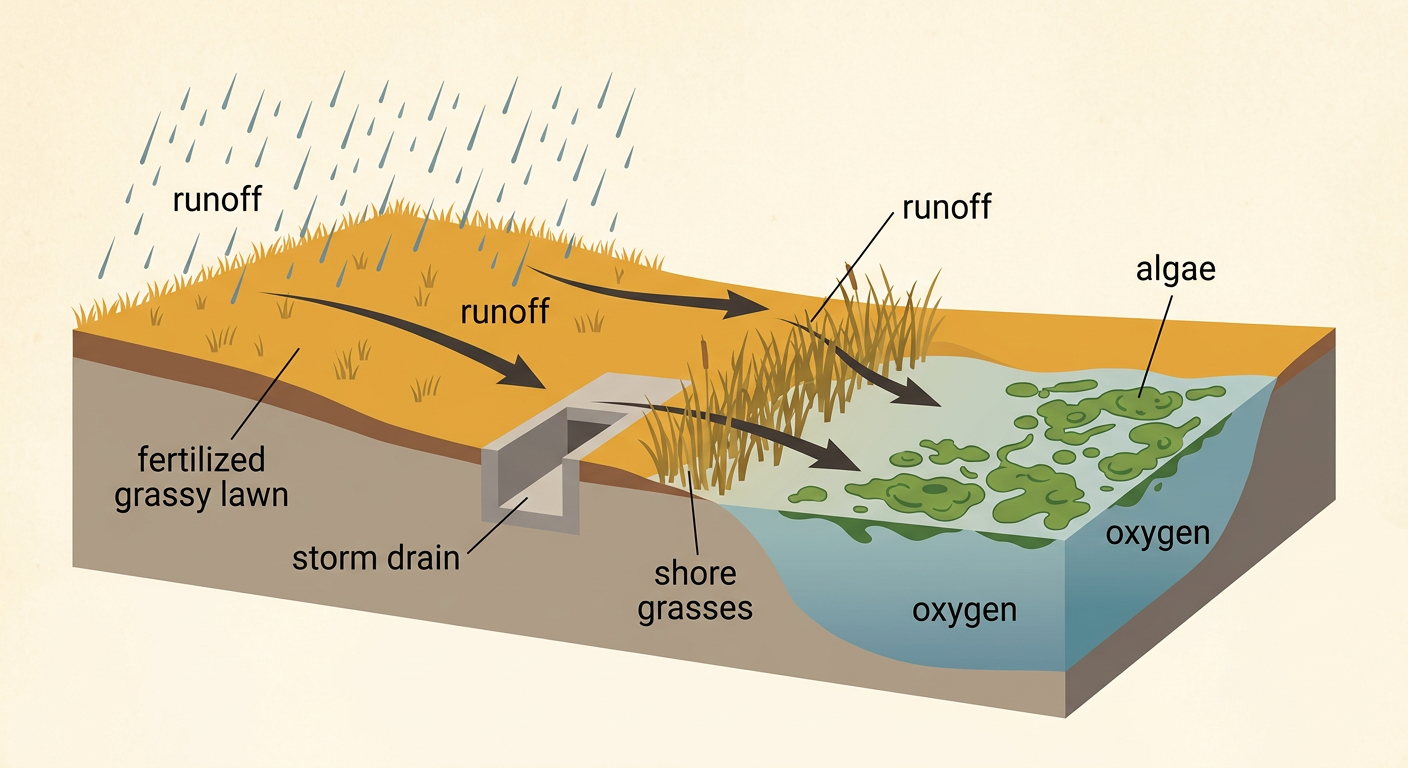
Earth provides resources that living things need, including fresh water, clean air, soil, forests, minerals, and energy sources. People use scientific observations to notice when these resources are at risk. For example, a town may discover that rain washes fertilizer from lawns into a nearby pond. The added nutrients can cause algae to grow quickly. A thick algae layer may block sunlight, and decomposing algae can reduce oxygen in the water. This makes survival harder for fish and other organisms. Community scientists can test water samples, observe algae growth, and map where runoff enters the pond. Residents can then protect the pond by using less fertilizer, planting grasses along the shore, and keeping storm drains clear. These actions apply scientific ideas about ecosystems, water movement, and plant growth.
Reading Community Case Studies
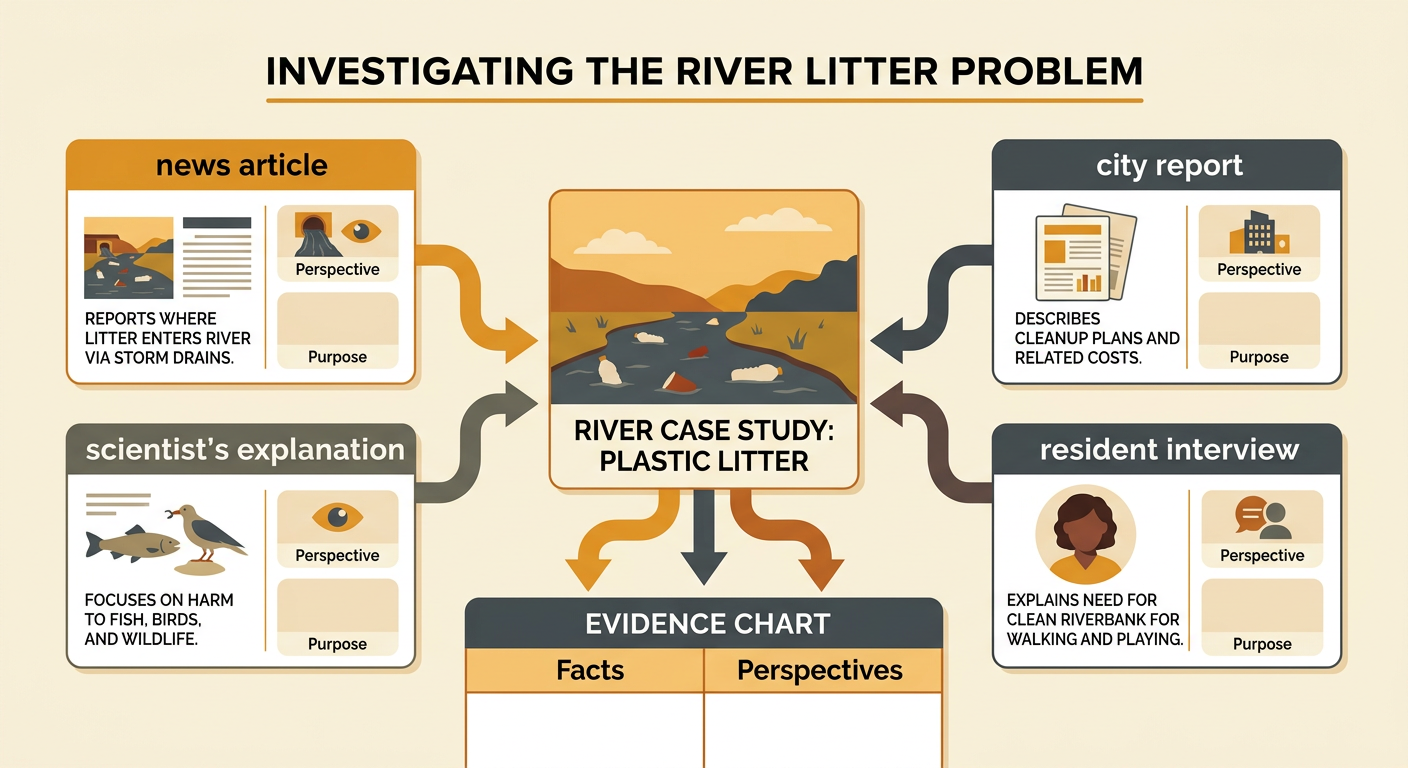
A case study explains how a real community investigated and responded to a problem. To understand a case, gather information from several sources, such as a news article, a city report, a scientist’s explanation, and an interview with a resident. Suppose one source reports that plastic litter is entering a river through storm drains. A second source explains that floating barriers can collect trash, while a third describes volunteers cleaning the riverbank. Compare which facts appear in more than one source and note what unique evidence each source adds. Also consider each writer’s perspective and purpose. A scientist may focus on effects on wildlife, a city leader may discuss cost, and a resident may value a clean place for recreation. Combining these viewpoints gives a more complete picture than relying on only one text.
Interpreting Environmental Data
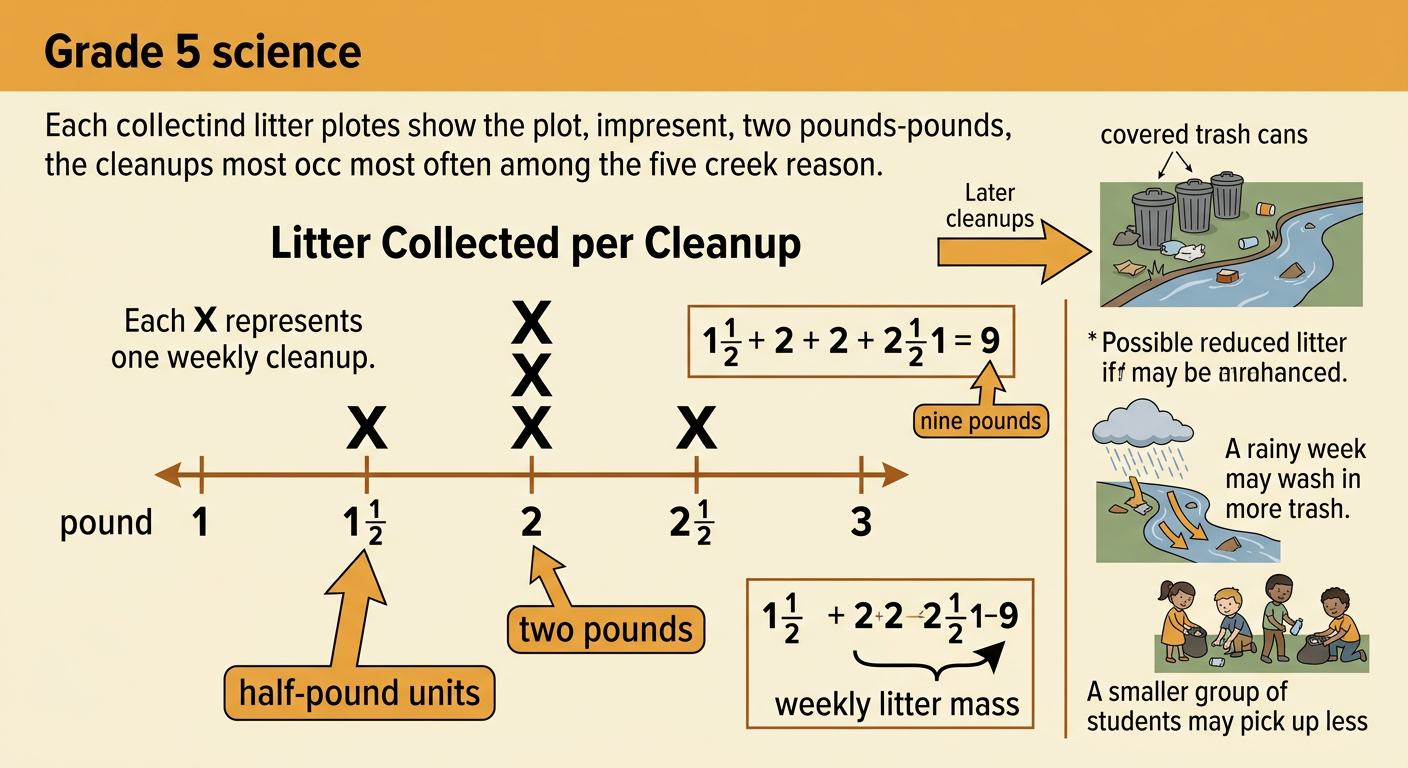
Measurement data help a community describe a problem and check whether an action works. Imagine students measure the mass of litter collected beside a creek during five weekly cleanups: 2, 2 1/2, 1 1/2, 2, and 1 pounds. They can place an X above each value on a line plot marked in half-pound units. The plot shows that 2 pounds occurred most often. Altogether, the students collected 9 pounds of litter. If later cleanups collect less litter after covered trash cans are installed, that pattern may be evidence that the cans are helping. However, students should consider other factors, such as weather, the number of volunteers, and the size of the area searched. Accurate units, repeated measurements, and careful comparisons make a conclusion more dependable.
Comparing Possible Solutions
Communities often compare several solutions before acting. For creek litter, possible solutions include adding covered trash cans, organizing cleanups, installing a trash-catching screen, or teaching people to reduce single-use plastics. Each choice has benefits and limits. Cleanups remove existing litter but must be repeated. Covered cans may prevent litter, but the city must empty and maintain them. A screen can catch floating trash, but it could interfere with water flow if it is not designed and monitored carefully. People may also judge solutions according to different values and experiences. Residents may prioritize a clean park, wildlife experts may focus on animal safety, and city officials may consider cost and public access. A comparison table can rate each solution for effectiveness, cost, safety, and community support. Evidence should guide the final choice.

Proposing a Community Action
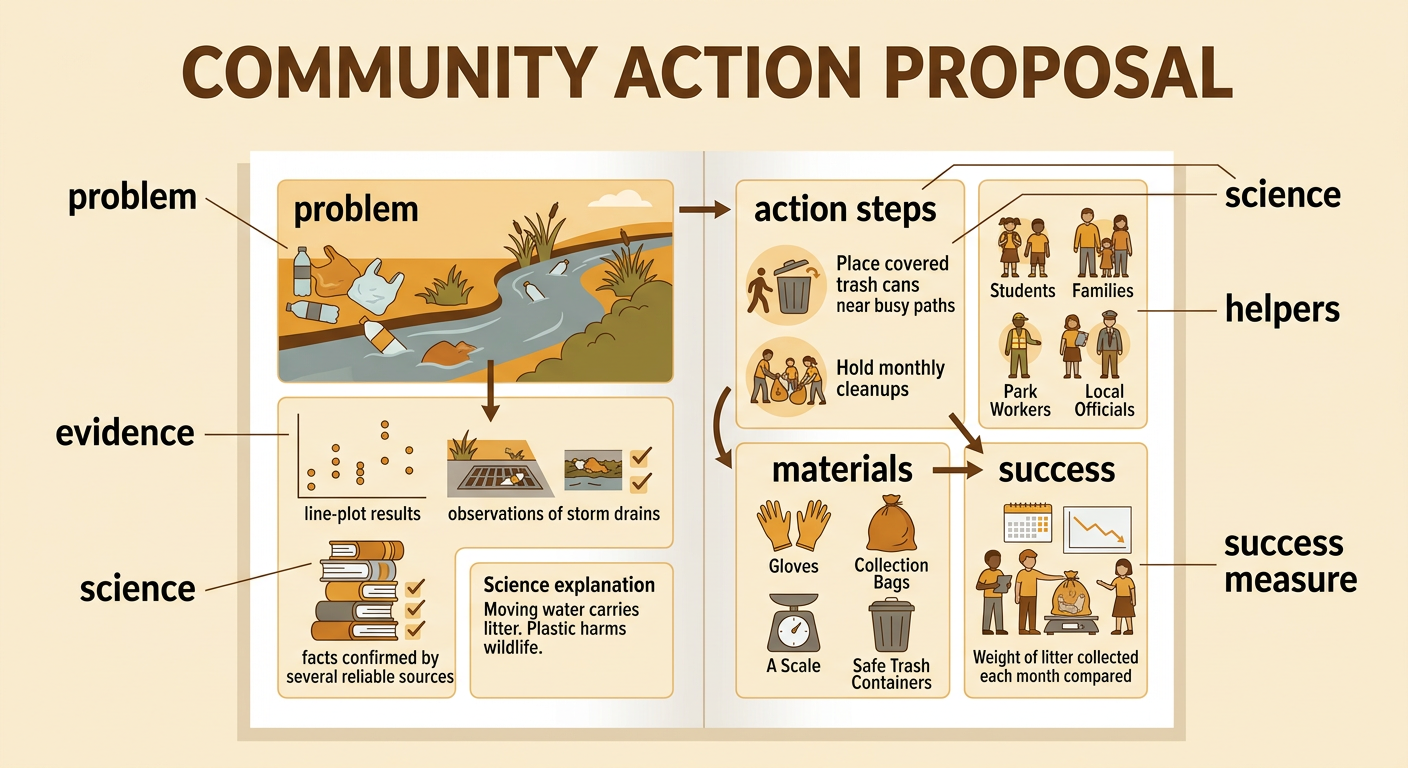
A strong community action proposal clearly names the problem, presents evidence, explains the science, and recommends realistic steps. For example, students might propose reducing litter in a neighborhood creek by placing covered trash cans near busy paths and holding monthly cleanups. They could support the proposal with line-plot data, observations of storm drains, and information from several reliable texts. The proposal should identify who will help, what materials are needed, how much time the action will take, and how success will be measured. Students might weigh collected litter each month and compare the results over six months. They should also explain how the plan respects different perspectives, including concerns about cost, recreation, and wildlife. Sharing the proposal with a school council or local government gives community members a chance to ask questions, suggest changes, and participate.